
Ken Forrester: 20 Years of The FMC
A retrospective on the rebirth of South African Chenin Blanc through the lens of its original flagship label, The FMC. Jason Millar tastes through the back catalogue of the wine that paved the way for the new wave.


When Ken Forrester took over the abandoned vineyard of Scholtzenhof in 1993, it was a change of lifestyle for a man who had spent the better part of three decades in hotel management.
Relocating his wife and young family, he renamed the estate Ken Forrester Vineyards and began the work of restoring the property, located to the west of the Helderberg mountain in Stellenbosch.
By the time Nelson Mandela was elected in 1994, Chenin Blanc covered over 32,000 hectares of the Cape.
Planted extensively by the national co-operative winery, KWV, it had been the most important white grape for South Africa since the 1950s, mostly grown for distillation into Cape brandy.
Scroll down for tasting notes and scores for a retrospective of The FMC
The trendsetter
By 1994 many of the vineyards were mature and well-adapted to local conditions. Chenin became an important focus for experimentation and ambition in the years following the end of segregation.
In the hands of winemakers such as Eben Sadie, Chris Alheit and Chris and Andrea Mullineux it has been instrumental in building the reputation of the Cape for world-class wines.
But before any of those esteemed names, and before Swartland was seriously prospected for fine wine, there was Ken Forrester and the Chenin Blanc known as The FMC, a wine from Stellenbosch that can be credited with putting fine South African Chenin Blanc on the map.
Produced from 2000, The Forrester Meinert Chenin was a collaboration between Ken Forrester and winemaker Martin Meinert, who had previously worked at Simonsig and Vergelegen.
Aiming high
From the beginning, the goal was to make a high quality, attention-grabbing wine that could sell at a premium price.
‘I knew The FMC was good, but it was hard to convince people in those days that you could make a really good Chenin Blanc,’ Forrester recalls.
‘I looked at the price of the most expensive white wine in South Africa and said, “That’s my benchmark.” We went to the first Independent Winemakers Guild auction in 2000 in South Africa and we sold at that price, which was a wonderful validation of the wine.’
The FMC was squarely aimed at a premium market: fine wine buyers, collectors and sommeliers — in short, the people who appreciated the great, age-worthy white wines of France.
But it wasn’t inspired by those wines. Unlike the South African Chardonnays which looked towards Burgundy, Forrester says, ‘I never wanted to look or be like anybody or anything else. I wanted the wine to carve a path of its own. It was about maximum extract and maximum agility, balance and elegance at the same time.’

Twenty years down the line
In July, at The OWO at London’s Raffles Hotel, journalists and sommeliers assembled to taste through 20 years of this Cape icon.
Every wine was sourced from the farm, and each vintage poured from magnum accompanied by a range of exquisite dishes from Mauro’s Table.
Introducing the wines, Forrester described them as ‘my lifetime’s work,’ starting with 2020, which unfortunately wasn’t in perfect condition, and ending with the superb 2003.
The fruit sources and winemaking have barely changed. Before 2016 the fruit was sourced solely from the 1974 vineyard, which was planted as bush vines, with the trellised 1970 site only contributing fruit from the 2016 harvest onwards.
Each year The FMC is made with bunch selection in the vineyard across multiple picks, whole-bunch pressing, wild yeast fermentation and ageing in 400 litre French oak.
Some refinements have taken place over time. There’s less work with the lees than in the early days, giving a leaner, tighter aspect to the wine.
The time in barrel has also dropped since the earliest vintages, and the number of picks in the vineyard have increased from four in 2003 to eight in 2020, to target more precise ripeness in the bunches.
Sometimes there’s a little residual sugar, but it is often balanced by the acidity and integrated during bottle-ageing so that the wines feel dry, but rich, with some honey and mushroom flavours from botrytis.
Steering towards the future
As with all retrospectives, questions about the future direction of the wines and the farm are inevitable.
In May 2023 Shawn Mattyse, a born-and-bred South African, was officially appointed winemaker at Forrester Vineyards after nine years with the farm, and he is increasingly taking over the making of the wines.
‘He’s going to make some waves,’ Forrester says. ‘He’s got his hand on the tiller; I’m just the old codger who makes his life miserable from time to time.’
Whatever the coming decades bring for Forrester Vineyards, the future of the most important Chenin Blanc in modern Cape winemaking history isn’t in doubt.
‘The FMC is definitely an ongoing project. It will continue,’ Ken assures us.
Looking back at The FMC:
Related articles
- Malu Lambert’s favourite South African white blends
- Momento Wines: A passion for Grenache
- South African Chenin Blanc panel tasting results
Ken Forrester, T Noble Late Harvest, Stellenbosch, South Africa, 2020
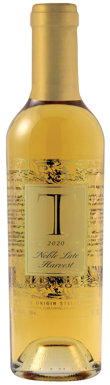

This is unctuously rich, a full 180g of residual sugar, with lovely energy. Even here it’s clear that the wine isn’t hugely affected by noble...
2020
Ken Forrester

Ken Forrester, The FMC, Stellenbosch, South Africa, 2018
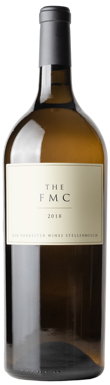
Juicy pear, baked quince and fresh honey emerge from the nose of this exuberant but still-coiled FMC, alongside seductive notes of creamy, unsalted butter, ripe...
2018
Ken Forrester
Ken Forrester, The FMC, Stellenbosch, South Africa, 2016
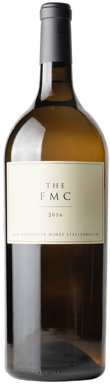
Oatmeal, candle wax, sweet spices, mushroom and dried orange come through strongly on the smoky, vanilla-spiked nose of this FMC. With its purity and freshness...
2016
Ken Forrester
Ken Forrester, The FMC, Stellenbosch, South Africa, 2012
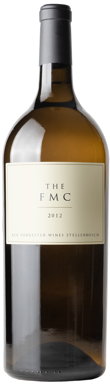
A distinctly botrytis-inflected nose with marmalade, dried apricot and a touch of toffee apple. Dry with the residual sugar now well-absorbed, this shows baked apple...
2012
Ken Forrester
Ken Forrester, The FMC, Stellenbosch, South Africa, 2011
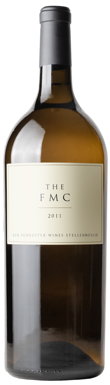
Toasty and rich with notes of peanut butter and pineapple, baked quince, bread-and-butter pudding, honey and dried orchard fruits, this showed a little heat on...
2011
Ken Forrester
Ken Forrester, The FMC, Stellenbosch, South Africa, 2010
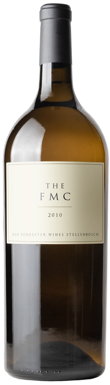
The savoury botrytis influence is strong in this vintage with dried apricot vying with notes of button mushroom, leading into a rich palate that still...
2010
Ken Forrester
Ken Forrester, The FMC, Stellenbosch, South Africa, 2004
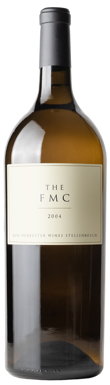
Quince paste, mushroom, physalis and marmalade-on-toast lead the flavour of this fully mature FMC that has plenty of dried orchard fruit at the core with...
2004
Ken Forrester
Ken Forrester, The FMC, Stellenbosch, South Africa, 2003
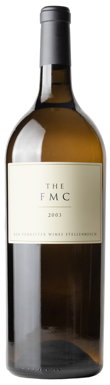
The 2003 is a great surprise, burnished with the mushroom and marmalade character of extensive botrytis, full, long and pungent in flavour, with incredible integration...
2003
Ken Forrester
