Krug Grande Cuvée: new 170th edition and vertical tasting
Tim Hall attends a vertical tasting of Krug Grande Cuvée for the launch of the Champagne house's 170th edition, discovering a 'triumph of blending'.


Champagne Krug will release the 170th edition of its flagship Grande Cuvée, as well as the 26th edition of Krug Rosé, at the end of May 2022.
To celebrate the launch, the high end house organised a preview tasting in London for the UK wine trade and press.
To put the new cuvée in context, five previous editions of Grande Cuvée were also shown at the tasting – 169th, 166th, 164th, 163rd, 160th – as well as three editions of Krug Rosé: 26th, 25th and 20th.
Scroll down for notes and scores for the new Krug Grande Cuvée 170th edition
Buy Krug masterclass tickets at the Decanter Fine Wine Encounter NYC
An introduction to Grande Cuvée
Beginning in 2016 with the 163rd edition, based on the 2007 harvest, Krug decided that its non-vintage prestige wine (which it calls multi-vintage) would be shaped more by the character of the main harvest, reflected by the majority of the wine from that year in the blend.
It marked a turn from annual releases built only to show the Krug house style. From then on, each Grande Cuvée would be an interpretation of a year as well as the blending of reserve wines from prior years to lend the inimitable Krug stamp.
Grande Cuvée is Krug’s main offering. But unlike other Champagne houses’ main non-vintage wine, Grande Cuvée has always been a prestige cuvée, priced accordingly and aiming to be the best.
Each edition contains over 60% of the base year’s harvest, and the blend consists of about 35% Chardonnay, 45% Pinot Noir and 20% Meunier, but the blend can yo-yo each year.
The high percentage of Meunier used by Krug is striking; most houses exclude it from their prestige blends. Krug values its roundness, and has coaxed exceptional longevity from its Meunier.
Krug makes vintage wines too, and two famed single-vineyard wines: Clos du Mesnil and Clos d’Ambonnay; but Grande Cuvée dominates the house’s production.

Krug Rosé
Krug’s rosé, first released in 1983, has been an annual ‘edition’ wine since the 2008 base year came out in 2017. It has always been a paragon of blended rosé, showing a silky finesse. It tends to show a little less Chardonnay and a touch more fruity Meunier than the white Grande Cuvée, and has about 10% of the blend as still red wine.
Krug says it’s a food wine, but nowadays consumers around the world seem agog for rosé to suit many moments.
What typifies Krug’s style?
Over the years Krug has had many fans, such as Hemingway, the late Queen Mother, Brigitte Bardot, and even English cricket pundit John Arlott, who served Krug with kippers. This Champagne house calls its cultish followers ‘Krugists’.
Krug has close relationships with growers who supply grapes beyond the 21ha owned by the house.
The base wines for both Grande Cuvée and the vintage wines are oak-fermented plot-by-plot. Many of these go into a vast library of reserves, kept in stainless steel.
Freshness laces the rich, savoury, dry butteriness of the Krug style because most of the juice’s precious malic acid is cleverly retained by avoiding malolactic fermentation of the base wine.
Since 2016, the edition number on the label indicates the vintage that provides most of the wine in each bottle, and since 2011 an ID code on the label indicates, via an app, when each bottle was disgorged.
Know your facts: what is disgorgement?
After the second fermentation in bottle, at the end of a period ageing on lees, the wine is disgorged before the final cork goes in to remove the yeast deposit from the bottle. The bottles are gradually shifted into an upside down position to nudge the yeast into the cap, the neck of the bottle is frozen, and the solid yeast particles are then expelled from the bottle.
Grande Cuvée is disgorged in batches, some much later than others. Notice for example that the 160th edition tasted recently was disgorged eight years ago.
Once disgorged and freed from the protective animated suspension of contact with the lees deposits in the bottle, Champagne ages quicker.
Some love maturity more than others, some prefer a whistle-clean young purity. In any case, Krug ages at a snail’s pace.
Hugh Johnson’s answer to Krug’s mystery is taste: ‘Each sip is so packed with flavour that a full-mouth swallow would leave you gasping.’ He’s right about the sip; I’ve never dared test a gulp.
Tasting Grande Cuvée 170th edition
A vertical of Krug’s Grande Cuvée was a fabulous chance to test the house’s claim about the logic of the edition approach.
How was each wine a child of its base year, yet also a chip off the parental block of Krug’s style?
Vintage authenticity did work, but in rather varied ways. The 170th edition, or the ‘new baby’ as cellar master Julie Cavil put it, is mostly 2014 (55%), which was a difficult year. Yet the wine is a triumph of compensation, a blend of 195 wines from 12 different years, buttressed heavily (45%) by 2013 reserve wines.
The 169th works in a different way, deliberately highlighting the wonderful freshness of the superior 2013 harvest.
And 2008’s superb year allowed 68% into the final 164th edition bottling, with the reserves taking a subtle back seat. It was my top wine.
It pays to research the conditions of the main base year wine to try and discern what Krug have tried to create. But don’t be surprised if mysteries persist; these are arguably the joys of fine wine.
Know your facts: what is base wine?
Base wine refers to the lion’s share of the wine that makes up the blend of a non-vintage Champagne. It is the wine from the most recent harvest year. It often makes up 70-85% of the final wine, and is the youngest wine in the blend. The remainder of the blend is made up of reserve wines from other vintages. Krug takes the principle to painstaking extremes, aiming to make the most complex blends.
The 170th edition of Krug Grande Cuvée will be available in the UK in late May 2022 and will retail between £200-£210. Krug Rosé will retail around £240-£245.
See Tim Hall’s notes and scores for the new Grande Cuvée 170th edition:
Related content:
Krug producer profile
Yohan Castaing: Krug new releases in 2021
Simon Field MW: Krug Grande Cuvée 167th edition: release and vertical tasting
Krug, Grande Cuvée 164ème Édition, Champagne, France
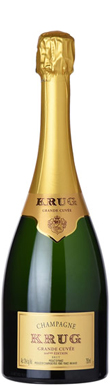

This Grande Cuvée, based on the epic 2008 vintage, surely foreshadows the potential of the vintage wine of the same year. This is superb, with a smoky intensity to the tropical passionfruit and pomelo citrus notes. A depth and complexity of flavour here seldom equalled in Champagne, and a lively energy on the palate carry the wine to a gracefully persistent finish. This exquisite wine is drinking now, but will undoubtedly continue to age. If vintage 2008 has more potential, the Krug Grande Cuvée 164th edition assuredly gives more pleasure now.
Krug

Krug, Grande Cuvée 170ème Édition, Champagne, France
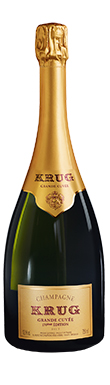
This marvellous wine is at the same time rich with smoky, yeasty aromas, yet also very crisp and pure. ‘I smell all the French breakfast: toast, butter, marmalade and coffee,' said Krug cellar master Julie Cavil. For me, the combination of lively acidity and a rich density of flavour on the palate is unstoppable. The blend is 45% reserve wines going back to 1998, and this was aged seven years on the lees, being disgorged in the winter of 2020-2021. Drinking well now, but will also continue to improve with time in the cellar.
Krug
Krug, Grande Cuvée 163ème Édition, Champagne, France
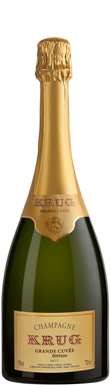
An impression of softness rather than the compact angularity I associate with this year in Champagne. Yet there are quite lovely citric intruding details in the wine, and a pithy, chalk-silk tension. And there’s a buttery undertow adding gravitas. But all this resolves on the back palate into something sleek and more compact with great length. A sense that 2007 is transcended here by the relatively high proportion of fine, firm and fruity Meunier and the 12 different years that contribute to the modest fraction of reserve wines going back to 1990. Delightful, and this bottle being disgorged in the winter of 2019 promises much for the next five to 10 years. Main harvest: 2007. 27% reserves. Aged on lees for over 10 years. Disgorged: Late 2019.
Krug
Krug, Grande Cuvée 166ème Édition, Champagne, France
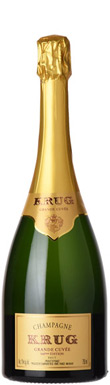
A biscuity reductive and toasty nose, but refined and not overdone. Flows nicely all the way through. A superior creamy and silky texture, substantial but still retains a spritely and athletic poise and drive. Ferny and herbal to the end, with a smoky menthol breeziness. An open riot of dusty rose, crystallised fruits and butter, all in a heady and lingering finish. Main harvest: 2010. 42% reserves. Almost eight years on lees. Disgorged: Late 2019.
Krug
Krug, Grande Cuvée 160ème Édition, Champagne, France
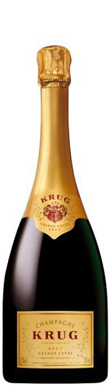
A rich gold hue of maturity, showing roasted buttery apricot and a vellum note like open book pages. Development showing from quite long on the lees in the bottle and time under cork since the spring 2014 disgorgement. An ethereal note of butter and caramel laced into the soft cooked yellow fruit palate. Mellifluous texture with nougat, cream and gentle spice and a telltale 2004 streak of relieving fresh acidity to stiffen the mellow fruit. Main harvest: 2004. 35% reserves. 121 different wines blended from 12 different years. Nine years on lees. Disgorged: Spring 2014.
Krug
Krug, Rosé 25ème Édition, Champagne, France
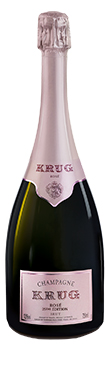
An intense clarity of fresh red berries from the start, which builds anticipation on the magnificent and magnifying nose. On the palate there’s counter-balancing mature buttery fruit crumble and a savoury note here, delicious and grown-up – the result of a high contribution of 50% reserve wines in the blend perhaps? There’s a smidgen of grippy texture at the end like drinking a light red wine and it does not detract. Less strikingly obvious and glamorous than the 26th edition. This will keep well and develop. Main harvest: 2013. 50% reserves. Aged for five and a half years on lees. 11% red wine used in the blend. Disgorged: Late 2019.
Krug
Krug, Rosé 26ème Édition, Champagne, France
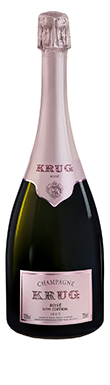
An exotic, bright and freshly crushed raspberry nose, which persists. Icing sugar and cracked cashews. A gorgeous cascade of stewed fruits, spice and rhubarb in the mouth. An exhilarating and fine wine. A fruit lolly note, but refined and smokily luxurious too. Red wine from different plots in Aÿ, Bouzy and Mareuil-sur-Ay. The rosés are selected from more mature fruit and therefore need fewer components to express the priority of pure berry intensity. Candy and sweet notes on the end. Main harvest: 2014. 35% reserves. Aged for almost seven years on lees. 11% red wine used in the blend. Disgorged: Early 2021.
Krug
Krug, Rosé 20ème Édition, Champagne, France
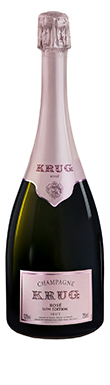
A distinct coppery colour with amber highlights. Superbly pretty. I notice this particular bottle has six years cork-ageing after being disgorged in the winter of 2015. The wine is moving into early mature middle age, showing tantalising complexity now: a touch of toffee, walnut, rich tea biscuit and sweet prunes. There is a silk mousse texture and it is all zipped up with a precise and bracing redcurrant racy finish. Quite a finale, positive freshness which promises more to come. Main harvest: 2007. 32% reserves. Aged for more than seven years on lees. 10% red wine. Disgorged: Late 2015.
Krug
