
La Rioja Alta: The art of ageing
Sarah Jane Evans MW reports on a stunning vertical of top Rioja, hosted by Julio Sáenz, technical director of La Rioja Alta, at the Decanter Spain and Portugal Fine Wine Encounter...


What is the difference between La Rioja Alta 890 Gran Reserva and the 904 Gran Reserva – apart from the numbers in their names and their prices? Why doesn’t La Rioja Alta make white Rioja? And what lies behind the recent step-up in quality across the range?
These were some of the questions covered at the sell-out masterclass held at Decanter’s Spain & Portugal Fine Wine Encounter in February 2020. La Rioja Alta’s technical director, Julio Sáenz, had brought verticals of the bodega’s two great Gran Reservas – 890 and 904 – plus the longstanding favourite, Viña Ardanza.

Each of the three wines shown at the tasting is closely connected to the history of the bodega, which is still owned by its founding families. The name of 890 derives from 1890, the year when La Rioja Alta was founded in Haro’s Station Quarter. It was made by the bodega’s first winemaker, Frenchman Albert Vigier.
Fourteen years later, in 1904, a wine was launched to mark the merger of La Rioja Alta with Viña Ardanza – a wine that, in due course, became the 904.
Sáenz noted that Viña Ardanza was registered in 1942, as a ‘Burgundy style’ wine, indicated by its bottle shape. It was an inauspicious beginning, during the aftermath of the Spanish Civil War and as World War II raged elsewhere around the globe. ‘The best markets at that time were Cuba and Venezuela,’ said Sáenz.
However Ardanza went on to become a national and international favourite. La Rioja Alta subsequently launched Viña Arana (1974) and Viña Alberdi (1978), both of which are now labelled as gran reservas, formally recognising their age classification.
‘Today, in the years when no 890 is produced, the fruit goes to Viña Arana,’ explained Sáenz. ‘And in the years where there is no 904, the fruit goes to Arana or Alberdi.’
Sáenz revealed: ‘The most important change in Viña Ardanza’s history was the Finca La Pedriza vineyard in Rioja Oriental.’ Located in Tudelilla, this is a highly rate site for Garnacha (typically Ardanza is 20% Garnacha).
‘Pedriza’ means stony, and the vineyard certainly has a Châteauneuf-du-Pape appearance. The vines were planted in 1999 and the exceptional Ardanza 2010 shows all the energy of that vineyard.
Sáenz is even more optimistic about the future of Ardanza. ‘The vineyard is getting better and better,’ he noted. Today Sáenz differentiates the ageing of different varieties. The Garnacha sees 30 months in American oak with five rackings; while the Tempranillo is aged for three years with six rackings.
890 and 904
With the glasses in front of us, and Sáenz as our guide, the differences between 890 and 904 were clear. He explained: ‘The 890 has an explosive character, it’s more tannic and complex, with a horizontal structure. By contrast 904 is very elegant, with less tannin and a more vertical structure.’
Analytically, the 890 has just 3% Graciano and 2% Mazuelo to polish the Tempranillo in the blend; while 904 has 10% Graciano. There is also a difference in the ageing: today 890 spends six years in oak, compared to four years for the 904.
In 1981, the 890 was aged for seven years in American oak barrels, while number of rackings has also reduced from 12 to 10. ‘We decided to do this in the final years of barrel ageing,’ said Sáenz. ‘By this time it’s no longer necessary for clarifying the wine and it reduces the oxidation.’
A further change is the addition to the winemaking team of Alejandro López in 2019. López crossed the road in Haro’s Station Quarter from Bodegas Bilbaínas, where he was technical director.
And the white wine? Why are there no white Riojas at La Rioja Alta? ‘They used to make a Viña Ardanza Blanco,’ said Sáenz. ‘I’d love to have it again.’ Let’s hope for his sake – and all our sakes – that his wishes are fulfilled.
The Rioja Alta wines
La Rioja Alta, Viña Ardanza Selección Especial, Rioja, Rioja, Spain, 2010
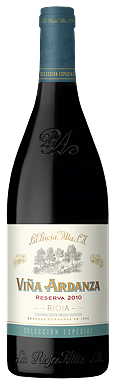

Rioja Alta at its luxurious best. Aromatically it’s all truffle, sweet spices and red flowers, then in the mouth there’s a refreshing note of cherry,...
2010
La Rioja AltaRioja

La Rioja Alta, Viña Ardanza Reserva Especial, Rioja, Rioja, Spain, 2001
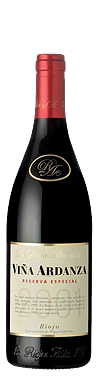
A perfect example of what made Viña Ardanza such a favourite. It’s a very fine balance of fruit and spice, with plump fruit and a...
2001
La Rioja AltaRioja
La Rioja Alta, Viña Ardanza Reserva, Rioja, Rioja, Spain, 1995
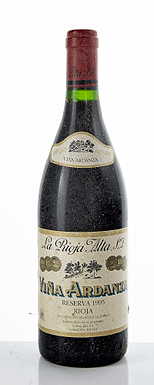
‘1995 was the vintage of the 1990s in Rioja,’ says technical director Julio Sáenz, ‘resulting in ideal colour, balance and structure.’ The nose is savoury...
1995
La Rioja AltaRioja
La Rioja Alta, Viña Ardanza Reserva, Rioja, Rioja, Spain, 1985
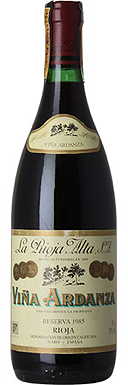
‘1985 was one of the best wines I never made,' comments technical director Julio Sáenz. ‘It’s a classic Rioja.’ The colour is clearly evolved. Aromatically...
1985
La Rioja AltaRioja
La Rioja Alta, Gran Reserva 904, Rioja, Rioja, Spain, 2010
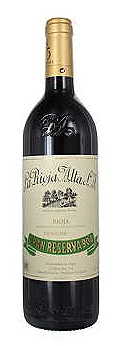
A youngster, needing five years to begin to settle in. Aromas of tobacco, liquorice and vanilla. In the mouth, the fruit arrives plump, with a...
2010
La Rioja AltaRioja
La Rioja Alta, Gran Reserva 904, Rioja, Rioja, Spain, 2001
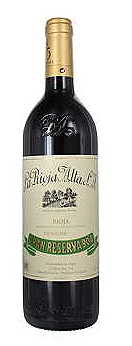
Alluringly complex aromatics, balsamic with sweet spices, red fruits, dark chocolate. The palate is startlingly fresh, balanced between cherry red fruits, liquorice and cinnamon, with...
2001
La Rioja AltaRioja
La Rioja Alta, Gran Reserva 904, Rioja, Rioja, Spain, 1995
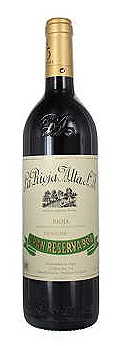
From the best vintage of the 1990s, and this example sings. The aromas are the typical blend of red fruits, with liquorice and cedar. ...
1995
La Rioja AltaRioja
La Rioja Alta, Gran Reserva 890, Rioja, Rioja, Spain, 2005
No doubt about it: ‘This is the best 890 in our history,' declares Julio Sáenz, technical director of La Rioja Alta. Aromatically, it is overflowing...
2005
La Rioja AltaRioja
La Rioja Alta, Gran Reserva 890, Rioja, Rioja, Spain, 1995
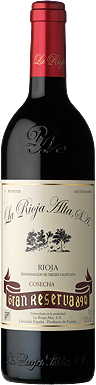
A classic year in the decade, producing top wines. This typically expresses the defining ‘explosive’ character of the 890 Gran Reserva compared to 904, with...
1995
La Rioja AltaRioja
La Rioja Alta, Gran Reserva 890, Rioja, Rioja, Spain, 1981
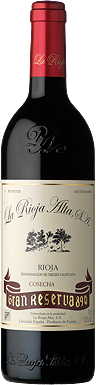
The Decanter Fine Wine Encounter was a rare chance for Decanter readers and La Rioja Alta technical director, Julio Sáenz, to taste the 1981 vintage...
1981
La Rioja AltaRioja
