
Old vines in Latin America: The gift of time
With many vineyard sites established in the 16th century or possibly earlier, Latin America boasts a significant number of old vines. But as Tim Atkin MW discovers, winemakers don’t like to shout about it...


The site must have looked propitious: the soil was rich and red, the vegetation lush, dense and green. Christopher Columbus founded the colony of La Isabela in what is now the Dominican Republic in 1493 as a base from which to search for precious metals – especially gold – but the second European settlement in Latin America was almost certainly the site of its first vineyard, planted alongside other crops.
Did those first vines produce grapes? It would have been a close call, as La Isabela was abandoned after three years because of disease, hurricanes and hunger. And if so, what were they? Listán Prieto (aka País, Criolla Chica and Mission) brought from Castilla-La Mancha and set to become the most planted grape in the Americas by the middle of the 16th century? Moscatel de Alejandría? Or some other grape, sourced perhaps from La Gomera in the Canary Islands, Columbus’ last port of call to take on provisions before crossing the Atlantic? In the absence of archaeological finds, we don’t know.What we do know is that wine moved south with settlement and conquest. Everywhere they went, the conquistadors planted vines, in Mexico, Venezuela, Peru, Bolivia, Chile and finally Argentina, partly for religious purposes, but more often for secular ones: medicine, food and pleasure. As early as 1519, the merchant vintners of Seville made sure that every ship leaving for the Americas carried cuttings or seeds as part of their diverse cargo. By the mid-16th century, Peru was the centre of the Latin American wine trade; within 25 years of planting its first vineyard (in 1539), the country had 40,000ha. The Portuguese too brought vines from Europe – probably Madeira – to Brazil in 1532. Only Uruguay was late to the vinous party, waiting until the arrival of Jesuit missionaries with their vines in the 1620s.
Scroll down for Atkin’s top wines from old vines
Planting restrictions
Latin America did have some wild vines of its own – the antecedents of the tendrils that you can see snaking through the trees in Chile’s Maule Valley – but no wine was produced until the Spaniards arrived. The indigenous populations drank alcoholic beverages fermented from fruit, cereals and agave rather than grapes. The arrival of Vitis vinifera was what built the wine industry, turning it into a conspicuous success. So conspicuous, as it happened, that in 1595 Philip II of Spain issued an edict restricting further plantings in Spain’s colonies.
Significantly, monasteries were exempted from the injunction. Jesuit missionaries in particular were a vital part of the development of the nascent Latin American wine scene. As historian Rod Phillips has written: ‘The skill with which the missionaries and others identified suitable areas for viticulture is shown by the fact that most of those planted in the 16th century remain centres of wine production today.’
Phillips is right. Peru may be better known for pisco than table wine these days, having suffered from phylloxera and the shift to other crops (most notably cotton in the 19th century), but what are now Chile and Argentina, where vines arrived in 1548 and 1551 respectively, are still flourishing. And while it’s true that some of the best regions in these two countries are comparatively new – Alcohuaz, Huasco and Osorno in Chile, and La Carrera, Gualtallary and Uspallata in Argentina – plenty of historic regions are still producing excellent wines, from Itata to the Maule Valley, and Salta to Luján de Cuyo.
Missing a trick
Where are Latin America’s oldest vines? There is no equivalent of South Africa’s Old Vine Project in any of its wine-producing countries, unfortunately, so it’s difficult to say with any certainty. Old vines are not treasured (or even mentioned in most cases) the way they are in Europe, Australia and the Cape these days. Given the interest in old-vine fruit and the concentration and quality it can provide, the continent is surely missing a trick.
Cees van Casteren MW, an expert on Bolivian wine, reckons the late Don Armando González’s vineyard in Cinti, close to Tarija, must be in with a shout. ‘When I spoke to Don Armando in 2015, he told me that some of his vines had been planted by his great- grandfather. He was 80 at the time, so I reckon they could be close to 200 years old.’
First planted in the 16th century, the area uses trellises to combat the humidity and disease pressure that comes with growing grapes in a tropical climate, often attaching vines to pepper (molle) and chañar trees, and then pruning and picking them from ladders. The varieties are all Spanish – Criolla Chica, Moscatel de Alejandría, Vichoqueña and Cariñena (Carignan) – and the vineyards are historic in more senses than one. ‘They’ve barely changed since the Spaniards first planted them,’ explains van Casteren.
Chilean revival
Uruguay (Bodegas Carrau’s 89-year-old Nebbiolo and Sousao block) and Brazil (the Miolo Wine Group’s 1976 plantings of Tannat and Riesling) can’t compete with Bolivia for antiquity, but Chile certainly can. The oldest dated vines I’ve seen are in Itata, close to Concepción at Cucha Cucha in Ránquil, where the estate’s 1.63ha 9C block is proudly identified as having been planted in 1850. This might not be the most venerable block in the region, however. One grower told me that phylloxera-free Itata has some vines that are over 250 years old, which may well be true, given the size of some of the trunks.
Partly thanks to the renaissance of Itata and neighbouring Bío Bío, led by people such as Leonardo Erazo, Roberto Henríquez, Mauricio González of Vitivinícola Estación Yumbel and Marcelo Retamal of De Martino (almost all of whom work with dry-farmed grapes), old-vine País in particular is enjoying a revival. Further north in Maule, producers like Renán Cancino of Huaso de Sauzal, Julio Bouchon and Diego Morales are promoting the variety too. There’s even an annual Fiesta del Vino País in Cauquenes every November.
The so-called Uva Chilena isn’t the only old-vine focus in Chile. Moscatel de Alejandría (which is sometimes blended with other grapes such as Corinto), Semillon, Cinsault and Carignan are all producing some excellent wines. The last of this quartet wasn’t widely planted until after the disastrous 1939 earthquake, when it was promoted by the government as a superior-quality variety that would aid Maule’s economic recovery. But it’s now recognised as one of Chile’s best red grapes, mostly thanks to the work of the Vignadores de Carignan (VIGNO) group. Eighty-year-old vines don’t compare with something planted in 1850 or earlier, and yet they are still mature by global standards.
Spanish heritage
And what about Argentina? Well, the Salta region appears to be leading the field here. Domingo Hermanos’ Rupestre vineyard in Cafayate has parcels that date back to the late 19th century, but the winner is surely Colomé’s 1854 block in Molinos. This remarkable estate, which is located at 2,300m altitude in the wilds of northern Argentina, has a total of 8ha of vines that are between 100 and 150 years old, which must be the highest number in the country.
Old-vine Malbec plantings exist in other parts of Argentina too, most notably in Río Negro (where Noemía’s 1932 plantings are located), in Luján de Cuyo close to the city of Mendoza (De Angeles’ 1924 vineyard is the most famous) and in La Consulta, at the southern end of the Uco Valley, where Italian immigrants planted this and other grapes at the end of the 19th century. Very few of those plots still exist, alas. A government vine-pull scheme introduced at the end of the 1980s saw a dramatic reduction of Malbec plantings from a peak of 58,000ha, with many vineyards bulldozed to make way for more productive grapes or other crops. Even today, after the Uco Valley boom of the past 20 years, Argentina is only back at 43,000ha.
Like Chile, Argentina is also rediscovering its Spanish heritage with Criolla Chica, not to be confused with the more widely planted and much lesser quality Criolla Grande, which is a crossing of Listán Prieto and Moscatel de Alejandría. Good examples are made by Cadus, Cara Sur, Durigutti, El Esteco, Niven and Vallisto. Of these, the most remarkable site is Cara Sur’s 5ha of vines in Calingasta, a mixed 80-year-old pergola of Bonarda, Barbera, Criolla Chica, five different Cereza clones, Torrontés Sanjuanino and three different Moscatels. ‘It’s a museum, a marvel,’ says winemaker Pancho Burgallo, who runs the project with Sebastián Zuccardi.
A sense of place
Burgallo, like many people who work with old vines in Latin America, lists fruit quality, consistency from one year to the next and the natural balance of the plants as the advantages of working with such special parcels. Other producers I spoke to mentioned deeper root systems, lower yields, higher levels of natural acidity, lignified stems, finer tannins and the ability to cope with drought better than younger vineyards, reducing or removing the need for irrigation. ‘They adapt to the vintage conditions,’ says Derek Mossman Knapp of Garage Wine Co. Above all, they spoke of a sense of place, of vines that express their environment.
And the disadvantages? The amount of work they require – most of it manual and back-straining – is the main drawback, it seems, and younger generations are less keen on this than the old-timers. The small quantities are also a disadvantage, especially if the price of the resulting wine doesn’t make up for them. Susceptibility to viruses is an issue, too. ‘If you’re farming, you need to add compost and humus,’ comments Leo Erazo. Replanting individual vines when others die is also trickier than it seems, as the old ones compete with the new. ‘You’ve got a 50% chance of success,’ reckons Hans Vinding- Diers of Noemía.
What would the men who planted those first vines in La Isabela make of what they started, albeit with a failed crop? I like to think that they’d smile and feel at least a twinge of satisfaction.
Latin America can be proud of what it’s achieved in the intervening 526 years.
See Tim Atkin’s top 12 wines made from old vines
You may also like
Top South American Cabernet Franc wines: Panel tasting results30 best affordable Chilean wines to tryBest South American wines under £15/$20Five great Malbec wines from Patagonia
De Martino, Viejas Tinajas Muscat, Itata Valley, Chile, 2017
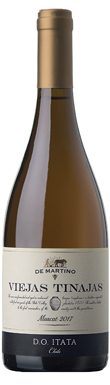

Aged for seven months on skins in clay pots, this is a modern take on a very traditional style. Scented, elegant and refined, with orange...
2017
De Martino

Riccitelli, Old Vine Semillon, Río Negro, Patagonia, Argentina, 2017
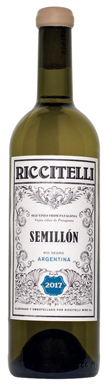
This remarkable Semillon comes from the cooler Río Negro side of Patagonia. Savoury, bready and refreshing, with a hint of oak and notes of honeysuckle...
2017
RiccitelliRío Negro
A Los Viñateros Bravos, Leonardo Erazo, Pipeño Blanco, Itata Valley, Chile, 2018
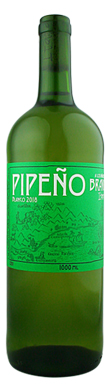
This cement and rauli wood-aged Itata cuvée from Leo Erazo is a low-alcohol co-fermentation of Semillon and Moscatel. Sappy, leesy and focused, with notes of...
2018
A Los Viñateros Bravos
Garage Wine Co, Old Vine Pale Lot #83, Truquilemu, Maule Valley, Chile, 2018
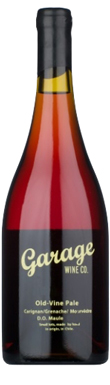
Sourced from a cooler part of the Maule Valley, Derek Mossman’s lightly wooded rosé is a blend of Carignan and Mataro. It has raspberry and...
2018
Garage Wine Co
Bodega Teho, Tomal Vineyard Malbec, Uco Valley, La Consulta, Mendoza, Argentina, 2014
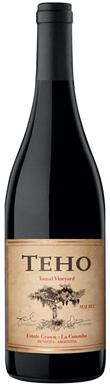
This stunning blend of mostly Malbec with 10% of field-blended red and white grapes is poised and effortlessly complex, displaying perfumed black fruits, subtle oak...
2014
Bodega TehoUco Valley
Chacra, 32 Pinot Noir, Patagonia, Argentina, 2016
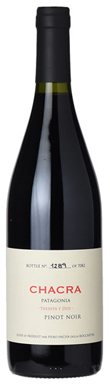
These are the oldest vines at Chacra, planted on clay and limestone soils. Fresh and ethereal; enticing rose petal and summer berry notes, understated oak...
2016
Chacra
De Angeles, Viña 1924 Gran Malbec, Luján de Cuyo, Vistalba, Mendoza, Argentina, 2013
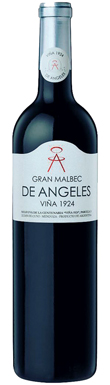
Gran Malbec comes from Parcel 3 and is typical of the cooler 2013 vintage, showing plenty of perfume and texture, fine-grained tannins and a sheen...
2013
De AngelesLuján de Cuyo
Undurraga, Vigno Old Vines, Sauzal, Maule Valley, Chile, 2014
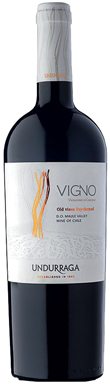
Undurraga’s cuvée of old-vine Carignan and a splash of Cinsault comes from the Sauzal sub-region. Ripe berry fruit, subtle oak and finely crafted tannins distinguish...
2014
Undurraga
Bodega Colomé, Auténtico Malbec, Calchaquí Valley, Salta, Argentina, 2017
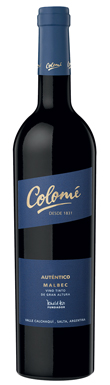
Made without oak (hence its authenticity), this wonderful, high-altitude red is complex, stony and appealingly rustic, full of tobacco, ginger spice and sweet dark berry...
2017
Bodega ColoméCalchaquí Valley
Casa Lapostolle, Clos Apalta, Apalta, Colchagua Valley, Chile, 2015
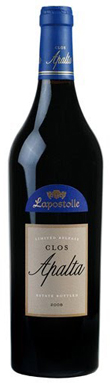
Typical of the late-picked style favoured by consultant Michel Rolland, this 85% Carmenère and 15% Cabernet Sauvignon blend is smooth, sweet and plush, with lots...
2015
Casa LapostolleApalta
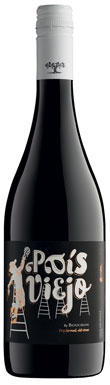
J Bouchon, País Viejo, Maule Valley, Chile, 2018
91
With 20,000 bottles made, this is one of Chile’s most commercially successful old-vine wines. Fresh, pure and attractive, with lovely summer pudding fruit and a tangy finish.
2018
J Bouchon
Cara Sur, Criolla Chica, Calingasta Valley, San Juan, Argentina, 2015
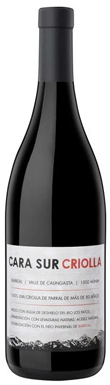
Concrete egg-fermented and aged, this is a sappy, intense, bracingly refreshing Criolla Chica, showing red cherry and pomegranate notes and a spicy flourish.
2015
Cara SurCalingasta Valley
