
Lugana: Regional profile and 12 spectacular whites
Visitors to Lake Garda’s scenic shores have long enjoyed the dry whites of its local Lugana DOC. And recently the wines have soared in popularity further afield, as drinkers discover what the area’s unique soil profile can produce.


If in the past it was international white varieties that occupied the foreground in the general perception of top-quality Italian whites – explosive Sauvignons from Alto Adige and Friuli, or big creamy Chardonnays from Tuscany and Umbria – today’s success stories are the rediscovered native white varieties: Pecorino in Marche and Abruzzo, Vermentino on the Tuscan coast and Ribolla Gialla in Friuli, where plantings of which have quadrupled in recent years.
In Lombardy in the north, could Lugana be the next big thing?
Scroll down to see tasting notes and scores for 12 Lugana wines worth seeking out
The Lugana DOC covers an area of about 2,500ha, according to the Lugana consorzio, to the south of Lake Garda (see map below), stretching inland from its shores for some 10km, and east to west at its widest point for about 12km.
The largest part of the DOC lies in the province of Brescia, Lombardy, while a small corner (some 200ha) in the northeast spills over into the Venetian province of Verona, bordering the Veronese DOCs of Bianco di Custoza and Bardolino.
The vine-growing areas around the villages of Lugana, Rovizza and San Benedetto, considered the historic cru of the DOC, are closer to the lake, while those further inland around the village of Pozzolengo are mostly more recent.
Tempered by the proximity of Lake Garda, the climate is mild Mediterranean, which suits the late-ripening local variety Turbiana. Neighbouring DOC zones have similar climates, but what makes Lugana special are the soils.
Lake Garda was formed by a glacier, which, pushing debris inland, created the line of low morainic hills that form the southern boundary of the Lugana DOC. As it withdrew, the melt water from the glacier deposited the fine calcareous clay, up to 60m deep in places, which forms the soils of the plain. No other wine-growing region of Italy has anything similar and this unique soil profile gives Lugana the acidity and minerally intensity that are its distinctive features.
The production regulations state that Lugana must be made from Trebbiano di Soave, known locally as Turbiana or Trebbiano di Lugana. The regulations also allow for the inclusion of complementary varieties up to a total of 10%, but very few producers take up the option to do so.

Lugana: the facts
Categories: Lugana DOC (1967), Lugana DOC Spumante (1975), Lugana DOC Superiore (1998), Lugana DOC Riserva (2011), Lugana DOC Vendemmia Tardiva (2011)
Area planted: 2,500ha
Annual production (2020): 27.6 million bottles
Key producers: Avanzi, Bertagna, Cà dei Frati, Ca’ Lojera, Cà Maiol, Cascina Maddalena, Citari, Cobue, Famiglia Olivini, Fraccaroli, La Meridiana, Le Morette, Marangona, Montonale, Nunzio Ghiraldi, Ottella, Pasini San Giovanni, Perla del Garda, Pilandro, Selva Capuzza, Tenuta Roveglia, Tinazzi, Tommasi, Zenato
What’s in a name?
Tracking down the identity of Lugana’s principal variety – or varieties – is an intricate business. The national register of grape varieties lists neither Turbiana nor Trebbiano di Lugana as separate varieties, but gives them as synonyms for Trebbiano di Soave, which in turn is listed as a synonym for Verdicchio Bianco.
In fact, initial DNA studies indicated that Verdicchio and Trebbiano di Soave were identical. More recent research has confirmed this, but has set Trebbiano di Lugana slightly apart.
The current thinking is that Trebbiano di Lugana/Turbiana has a very close affinity with Verdicchio, but is a biotype in its own right. To affirm this, the Lugana consorzio has recently registered three new clones of Turbiana, developed from selections of old vines from the historic centre of the DOC zone.
Whatever the genetics, the truth of the matter is that the same – or very similar – varieties respond very differently in different terroirs, and grown on the clay soils of Lake Garda, Lugana is a very different wine to the Verdicchio of Marche, along the central eastern Adriatic coast.
Styles of Lugana wine
Lugana comes in a range of styles. The basic Lugana DOC is released in the spring after the vintage. At that point it is fresh and crisp, with a not overly pronounced citrus and white fruit character and a distinctive tangy finish. Once the phase of youthful zippiness has passed, it acquires more depth and breadth and the flinty mineral note becomes more evident.
Producers all agree that although the new vintage regularly sells out in less than a year, Lugana has a potentially very interesting ageing curve, developing complex tertiary aromas with bottle age that belie its reputation as a ‘drink-youngest-available’ summer wine. As Luca Formentini from Selva Capuzza says: ‘Lugana is not afraid of time.’ And, in fact, wineries such as Tenuta Roveglia and Ca’ Lojera can show wines going back as far as the mid-1990s that are still drinking perfectly today.
Lugana Superiore is conceived to deliver a more structured wine, made from lower yields and aged for a year, possibly but not always with some oak. The Riserva category was introduced in 2011 and is unusual among Italian white Riservas for the length of ageing – a full two years, of which six months must be in the bottle.

In the margin of these three core styles, there’s a minuscule production of the off-dry Vendemmia Tardiva (late harvest), which seems destined to disappear in the not too distant future, plus a sparkling version that, on the other hand, is assuming increasing relevance for the DOC in terms of both quantity and quality.
The majority of the leading producers now have a vintage sparkler in their range and for some, such as the excellent Olivini, it is becoming a focus wine. Dry and firmly structured, with the complexity that comes from long lees ageing – among Pilandro’s current releases is an outstanding ‘brut zero’ 2011 – metodo classico Lugana is definitely here to stay.
Impressive growth
The first thing to say about Lugana today is that it’s booming. Since 2000, says the consorzio, the area under vine has increased fourfold. Production has increased year on year in every vintage of the past decade and in the past four years raced up to the current level of 27 million bottles. Roughly 90% of this production consists of Lugana DOC and there is no sign of that changing in favour of the Superiore or Riserva categories – use of the Superiore category is actually declining.
Estates that make late-release special selections, such as Le Morette’s single-vineyard Benedictus, Montonale’s Orestilla, or Olivini’s excellent Demesse Vecchie, tend not to brand them as Superiore, although they would qualify as such. Long-established producers such as Ca’ Lojera and Perla del Garda remain faithful to the label, but many feel that it has been superseded by the more recent Riserva.
Having said that, the Riserva category does not have an overwhelming following. Of the 100 or so bottlers, fewer than 20 make one, which poses the question: does Lugana need a Riserva category? Given the Turbiana grape’s propensity for ageing, the answer should be yes, but the demand for basic DOC and the limited margins for the producer on long-cellared wines are disincentives.

As for style, recent years have seen significant developments. The official description of Lugana in the disciplinare di produzione is ‘dry to demi-sec with possibly a slight perception of wood’. This is looking decidedly outdated in 2022 – it is unusual today to find the residual sugar, which used to be a feature of the easy-drinking, aperitif style favoured by the local tourist trade. Today’s Lugana wines are drier, less fruit-forward, more minerally and much more food-friendly.
The other major turnaround has been in the use of oak. Lugana has the structure to cope with barrel ageing, but most producers today agree that Turbiana’s delicate aromas are overwhelmed by anything but a slight lick of barrique, and I would second this view. Both the basic DOC and the Riservas spend a shorter or longer time on the lees but typically this is in vat, with possibly a small percentage of the final cuvée matured in wood. It seems to me that this is the ageing that suits the variety best.
Lugana: know your vintages
2021 Seen as the best vintage in recent years. Some hail damage reduced the crop and made for a late harvest, but the quality is super. Slightly more full-bodied than 2020, with ripe fruit and good acidity, the early releases are already attractive and prospects for later bottlings and Riservas are excellent.
2020 Cooler-than-usual night temperatures in the run-up to the harvest helped preserve acidity and develop aroma. Hail damage reduced yields in some places. Base wines are well balanced with good structure and will drink well in the medium to long term. Producers see good potential for the Riservas, due to be released from the end of 2022.
2019 A cold spring slowed down the vegetative cycle and most producers picked late, but in good weather conditions, well into October. A very representative vintage with wines that combine body and acidity. This is the current vintage for most special selections, which are drinking well now and will continue to evolve.
2018 A complicated vintage for growing, with extreme summer temperatures but also autumn rain. Yields were up and sometimes the wines may seem to lack a little concentration, but the aromas are attractive. Some Riservas have interesting hints of botrytis. An earlier-drinking vintage, ready now.
Distinctive personality
The growth of Lugana represents one of the most interesting case studies in Italian wine today. Lake Garda’s flourishing local tourist trade has always guaranteed demand for a summery white wine, but that is not sufficient to explain the exponential increase in production. I asked the producers what, in their opinion, were the reasons for Lugana’s success.
Alberto Zenato from the winery of the same name at San Benedetto cites the arrival at a critical mass of production, which has raised visibility. In this context, investments from outside the DOC have played a significant role.
Less than 10% of the area under vine lies in the province of Verona, but Veronese producers bottle more Lugana than all the wineries in the Lombardy part of the DOC put together. All the major Veronese houses have a Lugana in their ranges, sourced from either their own vineyards or from bought-in grapes, and this is at the same time an endorsement of the region and a major factor in the recent expansion.
Roberto Girelli from Montonale attributes success to the credibility that comes from consistent quality, while Francesco Montresor at Ottella refers to the combination of the exclusive native variety with a unique terroir. Others mention the shift in wine drinkers’ tastes towards drier, more minerally whites, while some point to the versatility of Lugana, at the same time both fresh and long-lived, as well as its capability to make classic sparkling wines.
All this is undoubtedly true, but I would like to think that Lugana merits attention because it’s an exciting wine with a distinctive and quite unique personality. If it is not already the Next Big Thing in Italian whites, it certainly deserves to be.
See tasting notes and scores for 12 Lugana wines worth seeking out:
Related content
Expert’s choice: Premium Pinot Grigio
East coast Italy: Marche, Abruzzo & Molise
Premium white blends of Friuli and Alto Adige
Marangona, Tre Campane, Lugana, Lombardy, Italy, 2019
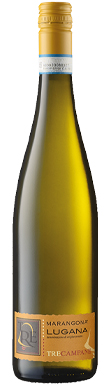

The young Alessandro Cutolo is one of the up-and-coming producers of Lugana, making bone-dry wines of great personality from organic vineyards at the heart of...
2019
MarangonaLugana

Montonale, Montunal, Lugana, Lombardy, Italy, 2020
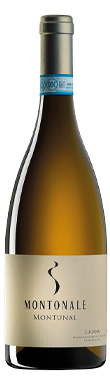
The Montonale estate lies on the western edge of the DOC zone, where the soils and mesoclimate of the first line of morainic hills give...
2020
MontonaleLugana
Cà Lojera, Riserva del Lupo, Lugana, Lombardy, Italy, 2018
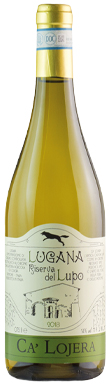
Founded at the end of the 1980s, Ca’ Lojera was one of the first ‘new generation’ wineries of Lugana. Its wines from the 18ha of...
2018
Cà LojeraLugana
Ottella, Le Creete, Lugana, Veneto, Italy, 2020
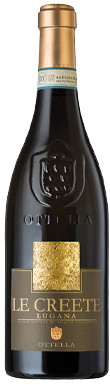
Francesco Montresor left a legal profession to take over the family estate, converting it from mixed agriculture to viticulture. The property, one of the oldest...
2020
OttellaLugana
Selva Capuzza, Selva, Lugana, Lombardy, Italy, 2020
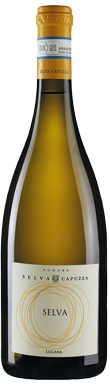
Selva Capuzza is in the southwest corner of the DOC zone, where it overlaps with the less-known but very interesting San Martino della Battaglia...
2020
Selva CapuzzaLugana
Famiglia Olivini, Lugana, Lombardy, Italy, 2020
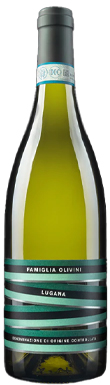
The 14ha used for the production of the Olivini family’s still Lugana wines circle the new, ultra-modern cellars and tasting rooms, while a further 16ha,...
2020
Famiglia OliviniLugana
Pasini San Giovanni, Lugana, Lombardy, Italy, 2020
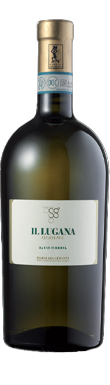
Production of the Pasini family winery is divided equally between Lugana and the pale rosé wines of Valtènesi from the west coast of Lake Garda,...
2020
Pasini San GiovanniLugana
Perla di Garda, Madre Perla Riserva, Lugana, Lombardy, Italy, 2018
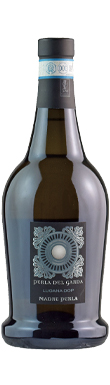
Perla del Garda was the first estate in Lugana to adopt organic viticulture The family-owned property, now managed by Giovanna Prandini, has 30ha on...
2018
Perla di GardaLugana
Tenuta Roveglia, Limne, Lugana, Lombardy, Italy, 2020
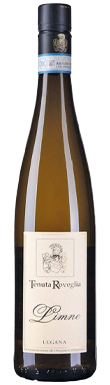
In a highly fragmented DOC zone, the Roveglia estate is rare in having its extensive vineyards in a single plot around the winery and 15th-century...
2020
Tenuta RovegliaLugana
Cà Maiol, Prestige, Lugana, Lombardy, Italy, 2020
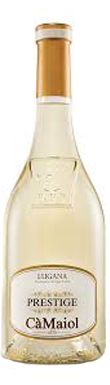
The Santa Margherita group acquired the highly regarded Provenza-Cà Maiol estate in 2017 and new gravity-fed cellars came into operation in 2020. The range of...
2020
Cà MaiolLugana
Tommasi, Le Fornaci Riserva, Lugana, Veneto, Italy, 2018
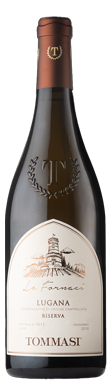
From its base in Valpolicella, the Tommasi family has expanded into prestige regions in various other parts of Italy. One of its first investments was...
2018
TommasiLugana
Zenato, Sergio Zenato Riserva, Lugana, Veneto, Italy, 2019
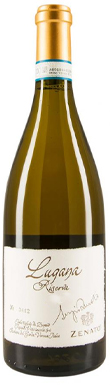
Founded by Sergio Zenato in 1960, production is divided between Valpolicella and Lugana, where the family owns vines in some of the top sites of...
2019
ZenatoLugana
