
Málaga: How this Spanish region was rediscovered
The golden era of Málaga wines was lost to history, but intrepid winemakers are exploring the region’s mountainous extremes anew.


Two hundred years ago, long before it became the buzzing holiday resort it is today, Málaga meant wine. Made from Moscatel and Pedro Ximénez and named after the region’s hinterland mountains where the grapes were grown, the internationally famous ‘Málaga mountain wine’ was as highly regarded as Sherry (from the Cádiz province, further west).
Yet today the wines of Málaga are scarce in the city’s fine wine lists, with some rare exceptions that I’ll be featuring in the pages that follow. The arrival of the destructive vine-root louse phylloxera in 1878 spelled the end of the then buoyant Málaga wine industry.
Rather than struggle on, it was easier for growers to abandon many of the distant and difficult to manage mountain vineyards – olives and almonds were a much more straightforward crop to plant lower down.
New enthusiasm
While the Romans knew all about the wines of the region, by the 20th century Málaga wine had disappeared from view. However, in an exciting turn of history, a new generation of vine-growers and winemakers – some local, some from elsewhere – are now waking the region from its sleep.
The future is particularly bright – even if some of the finest vineyards are in places that are as difficult to get to and work as ever. If you want a great holiday with sunshine, history and fine wine, then Málaga is the place to go.
For wine lovers outside Spain, it should be high on the wish list, because a number of the most interesting wines have limited distribution in export.
Traditionally, Málaga was synonymous with sweet and fortified wine. There are historically famous brands, notably Málaga Virgen (for example, Reserva de Familia Pedro Ximénez).
The excitement today, however, is undoubtedly with the new generation. Two names stand out: Ordóñez and Telmo Rodríguez (pictured below). Long established in the region, the Ordóñez family began making sweet wines as a joint project in the early 2000s with the late, great Alois Kracher, the firebrand maker of sweet wines in Austria.
Distinctive to the Kracher portfolio in Austria, and to the Ordóñez wines in Málaga, is their ringing purity. Prior to that, it was in the late 1990s that Rodríguez and his business partner Pablo Eguzkiza were drawn by the dramatic landscape, old vines and slate soils of the Axarquía – a rugged mountain-landscape region to the east of Málaga city distantly scattered with white painted houses.
Rodríguez highlights a key difference in the ways in which he and the Ordóñez family work: he prefers to use the pasera technique, the traditional sweet wine production method of laying out bunches of grapes on sloping ground in the open air to dry them.
The Kracher technique adopted by Ordóñez is to dry indoors – an approach originally dictated by Austria’s northern European climate. Whichever the method, both produce delicious wines.

Moscatel country
That viticulture in the region survived at all after phylloxera owes much to the business of Málaga raisins (pasas), Moscatel de Alejandría grapes carefully dried on paseras (traditionally floor spaces but also sloped racks).
This high-quality product, nothing to do with the supermarket raisin, has its own DO – Pasas de Málaga – which is also managed by DO Málaga.
We are in Moscatel de Alejandría country here and it feels ironic: in the global Moscatel rankings, Alejandría is seen as the poor relation to the small-berried variety known as ‘Petits Grains’.
Yet in Málaga, Moscatel de Alejandría shows its brilliance. One producer of lovely Moscatel is Bodegas Bentomiz, where winemaker Clara Verheij and her husband André Both have built a deserved reputation for their naturally sweet wines. Verheij prefers to stop fermentation by chilling, rather than fortification, retaining delicacy.
Her Ariyanas Moscatel-based wines, which include dry sur lie white and sweet expressions, are a fine example.

The DOs of Málaga at a glance
DO Málaga: (created 1933)
Wines: For sweet or fortified white wines, from five zones (roughly west to east): Serranía de Ronda, Manilva, Norte, Montes de Málaga, Axarquía
Classification: According to winemaking and ageing, ranging from the youthful dulce natural to the wines designated as trasañejo. These are aged for a minimum of five years but the best are age for far longer
Grapes: Mainly Pedro Ximénez and Moscatel de Alejandría
DO Sierras de Málaga (created 2001)
Wines: For dry wines and sweet reds. May come from anywhere across the province of Málaga. The Serranía de Ronda production zone is significant here
Grapes: A wide range of local and international varieties is permitted
Beyond sweet
A newer project in the Axarquía with real promise is Viñedos Verticales. In just a decade, Juan Muñoz and Vicente Inat, both deeply attached to the history and culture of the region, have built a fascinating portfolio.
There’s also Sedella. Focusing on red wines from the Axarquía’s steep, craggy hillsides, this exciting project is run by Lauren Rosillo, technical director of Familia Martínez Bujanda in Rioja. As Bentomiz, Viñedos Verticales and Sedella all show, the future of Málaga – even in the Axarquía – is not just sweet.
On the other, western side of the mountain this is very clear. Just as rugged and no less spectacular are the Montes de Málaga, where Victoria Ordóñez is the name to know. Since she struck out on her own in 2015, she has been a leading figure protecting the area’s vine-growing, which is under threat given the difficulty of managing the tiny, hard-to-access parcels.
These are scattered across steep slopes of between 46% and 76% gradient, amid trees and scrubland, at 800m-1,000m elevation: truly heroic viticulture. Ordóñez learned her sweet wine-making working alongside Kracher. Today, though, she has her own, eponymous business making dry wines – white and red – with her son Guillermo.
For the whites, she has been identifying and restoring old vineyards of Moscatel and Pedro Ximénez (locally known as Pero Ximen) to revive the production of Málaga’s ‘mountain wine’; yes, that’s the PX of Jerez and Montilla Moriles, but here transformed into dry wines of thrilling purity and minerality.

Cool, crisp highlands
The DO Sierras de Málaga is full of promise, in particular the area known as Serranía de Ronda to the west of Málaga city. Red and dry white winemaking started here in the 1980s to supply the burgeoning tourist industry down on the coast.
Typically for the time, the area was freshly planted with international varieties. At Cortijo Los Aguilares, a fabulous 800ha estate close to Ronda with some 25ha of vineyard, technical director Bibi García (pictured below) makes lovely Pinot Noir.
Pinot Noir? In the south of Spain? Yes – because the vineyards lie between two sierras, at 900m, where they benefit from refreshing winds and a wide diurnal temperature range.
Among its reds, varietal wines made from Graciano and Garnacha, the two particularly interesting Petit Verdots under the Tadeo label, and now a white (since the 2022 vintage), have all sealed García’s reputation and helped draw attention to the region.
The Serranía de Ronda is on the up, and there’s real reason to stay overnight and visit the growing number of wineries, rather than just making a day trip to see the famous gorge, impressive though it is. Come to Málaga to discover a thriving wine world.
Find a new facet to varieties you thought you knew – in my case Pedro Ximénez. Already a year-round destination, Málaga now deserves to be known for its fine wines and winemakers.

The modern face of Málaga: Sarah-Jane’s top eight
Related articles
- How I fell in love with Spanish wine – nine experts share their memories
- Heroic winemaking in the mountainous heart of Galicia
- The Spanish wines pushing the boundaries of tradition
Victoria Ordóñez e Hijos, Voladeros, Sierras de Málaga, Andalucia, Spain, 2023
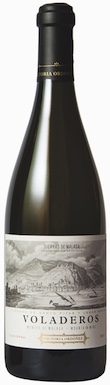

The revival of a once-famous ‘Málaga mountain wine’ style, this is a dry Pedro Ximénez below 14% – it's a style that had disappeared, Victoria Ordóñez...
2023
Victoria Ordóñez e HijosSierras de Málaga

Cortijo Los Aguilares, Breñal, Sierras de Málaga, Andalucia, Spain, 2023
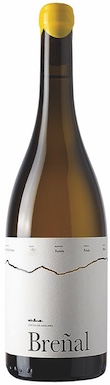
An immediate success when the 2022 vintage became the first white wine in the Cortijo portfolio, this wine is mainly Garnacha Blanca, which delivers a...
2023
Cortijo Los AguilaresSierras de Málaga
Bodegas Bentomiz, PiXel, Sierras de Málaga, Andalucia, Spain, 2022
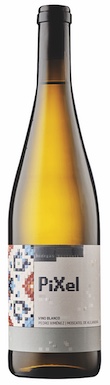
A relatively new release to add to the established line-up of wines from Bentomiz, high up in the Axarquía, east of Málaga city. Clara Verheij’s...
2022
Bodegas BentomizSierras de Málaga
Viñedos Verticales, La Raspa Blanco, Sierras de Málaga, Andalucia, Spain, 2023
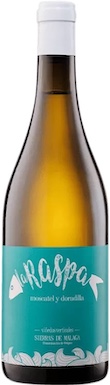
Visit the website – owners Vicente Inat and Juan Muñoz have captured the essence of mountain Málaga in a few words: ‘Slate slopes and salty...
2023
Viñedos VerticalesSierras de Málaga
Victoria Ordóñez e Hijos, La Ola del Melillero, Sierras de Málaga, Andalucia, Spain, 2023
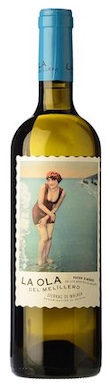
A good-value, lighthearted introduction to the wines of Victoria Ordóñez. It is named after the waves caused by the fast ferry from Málaga to Melilla –...
2023
Victoria Ordóñez e HijosSierras de Málaga
Cortijo Los Aguilares, Tadeo Petit Verdot, Sierras de Málaga, Andalucia, Spain, 2022
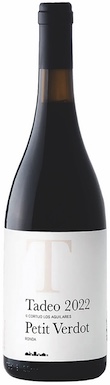
Showing graphite and cedar on the nose, and in the mouth bursting with black fruit layered with fine oak and spice. Petit Verdot is often...
2022
Cortijo Los AguilaresSierras de Málaga
Jorge Ordóñez, No3 Old Vines, Málaga, Andalucia, Spain, 2018
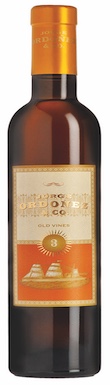
A very fine example of the potential of the Axarquía’s slate soils. No3, in the numbered series, comes from 80- to 100-year-old vines grown at...
2018
Jorge OrdóñezMálaga
Compañía de Vinos Telmo Rodríguez, (MR) Mountain Wine, Málaga, Andalucia, Spain, 2022
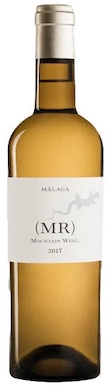
This lovely wine is the little brother of the exceptional Molino Real, made in the very best years. However, don’t feel short-changed. Grapes are sun-dried...
2022
Compañía de Vinos Telmo RodríguezMálaga
