
Marilisa Allegrini in Tuscany
After decades building some of Valpolicella's most recognisable brands, the Allegrini family divided in late-2023, with Marilisa, daughter of founder Giovanni Allegrini, taking full control of the family's Tuscan properties. Far from finding herself in at the deep end, however, Marilisa first ventured to the region over 20 years ago.


Until the early 1980s, Valpolicella was regarded as a cheap, thin, quaffing wine of no distinction. Until, that is, Giovanni Allegrini and a handful of others changed that perception by acquiring outstanding vineyards and producing wines with concentration and personality.
After his death in 1983, Giovanni’s sons Walter and Franco continued his work, while his daughter Marilisa took care of the company’s marketing worldwide. Walter, who was the family’s viticulturalist, died young in 2003, but it was after Franco died in 2022 that the wheels were set in motion for Marilisa to leave the parent company.
Scroll down for notes and scores of Marilisa Allegrini’s Tuscan portfolio
The family decided that the next generation should look after the original Valpolicella portfolio, while Marilisa should relinquish her shares but take control of the Tuscan estates.
She had already been the majority shareholder for some years, so no substantial change was involved. In addition to Villa delle Torre in Valpolicella, Marilisa and her daughters today own and manage Poggio al Tesoro in Bolgheri and San Polo in Montalcino.
Villa delle Torre is a Renaissance palace which doubles as a hotel and events venue, as well as the headquarters of Marilisa’s winemaking production in Valpolicella. The original vineyards there had been planted by her father Giovanni, but they were pergola trained, a method which fell out of fashion in Valpolicella, so the villa’s 15 hectares of vines were entirely replanted in 2008.
Bolgheri
Marilisa’s first venture in Tuscany, in conjunction with Walter, was to buy land in Bolgheri in 2001. Despite early setbacks – the 2002 vintage was a washout, and Walter died in 2003 – the Poggio al Tesoro venture continued, with the well known consultant Alberto Antonini advising on winemaking.
The extreme heat of the 2003 vintage persuaded many growers to pick early, but Antonini insisted on waiting into October before picking, and he was proved right.
‘When Alberto tasted the Cabernet Sauvignon and Cabernet Franc from 2003,’ explains Marilisa, ‘he insisted that the Franc should be bottled separately. Thus Dedicato a Walter was born. It wasn’t our most important wine in terms of volume, but it has been consistently impressive from the start, probably because of the high clay content in the soil. And it demonstrates that Bolgheri is a hot spot for the variety, as other fine examples, such as Paleo from Le Macchiole, are also of exceptional quality.’
‘Our main wine is Sondraia, which is a selection of the best grapes from the large Sondraie site, and it’s always been a blend of 65% Cabernet Sauvignon, 25% Merlot, and 10% Cabernet Franc. Unlike “W” [Dedicato a Walter] which is aged entirely in new oak, Sondraia is aged in 50% new barrels for 18 months.’
I wondered whether she had a model for the wines she wanted to produce. After all, both Sassicaia and Orneillaia were close by. ‘Not really, I hoped my wines would have their own identity. But I wasn’t aiming for the opulence of Ornellaia, as I wanted wines that were elegant too.’
As Bolgheri is lower-lying than either Valpolicella or her vineyards in Montalcino, I also wondered whether global warming was becoming a problem, for Merlot in particular. ‘It’s definitely an issue, and our main method of limiting high sugars and alcohol is by vineyard management. For example, we lay straw between the rows to help the soils retain moisture, and we also leave larger, shadier canopies than in the past. And remember that Bolgheri, despite its low elevation, enjoys great ventilation from the Mediterranean.’
The absence of constricting rules in Bolgheri allows Marilisa to produce a range of 10 wines from four sites, including two whites, which don’t quite attain the grandeur of the reds.
Montalcino
Marilisa purchased San Polo in 2007, as the previous owner, Silvia Fertonani, was experiencing family problems. She replaced Merlot and Cabernet Franc with Sangiovese, obtaining organic certification in 2017, and introduced more parcel selections in the winery.
In 2020, she released a wine vinified in amphorae. ‘Our winemaker, Riccardo Fratton, was bored during Covid, so this gave him a new project. The cap protects the wine from oxidation, but while we like it, it’s a very small part of the production; just 4,000 bottles.’
More significant are the old-vine bottling, and the single-vineyard wine, ‘Podernovi’, which emanates from the region’s galestro (schist-clay) soils.
Although Marilisa’s three estates have been in existence for many years, she was canny enough to buy the sites in Bolgheri well before prices skyrocketed, and in Montalcino the existing winery allowed her to begin production without delay.
While the original Allegrini winery is now in the hands of Franco’s children, Marilisa has kept an eye on the succession of her own enterprise by involving her two highly educated daughters.
And she has appointed Andrea Lonardi MW, formerly COO of the Angelini Wine Estates group, as CEO of her new group.
A taste of Marilisa Allegrini’s Tuscan portfolio
Related articles
- Bolgheri 2021: Overview of a milestone vintage and top-scorers
- Rosso di Montalcino: Superb Sangiovese on the rise
- Burgundy 2023 en primeur: Full vintage report & top-scoring wines
Poggio al Tesoro, Solosole Vermentino, Bolgheri, Tuscany, Italy, 2023
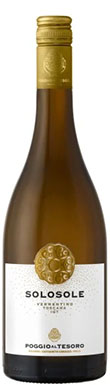

Coastal Tuscany has a deserved reputation for Vermentino, and this unoaked version shows the grape to advantage. The aromas are floral, along with delicate notes...
2023
Poggio al TesoroBolgheri

Poggio al Tesoro, Sondraia Bianco, Costa Toscana, Tuscany, Italy, 2021
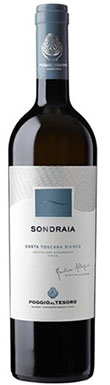
The difficult Viognier grape was a bold choice for this second white wine from the Bolgheri estate, which is aged in a roughly equal blend...
2021
Poggio al TesoroCosta Toscana
Poggio al Tesoro, Cassiopea Rosato, Bolgheri, Tuscany, Italy, 2023
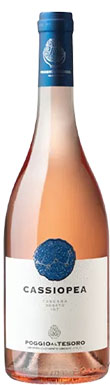
This is a perfectly acceptable rosato in a crowded field. Pale onion skin in colour, it resembles its Provençal cousins. The nose is reticent, with...
2023
Poggio al TesoroBolgheri
Poggio al Tesoro, Sondraia, Bolgheri, Superiore, Tuscany, Italy, 2020
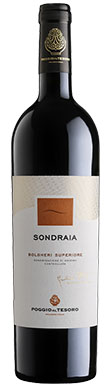
Surprisingly, given the dominant role of Cabernet Sauvignon, there are some charming red fruit aromas; lifted, elegant and perfumed. The attack is sleek despite the...
2020
Poggio al TesoroBolgheri
Poggio al Tesoro, Sondraia, Bolgheri, Superiore, Tuscany, Italy, 2019
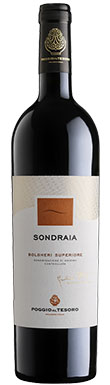
The hot summer was tempered by cool nights and light rainfall in 2019, offering exceptional growing conditions. The aromas are complex, with rich notes of...
2019
Poggio al TesoroBolgheri
Poggio al Tesoro, Sondraia, Bolgheri, Superiore, Tuscany, Italy, 2016
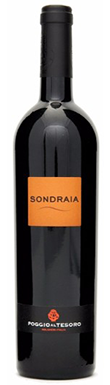
This was an early harvest of healthy grapes, resulting in deeply coloured and structured wines. Black fruits in general, and black cherries in particular, dominate...
2016
Poggio al TesoroBolgheri
Poggio al Tesoro, Sondraia, Bolgheri, Superiore, Tuscany, Italy, 2011
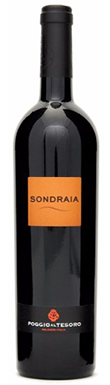
The weather in 2011 was variable but there was nothing to compromise the health and quality of the grapes by the time of harvest. The...
2011
Poggio al TesoroBolgheri
Poggio al Tesoro, Dedicato a Walter, Bolgheri, Superiore, Tuscany, Italy, 2020
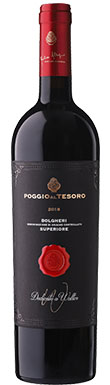
The end of the growing season in 2020 was relatively cool, which probably accounts for the lightly herbaceous tone on the nose – but there's no...
2020
Poggio al TesoroBolgheri
Poggio al Tesoro, Dedicato a Walter, Toscana, Tuscany, Italy, 2019
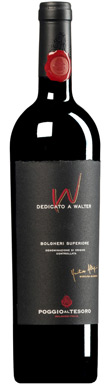
An exceptional vintage. The aromas are still not that expressive, though there are hints of cherries and marzipan. This is very concentrated and dense, with...
2019
Poggio al TesoroToscana
Poggio al Tesoro, Dedicato a Walter, Toscana, Tuscany, Italy, 2018
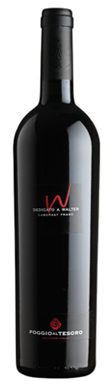
Despite a tricky vintage, this wine is a triumph. There's no lack of lush black fruits on the nose, and the palate is truly sumptuous....
2018
Poggio al TesoroToscana
Poggio al Tesoro, Dedicato a Walter, Bolgheri, Superiore, Tuscany, Italy, 2016
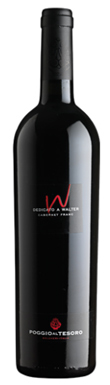
The wine benefitted from the same conditions in 2016 as Sondraia. The dense, lush nose is cut by a light savoury tone. The attack is...
2016
Poggio al TesoroBolgheri
San Polo, Rosso di Montalcino, Tuscany, Italy, 2021
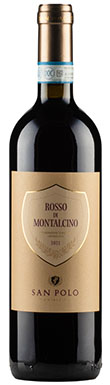
Just three hectares of vines are used to produce this Rosso di Montalcino, which is aged in second-fill barriques. The cherry-scented nose is light and...
2021
San PoloRosso di Montalcino
San Polo, Brunello di Montalcino, Tuscany, Italy, 2019
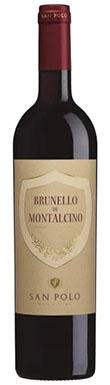
The nose is perfumed and floral, with ripe cherry aromas. Bright acidity supports a fresh attack, and while there's tension and grip on the palate,...
2019
San PoloBrunello di Montalcino
San Polo, Podernovi, Brunello di Montalcino, Tuscany, Italy, 2016
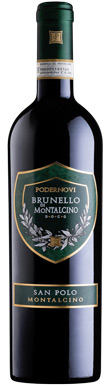
The Podernovi cru comes from a well exposed 3ha parcel planted in 1990. The growing season in 2016 was complex but the outcome was excellent....
2016
San PoloBrunello di Montalcino
