
Masi producer profile plus 17 wines tasted
It has been said that Sandro Boscaini is to Amarone what Angelo Gaja is to Barbaresco and Antinori to Chianti. 'Few would contest the assertion,' says Richard Baudains in his profile of Veneto producer, Masi. Read more below and see his tasting notes and scores for 17 wines dating back to 1958.


The Italians always like to begin a story from the beginning. This one begins in the year 1772, when Giobatta Boscaini entered into a contract with a certain Bonaldi for the lease of vineyards in the Vaio (‘valley’) dei Masi; vineyards which the Boscaini family later acquired through marriage and which they have owned ever since. It was the prologue to a story spanning 250 years and six generations of uninterrupted winemaking.
Scroll down to see tasting notes and scores for 17 Masi wines
Jump forward exactly 100 years and the modern story starts when, in 1882, Paolo Boscaini founded the firm of Paolo Bosciani & Figli. His son, Guido developed the business, planting new vineyards and increasing production, selling his wines in barrel to merchants who would stay as guests at the family home while they selected their wines.
The world of wine was changing rapidly, however. The 1960s saw the emergence of giant industrial bottlers in the Veneto and, foreseeing a difficult future for family wine growers like themselves, Guido sought to direct his son Sandro towards a more secure profession in pharmacy.
Tenuta dei Masi
Sandro had other ideas and on graduating in Economics and Commerce he threw himself back into the family business, a decision which changed the destiny of the company – in the mid-1960s, Sandro proposed to his father that he and his enologist brother, Sergio, take on the management of a new branch of the firm to produce Amarone and other estate wines from the property in the Vaio di Masi, under the name Tenuta dei Masi.
Over the next half century, Sandro led the company which became known as Masi Agricola to a position of leadership in the Veneto, with a profound influence on the development of the wines of Valpolicella.
A far-sighted business strategist – enterprising and dynamic, deeply conservative in his attachment to the Valpolicella, but in other ways ahead of his time – it has been said that Sandro Boscaini is to Amarone what Angelo Gaja is to Barbaresco and Antinori to Chianti. Few would contest the assertion.
Leading the way
Masi’s leadership role has been achieved through a long track record of innovation, guided by the combination of commercial intuition, scientific research and technical expertise. The ‘re-’ prefix is a leitmotiv in the Masi curriculum: it was Masi for instance, with their legendary winemaker Nino Franceschetti, who first reintroduced the Ripasso technique of refermenting a young Valpolicella on the pomace of Amarone, for their Campofiorin; Masi, too, were responsible for the rediscovery of the rare local variety, Oseleta, which they were the first to introduce into the blend of their top Amarones.
Masi were also pioneers of the ‘reinvention’ (Sandro Boscaini’s term) of Amarone, resolving many of the technical issues inherent in its artisan production and giving the ‘Baroque’ Amarone of the past a restyling in favour of a more modern profile, with bright fruit definition, fresh acidity, soft tannins and balanced alcohol.
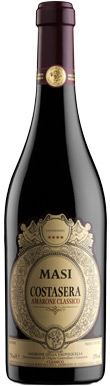
None of this implies the compromising of the character of Amarone, however. The Costasera Classico is a modern Amarone, but stylistically within the canons of a certain orthodoxy. Masi might represent innovation but they also stand staunchly for tradition. On the issue of appassimento, for example, Sandro Boscaini is highly critical of the current trend in Valpolicella towards the drastic reduction of the period of grape drying – ‘It is impossible to make Amarone with less than 100 days appassimento,’ he said.
The Masi wine family
Masi has an annual output of 12 million bottles, a total area of 1,300ha in production and a grape supply supplemented by what Sandro Boscaini describes as an ‘extended family’ of 40 long-term contract growers.
The core production is Veronese and comprises the full range of Valpolicella together with the two other classics of the region, Soave and Bardolino. There are five Amarone: Costasera and its Riserva come from the selected hillside sites, while Mazzano, Campolongo di Torbe and Vejo Amaron are single-vineyard cru.
Beyond the regional confines, Masi own a 100ha estate in Friuli and have a controlling share in the Conegliano Valdobbiadene Prosecco Superiore house of Canevel. In the Trentino they manage the prestigious Bossi Fedrigotti estate in a collaboration similar to the long-established one with Serego Alighieri in Valpolicella.
The most recent acquisition, in partnership with Serego Alighieri, is a large estate in the Montecucco DOC in southern Tuscany, but the most intriguing project is the organic Tenuta La Arboleda in Tupungato, Argentina, where Masi have planted Corvina alongside the native Malbec and have introduced air-drying of the grapes in the Veronese style.
The diversification of production is not only horizontal. At one end of the range, Masi make the historic single-vineyard Amarones which rank among Italy’s great red wines. (The adjective historic is used advisedly – there is documentary evidence that vineyards existed at Mazzano and Torbe, on the slopes where Masi make two of their cru wnes, in the year 1194).
At the other end of the range, nothing could be more contemporary than the newly released Masi Fresco line, which ticks all the young consumer market research boxes of organic, light, fresh, anytime drinking.
Looking ahead
The Masi of the future will continue to grow. New plantings have recently been completed in the valley of Negrar and more are planned. Stewardship of the land will continue to be a priority. Eight kilometres of ‘marogne’ (the dry stone walls which support the hillside terraces) have been restored and the long and laborious manual work continues.
Estate management will become increasingly environmentally sensitive, with the development of the Masi Green project already in operation, which aims to improve the company’s sustainable credentials in all aspects of the production process, from vineyard management to packaging.
Wine tourism, already well-developed at the Canova estate on Lake Garda, will be an increasingly important focus, with the completion of the giant multi-functional visitors’ centre at Monteleone, which will also house a revolutionary grape drying facility.
The company was the first wine producer to be quoted on the Italian stock market, but not too much should be read into the move – the Masi of the future will remain firmly family-owned and managed, as it has been for the last 250 years.
Masi’s Amarone crus
Serego Alighieri, Vaio Armaron, Amarone della Valpolicella Classico
This vineyard selection comes from the estate of Serego Alighieri at Sant’Ambrogio, which Masi has managed since 1973. Armaron is the name of the valley (‘Vaio’ in Veneto dialect means ‘dry river valley’) and is considered one of the historic ‘cru’ of Valpolicella. The southwest-facing vines are located at 250m above sea level on colluvial soils.
It is the most immediately expressive of the cru wines on the nose, with a distinctive raisined grape character and often botrytis notes of truffle. First bottled in 1979. Average annual production: 40,000 bottles
Masi, Campolongo di Torbe, Amarone della Valpolicella Classico
Torbe is a tiny village at the top of the valley of Negrar. The Campolongo vineyard stretches for around 10ha along a terraced ridge facing southwest at 375-400m with red ferrous limestone soils of volcanic origin. The grapes are dried in lofts on site. The style is rich, fleshy and full bodied, with the classic cherry and almond character of Valpolicella. First bottled: 1958. Average annual production: just over 15,000 bottles.
Masi, Mazzano, Amarone Classico della Valpolicella
At 415m above sea level, Mazzano is one of the highest sites of the DOCG zone. Located in a steep, woody area on the opposite side of the valley of Negrar to Torbe, the 8ha vineyard faces west on terraces which follow the contours of the slopes on stony marl soils. The 60-year-old vines are trained on the traditional pergole. Here, too, the grapes are dried in nearby open lofts. Mazzano is the most austere of the three Amarone cru, more subtle on the nose but with great elegance on the palate. First bottled: 1964. Average annual production: around 14,000 bottles.
A taste of Masi: 17 wines rated
Related articles
- Roagna: Producer profile & 11 wines tasted
- Il Marroneto: Producer profile & 10 wines rated
- Vega Sicilia Único: anniversary vertical tasting of 40 vintages
Masi, Amarone della Valpolicella, Veneto, Italy, 1958
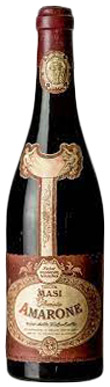

This is from the period of artisan production prior to the DOC of 1968, when in fact very little Amarone was commercialised. It is starting...
1958
MasiAmarone della Valpolicella

Masi, Amarone della Valpolicella, Veneto, Italy, 1962
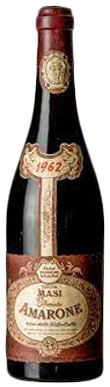
Picked in the first week of October and pressed at the end of the period of appassimento in late February, as was tradition, this is...
1962
MasiAmarone della Valpolicella
Masi, Amarone della Valpolicella, Classico, Veneto, Italy, 1974
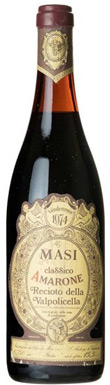
A favourable growing season and good harvest weather conditions were followed by a damp and foggy autumn that complicated the drying in all but the...
1974
MasiAmarone della Valpolicella
Masi, Campolongo di Torbe, Amarone della Valpolicella, Classico, Veneto, Italy, 1979
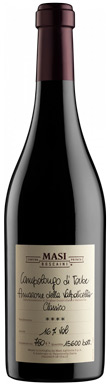
The subtly ethereal nose of this 1979 has aromatic herbs with citrus peel and delicately salty nuances, then a palate with an agility that defies...
1979
MasiAmarone della Valpolicella
Masi, Amarone della Valpolicella, Classico, Veneto, Italy, 1980
This was a complicated vintage to manage. The spring was cold and wet spring, there were hail storms in early summer and drying conditions were...
1980
MasiAmarone della Valpolicella
Serego Alighieri, Vaio Armaron, Amarone della Valpolicella, Classico, Veneto, Italy, 1986
A big rich wine and the best of the three cru in this vintage. The nose is open and complex, with a freshness that belies...
1986
Serego AlighieriAmarone della Valpolicella
Masi, Amarone della Valpolicella, Classico, Veneto, Italy, 1988
A five-star vintage, which Sandro Boscaini also sees as marking the new stylistic direction which came out of the research conducted through the '80s, aimed...
1988
MasiAmarone della Valpolicella
Masi, Amarone della Valpolicella, Classico, Veneto, Italy, 1990
Another five-star vintage to begin the new decade, in which favourable growing and grape drying weather conditions coincided - a rare occurrence. A very dark,...
1990
MasiAmarone della Valpolicella
Masi, Campolongo di Torbe, Amarone della Valpolicella, Classico, Veneto, Italy, 1997
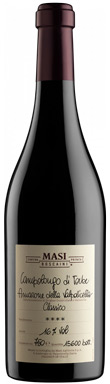
A great wine, the 1997 Campolongo di Torbe has a complex, mature bouquet of cherry jam, almonds, scented blossoms, sweet spice and orange peel, rounded...
1997
MasiAmarone della Valpolicella
Masi, Mazzano, Amarone della Valpolicella, Classico, Veneto, Italy, 1997
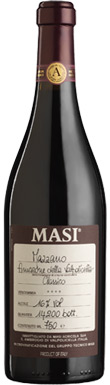
A little shy on the nose, with delicate yet very precise aromas of violets and mulberry and touches of white pepper, but with stunning, succulent...
1997
MasiAmarone della Valpolicella
Masi, Costasera, Amarone della Valpolicella, Classico, Veneto, Italy, 1997
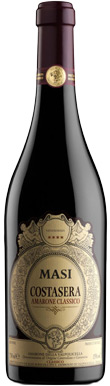
Picked in very warm, dry conditions, this vintage saw the beginning of the trend towards earlier picking, which continued through the 2000s, and also the...
1997
MasiAmarone della Valpolicella
Serego Alighieri, Vaio Armaron, Amarone della Valpolicella, Classico, Veneto, Italy, 1997
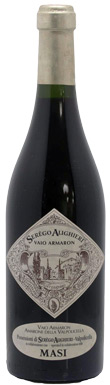
A little less complex on the nose compared to the 1986, but the five-star 1997 vintage has an extra gear in terms of structure and...
1997
Serego AlighieriAmarone della Valpolicella
Masi, Costasera, Amarone della Valpolicella, Classico, Veneto, Italy, 2003
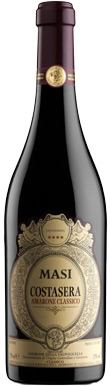
The notoriously hot and dry 2003 gave the first warning signs, after the similar 2000, of the climate change to come. The grapes were picked...
2003
MasiAmarone della Valpolicella
Masi, Costasera, Amarone della Valpolicella, Classico, Veneto, Italy, 2009
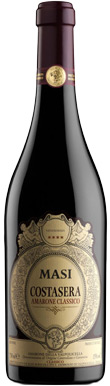
Picking returned to late September, thanks to a drop in temperatures in the lead in to the harvest and large night-day temperature excursions which helped...
2009
MasiAmarone della Valpolicella
Masi, Mazzano, Amarone della Valpolicella, Classico, Veneto, Italy, 2012
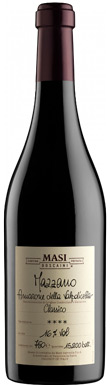
Another vintage with a hot, dry summer, Mazzano 2012 delivers a wine of very distinctive terroir character. The nose is subtly floral, with undertones of...
2012
MasiAmarone della Valpolicella
Masi, Costasera, Amarone della Valpolicella, Classico, Veneto, Italy, 2012
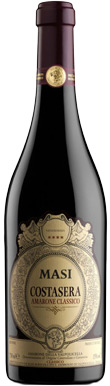
An outstanding vintage, with low production and rich, concentrated grapes. The spring started cold and wet, but a hot, dry summer brought the fruit to...
2012
MasiAmarone della Valpolicella
Masi, Costasera, Amarone della Valpolicella, Classico, Veneto, Italy, 2016
Rated slightly below the 2015s, but certainly on an equal footing with the great vintage of the year before, 2016 saw a return to weather...
2016
MasiAmarone della Valpolicella
