
Meet Rioja’s wine nobility
Europe’s aristocracy has a long association with wine production, and in the Rioja region of Spain a number of the most privileged and wealthy families are still highly regarded producers, says Tom Cannavan


The golden age for the noble families of Europe extended from the Middle Ages through to the 18th century. The aristocracy flourished, with hereditary titles such as duke, marquis or baron bestowed by the ruling monarch. Considered to be just one step removed from royalty, the title holders were endowed with various privileges, including land ownership and the collection of rents and taxes.
Titles were passed down through generations, but from the 18th century onwards the rise of the bourgeoisie, the middle classes, saw privileges gradually being stripped away from aristocrats (think French Revolution). As a result, in most of Europe today, such titles are mainly symbolic.
Historically, extensive country estates supported farming and often hunting. As the privileges of the aristocracy continued to be eroded during the 19th century, turning their land ownership into profitable and sustainable businesses became increasingly important. More and more noble families planted vines and established wine estates. In particular, the fame, success and high prices paid for the wines of Bordeaux was a source of inspiration.
Despite the rise of the Second Spanish Republic in the 1930s, the titles of Spanish noble families are enshrined in law to this day (although they do not confer any special privileges). There are many Spanish wines bearing the noble title ‘Marqués’ on the label, but that doesn’t always mean a noble family is behind the business. The brand Marqués de Cáceres is one such example – it is just a brand name invented in the 1970s when the business was founded as a cooperative cellar.
However, noble families continue to play an intrinsic part in modern-day Spanish wines, as they have done for generations. For Rioja, Bordeaux was the model. Luciano de Murrieta travelled there to study winemaking and returned to Rioja in 1852 to make Bordeaux-style wine. The King of Spain, Amadeo de Saboya, gave him the title of Marqués; when his bodega at Finca Ygay was founded in 1872, Marqués de Murrieta was born. Other nobility trod a similar path at the time, including the Marqués de Riscal, whose first harvest was in 1862.
Ironically, it was Bordeaux’s greatest natural disaster that led to a surge of interest in the wines of Rioja, no doubt encouraging more families to establish wine estates producing Bordeaux-style wines. Phylloxera devastated Bordeaux’s vineyards, with the vine-destroying aphid rampant across the region from around 1870 and unchecked for almost 20 years, until the solution of planting on resistant American rootstocks was found.
French merchants trying to keep their markets alive as the output from Bordeaux dwindled, looked south to Rioja where wines were now being made in a similar style to those of the Médoc. The golden age for Rioja had begun, and to this day some of region’s most noble families are fully involved in wine production, including the houses below.

Marqués de Murrieta
It is fitting to start with Marqués de Murrieta, given the part that Don Luciano de Murrieta had played. On his return from the Médoc he applied the concept of a Bordeaux château to his Finca Ygay estate, making wine only from grapes grown in his own vineyards. At its heart he built his own ‘château’, the Castillo Ygay, now also the name of Marqués de Murrieta’s most famous wine. The winemaking techniques of Bordeaux were applied to the local Tempranillo grape to great effect, particularly the practice of ageing in small oak barrels.
Today Vicente Dalmau Cebrián-Sagarriga, the 11th Count of Creixell, is president of Marqués de Murrieta, running the substantial 300ha estate alongside his sister. Born in 1970, Cebrián-Sagarriga has continued the work of his father, the 10th Count, who died suddenly in 1996 at the age of 47. He has overseen a meticulous programme of restoration; updating the historic castle and facilities, but also building a new wine cellar.
Head winemaker, María Vargas, is also part of the modernising story at this estate, and leads a new team that was put in place by the current regimen. She is intent on fusing 160 years of history with contemporary techniques in both vineyard and winery, with the aim of achieving even more precision and finesse in the wines.
Marqués de Murrieta is a truly international brand, with about 70% of production exported. A 100-point score from The Wine Advocate for the 1986 Castillo Ygay Blanco undoubtedly furthered its already excellent reputation.
While there may be pressure on Vargas not to change the ‘recipe’ for the historic Castillo Ygay too much, there is also innovation. She is now responsible for the Pazo Barrantes wines, from the family’s estate in Rías Baixas, and also for Dalmau, a modern interpretation of Rioja from a single vineyard, aged only in new French oak barriques and with 15% Cabernet Sauvignon in the blend.
Marqués de Vargas
Marqués de Vargas traces its vine-growing history in Rioja all the way back to 1840, when Don Felipe de la Mata, the 8th Marquis of Vargas, planted vines at his Hacienda Pradolagar estate. But it was Don Hilario de la Mata, the 10th Marquis, who was instrumental in transforming the estate from grape growing to wine production.
Don Hilario built a substantial business in wine and spirits distribution and production, so his ambition to see his family vineyards become a wine-producing estate was perhaps natural. He died before that dream could be realised, but in 1989 a winery was finally built at the Hacienda Pradolagar in the heart of the Rioja Alta by his son, Pelayo de la Mata, the 11th Marquis.

The estate lies in an area sometimes referred to as ‘Los Tres Marquéses’ – adjoining vineyards planted by the Marquéses of Murrieta and Romeral. This is another château model, with the winery surrounded by 60ha of its own Tempranillo, Mazuelo, Graciano, Garnacha and Maturana vines.
In the vineyard, green harvesting is used to control yields and no herbicides or pesticides are used. The winery boasts a variety of fermentation vats, including oak, cement and stainless steel, allowing each of the 32 vineyard plots to be vinified separately.
Winemaker Ana Barrón produces a reserva made from 85% Tempranillo, with Mazuelo and Garnacha, and aged for 20 months in American, French and Russian oak; while the Selección Privada is another reserva, dominated by Tempranillo, but this time coming from three specific vineyards and aged in Russian oak only. The Hacienda Pradolagar blend is made only in the best vintages; a combination of Tempranillo and Mazuelo from the oldest vineyards, aged in new Tronçais oak for about 18 months. In some years a gran reserva is produced from a single vineyard called El Cónsul.
The family also owns Conde de San Cristóbal in Ribera del Duero and Pazo de San Mauro in Rías Baixas.
Marqués de Riscal
One hundred and fifty years after it was established, Marqués de Riscal is almost as well known for the extraordinary and colourful architecture of its much-photographed hotel, designed by Frank Gehry, as it is for its high-quality wines.
Located in the Rioja Alavesa sub-area, the estate boasts 540ha of vineyards, though it controls almost 1,000ha more in order to produce a total of more than six million bottles a year.
Like Luciano de Murrieta, the Marquis of Riscal, Camilo Hurtado de Amézaga, took inspiration from Bordeaux, not only with small-barrel ageing but in planting his vineyards with Cabernet Sauvignon and Merlot, as well as indigenous varieties. The prestige cuvée, Barón de Chirel, still has a percentage of Cabernet in the blend from vineyards that are more than 80 years old.
Frank Gehry’s truly iconic building does speak of this historic family’s bold ambition. It sits at the heart of The City of Wine, Riscal’s very 21st-century concept to market its brand and provide a worldwide focus. As well the hotel (run by the Marriott group), there’s a Michelin-starred restaurant, a spa (managed by Caudalie, the inventors of vinotherapy at Château Smith Haut Lafitte in Bordeaux) and extensive visitor facilities.
Traditionally, the Riscal range does not include Rioja wines below reserva level, although in 2010 the company did acquire Marqués de Arienzo, a brand with its own vineyards, which produces crianza. There is a gran reserva, but it is the reserva that is the mainstay of the Marqués de Riscal portfolio. Finca Torrea is another ‘modern’ Rioja from old Tempranillo and Graciano vines that is aged in French oak, while Riscal also produces white wines in Rueda and operates a winery in Castilla y León.
Marqués de Griñón
Though the title of Marqués de Griñón dates back centuries, Carlos Falcó y Fernández de Córdova, the current Marquis, presides over a much more modern wine business. Now 82 years old, he graduated from the University of California Davis with a degree in viticulture and oenology in 1964 and is considered by many to be one of Spanish wine’s great modernisers.
This is another noble family with strong Rioja connections, though today the Marqués de Griñón brand is a joint venture, the wines being made by Bodegas Berberana. Within the group is the Durius project in Ribera del Duero, the El Rincón brand from Madrid and – arguably the jewel in the crown – the Dominio de Valdepusa estate in Castilla-La Mancha.
The Valdepusa estate is the historic home of the family, but Carlos Falcó’s ideas were groundbreaking, planting an initial 14ha of Cabernet Sauvignon in 1974, since expanded to more than 50ha with Syrah, Merlot and Petit Verdot, as well as Graciano.
The Marquis introduced radical new techniques for Spain at that time, including drip irrigation and canopy management. Over the years, a crack team of consultants has constantly been challenged with improving both the vineyards and winemaking, including names such as Emile Peynaud, followed by Michel Rolland, viticulturist Dr Richard Smart and the renowned soil specialist Claude Bourguignon.
Soils at the estate are clay over a 2m depth of limestone and the vines are encouraged to send their roots deep underground, through density of planting and controlled irrigation, but also by using ‘potting tubes’ that prevent roots from contact with the soil for the first 25cm of depth.
In the winery only French oak barriques are used and though the estate’s top wine is a blend called Emeritus, it is the high-quality range of single-varietal wines that has garnered most attention from critics and wine lovers, including Petit Verdot, Syrah, Graciano and Cabernet Sauvignon.
In 2003, Dominio de Valdepusa became the first estate to receive DO Vino de Pago, the highest level possible in a Spanish classification system called Vino de Pago. The classification never really grabbed the world’s attention, perhaps one reason why Carlos Falcó was instrumental in launching an association called Grandes Pagos de España – although somewhat confusingly, its members have not necessarily been awarded DO Vino de Pago status.
Originally published in the Decanter Spain supplement 2019
Wines to try
Marques de Murrieta, Castillo Ygay Gran Reserva Especial, Rioja, Rioja, Spain, 2007
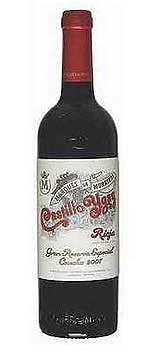

This vintage of the legendary Ygay comes from a poor to average year, but this is a case where that seems not to matter. Beguiling...
2007
Marques de MurrietaRioja

Marqués de Riscal, Barón de Chirel Reserva, Rioja, Rioja, Spain, 2010
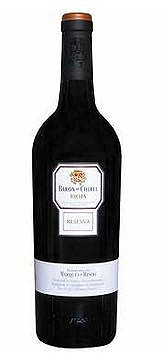
Vines for this cuvée are 80-120 years old and it is released only in the best years. After 24 months in French oak there is...
2010
Marqués de RiscalRioja
Marques de Griñon, Dominio de Valdepusa Petit Verdot, La Mancha, Spain, 2016
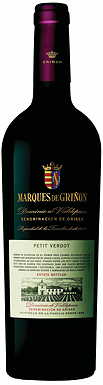
It's rare to find single-varietal bottlings of Petit Verdot, the wayward child of Bordeaux that can be green and tannic, and is used sparingly in...
2016
Marques de Griñon
Marqués de Vargas, Reserva, Rioja, Rioja, Spain, 2014
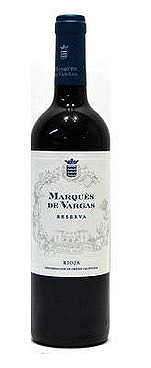
Classic Rioja reserva in many ways, from 30-year-old vines and spending two years in American, French and Russian oak. So there is vanilla and smokiness,...
2014
Marqués de VargasRioja
