
Monasterio: Argentina’s first grand cru
With its highly sought-after combination of soils, altitude and location, this remote corner of Uco Valley’s Gualtallary region is the top candidate to be the country’s first officially recognised ‘grand cru’ area, argues Patricio Tapia...
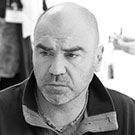

It is sometime in the mid-1990s and Alejandro Vigil, today in charge of the Catena Zapata wines, has problems with the dust that seeps through the floor of his old Renault 12. In fact, while touring Malbec vineyards in the Uco Valley, he must, from time to time, stick his head out of the window so that the dust of those narrow, rustic dirt roads does not leak into his lungs.
Scroll down for Patricio Tapia’s top 12 wines from Monasterio and the nearby Gualtallary area
One of those roads takes him to a remote place, a sort of small, inhospitable corner in the middle of the mountain, in the now very fashionable area of Gualtallary.
‘I remember going up a kind of dry river, which is currently La Vencedora street, and there was not much there. Just a walnut plantation, another one of peaches and that vineyard, on the right, going up by the dry river.’ That vineyard was Adrianna, the highest plantation in Mendoza at the time, and today the main source of the best wines of Catena, both whites and reds.
At the time, Nicolás Catena and his team were looking for a place from which to obtain more elegant wines than those produced in the traditional areas of Mendoza, generally sunny and warm places such as Lunlunta or Agrelo. Those places deliver generous, fruity wines, delicious in their exuberance, but perhaps without the nerve or tension Catena was looking for.
The Catena team had a hunch that up in the mountains, with the influence of the cool Andean breezes, at about 1,400m high, they might find that elegance. And they did, with Malbec. In 2004, they bottled their Adrianna single-vineyard wine. ‘We started studying the soils of the place in the early 2000s and realised that they were incredibly diverse. That first bottling, in 2004, came from four different soil types [in the Adrianna vineyard] that, together, seemed to give us the best wine.’ So explains Vigil, who became Catena’s head winemaker in 2002.
It soon dawned on Vigil that soil diversity had a profound, positive impact on Malbec: ‘a conclusion that, back then, was contradictory to the homogeneity we had all been searching for: same clone, same soil, same wine.’ And if the single-vineyard Adrianna was a very important step in that quest to go beyond the grape to reflect the place, as of 2013 the matter became even more specific.
Cementing a reputation
With the 2013 harvest, Vigil and his team decided to go one step further than the concept of s ingle vineyard, drilling down to individual plots within the vineyard. Instead of a single Adrianna bottling, they decided to bottle three wines according to the type of soil in which their vines had been planted. Of that trio, for me the most complex and delicious is Adrianna Vineyard Mundus Bacillus Terrae, a Malbec that comes from a 1.4ha plot containing Adrianna’s most calcareous soils.
In its 2015 incarnation, Mundus is an arrow of acidity, of energetic tones of red fruits and of a texture that resembles chalk, a texture with claws. If you thought that Malbec was soft and round, you must try this one to realise that such generosity is but one facet of Malbec’s personality.
‘For me, soils rich in chalk like Mundus give wines that are built not only from their acidity, but also from that texture that is almost rough, but does not become annoying,’ Vigil enthuses. ‘They are wines of thirst, which invite you to drink, but at the same time they are sufficiently deep and complex to capture your attention.’
Known locally as ‘Indian cement’, the soil of Mundus Bacillus is a mixture of sands, gravel, clay and chalk, but compacted, a true cement wall that with water becomes sufficiently permeable for the roots to penetrate it. It is not a common soil type, either in the Uco Valley, or in Gualtallary, but it is found in this area that Vigil toured for the first time in his Renault 12.
The area is known among locals as Monasterio (‘monastery’), named for the monks of Cristo Orante who settled here in the mid-1990s. ‘These soils are located at the foot of the Sierra del Jaboncillo, which was formed around two and a half million years ago,’ says geologist Guillermo Corona, who has been studying the area for an upcoming book on Uco’s wine and geography.

For Corona, that Indian cement is the result of the erosion of the rivers, with material dragged down from the highest areas.
‘Higher up in the mountains, the chalk is pure, but lower down, in areas like the Adrianna vineyard, at the foot of the mountain range, is a compact mixture of chalk, stones and sand,’ Corona adds.
Distinctive character
It is this specific soil type that caught Vigil’s attention when he began working in the Adrianna vineyard – and it has also seduced other producers in Mendoza, Bodega Zuccardi among them.

‘We have been studying the area since we started buying grapes from there in 2013,’ says Sebastián Zuccardi, third generation of the family and today in charge of its wines. ‘And what we have learned is that not all Gualtallary is the same – it is very heterogeneous, and the same applies for Monasterio. The part that interests us is the cemento indio.’
It has caught their attention because of the distinctive character of the grapes that come from that soil type, according to Zuccardi. ‘I think it delivers one of the most special wines in Mendoza. The texture is hard and one must be careful with tannins. The key is to extract them carefully because they can be very rustic. In aromas, it has a lot of Gualtallary – a lot of those typical aromas of thyme, of herbs. But you must be careful, because it’s easy to pass from fresh, herbal aromas to notes of overripe fruits [if you harvest too late].’
The enthusiasm for the area has led Zuccardi to produce two of its most important wines with the grapes it buys in the area: Aluvional Gualtallary and Polígonos Gualtallary – two linear, refreshing Malbecs, tense in texture, and full of mineral tones and red fruits. These Malbecs are among the most delicious being produced in Argentina today. In addition, Zuccardi has bought almost 90ha in the area, with 30ha planted so far, 10ha of which will go into production with the 2019 harvest.
Of the soil
On a smaller scale, but equally specific in terms of soil search, the PerSe winery has also opted for that Indian cement. PerSe is the project of two very important characters on the Argentinian wine scene. One is David Bonomi, current winemaker of Norton, and the other is Edgardo Del Pópolo, general manager of Susana Balbo Wines. Both have a long history of making wines in Mendoza, and in 2012 they decided to create PerSe, a project that produces around 5,000 bottles a year and focuses on Gualtallary.
During the first four vintages, the wines were made with grapes purchased from third parties, but in 2013 they found a special site in the Monasterio area – since the 2016 vintage, the core of their red wine production comes from there. ‘We have planted 1.5ha of vineyards. Due to the diversity of soils, we have divided the vineyard into four sectors,’ says Del Pópolo as we walk through one of those sectors, a small corner rich in white stones and with almost no soil in sight. The view from here is captivating – the summit of the Andes, very close, cutting the horizon with its pointed peaks. A gentle breeze wafts down from the arid and parched Andean foothills. From that very particular piece of land comes Uni del Bonnesant, a Malbec growing in a highly calcareous soil whose structure corresponds perfectly to that Indian cement.
The 312 Malbec vines there are planted at high density, and the soil is poor and stony. The first harvest of Uni was in 2016, a cold year in Uco that seems to have underlined the fresh and at the same time severe, tense character of those soils. ‘More than fruit or herbs, this type of soil gives us earthy, mineral notes. You can sense the chalk not only in the texture, but in the aromas,’ says Del Pópolo.
PerSe vineyard has been planted in partnership with the monks of the monastery, who had already ventured into the world of viticulture and oenology with a small neighbouring vineyard featuring heavier and less calcareous soils. Only found in the souvenir shop of the monastery, this Malbec has fresh and vivid notes of red fruits, along with the classic herbal aromas of Gualtallary Malbec. Uni del Bonnesant, on the other hand, is a more austere wine, less fruity and more concentrated in the flavours of stone and lime.
Exciting future
Catena, Zuccardi and PerSe are just a few of the projects that are taking advantage of this particular type of soil in this corner of the Uco Valley. To them we must add other wineries that have also arrived in the area or in nearby places, equally captivated by the character that their wines offer. Among them, Benegas, Domaine Nico, Lagarde/Pescarmona, Michelini i Mufatto, Michelini Wines, Susana Balbo, Viñalba and Vistalba. Some of them are experimenting with purchased grapes, while others have planted their own vineyards.
Although the first vineyards of Monasterio were planted more than 20 years ago, the feeling is that there is still everything to discover. In fact, Gualtallary as an appellation does not exist. There is a project to transform it into a GI – that is, a geographical indication within the Uco Valley – but that is still being processed. Within that new GI, Monasterio is one of the areas being considered for designation but, according to the producers who are working with local grapes, even that small area will have to be sub-divided due to its heterogeneity.

At the moment, what is known is that the diversity of Uco is summarised there, not only in its soils but also in the grapes. Malbec is the main player, but there is also very good Cabernet Franc from the hands of Bodega Aleanna; Pinot Noir with a deep minerality like those made by Domaine Nico, a bit further up in the mountains; or Catena’s White Stones and White Bones, two Chardonnays that rank among the best whites produced today in South America.
In the future – who knows when – we could see Monasterio being divided further according to its soil, and perhaps also by its altitude. However, based on these early results, the wines are undoubtedly already showing great quality. Above all, they offer a very powerful personality that goes far beyond varietal character.
Having covered the wines of Argentina for more than two decades, this is the first time that I have encountered such a distinctive terroir – a group of very specific vineyards that should be first on any list of Argentinian grands crus.
Uco Valley: in search of specificity
What until two decades ago was nothing more than a desert at the foot of the Andes, very high in the mountains, and with vineyards planted only in some areas where water and the absence of frost allowed it, today has become the object of desire of most Mendozan producers. This interest has manifested itself in an expanding area of vineyards (from almost 18,000ha in 2006 to more than 28,000ha in 2018), but also in a genuine curiosity to see the differences that this wide stripe of territory offers.
Geographical indications (GIs) began to be applied in Argentinian wine towards the end of the 1990s. In the Uco Valley, the first was the most generic, GI Valle de Uco, established in 2002 and respecting the political borders of the region. However, as producers have have got to know the valley in more depth, the subsequent GIs have not only been more specific but are supported by deep studies of climates, topography and soils.
Today in Uco there are seven specific GIs: Paraje Altamira, Los Chacayes, Tupungato, Tunuyán, San Carlos, Eugenio Bustos and La Consulta. At the time of writing, a GI for San Pablo was due to be approved. In the case of Gualtallary, the next to be approved by the government, it already has a study of soils, climates, topography and mesoclimates, as well as a sub-division into five different sub-groups that can themselves be GI in the future: one of them is Monasterio.
Patricio Tapia is author of the annual Descorchados guide to the wines of South America, and a regular Decanter contributor
See Patricio Tapia’s top 12 wines from Monasterio and the nearby Gualtallary area
You may also like
The Decanter interview: Daniel Pi
Rising starts: Winemakers to watch in Chile and Argentina
Argentina’s mountain wines: Calchaqui Valley reds
Great value Malbec from Argentina: A buying guide
Catena Zapata, Adrianna Vineyard White Bones Chardonnay, Uco Valley, Gualtallary, Mendoza, Argentina, 2016
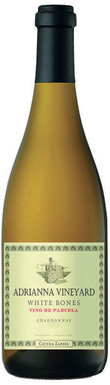

From the Adrianna Vineyard’s most chalk-rich soils. Pungent acidity, like a freshly sharpened razor. 80% of the wine is matured under flor, accounting for the...
2016
Catena ZapataUco Valley

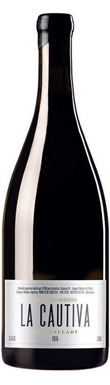
Michelini i Mufatto, La Cautiva, Uco Valley, Gualtallary, Mendoza, Argentina, 2016
98
Above 1,600m in Gualtallary, Andrea Mufatto and Gerardo Michelini buy grapes from a highly chalky vineyard. After a year of ageing in old barrels, this red shows a firm, tense structure, with mineral tones and herbal notes. The acidity seems to have claws, the flavours complex and profound. Charming.
2016
Michelini i MufattoUco Valley
PerSe, Uni del Bonnesant, Uco Valley, Gualtallary, Mendoza, Argentina, 2016
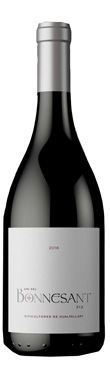
100% Malbec from a corner of highly calcareous soils in Monasterio, with minimal production (312 bottles). Generous in mineral notes, wrapped in a structure of...
2016
PerSeUco Valley
Catena Zapata, Adrianna Vineyard Mundus Bacillus Terrae, Uco Valley, Gualtallary, Mendoza, Argentina, 2015
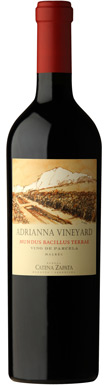
From the cooler summer of 2015 comes this stunningly fresh, vivid and beguiling wine. It's so young yet has all the hallmarks of the site:...
2015
Catena ZapataUco Valley
PerSe, La Craie, Uco Valley, Gualtallary, Mendoza, Argentina, 2016
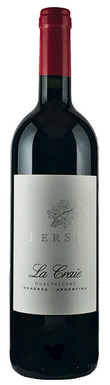
Two-thirds Malbec with Cabernet Franc, all from the high areas of Gualtallary and from soils generous in chalk. Fruity, herbal flavours with mineral notes. Succulent...
2016
PerSeUco Valley
Bodega Vistalba, Tomero Parcela Unica Malbec, Uco Valley, Gualtallary, Mendoza, Argentina, 2017
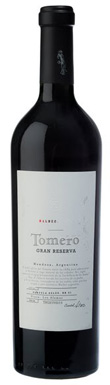
97
This shows an accent in the freshness of the fruits and herbs, far from the maturity and unctuousness usual in the wines of this winery. A new release, it has fine and firm acidity, and a powerful and ample body, but all in a refreshing and tense balance.
2017
Bodega VistalbaUco Valley
Bodega Aleanna, Gran Enemigo Single Vineyard Cabernet Franc, Uco Valley, Gualtallary, Mendoza, Argentina, 2015
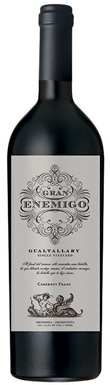
With 85% Cabernet Franc and the rest Malbec, all from Adrianna’s calcareous soils, the fruits here feel red and refreshing, decorated by herbal tones accentuating...
2015
Bodega AleannaUco Valley
Lagarde, Primeras Viñas Malbec, Uco Valley, Gualtallary, Mendoza, Argentina, 2016
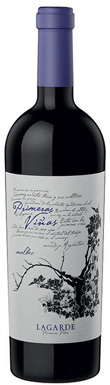
To emphasise the freshness of this Malbec from the Gualtallary heights, winemaker Juan Roby advanced the harvest and aged the wine in large foudres so...
2016
LagardeUco Valley
Zuccardi, Aluvional, Uco Valley, Gualtallary, Mendoza, Argentina, 2016
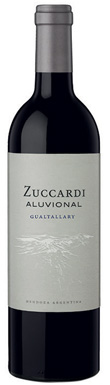
96
Pure in its fruity, herbal expression, this comes from a selection of chalk-rich vineyards in Gualtallary. After a year of ageing in concrete tanks and old barrels, the wine feels refreshing and vivacious, with granular tannins and a herbal finish that invites continued drinking.
2016
ZuccardiUco Valley
Zuccardi, Polígonos, Uco Valley, Gualtallary, Mendoza, Argentina, 2017
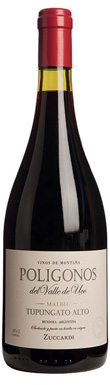
Malbecs selected from some of the Gualtallary’s highest areas, planted on chalk. Aged in cement so the fresh, intensely red fruit comes through clearly: at...
2017
ZuccardiUco Valley
Bodega Benegas, Benegas Lynch Malbec, Uco Valley, Gualtallary, Mendoza, Argentina, 2015
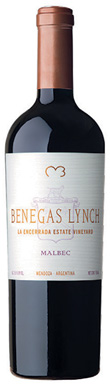
95
From the La Encerrada vineyard, one of the highest and most chalk-rich spots in Gualtallary, this Malbec represents a shift in the house style towards much fresher and more tense reds, less focused on the wood and more on the fruits and the expression of the place.
2015
Bodega BenegasUco Valley
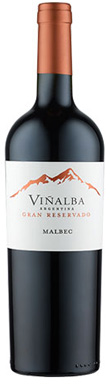
Viñalba, Gran Reservado Malbec, Uco Valley, Gualtallary, Mendoza, Argentina, 2016
94
From one of the highest places in the Uco Valley, at 1,600m. From that cold climate and in highly calcareous soils, this Malbec feels austere and firm, with a space for red fruits but mainly for herbs and spices in a wine for the cellar.
2016
ViñalbaUco Valley
Catena Zapata, Adrianna Vineyard White Bones Chardonnay, Uco Valley, Gualtallary, Mendoza, Argentina, 2016
From the Adrianna Vineyard’s most chalk-rich soils. Pungent acidity, like a freshly sharpened razor. 80% of the wine is matured under flor, accounting for the...
2016
Catena ZapataUco Valley
Michelini i Mufatto, La Cautiva, Uco Valley, Gualtallary, Mendoza, Argentina, 2016
98
Above 1,600m in Gualtallary, Andrea Mufatto and Gerardo Michelini buy grapes from a highly chalky vineyard. After a year of ageing in old barrels, this red shows a firm, tense structure, with mineral tones and herbal notes. The acidity seems to have claws, the flavours complex and profound. Charming.
2016
Michelini i MufattoUco Valley
PerSe, Uni del Bonnesant, Uco Valley, Gualtallary, Mendoza, Argentina, 2016
100% Malbec from a corner of highly calcareous soils in Monasterio, with minimal production (312 bottles). Generous in mineral notes, wrapped in a structure of...
2016
PerSeUco Valley
Catena Zapata, Adrianna Vineyard Mundus Bacillus Terrae, Uco Valley, Gualtallary, Mendoza, Argentina, 2015
From the cooler summer of 2015 comes this stunningly fresh, vivid and beguiling wine. It's so young yet has all the hallmarks of the site:...
2015
Catena ZapataUco Valley
PerSe, La Craie, Uco Valley, Gualtallary, Mendoza, Argentina, 2016
Two-thirds Malbec with Cabernet Franc, all from the high areas of Gualtallary and from soils generous in chalk. Fruity, herbal flavours with mineral notes. Succulent...
2016
PerSeUco Valley
Bodega Vistalba, Tomero Parcela Unica Malbec, Uco Valley, Gualtallary, Mendoza, Argentina, 2017
97
This shows an accent in the freshness of the fruits and herbs, far from the maturity and unctuousness usual in the wines of this winery. A new release, it has fine and firm acidity, and a powerful and ample body, but all in a refreshing and tense balance.
2017
Bodega VistalbaUco Valley
Bodega Aleanna, Gran Enemigo Single Vineyard Cabernet Franc, Uco Valley, Gualtallary, Mendoza, Argentina, 2015
With 85% Cabernet Franc and the rest Malbec, all from Adrianna’s calcareous soils, the fruits here feel red and refreshing, decorated by herbal tones accentuating...
2015
Bodega AleannaUco Valley
Lagarde, Primeras Viñas Malbec, Uco Valley, Gualtallary, Mendoza, Argentina, 2016
To emphasise the freshness of this Malbec from the Gualtallary heights, winemaker Juan Roby advanced the harvest and aged the wine in large foudres so...
2016
LagardeUco Valley
Zuccardi, Aluvional, Uco Valley, Gualtallary, Mendoza, Argentina, 2016
96
Pure in its fruity, herbal expression, this comes from a selection of chalk-rich vineyards in Gualtallary. After a year of ageing in concrete tanks and old barrels, the wine feels refreshing and vivacious, with granular tannins and a herbal finish that invites continued drinking.
2016
ZuccardiUco Valley
Zuccardi, Polígonos, Uco Valley, Gualtallary, Mendoza, Argentina, 2017
Malbecs selected from some of the Gualtallary’s highest areas, planted on chalk. Aged in cement so the fresh, intensely red fruit comes through clearly: at...
2017
ZuccardiUco Valley
Bodega Benegas, Benegas Lynch Malbec, Uco Valley, Gualtallary, Mendoza, Argentina, 2015
95
From the La Encerrada vineyard, one of the highest and most chalk-rich spots in Gualtallary, this Malbec represents a shift in the house style towards much fresher and more tense reds, less focused on the wood and more on the fruits and the expression of the place.
2015
Bodega BenegasUco Valley
Viñalba, Gran Reservado Malbec, Uco Valley, Gualtallary, Mendoza, Argentina, 2016
94
From one of the highest places in the Uco Valley, at 1,600m. From that cold climate and in highly calcareous soils, this Malbec feels austere and firm, with a space for red fruits but mainly for herbs and spices in a wine for the cellar.
2016
ViñalbaUco Valley
