
10 of the most exciting southern Rhône estates
This large region’s vineyards are as diverse as they are plentiful. Matt Walls profiles 10 producers that stand out from the rest and recommends a wine from each...


Occasionally when I taste a wine, I get an overwhelming urge to run into the street, plant a glass in the hand of the nearest person and exclaim: ‘You have to taste this!’ In all likelihood that would get me arrested, so thankfully I can write about them here instead.
To follow is a list of 10 southern Rhône estates that have had this effect on me over the past year. Wines that have planted a flag in my mental wine map that I can’t help returning to. Wines that I want to talk about and share with friends.
Scroll down for Matt Walls’ top picks from 10 of the most exciting southern Rhône estates
I’ve been living near Avignon for the past 12 months, criss-crossing the southern Rhône to research a book on the wines of the region, so restricting myself to just 10 estates wasn’t easy. With 68,000ha of vines and more than 1,500 private domaines, it’s a region that’s constantly changing – and there’s a surprise waiting around every corner.
All these wines possess something that sets them apart. Some represent an innovative style or are made in an original way. Others are from brand-new estates or brilliant new talents. Certain wines reveal the potential of an obscure terroir or an under-the-radar producer. But, first and foremost, they are all deliciously drinkable.

Châteauneuf-du-Pape tends to dominate the conversation when it comes to the southern Rhône, so I’ve ventured further afield to shine a light on alternative appellations. They tend to enjoy more creative freedom and offer value for money – most of these wines are under £25 a bottle.
So for a taste of what’s exciting in the southern Rhône right now, get your hands on some of these.
Domaine Gourt de Mautens, IGP Vaucluse
I’ve met few winemakers as determined as Jérôme Bressy. He took over the family vineyard holdings around Rasteau in 1996, and instead of taking the crop to the local cooperative he started making his own wine. Taking advice from friends such as Henri Bonneau and Domaine de Marcoux, he increased his plantings of well-adapted local heritage varieties including Vaccarèse and Piquepoul Noir and converted to biodynamics.
The turning point came in 2010 when Rasteau was promoted from a village to a cru – from AP Côtes du Rhône-Villages Rasteau to AP Rasteau. Production rules were tightened and the authorities stipulated that the total of what they consider lesser varieties, such as Vaccarèse, could only make up 15% of the final blend. His red contained 40%. Instead of changing his wine, he dropped out of the appellation and to this day bottles his wines under IGP Vaucluse.
His old vines are co-planted and tended in the traditional gobelet style. They naturally yield just 8-15hl/ha, and he makes no adjustments to the juice except a little sulphur dioxide. Ferments can take longer than a year to complete. His professed ambition was to create not only a great Rhône wine, but a great Mediterranean wine. And within 20 years, he’s achieved it.
Domaine L’Anglore, Tavel

You have to feel sorry for Tavel. It was historically famous for pale red wines, but, in something of an administrative stitch-up, when its appellation status was approved back in 1934 it was granted for rosé wine only. And darkly tinted rosé at that. Which, despite being more characterful and flavoursome than most identikit pale rosés, is currently about as fashionable as corrective footwear.
But a great terroir is a great terroir. Former beekeeper Eric Pfifferling previously took his small crop of grapes to the local co-op, but increasingly found he couldn’t stomach what he considered to be their ‘very chemical, very technical’ style of wine. After travelling around France to spend time with natural wine luminaries such as Jean Foillard, he returned to Tavel and threw the rule book on the fire. Now, he listens only to his vineyards in order to make the best wines possible, organically, mostly using carbonic maceration. And if that means a red wine from Tavel terroir, or a white wine blended across Tavel and Lirac, so be it – he’ll just bottle it as Vin de France. His wines are a little lighter than those from some of his neighbours, and they buzz with life and drinkability.
Moulin de la Gardette, Gigondas

There are some well-established estates in the southern Rhône that make classic expressions of their appellation but, for whatever reason, remain mysteriously little-known outside their home region. I have no doubt that Moulin de la Gardette is one of the greatest estates in Gigondas, but, in the UK at least, we’ve been slow to catch on.
Jean-Baptiste Meunier took over the family winery nearly 30 years ago, and has since converted its 25 parcels to organic viticulture. High altitudes, low yields and a light touch in the winery make for wines with all the rich, flowing fruits of traditional Gigondas, but they’re immediately recognisable for their exceptional balance, drinkability and breezy floral aromas. Meunier makes three cuvées: Petite Gardette from 10-year-old vines; Tradition, 40-year-old vines; and Ventabren, 80- to 100-year-old vines. All are lovely, but Ventabren is frequently among the best wines of the appellation – an unforced expression of this picturesque mountain village.
Domaine La Luminaille, Rasteau

In ancient times, the Luminaille lieu-dit in the hills behind the little village of Rasteau was a sacred site where people left offerings. It’s as if the land is now repaying this generosity. Julie Paolucci travelled the world as a sommelier, but always dreamed of returning to the family domaine here to make wine. When her father died unexpectedly in 2014, she and her partner Nicolas Brès returned to take up the reins. They now farm 17ha and are converting to organic viticulture.
Some of their Grenache and Carignan plantings are 90 years old, and much is planted in gobelets in the deep-grey, yellow and blue marls that make Rasteau so unique. In a compact garage winery they transform this fruit into something magical. Some Rasteau wines can be throbbingly potent, but these are some of its most tender and drinkable bottles. This is a 100% red wine appellation, but their two white Côtes du Rhônes, also grown on Rasteau terroir, are equally spellbinding.
Roucas Toumba, Vacqueyras

Roucas Toumba (meaning ‘fallen rock’ in the local Provençal language) had ‘a very difficult beginning’, according to its owner Eric Bouletin. Eric’s father died when he was 14, meaning that he had to leave school at 16 to help on the estate. His neighbour Christian Vache (of the excellent Domaine de la Monardière) could see him struggling and offered to help.
Today, he has 16ha of organically farmed vineyards across various plots, and tries to do as much as he can on the estate himself: planting trees, repairing stone walls, making jams out of wild fruits. ‘It’s peasant life, quite simply,’ he says. ‘I go to bed with the sun and get up with the birds.’
His plans for the estate? To plant some olive trees, install some beehives, perhaps teach his son, who is beginning to show an interest.
Like Bouletin himself, these wines are rooted in Vacqueyras, but they’re not loud; they don’t demand your attention. Which is one of the reasons they are so deserving of it.
Bouletin makes authentic, pastoral Vacqueyras wines – both reds and whites – that gradually unfurl in the glass and satisfy deeply.
Saint Jean du Barroux, Ventoux

From Lorraine in northern France, Philippe Gimel originally trained as a pharmacist before finding his vocation as a winemaker, going on to work at Domaine de la Janasse and Château de Beaucastel. When he struck out on his own in 2003, there were few serious wines made in Ventoux, but he recognised the potential of its more mountainous terroirs. He now owns 19ha of vines over three sites, tending his vineyards organically and crafting wines with extraordinary attention to detail and zero compromise.
His methods are idiosyncratic: different- sized bunches go into different cuvées, he hand-sorts, stems and matures his whites for eight years before release. Past projects have included orange wines, sweet wines and sous-voile cuvées (wines made under a ‘veil’ of yeast). ‘It’s what I wanted to do from the beginning, to really experiment and show how different Ventoux can be,’ he says. His latest projects include a top-end Ventoux sparkling wine and a series of three Syrah cuvées from his three terroirs. It’s understandable to be circumspect about pure southern Rhône Syrah – it’s usually better in the north – but Gimel coaxes a unique expression from the variety here at high altitude that combines southern generosity with northern freshness and precision to thrilling effect.
Domaine La Florane, Côtes du Rhône-Villages Visan
The biodynamic Domaine La Florane is spread across two little-known Côtes du Rhône-Villages appellations, Visan and St-Maurice, in the northeast corner of the southern Rhône. Twenty years ago, it was too cool to reliably ripen many of the permitted varieties on its estate, but gradually the terroir is coming into its own. ‘More and more people are planting in the north, and at altitude,’ says Domaine La Florane’s Adrien Fabre. ‘It’s the terroir of the future.’ At up to 380m, the estate’s vineyards are among the highest in Visan, and its north-facing Syrah plots in St-Maurice are ‘even cooler, more severe’.

Fabre returned to the domaine in 2007 to help his father, after a stage at Harlan Estate in Napa. Now he heads up a small team, all aged between 30 and 40 years old. ‘We’re just at the start,’ he says, and you can feel the energy in the cellar and the wines. A star of the future in the terroir of the future? Watch this space.

Domaine Saladin, IGP Ardèche
When Henri Saladin failed to return to the family farm in St-Marcel d’Ardèche after World War I, his family assumed he was dead. Two years later, he reappeared. He’d been convalescing in a hospital in northern France after being gassed during fighting. When his family saw what had happened to him, they swore never to touch the chemical farming products that were beginning to arrive on the market. So they’ve always been organic – since the estate was founded in 1422.
Sisters Marie-Laurence and Elisabeth Saladin now run the property, representing the 21st generation. They now have 17ha of vineyards, some co-planted, some in blocks, and they make wines across three colours in Côtes du Rhône, Côtes du Rhône-Villages and Vin de France. They like to use some white grapes in the red ferments, and the Grenache-based reds are made using semi-carbonic maceration. ‘One hundred years ago it was traditional,’ says Marie-Laurence. ‘There were no destemming machines back then.’
The resulting wines are pale in colour, with an easy, refreshing drinkability and a great sense of purity and peace.
Domaine Alary, Cairanne
When Jean-Etienne Alary returned to the family domaine after his travels, aged just 24, he was presented with a family heirloom: a sabre that belonged to a winemaking ancestor (also named Jean-Etienne) and was originally bestowed for fighting military campaigns under Napoleon. The current Jean-Etienne is the 11th generation to work this soil. So no pressure then…
Fortunately, he’s been learning from the best. His father Denis had already established this 30ha domaine as one of the most progressive in Cairanne, and after his studies Jean-Etienne worked with Domaine Confuron-Cotetidot in Vosne-Romanée, Seresin Estate in Marlborough and Henschke in Eden Valley. His adjustments since taking over include a gentler extraction, picking earlier and planting more Piquepoul Noir and Piquepoul Blanc. The wines have always been good, but if anything they now have even greater freshness and focus, across both reds and whites.
Domaine Serre Besson, Vinsobres
Some take up golf. Others teach, travel or volunteer. Victor Taylor’s ‘active retirement’ project is establishing a new domaine in Vinsobres. How’s it going so far? Well, his first vintage (2016) won Silver in this year’s Decanter World Wine Awards. And his 2017 is even better.

Taylor grew up in California working as a sommelier, and latterly as food and beverage manager in New York’s storied Carlyle Hotel. ‘Woody Allen would play every Monday, Eartha Kitt would sing,’ he reminisces.
Seeking a quieter life, he moved to Nyons in the southern Rhône, where in 2011 he spotted an ad for an old stone property with 3.5ha of vineyards in nearby Vinsobres. ‘I put a bid in that afternoon.’ He renovated the house, built a gravity-fed winery, converted the vineyards to organic and, with the guidance of his neighbours, taught himself how to make wine. He’s been welcomed and supported by other Vinsobres winemakers, and the results speak for themselves. The estate might be brand- new, but the style is a classic expression of Vinsobres terroir.
Southern Rhône: vintage guide
The southern Rhône is a particularly favourable spot for making consistently good quality red wine. It’s hot and dry (sometimes excessively), so ripening is rarely a problem. And the northerly Mistral wind follows any rains, which helps to keep vineyard diseases at bay.
Making balanced whites is more challenging, but quality – and demand – is on the rise. The number of grape varieties in play in the southern Rhône is huge, giving winemakers plenty of blending options in challenging years. The biggest problem for winemakers isn’t fluctuating quality, but quantity; the Grenache family is particularly prone to coulure (poor fruit set), for example.The 2018s are soon to be coming on to the market. I’ll be reporting on this challenging vintage in full on Decanter Premium at the end of the year.
2017
A small crop following serious coulure, hot temperatures and an exceptionally dry summer. Quality is variable, from good to excellent. The reds are potent, powerful, structured wines: serious, straight and purposeful. Some handled these severe conditions better than others, however a proportion of wines are overripe and leathery. Not so good for whites.
2016
A vintage that’s up there with the best: hot but not baking, dry but not parched. And a generous harvest to boot. The reds have an unforced, charismatic demeanour and are generally well balanced. Some of the wines have high alcohols, which will become increasingly obvious among more straightforward wines as time wears on. The best will age effortlessly. Sandwiched between two hot years, it’s a safer bet for white wines.
2015
Not as hot as the notorious 2003 vintage, but nonetheless a sweltering year. You feel the warmth of the sun in the wines – very solaire, as the French might say. There are some excellent wines among the best estates, particularly in Châteauneuf-du-Pape, but many more everyday wines have warming alcohols and a sweet, liqueur touch to the fruit. Another year that favours reds over whites.
2014
A cool, wet summer led to manifold problems, including rot, dilution and a struggle for ripeness. Then it rained during harvest time… Wines to the east of the region fared better, the best of which are drinking well now, with a certain clarity, freshness and drinkability. Not a vintage for long ageing, but it can occasionally surprise. An excellent vintage for white wines.
See Matt Walls’ top pics from 10 of the most exciting southern Rhône estates
You may also like
Rhône 2017: Full en primeur reportSouthern Rhône 2016: Full reportExpert’s Choice: White Châteauneuf-du-PapeTop Ventoux wines: Unsung hero of the Rhône
Domaine de Gourt de Mautens, Rouge, Vin de Pays de Vaucluse, Rhône, France, 2015
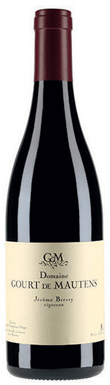

Grenache, Mourvèdre, Carignan, Counoise, Vaccarèse, Cinsault, Syrah, Muscardin; 14hl/ha yields; 30 months in large barrels before bottling. Already open and expressive, with black pepper and...
2015
Domaine de Gourt de MautensVin de Pays de Vaucluse

Domaine l'Anglore, Rosé, Tavel, Rhône, France, 2018
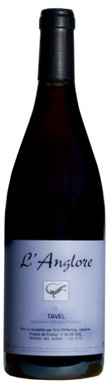
Old 1960s Grenache bush vines planted in white clay-limestone soils blended with one-third Cinsault. Is it a rosé or a red wine? Who cares? The...
2018
Domaine l'AngloreTavel
Moulin de la Gardette, Tradition, Gigondas, Rhône, France, 2016
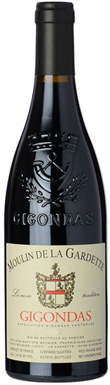
Hand-picked, partially destemmed, vinified in cement tanks followed by a long post-fermentation maceration, then 18 months in 228-litre barrels. Floral and lifted nose, with defined...
2016
Moulin de la GardetteGigondas
Domaine La Luminaille, 1er Né(z), Côtes du Rhône, Rhône, France, 2017
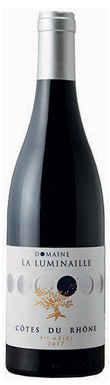
Hand-harvested, fermented in tank with wild yeasts then aged in two- and three-year-old Burgundy barrels on fine lees for six months. A little satsuma peel...
2017
Domaine La LuminailleCôtes du Rhône
St Jean du Barroux, L’Argile, Ventoux, Rhône, France, 2016
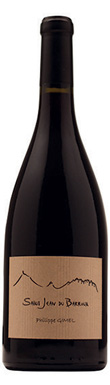
Grenache, Syrah, Carignan, Cinsault. Yields 20hl/ha, hand-harvested and 75% destemmed. Light reduction on the nose calls for a decant. Gently serrated tannic weave, with taut,...
2016
St Jean du BarrouxVentoux
Roucas Toumba, Les Prémices, Vacqueyras, Rhône, France, 2017
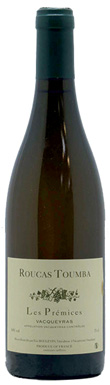
Marsanne, Roussanne, Clairette, Grenache Gris, Viognier, Vermentino, Picpoul, Picardan, Carignan Blanc. All hand- harvested, one parcel of vines on clay-limestone, one on galets roulés. One...
2017
Roucas ToumbaVacqueyras
Domaine la Florane, Terre Pourpre, Côtes du Rhône Villages, Visan, Rhône, France, 2017
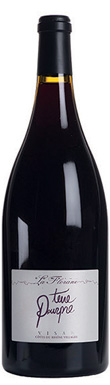
No destemming. This is vinified in a tronconic wooden tank, then spends 12 months in foudre. Assemblage is followed by six months resting in a...
2017
Domaine la FloraneCôtes du Rhône Villages
Domaine Saladin, Per El, Côtes du Rhône, Rhône, France, 2017
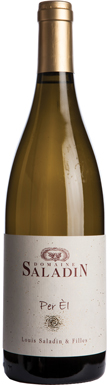
Clairette, Clairette Rose, Roussanne, Bourboulenc, Viognier, Marsanne and Grenache Rose. Villagers said Louis Saladin was mad to plant whites on one of the best terroirs...
2017
Domaine SaladinCôtes du Rhône
Domaine Alary, L’Estévenas, Cairanne, Rhône, France, 2016
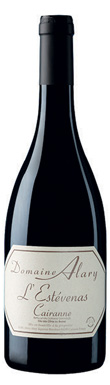
Some of the oldest Syrah in the southern Rhône; cuttings from Côte-Rôtie planted in the 1950s. The reduction on the nose clears with a decant....
2016
Domaine AlaryCairanne
