
New South Wales on a high: Orange & Hilltops regions and 15 wine picks
Travel several hundred metres up in altitude from the warm climes of Australia’s famous Hunter Valley, and you’ll find two wine regions, Orange and Hilltops, that are fast proving their cool credentials. Leading Australian wine writer Huon Hooke, the joint Regional Chair for Australia at the Decanter World Wine Awards, takes a trip.


Outsiders might scoff at the idea that Australia can produce cool-climate wines, as the country is famous for sun, surf and sand. A warm, temperate climate, with regular droughts, heatwaves and devastating wildfires, is the all-pervading impression.
That’s all true, but this massive continent supports a huge range of climatic regions. And as climate change increases its influence, cooler places to grow wine grapes will be increasingly valued.
Scroll down for Huon Hooke’s 15 wine picks from Orange and Hilltops
There are two ways to find a cool viticultural climate: go south or go up. Orange and Hilltops are two regions in the eastern state of New South Wales that achieve their coolness with altitude.
Orange is the only Australian wine region defined by altitude, with vineyards at ‘lows’ of 600 metres (2,000ft), up to 1,150m in the very highest reaches. Hilltops is a smaller region in planted area (600 hectares compared to 1,075ha in Orange) and much smaller in producer numbers (nine compared to 37), and the range of vineyard altitudes is lower, at 380m to 600m.
As well as their own producers, both regions also provide grapes for outsiders, as cool-climate varieties are sought by wineries based in warmer regions, such as the Hunter Valley.
Orange at a glance
Vineyard altitude: 600m-1,150m
Mean temperature of the warmest month: 21.6°C in January
Area under vine: 1,075ha
Red varieties: 60% of plantings
Producers: 37
Source: Wine Australia
Altitude is what they have in common, but for practical reasons they are in different GI (appellation) zones. Hilltops is officially part of the Southern New South Wales zone along with Canberra District, Tumbarumba and Gundagai, whereas Orange is in the Central Ranges zone along with Cowra and Mudgee.
The varietal offering is likewise slightly different in each: Orange specialises in varieties that suit unequivocally cool sites: Chardonnay, Pinot Noir (for both still and sparkling wines), Riesling, Pinot Gris, Sauvignon Blanc and, in the lower altitudes, Shiraz, Merlot and even Cabernet Sauvignon. As in most Australian regions, there has been a mini-boom in Italian and Iberian varieties of late, including Sangiovese, Barbera, Tempranillo, Montepulciano, Vermentino, Arneis and even Sagrantino.
Hilltops at a glance
Vineyard altitude: 380m-600m
Mean temperature of the warmest month: 23.5°C in January
Area under vines: 600ha
Red varieties: 80% of plantings
Producers: 9 (with Freeman the sole operating winery)
Source: Wine Australia
Hilltops has made its name with full-bodied reds from Shiraz and Cabernet Sauvignon, and has branched out into Tempranillo, Sangiovese, Nebbiolo, Fiano, Barbera, Zinfandel, Montepulciano and the Veronese twins of Corvina and Rondinella.
Both regions’ modern wine industries were pioneered in a similar time-frame. Orange’s first commercial vineyard came in 1980, Hilltops’ in 1969 – each inspired by the nationwide trend towards cooler climates and away from the traditional hot climates – which were mostly selected because of their proximity to major cities, and the concurrent fashion for fortified wines and big reds.
Orange: 40 years of growth
The oldest wineries in the Orange region that are still going today were Bloodwood and Cargo Road – both founded in 1983 – and Canobolas-Smith (now Canobolas Wines), founded in 1986. In 1989, Philip Shaw, then chief winemaker at Rosemount in the Hunter Valley, saw the region’s potential and began planting his Koomooloo vineyard.
Rosemount produced wines from these vines before they came to full maturity and Shaw eventually left corporate life to devote himself to Orange. His sons Daniel and Damian manage the business today while Philip, now in his 70s, has set up a micro-winery called Hoosegg, which makes tiny amounts of Chardonnay and full-bodied reds (Cabernet Sauvignon, Merlot, Cabernet Franc and Shiraz) from a select part of Koomooloo. The veteran winemaker says this is his last big shot at great wine and no expense is spared. The results have been outstanding.
So far there have been no big companies in Orange, which is a two-edged sword. While Orange could benefit from the profile and marketing clout a corporate could bring, on the other hand it enjoys the warm and fuzzy image of family-owned- and-run boutique wineries. The wines are mostly very small in volume, although Tamburlaine (originally Hunter based) has emerged in recent years as Australia’s biggest organic vineyard owner after buying the established Cabonne vineyards near Orange.

While several Orange winemakers are hedging their bets by planting Mediterranean varieties, at least one is going the other way. Drew Tuckwell, winemaker at Printhie, which recently opened a modern cellar door and restaurant, high on Mt Canobolas, explained: ‘We are focusing on Pinot Noir, Chardonnay and sparkling, as well as single-vineyard bottlings. We’re very encouraged as our 2015 Swift Vintage was named best sparkling at the Adelaide Wine Show in 2023, beating House of Arras.’
Cool climate is also a two-edged sword, and Shaw has not been able to make any Hoosegg wines for the past five years (he includes the upcoming 2024) because of hail and bad weather at flowering. Others in the district have been hit hard by frost as well, but he says Koomooloo has never been frosted, thanks to good cold-air drainage.
‘Hail is an intermittent thing, it’s just down to luck. In 30 years we never had hail, then three in a row,’ Shaw says. But he’s not discouraged. ‘It happens in Burgundy too, you know.’
Orange: the future is bright
Excitingly, a new generation of winemakers is accumulating in the region. Jeff Byrne moved from the Hunter to Orange to start Byrne Farm, while Will Rikard-Bell made the same move several years earlier and set up Rikard Wines, as well as being the contract winemaker for several other labels, notably Colmar Estate.
Meanwhile, new owners have moved in to Montoro Wines, and Nadja Wallington and her partner Steve Mobbs, both from winemaking families, set up ChaLou, buying an established Orange vineyard and taking grapes from the Wallington family’s vineyard at Cowra.

In 2022, former Stonier winemaker Jonathan Mattick bought Canobolas-Smith and renamed it Canobolas Wines. A mentee of Canobolas-Smith founder Murray Smith is Charlie Svenson, a microbiologist who, with his wife Loretta, established their own winery on the high slopes of Mt Canobolas, and named it De Salis. Their sons are also now involved. Generational changes continue at Colmar Estate too, where owners Bill and Jane Shrapnel recently announced they would gradually hand over their vineyard to their daughter and son-in-law.
If attracting skilled and smart younger people to the region is the way to go, the future of the Orange wine scene looks bright. In addition, the city of Orange continues to acquire fine eating places and accommodation. The city is growing and prosperous, and the region appears to have gained critical mass.
Hilltops: land of wine and cherries
Hilltops has a different set of assets to Orange. With few wineries and based on the much smaller town of Young, the cherry-growing capital of New South Wales, Hilltops nevertheless is doing similarly good things.
The first major vineyard of the modern era was Barwang, founded by Peter Robertson in 1969. In 1988, the property was purchased, expanded and the brand developed by McWilliam’s as ‘Hilltops Barwang’. Sadly this venerable family company went into liquidation in 2021. But the good news is the Barwang property was quickly bought by a local family, the Bowmans, who intend to revive the brand.
Today the big names in the region are Freeman and Moppity. Professor Brian Freeman was head of the school of wine science at Australia’s Charles Sturt University for 10 years and trained many of the country’s current winemakers and viticulturists.

With help from his daughter Marcelle, Freeman cultivates 200ha of vineyards which supply the Freeman brand as well about 30 other wineries from an eclectic array of 27 grape varieties. His own passion is air-dried grape styles, loosely modelled on Italy’s Amarone della Valpolicella. His highly successful air-dried Corvina-Rondinella, named ‘Secco’, is almost unique in Australia.
Freeman’s current tally of 27 varieties is a good hedge against weather events as well as global warming. ‘But it’s changing: Shiraz and Cabernet Sauvignon are out; Sangiovese, Nebbiolo, Grenache and Fiano are in,’ he declares.
‘We don’t talk about climate change here,’ he continues. ‘The early varieties are getting earlier and the later varieties are getting later! This year we had Corvina in May at 10° Baumé [a potential alcohol of 10%], 2.8pH and 13 grams per litre of acidity. Those would be good numbers for Hunter Valley Semillon, but not Corvina. We didn’t pick it.’
In early November he was licking his wounds after suffering the worst frost he’d ever experienced. With access to irrigation water an issue in Hilltops, he is presently planting Grenache, which will be dry-grown when established.
Hilltops is largely a red-grape region, but Freeman also grows a lot of Pinot Grigio and Prosecco – both popular wines that have a ready market. In a sense these are the bread-and-butter varieties that enable the passionate winemakers to focus on the more serious wines, which happen to be mostly reds.
Jason and Alecia Brown of Moppity bought a small run-down vineyard many years ago and took the wine game to a much higher level, vastly increasing the plantings and improving the wines. Moppity Cabernets and Shirazes under several labels have been extremely successful in wine shows.
The Browns then bought a Tumbarumba vineyard which they renamed Coppabella to produce cooler-climate Chardonnay and Pinot Noir. Later still, they bought a vineyard in the Canberra District.
Rounding out the larger Hilltops operators, Grove Estate and Ballinaclash are two properties with their own quality wines (and cherries) and a family connection. Grove Estate is owned by Brian and Suellen Mullany; Ballinaclash by Brian’s brother Peter Mullany and his wife Cath.
Raising the Hilltops profile

The majority of fruit grown in Hilltops isn’t vinified there. A number of winemakers based outside Hilltops – both established names and up-and-comers – buy grapes from the growers, including high-profile Canberra District winery Clonakilla, whose Hilltops Shiraz is considerably less expensive than its flagship Shiraz-Viognier.
Hunter Valley-based Gundog Estate currently fields three very smart Hilltops Shirazes. Others include: Hungerford Hill, Nick Spencer, McWilliam’s and its new owner Calabria Family Wines, Briar Ridge, Collector, Linear, De Iuliis, Sapling Yard, Lark Hill, Gilbert, Mercer, Ravensworth, Little Wine Co, Charteris, R Paulazzo, Tertini and Centennial Vineyards.
With so few wineries in the region – Freeman’s is the only one currently in operation – an informal group named ‘Hilltops Wine Associates’ has been formed to help give the region’s profile a boost. The 12 names include: Tamburlaine, Allandale, Corang Estate, Cassegrain, Boydell’s, Charles Sturt University, Twin Bridges, Murrumbateman Winery and some of the above.
Hilltops and Orange; two small, budding regions with complementary rather than comparable attributes, but both making common use of altitude in their effort to produce finer, more exciting Australian wines.
Orange and Hilltops: 15 exciting wines to try
Related articles
- Around Australia in 20 wines: Matthew Jukes’ selection
- Championing diversity in Australia: Emerging grape varieties and 12 wines to try
Printhie, Swift Cuvée Brut, Orange, New South Wales, Australia
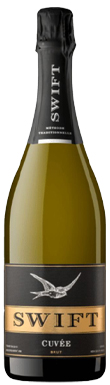

This is fresh and youthful for a Pinot Noir-Chardonnay blend that has most likely spent at least six years on lees. Fruit drives the wine:...
PrinthieOrange

Colmar Estate, Vintage Brut, Orange, New South Wales, Australia, 2017
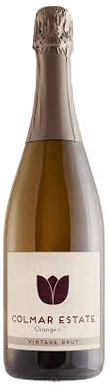
Thanks to the 80% Pinot Noir in the blend, there's a faintly tinted colour, smoky strawberry aromas and red apple overtones. The yeasty palate has...
2017
Colmar EstateOrange
Canobolas, Chardonnay, Orange, New South Wales, Australia, 2022
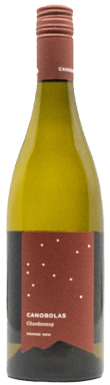
A discreet, harmonious nose that shows attractive albeit reserved creamy lees and lemon/citrus notes, while the oak is very subtle but effective, adding texture and...
2022
CanobolasOrange
Rikard, Chardonnay, Orange, New South Wales, Australia, 2022
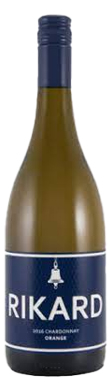
A honey note on top of waxy/lees and oatmeal aromas, the palate rich and full of flavour, yet refined. Texturally smooth and fine with sweet...
2022
RikardOrange
Freeman, Altura Vineyard Fiano, Hilltops, New South Wales, Australia, 2022
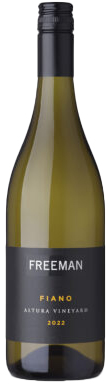
Spicy, tropical flower bouquet, hinting at frangipani, lychee, honey and dried mango. The wine has intensity and richness on the palate, good weight and length,...
2022
FreemanHilltops
Mayfield, Backyard Riesling, Orange, New South Wales, Australia, 2022
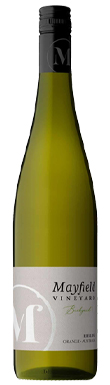
Bright aromas of lemon and white flowers, plus a hint of tropical fruits. Very delicate, light-bodied and classical in style. Has five grams per litre...
2022
MayfieldOrange
Philip Shaw, No19 Sauvignon Blanc, Orange, New South Wales, Australia, 2022
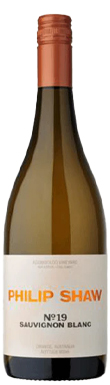
Light and bright with fresh lemon and peppermint aromas. The palate is crisp yet also quite intense in flavour, with vibrancy and fresh appeal. A...
2022
Philip ShawOrange
Hoosegg, Double Happy Cabernet Sauvignon, Orange, New South Wales, Australia, 2018
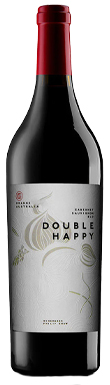
A typical Cabernet nose of blackcurrant and mulberry, the fruit ruling the aromas and flavours. The palate full-bodied and quite powerful but also refined and...
2018
HooseggOrange
Grove Estate, Sommitã Nebbiolo, Hilltops, New South Wales, Australia, 2019
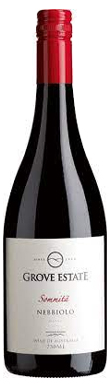
The bouquet is typical Nebbiolo in that it's elusive, savoury and laden with terrestrial scents such as fresh earth, drying autumn leaves and potpourri. The...
2019
Grove EstateHilltops
Philip Shaw, No3 Shiraz, Orange, New South Wales, Australia, 2018
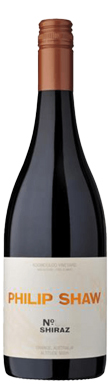
A strongly whole-bunch-influenced bouquet which is soft and multi-layered, open and approachable yet concentrated and with a structure that indicates excellent ageing prospects. A superb...
2018
Philip ShawOrange
Briar Ridge, Hillrose Syrah, Hilltops, New South Wales, Australia, 2022
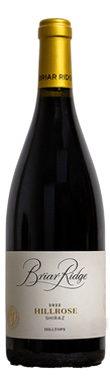
Aromas recall mixed spices – pepper and clove uppermost – as well as graphite and ironstone traces. Sweet berries too, which also fill the palate....
2022
Briar RidgeHilltops
Colmar Estate, Pinot Noir, Orange, New South Wales, Australia, 2022
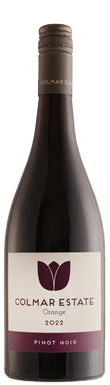
Light but bright red featuring a bouquet of spices, dark cherry, dried herbs, nettle and pomegranate. The palate is lean and fine, intense and tautly...
2022
Colmar EstateOrange
Freeman, Secco Rondinella-Corvina, Hilltops, New South Wales, Australia, 2016
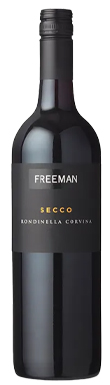
A sweetly mellow tobacco-like nose, while the medium to full-bodied palate is soft, fleshy and fruit-sweet at the core. There is gentle complexity here as...
2016
FreemanHilltops
Hungerford Hill, Sangiovese, Hilltops, New South Wales, Australia, 2022
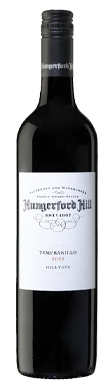
Bright, sweet mulberry, raspberry and blackcurrant aromas, the palate medium-bodied and firm with slightly edgy but ripe tannins adding grip. Quite delicious: the fruit-sweet core...
2022
Hungerford HillHilltops
Angullong, Fossil Hill Sangiovese, Orange, New South Wales, Australia, 2021
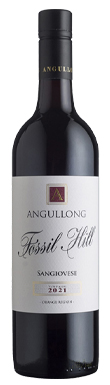
The aroma is driven by dark cherry and dried plum, along with terracotta, dry earth and pepper, with some iron-like mineral notes. Firm and bold...
2021
AngullongOrange
