No DO – The Spanish wines pushing the boundaries of tradition
If you see ‘Vino de España’ on a Spanish wine label, nowadays it may well mean it’s been made by a producer who likes to think outside the box on quality and creativity. Meet some of the Spanish winemakers determined to carve their own path, beyond the conformities demanded in the well-known regions.


When we take our first steps in wine study, we learn about famous appellations, permitted grape varieties and myriad regulations – often strange, at least to the newcomer. This is how I started to piece together the ‘official’ version of the wine world.
Was it the same for you? But right now, many producers in Spain are operating outside the rules governed by their denominación de origen (DO) – the Spanish equivalent of appellation.
Some of their wines are among the best in Spain and are either classified within a PGI (protected geographical indication) – a defined wider area that has less demanding specifications – or as Vino de España or Vino Varietal, broad classifications largely unburdened by geographical limitations or production-method stipulations.
There are many reasons for producers to classify their wines in less restrictive categories, and we will examine several of these.
First, it is important to explain that this is not an anti-DO rant!
The problems and advantages of DOs vary from region to region, some being relatively free from issues, but others seemingly inflicting a great deal of self-harm as a result of politics, intransigence or both.
Spain’s DO system does a lot of work on behalf of its producers to protect viticultural regions and promote them throughout the world.
On the other hand, many producers face roadblocks that stem from DO regulations which have, in many cases, failed to adapt to the challenges and ambitions of producers.
And then there are producers who are simply forced by geography or style to think outside the box, or rather in this case, outside DO borders.
The Spanish market

In the Spanish domestic market, most consumers favour wines from DOs. In a 2024 report (Consumo alimentario en España: Informe annual del consumo alimentario en España 2024) by MAPA, the country’s ministry of agriculture, fishing and food, it was noted that DO wines made up 50.8% of the volume of wine consumed within Spain, but an even bigger 73.8% of the total value of wine sales.
In contrast, wines with neither a DO nor PGI classification (ie, Vino de España) constituted only 41.9% of the volume sold and even less in value, at 20%. And wines classified in the PGI category only attracted 7% of the volume of wine sales, and a miserly 5.5% of value.
Traditionally, in the Spanish market, PGI and Vino de España classifications have been seen as inferior. This has been replicated internationally, with those wines making up the cheaper, value propositions in major retail.
There has been a perception that DO wines must be better quality because of stricter viticultural requirements, while wines made outside DO regulations have often come from higher-yielding, poorer-quality vines.
Free spirits

A new generation of winemakers is changing that image. Elías López Montero, owner and winemaker at Bodegas Verum in Tomelloso, 150km southeast of Madrid, has been committed to experimentation since starting his project in 2005.
Rather than the wines being classified within the DO Castilla-La Mancha, they are certified within the broader PGI of Vino de la Tierra de Castilla.
‘We wanted more freedom to play with different grapes, winemaking methods and ageing options. We wanted to be creative and take risks,’ López explains. ‘We are representing Castilla-La Mancha in our own way.’
Another young winemaker, Annabelle Borra (pictured above), released her first vintage from Vinos de Bellite in 2022 from vineyards close to Olite in Navarra. ‘We’re outside the DO because our wines are made in such a contrasting style to what’s typical in DO Navarra, especially with our biodynamic approach, whole-cluster fermentations and lower alcohol,’ Borra explains.
She believes that being outside the DO gives her the freedom to follow her own path. But is there a downside? ‘It also definitely means losing the benefits of a DO, like organised tastings and trips.’
Also in Navarra, Aseginolaza y Leunda is a small project that started selling with the 2017 vintage, of which there were only 2,400 bottles. ‘We have never been inside the DO, so we don’t know how it functions and cannot criticise it,’ is how owners Jon Aseginolaza and Pedro Leunda put it.
But they don’t subscribe to the regulations that classify wines according to the ageing process in the winery: a stipulation often imposed by the legal frameworks of DOs.
‘Our way of understanding our wines is based on the terroir and the landscape (parcels, lieux-dits, towns and regions),’ they explain.
Old regulations – new styles

Some producers simply have no choice. Owner of Bodegas Luis Pérez in Jerez, Willy Pérez (lead image), makes outstanding unfortified wine or Vino de Pasto. The grapes come from some of the best vineyard sites in Jerez, but there is no allowance for unfortified wines within the DO regulations – for now.
A movement to incorporate these wines into the DO is gathering momentum, however.
In Galicia, northwest Spain, Fedellos do Couto’s thrilling red Bastarda (made from Merenzao, also known as Bastardo in Portugal and Trousseau in Jura, eastern France) is now made from grapes from both sides of the Bibei river.
Winemaker Carlos (‘Curro’) Bareño Quintana names it ‘un vino criollo’ (a creole wine) with roots (literally!) in both Valdeorras and Ribeira Sacra. Previously this wine was produced from grapes wholly within the region of Ribeira Sacra but was still classified outside the DO.
However, Bareño is now optimistic about the role of the DO. ‘It has made real progress in terms of the regulations and is taking positive decisions,’ he reflects.
Does he think there are still more changes needed? ‘They should promote the old varieties, but I think they have already made a lot of progress with this. Also, they should only certify the wines according to the origin of the grape, not the quality,’ he adds. ‘They should not classify by organoleptic characteristics, nor on the basis of typicity, as these are subjective evaluations.’
Down in the Mediterranean southeast, Jorge Piernas (pictured) is a young grower and winemaker with vineyards in the Murcia sub-region of Bullas, where he classifies his wines outside the DO.
He has concerns about the established interests and outdated ways of thinking within the consejo regulador, but feels things can change organically as a younger generation becomes more involved.
What impact would this have on the winemaking practices of the region? ‘In our case, Monastrell above Merlot or Tempranillo,’ says Piernas. ‘Bushtrained vines instead of trellised, organic rather than conventional. Once you have this under control, let each person evolve the way they think they should.’
Consumer acceptance

As Piernas explains, marketing the wines to reach new consumers can be difficult without DO backing. ‘By being outside the DO you miss out on articles, presentations, visits from importer groups and official events,’ he concedes. ‘All of that takes away a lot of visibility, so there are very few positive aspects.’
However, when those wines reach the end consumer, it seems the reception is very positive. Edwina Watson, senior wine buyer at London retailer Fortnum & Mason, has recently made changes to its range.
‘We’re now moving beyond a selection once dominated by Rioja and Ribera del Duero to champion a broad spectrum of Spanish wines – wines with personality, irrespective of origin,’ she says.
A new addition to the Fortnum & Mason own- label range, an old-vine Garnacha produced by Bodegas Frontonio (near Zaragoza, Aragón) and classified as a varietal wine (£19.50), has become a customer favourite.
‘While appellations still matter, in Spain there’s a refreshing freedom for customers to look beyond a DO label, focusing instead on what’s in the bottle and who has made it,’ Watson adds.
These wines produced outside a DO may not carry a specified geographic origin on the label, but the best examples still communicate a clear sense of place with freedom and authenticity. The only problem? There are now so many excellent wines to try!
The 18 picks that follow are just some examples of the excellent non-DO wines that can be found…
18 top-notch non-DO wines from around Spain
Related articles
- Meet five maverick winemakers in Ribera del Duero
- Collector’s Guide: Spain
- What the locals are drinking in Rioja
Esteban Celemín, Últimas Huellas, Parcelas, Vino de la Tierra de Castilla y León, Castilla y Léon, Spain, 2023
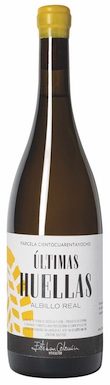

Esteban Celemín’s wonderfully expressive Albillo Real comes from four parcels grown on stony, sandy soils and close to his winery in Castronuño, Valladolid province. Fermented and aged for a year in barrel, the wine offers a hint of reduction which slowly reveals exotic aromas of pineapple and mango. The palate is driven by a salty minerality and a somewhat waxy texture, creating a textured, complex and seriously dry white wine. Elegant and precise.
2023
Esteban CelemínVino de la Tierra de Castilla y León

Bodegas de la Riva, La Riva Macharnudo El Notario, Vino de España, Andalucia, Spain, 2022
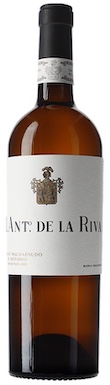
A direct, powerful and stripped-back white wine that speaks to its Andalucían origins. The Palomino Fino comes from the Notario parcel in the paraje of Macharnudo, where typical albariza soils seem to imbue this wine with serious freshness and salinity. It spends nearly two years under flor in bota casks, resulting in a wine that lingers somewhere between a white and a fino, with a beeswax texture and a biting lemon peel character. It is a great expression of the plot and Jerez itself.
2022
Bodegas de la RivaVino de España
Vides y Vinos Ossian, Capitel, Vino de la Tierra de Castilla y León, Castilla y Léon, Spain, 2022
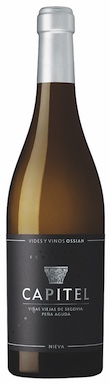
This is very old-vine Verdejo – some approaching 200 years – from Nieva, a cool region south of Valladolid in the province of Segovia. Here, the signature sandy soils take centre stage, resulting in a precise and chiselled white wine that shows off the freshness of the area. Typical varietal bitterness (hemp and grapefruit pith) combines with subtle oak to create a mouthwatering and textured white that will certainly develop further over the coming years. Organic.
2022
Vides y Vinos OssianVino de la Tierra de Castilla y León
Xose Lois Sebio, Vinos de Encostas, O Con Albariño, Vino de España, Galicia, Spain, 2022
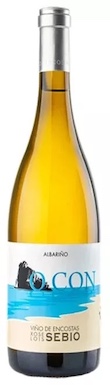
A beautifully evolving Galician Albariño, showing just a touch of kerosene and nutty complexity from a couple of years in bottle. The wine was part-fermented and aged on lees for 10 months in 500L and 700L used French oak barrels, which has created a structured white wine without losing any vibrancy. A medicinal note combines with aromas of juniper and a hint of tropical fruit leading to a saline and precise palate. Offering lots of tension, this will continue to unfurl over the years to come.
2022
Xose Lois Sebio, Vinos de EncostasVino de España
Enric Soler, Improvisació, Vino de España, Penedès, Spain, 2022
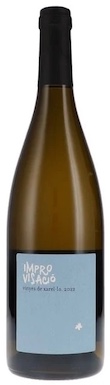
One of Catalonia’s top white wine producers, Enric Soler has crafted a chalky, stony Xarel.lo with fabulous energy. It comes from his two main parcels of 45- to 65-year-old vines in the Penedès, and is fermented and aged for eight months in Austrian Stockinger vats and concrete eggs. Lively citrus fruit drives this wine while there is a hint of fennel that speaks to its Mediterranean origins. It is electric and taut, serious yet mouthwateringly moreish.
2022
Enric SolerVino de España
L'Enclòs de Peralba, Els Presseguers, Vino de España, Penedès, Spain, 2021
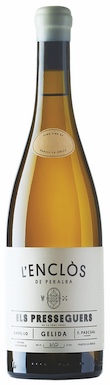
From vines planted in 1994 on clay-limestone soils in Penedès, this biodynamically farmed Xarel.lo from Roc and Leo Gramona combines richness and finesse. Fermented in stainless steel and aged nine months in a mix of cement eggs and 300L and 500L barrels with regular batonnage, the wine offers a certain creaminess cut with vibrant acidity. Ripe pear, apple and lemon are supported by a steely backbone, leading to a herbal finish. A serious wine and very moreish.
2021
L'Enclòs de PeralbaVino de España
Bodegas Garcia de Lara, Finca Villalobillos Airén Pie Franco, Vino de la Tierra de Castilla, Castilla-La Mancha, Spain, 2022
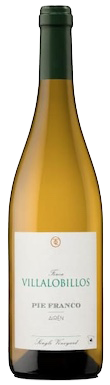
Planted in 1935 at 700m on García de Lara’s family estate in Corral de Almaguer, east of Toledo, these dry-farmed, ungrafted Airén vines reveal the hidden potential of this historic variety. Fermented in stainless steel, the wine offers a somewhat creamy palate of lemon curd and baking spice, balanced by intense salinity and chalky freshness. It has gained complexity in bottle and reveals the personality of central Spain.
2022
Bodegas Garcia de LaraVino de la Tierra de Castilla
Artadi, Valdeginés, Paraje de Valparaíso, Vino de España, Rioja, Spain, 2022
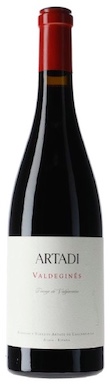
From a 4.1ha parcel in Laguardia planted on limestone-rich soils, this wine captures the essence of the Basque Country's Alava province. Perfumed with violets, wild herbs and a touch of black pepper, it’s vibrant with sloe berry and redcurrant crunch. It was fermented in 500L bocoy barrels where it spent 10 months prior to six months more in foudre, resulting in a finely balanced wine with understated oak. An elegantly structured wine, it is built to age and is a beautiful expression of its terroir.
2022
ArtadiVino de España
Bodegas Verum, Ulterior Parcela 6 Garnacha, Vino de la Tierra de Castilla, Castilla-La Mancha, Spain, 2020
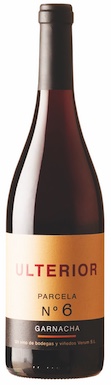
From organic vineyards of the El Romeral estate at Tomelloso, Ciudad Real, this Garnacha is fermented with 50% whole bunches in small stainless steel tanks, then aged for 12 months in 4,500L clay tinajas. Pale in colour but full of intensity, it displays strawberry jam and delicate caramel. Some exotic spice and garrigue herbs combine with tobacco leaf to create a unique personality on the palate, which is marked by fresh, chalky tannins and impressive acidity. It's a lively and vibrant Garnacha that confirms it can thrive in all terrains.
2020
Bodegas VerumVino de la Tierra de Castilla
Bodegas Frontonio, Las Alas de Frontonio, La Tejera, Vino de España, Aragón, Spain, 2022
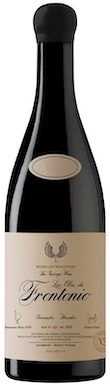
Sourced from the 1.4ha, quartz and slate, 80-year-old La Tejera vineyard in Alpartir, Aragón, this Garnacha-Macabeo field blend is as detailed as it is characterful. Aromas of peach compote and burnt orange mingle with cranberry, pomegranate and citrus peel. It was whole-bunch fermented and aged for 12 months in oak foudres, resulting in a firm and sinewy palate with well-managed tannins and a mineral drive. An elegant wine, it offers a true sense of origin.
2022
Bodegas FrontonioVino de España
El Escocés Volante, Provechón El Matón, Vino de España, Aragón, Spain, 2021
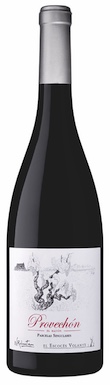
Only 1,800 bottles were produced from this 0.41ha parcel of Provechón (Bobal) planted in 1938 in Aniñon, most likely the oldest remaining vineyard of the variety in Aragón. It is a surprisingly floral and aromatic wine with mountain herbs and bright red berries. Whole-berry fermented, then aged in flextank egg and used 500L oak for 13 months, it is fruit-forward and elegant despite its intensity. Marked acidity brings freshness and elegance to a wine that is both satisfying and highly accomplished.
2021
El Escocés VolanteVino de España
Bodegas y Viñedos Jorge Piernas, Juan Piernas, Vino de España, Bullas, Spain, 2021
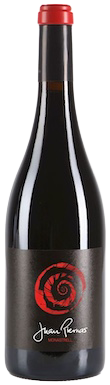
From 50-year-old vines in the El Paso Malo vineyard in Bullas, Murcia, this Monastrell is powerful yet poised. Black plum and damson fruit are intertwined with mountain herbs and a stony, mineral core. Nine months in 500L French oak barrels adds a gentle touch of oak, framing the wine with fine-grained tannin. Aromatic and layered, the wine marries depth with energy and finesse.
2021
Bodegas y Viñedos Jorge PiernasVino de España
LMT Wines, El Yesal, Vino de España, Navarra, Spain, 2023
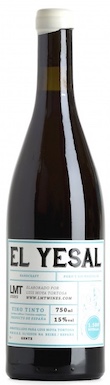
From 100-year-old Garnacha vines rooted in gypsum soils, this is a vibrant wine with impressive finesse. Partial whole-bunch fermentation lends brightness and lift, supporting aromas of wild strawberry and delicate wild flowers. The palate is layered with ripe plum and driven by acidity that brings tension and verve. At once elegant and intense, this is a Garnacha that captures the fruit and freshness of Navarra’s northern reaches.
2023
LMT WinesVino de España
Vinos de Bellite, Borra de la Vega, Vino de España, Navarra, Spain, 2023
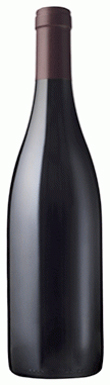
A beautifully poised Navarra Garnacha from a single vineyard first planted in 1941, this wine is lifted by a few vines of Garnacha Blanca and Viura. Minty aromas combine with rose petal and pomegranate while sleek, fine tannins bring definition to the palate, while cola and wild herb notes add to the freshness. It spends 10 months in neutral 500L French oak barrels, already well integrated into the wine. Elegant and precise but full of character. Produced using biodynamic methods.
2023
Vinos de BelliteVino de España
Aseginolaza y Leunda, Camino de Auritz, Vino de España, Navarra, Spain, 2022
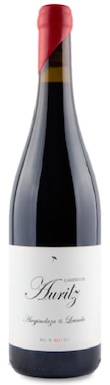
From two small parcels in Muruzábal, about 20 minutes southwest of Navarra's capital Pamplona, this is Garnacha with a northern feel. Pale in colour and full of aromatic charm, the nose reveals rose, delicate red berries and intense mountain herbs. Aged nine months in used French oak, the palate is finely structured, with delicate grainy tannins that bring shape and texture. A subtle, bitter herbal note adds to the freshness and character of this wine, which clearly reflects its origin.
2022
Aseginolaza y LeundaVino de España
Fedellos do Couto, Bastarda, Vino de España, Ribeira Sacra, Spain, 2023
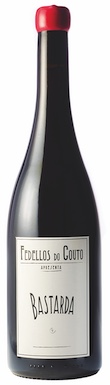
Pale in colour, this 100% Merenzao (Bastardo/Trousseau) from the regions of Ribeira Sacra and Valdeorras is somewhat delicate and finessed. It is a vibrant wine with cranberry crunch and added lift from the faintest of greenness in the form of tomato vine and wild herbs typical of the area. Plush strawberry dominates the palate, where 12 months in French oak is barely noticeable. A slatey character drives the wine, which is a beautiful expression of Galicia’s Atlantic style of red wine.
2023
Fedellos do CoutoVino de España
Jorge Temprado Viticultor, Pequeño, Vino de España, Aragón, Spain, 2023
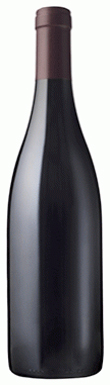
Bright and energetic, this Aragón Garnacha shows lifted strawberry fruit and an aromatic mix of thyme, oregano and white pepper. The palate offers lively acidity, balanced by just a short passage of six months in used barrels, and is marked by an intense minerality that seems to come from the vineyard’s sandy, slate soils. An expressive and unadulterated interpretation of Calatayud.
2023
Jorge Temprado ViticultorVino de España
Casa Aurora, Clos Pepín Villa de Albares, Vino de España, Bierzo, Spain, 2023
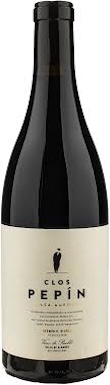
From the northern part of Bierzo, outside of the limits of the DO, this field blend is Mencía (60%) with Garnacha Tintorera, Palomino, Merenzao, Garnacha and Gran Negro. It is grown at up to almost 1,000m on red clay soils with granite, and harvested about a month later than the vines from the central valley. Forest-fresh aromas with balsamic and lavender open to red cherry, sloe berry and a hint of salinity. Steely and direct, it is a great example of high, cool Bierzo with an Atlantic profile.
2023
Casa AuroraVino de España
