
Non-Vintage Champagne: Panel tasting results
Our judges were impressed with the quality on show in this tasting, and while the category may lack the glamour of the top cuvées, non-vintage is the engine that drives the Champagne region, for both the Grandes Marques and smaller houses.


Simon Field MW, Anne Krebiehl MW and Tim Hall tasted 68 non-vintage Champagnes with two outstanding and 51 highly recommended.
Entry criteria: Decanter invited producers in Champagne to submit their main white, brut non-vintage cuvée, with a particular focus on members of the Union des Maisons de Champagne.
The verdict
Champagne houses face unprecedented challenges, agreed our panel, from sales in decline due to Covid and from climate change, but an impressive set of wines were fielded.
A very positive showing, from a region in turmoil, concluded our tasters. Only 14 of the 68 wines tasted scored lower than 90 points – a significant achievement for this entry-level, though hugely important category.
‘I was impressed by the general classic character of most of the wines we tasted,’ said Tim Hall. ‘There’s no question that Champagne is getting riper and fuller bodied, but this tasting showed that producers are making great efforts to preserve freshness and balance, and to combat the effects of climate change.
Scroll down for the top scoring Non-Vintage Champagne panel tasting notes and scores
‘The practice of what goes on in the face of climate change will take years to come to fruition,’ he continued, ‘but I was encouraged by these early efforts.’
‘There are two key factors when it comes to the quality of brut sans année [non-vintage],’ said Simon Field MW: ‘how much reserve wine a producer adds, and the dosage regime employed. The corollary to this is the ripeness of the fruit, which is increasing as the climate gets warmer. Dosage is unquestionably coming down, because the fruit is getting riper. At the same time, the percentage of reserve wine used has generally been increasing.’
Most of the wines tasted here probably had frost-affected 2017 as their base year, said Field. ‘It was a horrendous year,’ added Hall, ‘and the producers of the best wines here would have compensated by upping the level of reserve wines from 2013, 2015 and 2016 – maybe even fractions of the wonderful 2012 vintage.
‘There’s a massive surplus of reserve wines in Champagne at the moment, and we’ll see the proportion used increase, which is not necessarily a bad thing for the basic non-vintage offering of every major house.’
Both Field and Anne Krebiehl MW commented on the stylistic diversity on show. ‘There really is something for everyone,’ enthused Krebiehl. ‘And most of these were a pleasure to drink. I relished the freshness, the autolysis – even if it wasn’t pronounced – and the roundness.’
Krebiehl felt the Pinot Noir-based wines performed best – the best Chardonnay is probably used in other cuvées, she speculated. Field was also full of praise for these wines: ‘The Pinot Noirs excelled,’ he agreed, ‘the ripe, forward, red-berry character suiting the autolytic development.’
Hall emphasised the need for the Champagne houses to send a clear and different message to wine lovers this Christmas – 50% of Champagne is sold between September and January, he pointed out. And a wine that is associated primarily with celebration has suffered more than any other category in this pandemic. ‘Covid is providing Champagne with its biggest negative challenge in history,’ Hall said. ‘The region is sitting on five or six years of stock, when they’d like to be sitting on three. We’re about to see a period of dumping.’
While Hall advised consumers not to be seduced by discounts, Krebiehl was more upbeat. Why not take advantage of the deep discounting and buy non-vintage Champagnes to lay down for a couple of years, she suggested. ‘Maybe the message to consumers should be around using Champagne to make home and family socialising very special,’ said Hall.
Krebiehl was buoyed by the quality on display – ‘they tasted satisfyingly of Champagne’ – and remained positive about the future. ‘Champagne is the wine with the greatest resilience. No one can replace 200 years of solid marketing. In every city in the world, you’ll find Champagne on the wine list. What other region has this advantage?
Discussion copy by Amy Wislocki.
See all the wines from the Non-Vintage Champagne panel tasting
The NV Champagne scores:
68 wines tasted
Exceptional 0
Outstanding 2
Highly Recommended 51
Recommended 14
Commended 0
Fair 0
Poor 0
Faulty 1
Champagne: The Facts
Vineyard area: 34,300ha
Area by variety: Pinot Noir 13,034ha, Meunier 10,976ha, Chardonnay 10,290ha
Sub-regions: Montagne de Reims, Côte des Blancs, Vallée de la Marne, Côte de Sézanne and the southernmost Côte des Bar
Villages/crus: 319 – grand cru 17, premier cru 42, the rest classed as AOP Champagne
About non-vintage Champagne
Champagne is serious business – despite the high jinks eternally associated with it. Its annual sales, totalling £4.25 billion, are the economic motor of the region. While Champagne’s 34,300ha cover just 4% of France’s national vineyard area, the wines are responsible for a whopping 20% of the country’s wine revenue and 22% of its wine exports.
Most of the bottles made, shipped and drunk – a little more than two-thirds in fact – are so-called ‘brut sans année’, or brut (dry) non-vintage wines.
While most of the column inches given over to Champagne focus on prestige cuvées and single vintage releases, the entire industry actually hinges on these less exalted, high-volume bottles.
Tasting brut non-vintage may not be as thrilling as tasting vintage Champagnes, or the celebrated têtes de cuvée deluxe and prestige bottlings, but it is far more telling. These wines are, after all, the calling card of each house. The NVs give clues about quality and are the key to the style of a house. It is their consistency and reliability over the long term that is decisive and forges a house’s reputation.
Those of us who always keep a bottle chilled just in case we need a little pick-me-up will have one of these in the fridge – and hopefully more in the cellar. These are the go-to bottles which do the heavy lifting for Champagne as a whole.
Grandes Marques
A huge part of that market has traditionally been cornered by the so-called grandes marques, or ‘big brands’. This self-styled name harks back to the Syndicat de Grandes Marques, which today has been subsumed into the Union des Maisons de Champagne organisation. Previously, the Syndicat had grown gradually out of a group formed in 1882 to protect the name of Champagne in the era before French appellation law existed.
Over time, however, they dedicated themselves to furthering the prestige of Champagne in the world. This illustrious bunch, with chairmen from the likes of Veuve Clicquot, Pommery, Louis Roederer and Taittinger, was clearly effective: the world still refers to grandes marques – brands whose wines promise consistency year-in, year-out, no matter where in the world you buy a bottle.
Quite a number of big names entered their wines into our blind tasting of almost 70 wines, but there were also many other producers that are not necessarily household names – thus it held many surprises. Some of my favourites were indeed rewarded, while new names popped up to buy. We three tasters did not always agree, but this only goes to show how important it is to find a marque that really suits your own preferences.
It is clear that good blanc de blanc Champagnes are hard to find at this level, while blanc de noirs had an easier run. In effect, however, it was Champagne’s prized art of blending all three varieties that shone. Just as it should be with brut sans année.

The art of ageing Brut NV Champagne
Time is a key element in making Champagne. By law, non-vintage Champagnes have to spend at least 12 months on their lees (the expired yeasts used in the second fermentation in-bottle) before being disgorged (the removal of those yeast deposits). They then need a further three months’ post-disgorgement. Most of the better NV wines exceed this legal minimum, while vintage and prestige cuvées age far longer.
Special late-disgorgement releases clearly illustrate the difference between pre- and post-disgorgement ageing. While nothing can replace pre-disgorgement ageing in terms of mousse and texture, a little post-disgorgement ageing (ie, time in your cellar) works absolute wonders for NV Champagnes. When I was younger and poorer, I would make use of pre-Christmas discounts and just leave the bottles in my cellar (the benefit of a draughty Victorian ground-floor flat). Twelve months later, much more rounded, suave Champagnes would emerge.
I now age much finer bottles, but always have NV bottles in the cellar, too, simply because they gain so much by being aged.
Two or three years should be no problem at all for a NV Champagne, and the really good ones easily stretch to five years. So stash some away in a cool, dark spot. Quite apart from ageing, it is always good to have Champagne in the house.
See the top scoring Non-Vintage Champagne panel tasting notes and scores
The judges
Simon Field MW
Field was a buyer for London-based wine merchant Berry Bros & Rudd for more than two decades, and now works as a consultant on areas which particularly interested him during that time, with Champagne topping the list in France, along with Rhône and Languedoc. He is also a Decanter World Wine Awards judge.
Anne Krebiehl MW
German-born but London-based, Anne Krebiehl MW is a widely published freelance wine writer, educator, competition judge and consultant. A contributing editor for Austria, Alsace and English wines for Wine Enthusiast magazine in the US, she also has a particular speciality in all things sparkling and Champagne.
Tim Hall
Hall owns and runs Scala Wine, importing selected small-grower Champagnes into the UK and running events and trips. Promoted to Chambellan of the Ordre des Coteaux de Champagne in 2019, in 2013 he won the CIVC’s UK Champagne Ambassador competition and was runner-up in the European final held in Champagne.
Read next:
Champagne 2020 to make rare ‘trilogy’ of top vintages
Women of Champagne
Has the Champagne price bubble burst?
Charles Lafitte, Grande Cuvee Brut, Champagne, France
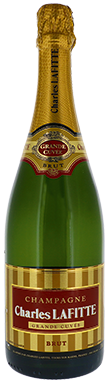

Simon Field MW: Bright with a lively mousse and mouth-filling texture. Attractive nose of peach, frangipane and brioche with very enticing match struck notes. The...
Charles Lafitte

Henri Giraud, Ay Grand Cru MV15, Champagne, France
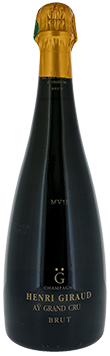
Simon Field MW: Modern oaky nose; hints of coconut and spruce; graphite and flintstone; behind that verbena, petits fruits rouges and a pleasing integration,...
Henri Giraud
Edouard Brun, Réserve Premier Cru, Champagne, France
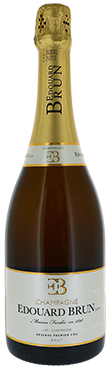
Creamy plum freshness combines with citric fruit, flowers, and windfall apples. Intense, savoury baked notes with lovely aromatic richness and pleasing finish.
Edouard Brun
Lanson, Le Black Réserve, Champagne, France
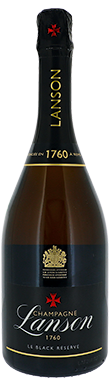
Inherent depth and freshness on the nose with butterscotch, ginger & macadamia. Apples, wild honey on the palate with a bitter lemon rind richness and...
Lanson
Louis de Sacy, Grand Cru, Champagne, France
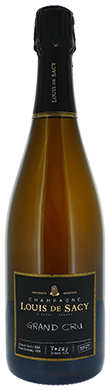
Flowers and hints of petrichor with subdued smokiness; lively mousse with fresh but inherently rich. On the palate stone fruit, flint and rye crumb with...
Louis de Sacy
Veuve Clicquot, Yellow Label, Champagne, France
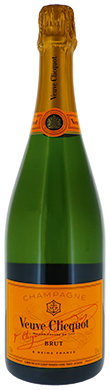
Lemony richness on the nose, a struck match character that falls in with lemon vanilla note. Toffee apple allure on the palate with chalky coolness...
Veuve Clicquot
Alfred Gratien, Champagne, France
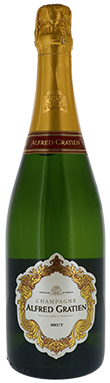
Buttery shortcrust pastry on the nose with hints of sourdough and flowers on the palate. A lovely interplay, rich but most refreshing with lasting flavour.
Alfred Gratien
Bernard Remy, Carte Blanche Brut, Champagne, France
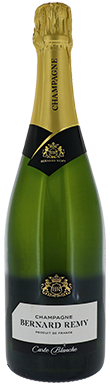
Freshly cut peel of red apple and slight white peppery notes on the nose. Delicate palate of berries and cream with chalky line of cool...
Bernard Remy
Charles Clément, Tradition Brut, Champagne, France
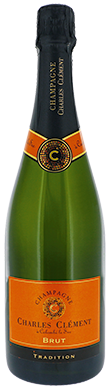
Smokiness and rye bread richness on the nose translate into brisk, vivid freshness. Hazelnut, quince, and honey on the palate with gentle mousse; potential to...
Charles Clément
Eric Legrand, Cuvée Réserve Brut, Champagne, France
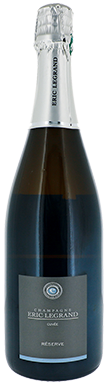
Lemon meringue and vanilla on the nose with a certain smokiness. Lively mousse with a touch of herbs and creamy richness on the palate which...
Eric Legrand
Gosset, Grande Réserve Brut, Champagne, France
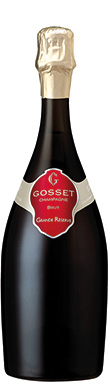
Rich nose of hazelnut, fig, and verbena. Fresh buttery, yeasty palate with lovely train of citrus and floral notes; shows autolytic depth.
Gosset
Beaumont Des Crayères, Grande Réserve Brut, Champagne, France
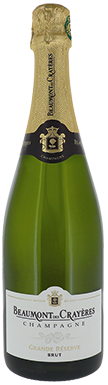
Waxy fulsome nose with preserved lemons and spice box. Teasing incisive palate with sourdough depth, lemony, apple scented richness and lively finish.
Beaumont Des Crayères
Brice, BOUZY Grand Cru, Champagne, France
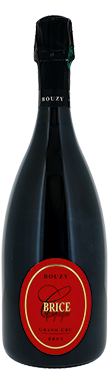
Molten candle wax, earth and rye crumb make for a rich expressive nose. Lovely salty sourdough with a hint of white pepper on the palate;...
Brice
De Watère, Brut Premier Cru, Champagne, France
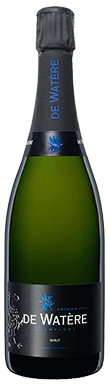
White field mushroom and fresh, unusual fruity yet earthy combination on the nose. On the palate spikey fresh mousse with bready richness, subtle yeasty depth,...
De Watère
J. de Telmont, Grande Réserve, Champagne, France
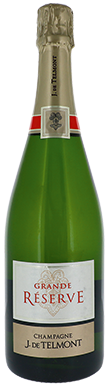
Buttery shortbread and fresh lemon rind combine on the inviting nose. Autolytic richness with red apple on the palate with a slight hint of honey....
J. de Telmont
Pommery, Royal Brut, Champagne, France
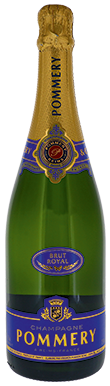
Seductive nose of verbena, plum and summer flowers. Lovely shortbread depth and buttery richness on the palate with impressive finish.
Pommery
Vranken, Demoiselle Brut E.O., Champagne, France
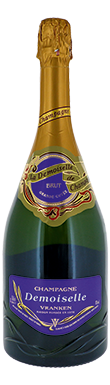
A touch of smoky butter with richer fruitiness on the nose. Fine mousse, melting butter and beguiling spice on the palate with beautiful depth and...
Vranken
