
Ornellaia: a masterclass in elegance
Monty Waldin recently co-hosted a Decanter Virtual Masterclass from the cellars of Ornellaia with estate director, Axel Heinz. If you weren't in the audience, here's what you missed...


As a grizzled sceptic I am wary whenever themes are shoehorned into a range of different wines and vintages. Ornellaia’s estate director, Axel Heinz chose the theme of ‘harmony, symmetry and elegance’ for this impressive Decanter Virtual Masterclass, but I need not have worried.
Scroll down for Monty Waldin’s tasting notes and scores for the seven Ornellaia wines
Poggio alle Gazze
The first wine, and the only white in the lineup, was Poggio alle Gazze (‘Magpie Hill’). It set the tone with its creamy, saline and transparent fruit and effortless texture.
This Sauvignon-dominated blend is an ageable, food-friendly wine. Heinz explained to the virtual audience how over time he had reduced the percentage of Viognier in the blend as it can be overpowering.
He also introduced concrete eggs to ferment the Vermentino. ‘Vermentino doesn’t like oak, and the egg’s oval shape allows better lees movement, more harmonious ferments and better-integrated creaminess,’ he explained.
Le Serre Nuove
The first red we tasted, Le Serre Nuove, is often considered to be Ornellaia’s ‘second wine’, but Heinz explained that it is in fact ‘terroir-specific, coming from lighter, sandier terroirs, hence it is afforded its own identity.’
Wines from sandy soils are among the hardest to get right, often seeming somewhat loose and vacant, but both the Le Serre Nuove vintages tasted here – the more structured 2013 and the silky and more obviously fluid 2018 – showed kinetic, forward-flowing fruit with palpable juiciness and focus.
Watch the full Decanter Virtual Masterclass Ornellaia tasting
Four vintages of Ornellaia
There followed four vintages of Ornellaia across three decades. Heinz, who has been with Ornellaia since 2005, said ‘experience builds confidence in intervening less but better. When you start thinking you know it all, you risk working to a formula.’
Each vintage of Ornellaia has undergone incremental tweaks, which Heinz describes as ‘trying to find a way to interpret each vintage on its own merits. What is the nature of both fruit and tannins?’
Tasting grapes in the field pre-harvest gives you ‘only a part of the story,’ he says. ‘The first days of fermentation give you more clues. We already have very varied vintages now in terms of weather patterns…The old vines are less flexible, so we adapt to them rather than vice-versa. And now the vineyards in general are mature, we have a real sense of what Ornellaia should express.’
There is a strong sense of maturity in the human terroir, too. Wine production is shared between Heinz and Ornellaia’s equally insightful winemaker Olga Fusari, who have 32 vintages at the estate between them.
Ornellaia: Fact box
Owner: Marchesi di Frescobaldi, since 2005.
Vineyard area: 115 hectares, 90% red, 10% white.
First vintage: 1985 (from vines planted in 1981).
Key wines: Poggio alle Gazze, Ornellaia Bianco, Le Serre Nuove, Le Volte, Ornellaia
The varieties
Heinz’s time working with prestigious names in Bordeaux (he has both French and German roots) in his early career has given him an adroit feel for getting the best out of the big-hitting Bordeaux varieties of both colours. ‘Bolgheri and Bordeaux are both maritime regions, but Tuscany’s extra daytime heat means treading the cautious path,’ he says.
‘The drier air here gives more flexibility in terms of picking dates during the day,’ he continues. ‘Cold nighttime air preserves aromas and the freshness needed for ageing…we ferment cooler here compared to Bordeaux. This preserves richness and ripeness without ever losing the necessary freshness.’
Bolgheri’s signature grape is Cabernet Sauvignon, but Heinz is not the only Bolgheri winemaker to show increasing interest in Cabernet Franc, which can be remarkable here for its moreish, silky, shining fruit and a distinct lack of its sometimes scratchy herbaceousness.
The much later ripening Petit Verdot, which is used as a bit-part on Bordeaux’s maritime Left Bank to add a touch of structure, also features in coastal Bolgheri.
But as in Bordeaux, ‘too much Petit Verdot can be rustic,’ Heinz notes – although the variety accounted for 17% of the blend in the 2018 vintage of Le Serre dell’Ornellaia.
Vintage variations
The tasting of four vintages of Ornellaia began with 2018, the latest vintage to be released. Despite its unusually high percentage of Merlot (51%), it should have a wide drinking window and be ready to drink virtually from the off. It also shows early signs of greatness in its clarity of fruit and quality of tannins.
Ornellaia 2013 was fascinating, Heinz describing it as ‘still tight, and fighting with itself, deciding if it wants to be a young wine or a mature one.’ I found it still very fresh, almost as if it had only just been bottled, and full of expression and elegance.
The sleeper vintage was the 2007, which is now beginning to approach its peak. ‘The 2007 was low key initially, and has never really closed down since, providing a long drinking window and a silkiness that is not dissimilar to 2018,’ says Heinz. Generous fruit, plenty of freshness and a tight weave of Bolgheri silk make this an attention-holding wine.
Ornellaia 1999 was the final wine of the tasting. It was a hot and highly rated vintage, providing uniform ripeness, hence the darker and deeper than usual fruit expression. Heinz describes it as ‘a figgy, very solar wine that probably has 15 or more years ahead of it.’
With its backbone of 65% Cabernet Sauvignon and its mid-adolescent age, this will definitely benefit from decanting.
Living up to its ‘harmony, symmetry and elegance’ billing, these wines proved to be anything but the big, bold blockbusters that the ‘SuperTuscan’ moniker given to Ornellaia and others erroneously implies.
The wines proved stimulating to unpick. I found myself going back to the wines without wearing myself out as would be the case with a similar number of Brunello di Montalcinos from the hot southern zone, for example. And I kept going back to them more as a wine lover than a journalist.
Ornellaia is an estate in its prime. Both vines and humans are now mature and at ease with each other, and well prepared to cope with future climatic vicissitudes.
Tasting Ornellaia wines:
Tickets now on sale for Decanter’s next Virtual Masterclass:
We are very excited to announce that tickets are now on sale for Decanter’s next Virtual Masterclass Château La Lagune and Paul Jaboulet Aîné: going beyond biodynamics – CLICK HERE TO FIND OUT MORE
Coming up…
- Champagne Billecart-Salmon – 14 May 2021 – priority tickets on sale Friday 16 April
- Château Margaux – 25 June 2021 – priority tickets on sale Friday 22 May
Not a Decanter Premium subscriber yet?
You may also like:
First taste: Ornellaia 2018
Tua Rita: producer profile plus latest releases tasted
Brunello di Montalcino 2004: a retrospective
Ornellaia, Poggio alle Gazze dell'Ornellaia, Toscana, Tuscany, Italy, 2018
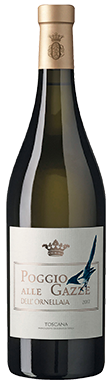

As 2018 was a relatively late harvest, bunch selection at picking followed tough ripeness criteria for each grape variety and terroir. Soft pressing gave finer...
2018
OrnellaiaToscana

Ornellaia, Le Serre Nuove dell'Ornellaia, Bolgheri, Tuscany, Italy, 2018
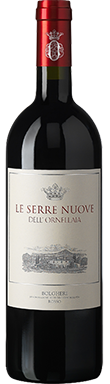
Le Serre Nuove's approachable style comes from younger vines or those on lighter, sandier soils, whilst retaining its potential to age in bottle. 2018 brought...
2018
OrnellaiaBolgheri
Ornellaia, Le Serre Nuove dell'Ornellaia, Bolgheri, Tuscany, Italy, 2013
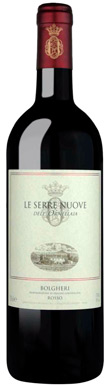
Le Serre Nuove dell'Ornellaia 2013 is engaging whilst having plenty of time left on its side. Both fruit and oak tannins are in sync, while...
2013
OrnellaiaBolgheri
Ornellaia, Bolgheri, Superiore, Tuscany, Italy, 2018
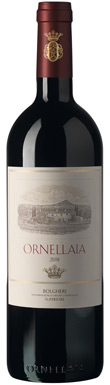
This is such a charismatic wine, abundant and packed full of flavour while refined and precise. The palate has barely-there tannins that glide across the...
2018
OrnellaiaBolgheri
Ornellaia, Bolgheri, Superiore, Tuscany, Italy, 2013
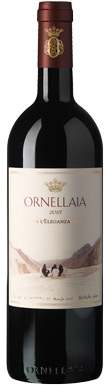
What a difference 10 years makes! There are plenty of bottle age characteristics on both nose and palate (cigar, tobacco and leather), while the oak...
2013
OrnellaiaBolgheri
Ornellaia, Bolgheri, Superiore, Tuscany, Italy, 2007
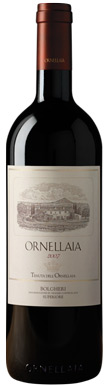
2007 was an old-school vintage whose steady growing season - sun and rain at the right times, no unwelcome surprises - culminated in a sunny...
2007
OrnellaiaBolgheri
Ornellaia, Bolgheri, Superiore, Tuscany, Italy, 1999
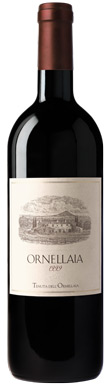
1999 produced a very deep Ornellaia with uniform ripeness and a darker than usual fruit profile, not least because of the very high quality of...
1999
OrnellaiaBolgheri
