
Paraje Altamira: The Geographic Indication that transformed Argentina’s terroirs & 20 wines tasted
Ten years after the creation of the Paraje Altamira GI, Alejandro Iglesias assesses its importance and legacy, talking to the winemakers who were instrumental in setting up this unique region.


About 20 years ago, Argentina saw the first stirrings of what would become known as the ‘terroir revolution’. During this time, wineries began to carry out in-depth studies of their vineyards to gain a better understanding of the effect the local conditions had on their wines.
This meant that it became useful for labels to state an exact place of origin, to indicate what drinkers might expect of the terroir-imbued character of the wines.
In 1999, the National Institute of Viticulture of Argentina (NIV) began a programme of Geographic Indications (GI) based around existing political boundaries – namely provinces, departments and districts. However, those demarcations did not necessarily align with the natural boundaries responsible for lending wines their distinctive profiles.
Scroll down for tasting notes and scores of 20 spectacular Paraje Altamira wines
Luis Reginato, head of vineyards at Catena Zapata, remembers: ‘We were enthusiastic about the idea of putting the exact origins of the grapes on the label. At the time, you could put “Mendoza, Argentina”, or maybe “Uco Valley”, but we knew that the Uco Valley has a range of diverse climates and soils, and so we started a study programme to gather information and knowledge that we’d never had before.’
During this process, Paraje Altamira GI was created, a milestone in the history of Argentinian wine – and one of the new and most exciting ‘grand crus’ in South America.
The Paraje Altamira example
‘The work we did to create the Paraje Altamira GI was essential. We’d never studied the climate, soils and geological origins of a specific place in such detail, and we worked in partnership with distinguished experts and institutions,’ says Hervé Birnie-Scott, estate director at Terrazas de los Andes.
The spur came in 2010, when the wineries Catena Zapata, Familia Zuccardi and Chandon (Terrazas de los Andes) invited the Universidad Nacional de Cuyo to run the research programme and present the results to the NIV. But there were further obstacles that needed to be resolved first.
‘Altamira had two issues that we had to deal with,’ says Sebastián Zuccardi. ‘ The name was registered as a trademark and we couldn’t use it. Also, it didn’t have any geographic boundaries; it was an area within the District of La Consulta (Department of San Carlos, Uco Valley).
The quality of the vineyards had earned them their own name among the locals: “Altamira”. We all knew that we needed to start promoting the place so we commissioned the most detailed studies possible to show the NIV that the region had its own distinctive characteristics.’
The studies included soil mapping, geological information, satellite imagery and the assaying of hundreds of soil samples to show that the area studied – designated as ‘Altamira’ – shared a set of characteristics that differentiated it from neighbouring areas. This would allow a new GI border to be drawn up. It was then that the leaders of the initiative came up with the idea of adding ‘Paraje’ (a local term for settlement or village) to differentiate it from the trademark.
Eventually, in 2013, the GI was approved and since 2014 it has been permitted to put the term on the labels of wines from the area.
Paraje Altamira GI: The facts
Location San Carlos Department, Uco Valley, Mendoza
Altitude 975m-1,097m
Total area 7,472ha
Cultivated area 2,733ha
Climate Continental, dry, sunny, significant thermal amplitude (Winkler III)
Soils Alluvial, heterogenous, stony soils rich in calcium carbonate
Main grapes Malbec 65%; Cabernet Sauvignon 15%; Chardonnay 6%; Pinot Noir 4%; Syrah 3%; Cabernet Franc 2%; Merlot 2%; Sauvignon Blanc 1,5% & Semillon 0.5%
Where is Paraje Altamira?
Paraje Altamira is a village located in San Carlos, a department to the south of the Uco Valley. It encompasses 2,733ha of vineyards in the southern alluvial cone of the Tunuyán River. This is what lends the area its defining characteristic: heterogenous, stony soils rich in calcium carbonate.
‘Paraje Altamira is the highest part of the alluvial cone of the Tunuyán River and also the highest part of La Consulta,’ says the geophysicist and educator Guillermo Corona, the author of the book Geografía del Vino (‘A Geography of Wine’).
‘The main difference between the two sectors is that in Altamira the stones coated in calcium carbonate are found closer to the surface, and so come into direct contact with the roots of the vines. That doesn’t happen in La Consulta, where the soils are deeper and are more sandy-loam based. The soils are the key factor, not the climate, because the slope is shallow and there’s not a great difference in height,’ he explains.

Reginato adds: ‘The vineyards in Paraje Altamira tend to be north-facing and so are more exposed to the sun. They’re planted at a height of between 975m and 1,097m, in dry conditions like the rest of the Mendoza, with a significant thermal amplitude; the temperatures plunge at night.’
Grape vines and other fruit have been grown here since the 20th century and were always famous for their quality. ‘A secondary factor is over a century of flood irrigation, which means that the soils have a greater amount of limestone on the surface. The vineyards planted in the last 20 years, in virgin soils, use drip irrigation in stonier soils. They also interact with the local flora,’ concludes Corona.
High-quality wines
‘The historic quality of the grapes and wines in this area was what motivated us to work on the creation of the GI,’ says Birnie-Scott. ‘Terrazas de los Andes regards it as a modern classic of the Uco Valley. Classic in the sense that it’s balanced and harmonious, delivering intensity and complex aromatic profiles with dark fruit and lots of spice, power and precise tannins in the mouth – and excellent ageing potential.’
Leading winemakers in the area include Sebastián Zuccardi and his Finca Piedra Infinita vineyard whose 38ha are divided into 36 parcels due to the vast range of soil types found at the foot of the Andes. ‘The Malbecs stand out for their red and blue fruit, but the most important quality is the chalky texture provided by the white layer of limestone material that covers the stones, which define the place’s elegant character,’ he says.
Although the greatest amount of surface area is dedicated to Malbec, ‘historically the Cabernet Sauvignon, Chardonnay and Semillon have always stood out and account for the oldest vineyards in Paraje Altamira. New plantings of Cabernet Franc are another trend that is seeing really excellent results,’ says Andrea Ferreyra, head oenologist at La Celia, which has been in the region for over a century.

The future and legacy
Since it was first approved, the GI has been expanded to an overall surface area of 7,472ha, of which over one-third is under vine. Ten years after the original studies, some producers are exploring the possibility of future subdivisions, now that they have better knowledge of the soil profiles, exposure and altitude.
Whatever happens to Paraje Altamira in the future, it is important to note how its initial appearance changed the Argentinian wine scene.
The 2013 initiative established the minimum requirements for the GIs that followed, such as its neighbour Pampa El Cepillo, Los Chacayes and San Pablo in Tunuyán, and several more across the rest of Argentina. It has also inspired some of the existing GIs to implement new studies and draw up fresh maps for their own terroirs.
Paraje Altamira: 20 top wines to try
Related articles
- Susana Balbo Torrontes: taking Argentina to new heights
- Argentina harvest report 2023: ‘Low yields but with unprecedented balance’
- Argentina: Award-winning wines to celebrate Malbec World Day
Mendel, Semillon, Uco Valley, Paraje Altamira, Mendoza, Argentina, 2021
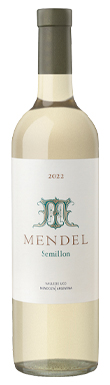

Although Paraje Altamira is renowned for its reds, the rocky soils there also produce some extraordinary whites. This Semillon is one of the most interesting...
2021
MendelUco Valley

Susana Balbo, Signature White Blend, Uco Valley, Paraje Altamira, Mendoza, Argentina, 2021
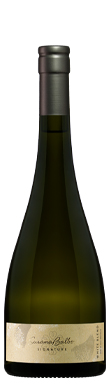
One of Argentina’s most sophisticated wines, this white blend is 38% Semillon, 34% Sauvignon Blanc and 28% Torrontes all from a vineyard set at a...
2021
Susana BalboUco Valley
Finca Suarez, Semillon, Uco Valley, Paraje Altamira, Mendoza, Argentina, 2021
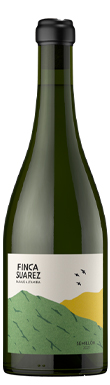
Pioneering producers in Paraje Altamira, the Suarez family harvest the grapes for this Semillon from a sector of alluvial, sandy soils at a height of...
2021
Finca SuarezUco Valley
Lupa, Calle Contastini Blanco Canoso, Uco Valley, Paraje Altamira, Mendoza, Argentina, 2021
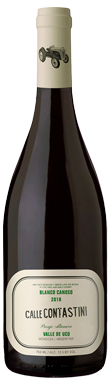
Juan Pablo Lupianez is a Paraje Altamira winemaker who co-ferments Chardonnay with a portion of Semillon and native yeasts to produce this white. The result...
2021
LupaUco Valley
Altos Las Hormigas, Jardin de Hormigas Los Amantes Malbec, Uco Valley, Paraje Altamira, Mendoza, Argentina, 2021
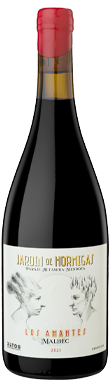
This long-awaited Malbec from the breathtaking new vineyard of Altos Las Hormigas in Paraje Altamira is a blinding debut. From a select parcel with calcium...
2021
Altos Las HormigasUco Valley
Zuccardi, Finca Piedra Infinita Malbec, Uco Valley, Paraje Altamira, Mendoza, Argentina, 2019
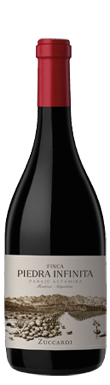
For this superb Malbec, Sebastián Zuccardi exclusively selects parcels at his Paraje Altamira vineyard where the soils are shallow and rich in granitic rocks coated...
2019
ZuccardiUco Valley
Terrazas de los Andes, Origen Paraje Altamira, Uco Valley, Paraje Altamira, Mendoza, Argentina, 2021
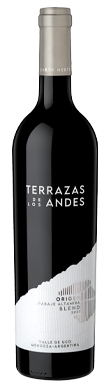
The Los Castaños vineyard in Paraje Altamira, owned by Terrazas de los Andes, is the home of this assemblage of Malbec and Cabernet Sauvignon, which...
2021
Terrazas de los AndesUco Valley
Achaval-Ferrer, Finca Paraje Altamira Malbec, Uco Valley, Paraje Altamira, Mendoza, Argentina, 2019
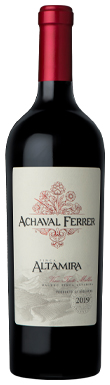
The first wine to put the Paraje Altamira region on the label due to the fact that the grapes came from a vineyard planted in...
2019
Achaval-FerrerUco Valley
Bodegas Salentein, Single Vineyard El Tomillo Malbec, Uco Valley, Paraje Altamira, Mendoza, Argentina, 2018
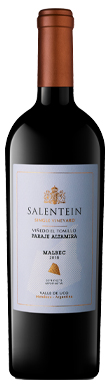
Salentein’s Malbec Single Vineyard collection features this exquisite red from Paraje Altamira; a textbook take on the region. A rich violet hue, the lovely nose...
2018
Bodegas SalenteinUco Valley
Catena Zapata, Nicasia Vineyard Malbec, Uco Valley, Paraje Altamira, Mendoza, Argentina, 2020
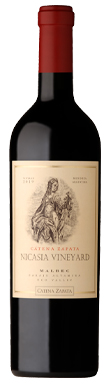
The Catena family’s Nicasia Vineyard in Paraje Altamira is the home of this pure, refined Malbec, made by Alejandro Vigil. Aged for 24 months in...
2020
Catena ZapataUco Valley
Finca La Luz, Illuminado Malbec, Uco Valley, Paraje Altamira, Mendoza, Argentina, 2017
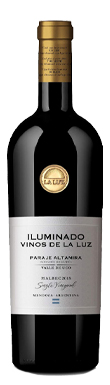
Finca La Luz’s flagship wine is made by Pablo Navarrete using grapes from Paraje Altamira. His classical approach has produced an opulent red with precise,...
2017
Finca La LuzUco Valley
Zuccardi, Finca Los Membrillos Cabernet Sauvignon, Uco Valley, Paraje Altamira, Mendoza, Argentina, 2019
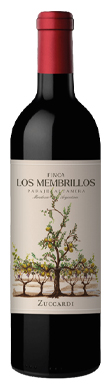
The rocky soils of a Paraje Altamira vineyard surrounded by quince trees (membrillo in Spanish) provided the grapes that Sebastián Zuccardi used to make this...
2019
ZuccardiUco Valley
Bodega Argento, Single Vineyard Altamira Organic Malbec, Uco Valley, Paraje Altamira, Mendoza, Argentina, 2021
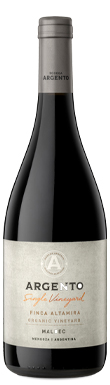
This Malbec from Paraje Altamira was made by Juan Pablo Murgia with low intervention technics. The grapes come from sandy, stony soils 1,066m high, while...
2021
Bodega ArgentoUco Valley
Chakana, Ayni Malbec, Uco Valley, Paraje Altamira, Mendoza, Argentina, 2021
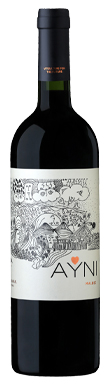
Chakana is an organic and biodynamic producer in Mendoza, that harvests from a vineyard in Paraje Altamira to produce this terroir-focused, minimal intervention Malbec. Aged...
2021
ChakanaUco Valley
Rutini, Malbec Single Vineyard Altamira, Uco Valley, Paraje Altamira, Mendoza, Argentina, 2018
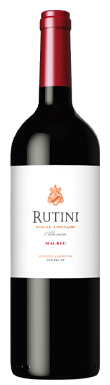
Made by Mariano Di Paola, this Malbec embodies all the elegance and energy of which Uco Valley reds are capable. Aged for 14 months in...
2018
RutiniUco Valley
Susana Balbo, BenMarco Cabernet Franc, Uco Valley, Paraje Altamira, Mendoza, Argentina, 2021
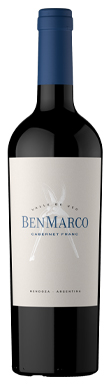
Candied nose, shows an elegant uplift, roses and geranium. Pronounced, Maqui berry, wet stones, and bell pepper. The palate brings in leafiness and blueberry fruit,...
2021
Susana BalboUco Valley
Zaha, Toko Vineyard Malbec, Uco Valley, Paraje Altamira, Mendoza, Argentina, 2019
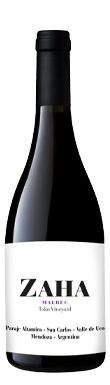
Made by Alejandro Sejanovich with grapes from a vineyard in Paraje Altamira, Zaha is a versatile Malbec made more complex by dashes of co-fermentations with...
2019
ZahaUco Valley
Bodega Norton, Altura Cabernet Franc, Uco Valley, Paraje Altamira, Mendoza, Argentina, 2020
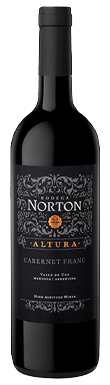
Altura Cabernet Franc is one of Bodega Norton’s most recent wines. Made by David Bonomi with grapes from Paraje Altamira, Uco Valley, the 2022 vintage...
2020
Bodega NortonUco Valley
La Celia, Finca La Celia Single Vineyard Heritage Malbec, Uco Valley, Paraje Altamira, Mendoza, Argentina, 2019
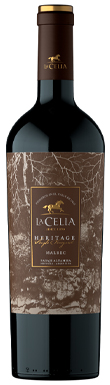
Finca La Celia is a venerable Uco Valley producer run today by the winemaker Andrea Ferreyra, who uses grapes from Paraje Altamira for this Malbec....
2019
La CeliaUco Valley
Luigi Bosca, De Sangre Edición Limitada Malbec, Uco Valley, Paraje Altamira, Mendoza, Argentina, 2020
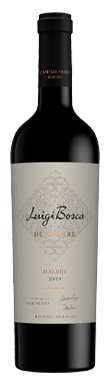
In 2021, Luigi Bosca expanded its portfolio to include wines from the Uco Valley made by Pablo Cuneo. This single-vineyard wine comes from Finca Los...
2020
Luigi BoscaUco Valley
