
Piedmont’s up-and-comers plus the 10 bottles to seek out
In a region of such prestige, starting up as a new producer comes with some daunting challenges. But these 10 enterprising estates are showing the way with their fresh insights, enthusiastic energies and love for the region.


Italian wine is famously steeped in tradition, with estates proudly touting generations of history. In the country’s northwest, the revered region of Piedmont has its share of century-old wineries, however the second half of the last century was significant in shaping the landscape of today. During this period, families transitioned from grape-growing to winemaking, establishing new commercial entities – mostly small to medium in size.
Scroll down for a selection of 10 exciting Piedmont wines to try
‘At present, most of the wine companies in Piedmont are still in the hands of the generation born in the 1960s,’ says Sandro Minella on behalf of I Vini del Piemonte, a producer-led marketing consortium for the region. Nevertheless, he notes a generational shift. You see this in the 20- and 30-year-olds now running their family’s estates. They have a certain advantage, being born into such a legacy.
Starting from scratch today is a different story. The recent success of Piedmont’s wines has driven up vineyard prices significantly, particularly in famous Barolo and Barbaresco. While land may be cheaper in lesser-known areas such as Alto Piemonte, years of abandonment means few vineyards have survived. Planting a new one requires permission, and denominations have a strict cap on increases. Renting vineyards is usually the most viable option – if you have the connections to secure a contract for an appropriate site and are prepared to take on the risk of it ending.
In this context, it may surprise that there are any startups in Piedmont. But where there’s a will, there’s a way. The producers on these pages are a testament to passion, persistence, vision and inventiveness. While they may not be able to rely on the support of an older generation, they have the freedom to create what they want. They are enriching an already impressive talent pool and helping push the region forward.
Muraje
Carema

For decades, the tiny denomination of Carema, to the north of Turin in the foothills of the Alps, was sustained by just two producers. Yet within the past 10 years a convincing crop of new-generation micro-wineries has popped up among the steep terraced slopes. Deborah and Federico Santini of Muraje are emblematic of the fresh young faces that are reversing years of viticultural abandonment. Starting with just 0.2ha in 2014, the couple told me that they have pieced together numerous parcels totalling 1.3ha. All traditionally pergola trained, the vines average 50 years old.
With a background in viticulture and clonal research, Deborah heads the project, making 5,000 bottles a year in a shoebox of a cellar. Besides a trio of ethereal yet enthralling Carema, the portfolio includes an easy-to-drink red blend of Nebbiolo with more obscure native varieties.
Despite its diminutive size, Muraje is vital to the preservation of this unique corner of Piedmont.
Le Pianelle
Alto Piemonte

German business advisor Dieter Heuskel visited Alto Piemonte in 2001 with Paolo de Marchi during a sabbatical internship at Isole e Olena in Tuscany (de Marchi’s family estate is Proprietà Sperino in Lessona). He saw the simmering potential in what made the wines great in the past – the native grapes, soil and climate. ‘The area was just waiting for a restart,’ declares Heuskel.
He teamed up with Alto Adige winemaker Peter Dipoli and purchased an abandoned vineyard on Bramaterra’s volcanic porphyry soil in 2004. Since then, they have painstakingly amassed 8ha spread over four areas – three in Bramaterra and one in the nearby denomination of Lessona.
In 2010, they brought in the best local talent as partners – superstar consulting oenologist Cristiano Garella, and vineyard manager Andrea Zanetta, formerly of the Nervi estate in the neighbouring denomination of Gattinara. Together they craft chiselled Nebbiolo-based wines that convey the distinctive character of Alto Piemonte’s less-trodden hills.
Valfaccenda
Roero

While Luca Faccenda’s family has been rooted in Roero for centuries, he is a first-generation winemaker. After earning his oenology degree from Turin University (which included an internship at Matteo Correggia), he gained experience at Pegasus Bay and Sacred Hill in New Zealand. Upon returning to Piedmont, he started consulting but soon realised he wanted to make his own wine.
In 2010, Luca established the Valfaccenda label with his wife Carolina Roggero. They have scraped together 5ha between owned and rented parcels. Three years later, he joined forces with like-minded estates Cascina Fornace and Alberto Oggero to create the SoloRoero collective. Besides sharing economic resources and expertise, their objective is to elevate the territory of Roero.
In 2017, Faccenda won Italy’s ASET/IGP Giulio Gambelli award for best young winemaker. Despite his technical rigour – or perhaps because of it – he crafts wines that speak soulfully and unequivocally of the steep, sandy slopes of Roero.
Valfaccenda, Vigna Valmaggiore Riserva, Roero 2020
Lalù
Langhe

The name Lalù is taken from owners Lara Rocchetti and Luisa Sala. From Turin, the pair became fast friends while studying gastronomic science at the University of Pollenzo. They spent weekends visiting producers in the Langhe and partnered on their final project, which examined the realisation of a sustainable winery. Following various experiences abroad, they worked stints at Barolo estates Enzo Boglietti, Trediberri, Réva and Conterno-Fantino.
In 2015, they managed to purchase 0.5ha in La Morra’s Roncaglie MGA area but waited four years before making a wine. They now farm 5ha within La Morra and Monforte d’Alba. ‘It is very difficult to insert yourself as a new producer,’ Sala admits, ‘but those who helped us, helped enormously.’
Currently, Lalù counts three wines – a Barbera d’Alba, a Langhe Nebbiolo and a convincing first Barolo from Le Coste di Monforte. In terms of winemaking mentors, Sala references Dominique Lafon and Cécile Tremblay in Burgundy, as well as Philine Isabelle Dienger (equally among Barolo’s most exciting up-and-comers). (@lalu.wine)
Fletcher Wines
Langhe

Australian born and bred, oenology graduate David Fletcher cut his teeth in the Yarra Valley. However, a Barolo masterclass, which included 1996 Bartolo Mascarello, spawned an enduring obsession with Nebbiolo. He landed an internship at Ceretto, returning regularly before he moved to Piedmont permanently in 2012 as the estate’s head of red winemaking.
‘Making my own Nebbiolo was always the objective,’ states Fletcher. In 2015, he purchased Barbaresco’s abandoned train station, restoring and converting it into a functional winery. He now farms approximately 5ha and supplements his production with purchased Barbaresco fruit only. While the latter is clearly Fletcher’s calling card, he also succeeds with a characterful Arneis, Pinot-esque Langhe Nebbiolo, and a partial whole-cluster Barbera.
Fletcher resigned from Ceretto earlier this year but is extremely deferential. ‘Without them, I couldn’t have done anything,’ he shares.
Fletcher, Roncaglie, Barbaresco 2020
Margherita Otto
Langhe

Now in his late 50s, Alan Manley was an avid collector and restaurateur in Colorado when he first visited Barolo in 1995. He returned almost every year afterwards to work at different wineries, such as Sandrone, Elio Altare and Cavallotto.
In 2011, he relocated permanently and started working for Maria-Teresa Mascarello. This is the model he emulates for his own Barolo Margherita Otto, which he started making commercially in 2015.
It has been fascinating to taste the progression. On a superficial note, the ageing casks are now older and less imposing. More importantly, the blend of vineyards used has evolved according to purchases and rental agreements Manley has been able to secure.
Vintage differences aside, I find the 2019 to be more complete than the first three releases, and Manley explains that he obtained a 24-year rental contract in the Vignane MGA area that year. This, along with subsequent acquisitions, bring him close to his goal of 12,000 bottles each of a single Barolo and a Langhe Nebbiolo.
Santa Caterina
Monferrato

In the early 2000s, practising lawyer Guido Carlo Alleva returned to Monferrato, the territory of his youth and mother’s ancestry. He purchased the derelict Tenuta Santa Caterina and has restored it to its former glory. He was able to salvage three old parcels of Barbera, Freisa and Grignolino, and slowly re-established plantings to 23ha, adding Nebbiolo and Chardonnay to the mix.
Among a focused range of varietal wines, Grignolino is the flagship – Alleva reminds me that it was once as widely planted in the area as Barbera, and also as highly prized as Nebbiolo. His affection is palpable as he describes Grignolino’s perfume as ‘unforgettable’.
Alleva is the current president of the Monferace association, which champions a traditional, long-aged style of Grignolino. Established in 2016 by 12 wineries, the alliance has triggered a small renaissance for this ancient grape.
Tenuta Santa Caterina, Monferace, Grignolino d’Asti 2018
La Raia
Gavi
When the Rossi Cairo family purchased La Raia in late 2002, the centuries-old aristocratic estate was selling bulk wine. ‘We had to create the wine brand from scratch,’ says Piero Rossi Cairo.
Initially, Piero’s older sister Caterina and her husband Tom Dean managed the property. They converted the vineyards to organic then biodynamic viticulture, constructed a winery, and grew annual production to almost 100,000 bottles. In 2015, Piero left his law practice to take the relay baton, further tripling production and honing the distinct identity of the estate’s wines. He works closely with in-house oenologist Clara Milani and external consultant Piero Ballario (ex-Marchesi di Grésy).
All three Gavi go through at least partial malolactic fermentation, a relatively uncommon approach in the zone. The vibrant, excellent-value Pleo represents two-thirds of production; the single-vineyard Vigna Madonnina is one of just a handful of Gavi Riserva bottlings; and the 4,000-bottle Pisé label is a rare oak-aged version.
La Barbatella
Asti

Among the original advocates of the Nizza zone, Angelo Sonvico founded La Barbatella in 1982. Initially, his ‘international’-style wines raised eyebrows but eventually gained accolades. In 2010, approaching 80 and without heirs, Angelo put the estate up for sale. By chance, Milanese entrepreneurs Lorenzo and Cinzia Perego saw the announcement. When they realised it was a fully fledged winery, ‘we took a leap in the dark’, says Lorenzo.
Despite a steep learning curve, the couple has updated and reinvigorated the brand while preserving its legacy. They have introduced new wines, including a Chardonnay and a traditional-method sparkler, but Barbera remains the focus.
Produced since 1983, La Barbatella is a benchmark for unoaked Barbera d’Asti. For the Nizza, the Peregos continue with barrique ageing, however they have curbed its impact by reducing both the amount of new wood and the level of toast.
La Barbatella, La Vigna dell’Angelo Riserva, Nizza 2018
Francesco Iandolo
Asti/Colli Tortonesi

Francesco Iandolo makes just two wines – a Nizza and a Timorasso. While he wasn’t born into a winemaking family, nor is he from Piedmont (he grew up near Naples), Iandolo knew by the time he was 20 that he wanted to make wine. A successful banking career helped him realise that goal and he has left the world of finance behind.
He purchased his first vineyard in 2018 – a 2ha plot in Nizza. He soon found a second parcel and blends the two vineyards to produce a deftly balanced and sophisticated Barbera.
His real focus though, is Timorasso. He foresees exciting changes in the Colli Tortonesi denomination over the next decade and recently acquired 10ha, planting 6ha to vines – ‘just before an influx of Barolo producers’, he says. Iandolo is a quick learner. And although he may still feel like a stranger, his wines convey a distinguishable sense of place.
Francesco Iandolo, Timorasso, Colli Tortonesi 2020
Piedmont up-and-comers: 10 wines to try
Related articles
- Piedmont Barbera: Panel tasting results
- The five best things to do in Piedmont
- Gavi: The names to know and 10 wines to try
La Raia, Pisé, Gavi, Piedmont, Italy, 2019
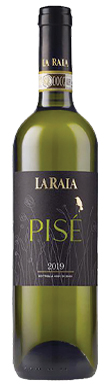

Pisé hails from La Raia’s Cascinetta vineyard, the vines averaging 70 years old. In 2018, Piero Rossi Cairo modified the winemaking to further distinguish it...
2019
La RaiaGavi

Francesco Iandolo, Timorasso Derthona, Colli Tortonesi, Piedmont, Italy, 2020
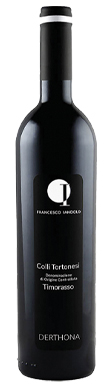
While waiting for his own vineyards to come into production, Iandolo’s first three vintages hail from a site that shares similar soil composition, slope and...
2020
Francesco IandoloColli Tortonesi
Fletcher, Roncaglie, Barbaresco, Piedmont, Italy, 2020
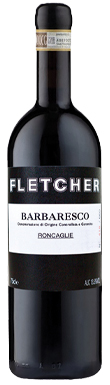
With purchased fruit coming from Poderi Colla’s considerable holdings in Roncaglie, 2020 is the second vintage of this cru bottling. It exudes the site’s heady...
2020
FletcherBarbaresco
Le Pianelle, Bramaterra, Piedmont, Italy, 2019
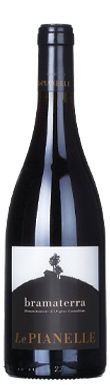
From the estate’s original vineyard, which was replanted in 2007. As of 2018, winemaker Cristiano Garella includes some whole bunches to impart freshness and curb...
2019
Le PianelleBramaterra
Margherita Otto, Barolo, Piedmont, Italy, 2019
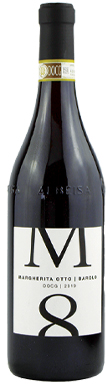
Assembled directly after harvest and bringing together fruit from Pernanno (Castiglione Falletto) and Vignane (Barolo) with a smattering from Serralunga at the base of Vignarionda....
2019
Margherita OttoBarolo
Tenuta Santa Caterina, Monferace, Grignolino d'Asti, Piedmont, Italy, 2018
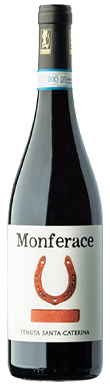
From 50-year-old vines, Monferace sees extended skin maceration and long ageing in a mix of tonneaux and small casks to soften Grignolino’s significant tannins. The...
2018
Tenuta Santa CaterinaGrignolino d'Asti
La Barbatella, La Vigna dell’Angelo Riserva, Nizza, Piedmont, Italy, 2018
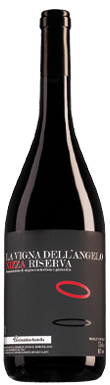
Since the 1980s, the Angelo vineyard has produced a barrique-aged Barbera now bearing the Nizza DOC. In 2015, new owners Lorenzo and Cinzia Perego introduced...
2018
La BarbatellaNizza
Muraje, Sumié, Carema, Piedmont, Italy, 2020
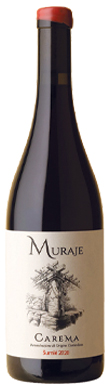
Assembled from Federico and Deborah Santini’s diverse plots throughout Carema, Sumié sees a spontaneous fermentation in cement followed by two months of skin maceration. Ageing...
2020
MurajeCarema
Valfaccenda, Vigna Valmaggiore Riserva, Roero, Piedmont, Italy, 2020
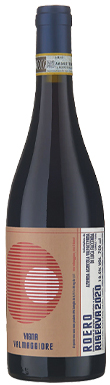
From the top of Roero’s illustrious Valmaggiore cru, the 360-degree views are sweeping. Here, Luca Faccenda rents a small parcel of minimum 70-year-old vines on...
2020
ValfaccendaRoero
Lalù, Nebbiolo, Langhe, Piedmont, Italy, 2021
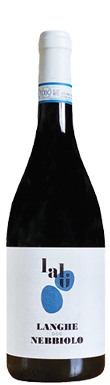
Lara Rocchetti and Luisa Sala’s 2021 Langhe Nebbiolo emphasises a radiance and florality that renders this oh-so drinkable – yet it's far from simple. Intense...
2021
LalùLanghe
