
Poggio di Sotto: ‘Quintessential Brunello’
Stephen Brook explores what makes Poggio di Sotto one of the finest producers of Brunello di Montalcino, with tasting notes and scores for eight vintages.


The highly regarded Poggio di Sotto estate was founded in 1969 by Piero Palmucci. Palmucci never planted vines, preferring to build up his estate by buying parcels recommended by his consultant, Giulio Gambelli.
In 2011, the Poggio di Sotto estate was bought by Claudio Tipa and integrated into his ColleMassari group of Tuscan properties – Castello ColleMassari in Montecucco, Tenuta San Giorgio in Montalcino, and Grattamacco in Bolgheri.
Poggio di Sotto is located in the commune of Castelnuovo del’Abate, on the southern flanks of the Montalcino zone. Many of the vineyards in this area are low-lying and can suffer from excessive heat in very warm vintages.
However Poggio di Sotto has 20 hectares of mostly south-facing vineyards at an elevation ranging from 200 to 440 metres, giving the wines their complexity as cooler, higher sites are blended with those lower down. The dominant soil type is clay, with bands of sand, gravel, and galestro at various levels.
Scroll down to see scores for eight vintages of Poggio di Sotto
‘An even higher level of consistency and polish’
After acquiring Poggio di Sotto, Tipa began planting up to 180 biotypes of Sangiovese for greater diversity and complexity. The farming of all 25 parcels of vines is organic, and the average age of the vines is just over 20 years.
Selective picking during harvest provides diverse lots for blending after ageing. It’s a costly practice but gives more complex and balanced wines.
The vinification is classic, with fermentation in large casks employing indigenous yeasts. Pump overs can continue for up to 45 days and after the malolactic fermentation.
The wine is aged for three to four years in Slavonian oak casks – winemaker Leonardo Berti believes that the use of barriques can standardise the wines and robs them of nuance.
All wines are vinified as though they were destined to become Brunello, but after the second year some wines may be deselected for shorter ageing and bottled as Rosso di Montalcino.
A similar selection is made later, during the ageing process, to determine whether any lots are worthy of being bottled as Brunello di Montalcino Riserva. After bottling, the wines receive further ageing for 12 months before release.
The wines produced by Palmucci were extremely good, but Tipa seems to have brought them to an even higher level of consistency and polish. Prices are eye-watering, but it’s hard to deny that Poggio di Sotto delivers Brunello of the highest quality.
‘Quintessential Brunello’
What singles them out is their remarkable freshness, especially given the vines’ location in one of the hottest sectors of the region.
Berti insists that they pick early, sometimes in late August, to be certain of avoiding any raisining and jamminess. Moreover, they are able to keep alcohol levels relatively low, unlike many of their neighbours, who can often produce wines at around 15% abv.
For me, Poggio di Sotto is quintessential Brunello. The wines aren’t blockbusters, they don’t hammer the drinker with extraction and alcohol, and their elegance and freshness are almost mouthwatering.
They are indisputably in the very top ranks of great Brunello.
Tasting eight vintages of Poggio di Sotto Brunello di Montalcino
Related articles
- Brunello di Montalcino 2019 – ‘spoiled for choice’: Full report
- Collector’s Guide: Tuscany
- Chianti Classico annata: New releases in 2024
Poggio di Sotto, Brunello di Montalcino, Tuscany, Italy, 2019
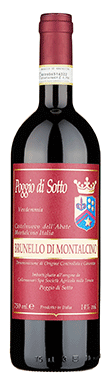

Despite heavy rain, there was very little disease in 2019 and the hot summer brought the grapes to full ripeness. The subdued cherry aromas reflect...
2019
Poggio di SottoBrunello di Montalcino

Poggio di Sotto, Brunello di Montalcino, Tuscany, Italy, 2018
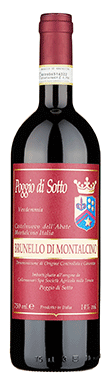
2018 was a tricky vintage, with summer rain, fog and mould, requiring selective harvesting and careful sorting. Yet estates with ample resources such as Poggio...
2018
Poggio di SottoBrunello di Montalcino
Poggio di Sotto, Brunello di Montalcino, Tuscany, Italy, 2016
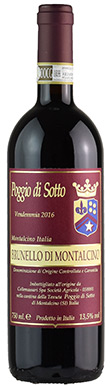
The early summer experienced variable and uneven weather, but a hot summer gave an early harvest of concentrated wines. The nose is truly stylish, with...
2016
Poggio di SottoBrunello di Montalcino
Poggio di Sotto, Brunello di Montalcino, Tuscany, Italy, 2015
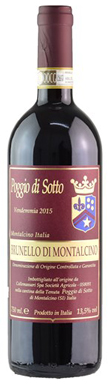
Despite some heavy summer rains, August was very hot but with cool nights. The result was splendid, structured wines of considerable longevity. The cherry aromas...
2015
Poggio di SottoBrunello di Montalcino
Poggio di Sotto, Brunello di Montalcino, Tuscany, Italy, 2013
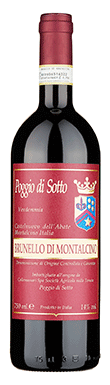
Much of the growing season was rainy, but the late summer was warm and harvest took place in dry conditions. The rain assured a big...
2013
Poggio di SottoBrunello di Montalcino
Poggio di Sotto, Brunello di Montalcino, Tuscany, Italy, 2012
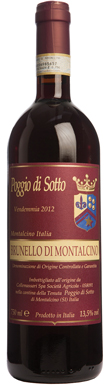
The growing season was dry until some welcome rainfall in September, delivering a small crop of well balanced wines. The sour-cherry nose is firm but...
2012
Poggio di SottoBrunello di Montalcino
Poggio di Sotto, Brunello di Montalcino, Tuscany, Italy, 2011
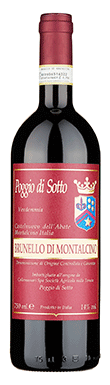
After a rainy July, August and early September were hot, ripening the grapes, if at the expense of some acidity. The nose, with sour-cherry aromas,...
2011
Poggio di SottoBrunello di Montalcino
Poggio di Sotto, Brunello di Montalcino, Tuscany, Italy, 2010
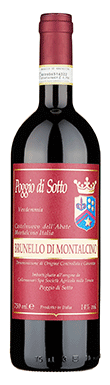
2010 was a hot year, and this meant the picking date was crucial to avoid wines with jammy flavours and excessive alcohol. Poggio di Sotto...
2010
Poggio di SottoBrunello di Montalcino
