
Pouilly-Fuissé: regional profile plus 20 top wines
The imminent release of its first officially recognised premier cru wines marks the dawn of a new era for this much-respected region of southern Burgundy. But will the wines live up to their newly elevated status? Charles Curtis MW profiles the area and meets its winemakers.

The excitement in Mâcon these days is palpable – the vintners of Pouilly-Fuissé are about to release their first premier cru wines.
These groundbreaking 2020 vintage wines represent the first vineyards to be classified not only in Pouilly-Fuissé, but in the Mâconnais region as a whole.
Scroll down to see tasting notes and scores for 20 top Pouilly-Fuissé wines
And yet, there seems to be a sense that INAO has got things slightly askew. Some feel that the classified terroirs represent the best of the best as they were prior to the submission of the brief to INAO – but which might not be the top sites now, in the context of global warming.
That the Mâconnais is capable of producing superb white wine is a well-established fact.
This article contains:
- Pouilly-Fuissé at a glance
- The classified vineyards
- Know your vintages
- Eight names to remember
Winemaking has been the chief occupation of the region since the foundation of the Cluny Monastery in 910 by Guillaume, Duke of Aquitaine and Count of Mâcon.
Within the wider Mâconnais region, it has long been recognised that the wines produced in the southern sector stand apart in their character, and in 1922 a court decision led to the protection of the wines of Pouilly-Fuissé, defined as coming from specific portions of the villages of Fuissé, Solutré-Pouilly, Vergisson and Chaintré.
It was granted appellation contrôlée status in 1936.

Pouilly-Fuissé at a glance
Established Union des Producteurs des Grands Vins Blancs de Pouilly-Fuissé formed 1929; the appellation officially recognised in September 1936.
Planted area Pouilly-Fuissé is 751ha out of 6,241ha in the greater Mâconnais region (and 30,738ha in Burgundy overall).
Elevation Vineyards at 200m-300m (summit of the Roche du Solutré: 493m) Soils Limestone, clay and sandy soils based on granite and schist.
Climate Warm and damp (up to 1,000mm per year) compared to the rest of Burgundy, with roughly 10% more precipitation and temperatures 10% higher.
Producers 250 producers with an average annual production of 41,000hl.
Grapes 100% Chardonnay.
Sources: BIVB; Pouilly-Fuisse.net
On the rocks
The Pouilly-Fuissé appellation is set apart by its dramatic landscape, with crags of limestone that spring from the earth in Solutré and Vergisson. These dramatic cliffs are the last remnants of the same limestone formations that form the Côte d’Or to the north before this landscape gives way to the granite and schist of Beaujolais and the northern Rhône.
Most of the vineyards in Pouilly-Fuissé are underpinned with limestone, although a few sites have a foundation of granite and schist.
Known as the ‘Porte Sud de la Bourgogne’, the region is known for its sunny climate, and the growing season here is warmer and wetter than in the Côte dʼOr. Chardonnay dominates throughout the Mâconnais, and it is the only grape permitted in the Pouilly-Fuissé appellation.
The warmth and limestone-rich soils combine to deliver a rich, almost voluptuous wine with aromas of ripe apple that can border on the tropical, with the nuance of floral and mineral notes. This lush character has been accentuated in the string of recent warm vintages, the soils providing a mineral, saline quality for balance.
The lay of the hills in Pouilly-Fuissé results in a variety of exposures. Vines can face east, south, west or north, although the premier cru slopes nearly all face east or south. While these are the sites that had traditionally yielded the greatest wines, the situation is beginning to change in this time of warming. In very hot vintages, the sites at the top of the hill and those facing north and even west may deliver a welcome freshness.
In total, just over one quarter of the vineyards have been classified as premier cru (194ha out of a total of 751ha), across 22 individual climats, or plots. Some feel that this is already perhaps generous. ‘One has to draw the line somewhere,’ admits Antoine Vincent, general manager and winemaker of Château-Fuissé, owned by his family since the 19th century.
Pouilly-Fuissé: know your vintages
2020 A warm winter, and the season started almost three weeks in advance of 2019. Frost damage was avoided. In a hot and dry growing season, there was mostly enough rain to avoid blockage of ripening. Harvest began on 25 August, earlier even than (the extremely hot) 2003.
2019 Mild winter, abundant rain. The night of 4 April saw frost that reduced potential crops by 60%-80% in low-lying vineyards. Hot and dry conditions caused vines to shut down, impeding ripening, but a bit of rain in late August and early September allowed vines to finish. Harvest began on 9 September.
2018 A wet winter served to replenish reserves in general, yet flowering was thorough and a large crop of grapes was set. Some vines suffered in a hot, dry summer, but harvest began early, between mid-August and the beginning of September.
2017 After a frigid, dry winter, March was warm, bud break began early in April and a large crop was set. The summer was mostly hot and dry, with thunderstorms in June and July but fortunately no hail. A large storm on 31 August delivered 60mm of rain and interrupted harvest, but the skins were already sufficiently thick that little damage was done.
The classified vineyards
The largest surface of premier cru vineyards is in Solutré-Pouilly, with 71.7ha out of 215ha. Pouilly is a hamlet that was incorporated with the village of Solutré in 1912, and its grapes may be used to produce Pouilly-Fuissé, St-Véran or Mâcon- Solutré-Pouilly, depending on their location in the village. Soils are predominantly clay leavened with limestone pebbles, the slopes exposed to the south and east.
The premier cru vineyard plots in the village are: Au Vignerais, Aux Bouthières, Aux Chailloux, En Servy, La Frérie, Le Clos de Solutré, Pouilly and Vers Cras. A number of these, such as Au Vignerais, are composed of several different climats – and, from the 2020 vintage, the portions that aren’t included in the premier cru classification will no longer be permitted to use the lieu-dit name. There is some ill-feeling in the area about this, but producers involved are waiting for a response from the INAO regulators to reach some resolution.
Fuissé to the southeast has the next-largest surface of premiers crus, at 51.3ha, across communes: Vers Cras (split between Pouilly and Fuissé), Le Clos, Les Brûlés, Les Ménétrières, Les Perrières, Les Reisses and Les Vignes Blanches. The majority of Fuissé vineyards are located in an amphitheatre of vines behind the village, with soils similar to those of Solutré-Pouilly. There are also granite-based soils in the western portion.
On the other side of Solutré is the village of Vergisson, where the limestone outcropping of the Roche de Vergisson rises to 483m. Vines cover the slopes, although the highest sites, such as the upper reaches of Sur la Roche, are not classified as part of the premier cru. Though the vines stretch almost to the peak, only those exposed south or east have received the higher classification. The classified sites here are: Les Crays, Sur la Roche, portions of En France and La Maréchaude (combined with parts of several other lieux-dits).
Chaintré, southeast of Fuissé, is the final village included in the appellation, and most of its vineyards are exposed to the east. These are the vineyards with the lowest elevation and are among the warmest, lying due south from Vinzelles. There are four premiers crus here: part of the lieu-dit Le Clos de Monsieur Noly, which lies west of the village on some of the steepest slopes; Aux Quarts (commercialised as the Clos des Quarts by proprietors Dominique Lafon and Olivier Merlin); Le Clos Reyssier (on gentle slopes); and Les Chevrières, south of the village.
These vineyards provide a wide array of aromas and flavours and some delightful (and affordable) wines. Tasting the range is the best way to discover the possibilities, not only of the new premiers crus, but of the high-quality cooler sites as well.
As with anything new in Burgundy, there is a bit of trepidation. Jean-Marie Guffens worries that wine lovers won’t understand: ‘They classified the sites that were exposed to the south and not too high on the slope. Today, however, it is an advantage to be exposed west or east. Who is going to know these crus? They are destined to be misunderstood.’
Let’s hope that he is wrong – there are marvellous wines throughout the Pouilly-Fuissé appellation, better than they’ve ever been. The excitement in the air is thoroughly justified, and Burgundy fans everywhere will do well to share in it.

Pouilly-Fuissé: eight names to remember
Château-Fuissé
The Vincent family has owned the Château-Fuissé domaine since 1862. Today, the family has more than 40ha of vineyards, including 25ha in Pouilly-Fuisse.
The wines are made by Antoine Vincent, who ferments on native yeasts, mostly in cask, and ageing over two winters. Single- vineyard premiers crus include south- facing Les Brûlés and the walled Le Clos monopole located behind the winery, and even more premier cru grapes are blended into its Tête de Cuvée bottling.
Domaine Eric Forest
Based in Vergisson, Eric Forest learned winemaking from his grandfather and took over the family domaine from him in 1999.
Today, he works 7.5ha in and around Vergisson. He uses organic and biodynamic methods in the vineyards, although is not certified. The fruit is gently pressed without crushing and then fermented in cask on native yeast with much of the lees. It’s matured over two winters before bottling without filtration and with very little sulphur.
Domaine Guffens-Heynen
Belgian by birth, Jean-Marie Guffens (pictured p40) arrived in the Mâconnais in the 1970s and worked as an apprentice with local vignerons. With his wife, he has built their 5.7ha domaine and négociant business Verget to produce some of the most exciting whites in Burgundy.
He and his winemaker Julien Desplans produce wines in a luxurious style while avoiding excess. Their Pouilly-Fuissé parcels in the Vergisson climats of Sur la Roche and Les Crays will be blended and labelled as Premier Jus des Premiers Crus from 2020.
Domaine Barraud
Founded in Vergisson in 1905, Domaine Barraud was among the first to bottle a domaine wine in the region, back in 1947 – the future premier cru Les Crays. The domaine has grown to 11ha under Daniel Barraud, who has recently passed the reins to his son and daughter Julien and Anaïs.
Its vineyards are home to a number of premiers crus, including En France, Les Crays and Sur la Roche.

Domaine JA Ferret
This superb 18ha domaine was founded in 1840. It has been directed for decades by women, notably the indomitable Jeanne Ferret, who began to domaine-bottle her wine in the 1950s when this practice was still very rare.
She developed an insightful classification of the terroirs of the region and began to bottle single-vineyard wines separately. Today, under proprietors Louis Jadot, the winemaking and vineyards are in the hands of Audrey Braccini, who is doing marvellous work with this heritage.
Domaines Leflaive
No longer a singular estate based in Puligny-Montrachet, there are now two Domaines Leflaive. In the Mâconnais, the same biodynamic techniques and best-in- class winemaking are used – overseen by Pierre Vincent, with overall direction from Brice de La Morandière – as in Puligny.
The Leflaive operation is still growing, but it owns or rents more than 18ha in the Mâconnais and has begun to produce an exquisite range of wines, including the premier cru En Vigneraie, fermented mainly in used casks.
Domaine Thibert
Christophe Thibert and his sister Sandrine manage this domaine, the vineyards being owned by the family for eight generations. However, it was not until 1967 that their parents Andrée and René formally founded the domaine.
Under Christophe, it has grown to 20ha. He and his team harvest and ferment with a sensitive hand in the vineyards and the cellar to produce wines from several single-vineyard sites, including premier cru wines Vignes Blanches and Les Ménétrières.
Roc des Boutires
The Parinet family purchased the Château du Moulin-à-Vent in Beaujolais in 2009 and first produced a Pouilly-Fuissé in 2011 using purchased grapes. They secured the 4.2ha domaine Roc des Boutires in Mâcon-Solutré in 2016.
The vineyards are farmed using organic techniques by Brice Laffond, who makes the wine as well. The vines for its premier cru Les Bouthières are located around the domaine.
See Charles Curtis MW’s top 20 Pouilly-Fuissé wines
These are Curtis’ pick of wines he feels represent Pouilly-Fuissé at its best, regardless of whether or not they will gain premier cru status. Prices, stockists and alcohol levels are shown on individual wine pages where available. 2020 vintage wines may not have completed maturation when tasted.
You may also like
Top five white Burgundy vintages ready to drink now
Top five red Burgundy vintages ready to drink now
Pouilly-Fuissé granted new premier cru designations
Eric Forest, Pouilly-Fuissé, La Roche, Burgundy, France, 2014
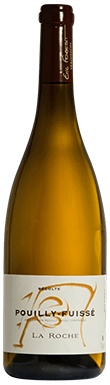

This is produced with grapes from a site at 401 meters elevation - too high on the rock to be premier cru The...
2014
Eric ForestPouilly-Fuissé

Domaine Leflaive, Pouilly-Fuissé, 1er Cru En Vigneraie, Burgundy, France, 2019
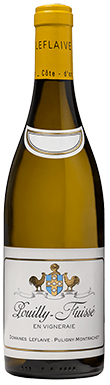
This 0.23-hectare parcel at the base of the rock of Solutré enjoys a full south exposition and chalky clay soils. The grapes, grown with...
2019
Domaine LeflaivePouilly-Fuissé
Domaine Ferret, Cuvée Hors-Classe, Pouilly-Fuissé, 1er Cru Les Ménétrières, Burgundy, France, 2020
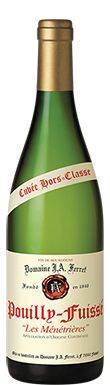
This site highly esteemed by Mme. Ferret, whose domaine holds 0.80 hectares here. The soil is clay over limestone and marl. The wine...
2020
Domaine FerretPouilly-Fuissé
Château-Fuissé, Pouilly-Fuissé, 1er Cru Le Clos, Burgundy, France, 2017
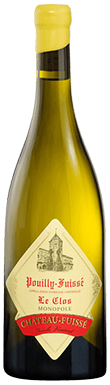
This monopole of 2.7 hectares is situated at the center of the Fuissé appellation and exposed to the east. Vine age averages 60 years...
2017
Château-FuisséPouilly-Fuissé
Domaine Ferret, Hors-Classe Tournant de Pouilly Cuvée, Pouilly-Fuissé, 1er Cru Les Reisses, Burgundy, France, 2020
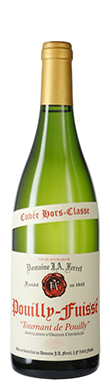
Tournant de Pouilly is the domaine’s traditional name for this parcel. The limestone-rich site is located in the premier cru Les Reisses. The...
2020
Domaine FerretPouilly-Fuissé
Château des Rontets, Pouilly-Fuissé, Les Birbettes, Burgundy, France, 2020
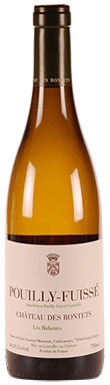
Superb wine from the vines between 60 and 110 years of age in the windswept clos of Les Rontets at 350 meters elevation at the...
2020
Château des RontetsPouilly-Fuissé
Domaine Olivier Merlin, Pouilly-Fuissé, Sur La Roche, Burgundy, France, 2018
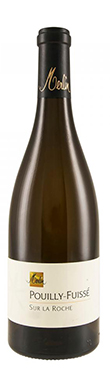
For me this was a highlight in Merlin’s line-up. It comes from clay and limestone soils at 370 meters of altitude facing south-east. ...
2018
Domaine Olivier MerlinPouilly-Fuissé
Château des Quarts, Pouilly-Fuissé, Clos des Quartz, Burgundy, France, 2018
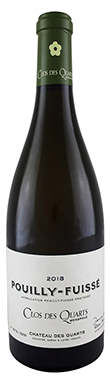
The Clos des Quarts is a 2.63-hectare vineyard whose oldest vines were planted in 1917, located in the village of Chaintré, where Merlin has farmed...
2018
Château des QuartsPouilly-Fuissé
Domaine Leflaive, Pouilly-Fuissé, La Chaneau, Burgundy, France, 2019
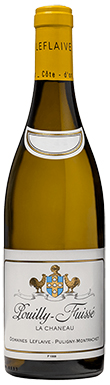
La Chaneau is the extension of the Vignerais slope as it turns to face east. It is located further up the slope and is...
2019
Domaine LeflaivePouilly-Fuissé
Bret Brothers, Pouilly-Fuissé, 1er Cru Aux Vignerais, Burgundy, France, 2019
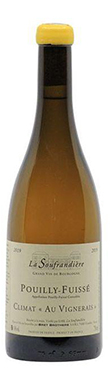
Produced from a half-hectare holding on the steeply sloping premier cru Aux Vignerais, located on the south side of the rock of Solutré. The...
2019
Bret BrothersPouilly-Fuissé
Domaine Robert-Denogent, Pouilly-Fuissé, 1er Cru Les Reisses, Burgundy, France, 2018
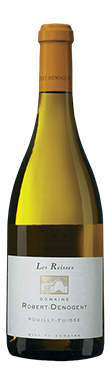
A rich but elegant style of Pouilly-Fuissé, this is produced from a half-hectare of vines farmed using biodynamic methods that average sixty years of age....
2018
Domaine Robert-DenogentPouilly-Fuissé
Domaine Ferret, Pouilly-Fuissé, Autour de la Roche, Burgundy, France, 2020
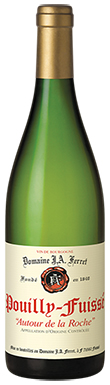
This site in the lieu-dit Les Terres du Perret lies at high altitude in Vergisson and faces north, and is thus not classified as premier...
2020
Domaine FerretPouilly-Fuissé
Domaine Ferret, Tête de Cru, Pouilly-Fuissé, 1er Cru Les Perrières, Burgundy, France, 2020
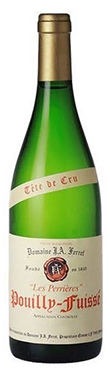
This wine is from east-facing vines behind Mme. Ferret’s house, and is thus called by the domaine ‘Clos de Jeanne’ although it is in premier...
2020
Domaine FerretPouilly-Fuissé
Château-Fuissé, Pouilly-Fuissé, Les Combettes, Burgundy, France, 2020
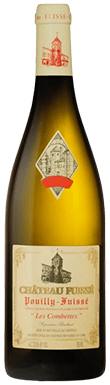
This monopole of 1.8 hectares is situated between Les Rontets and the premier cru Les Perrières, exposed to the east and north at 280m elevation....
2020
Château-FuisséPouilly-Fuissé
Château des Rontets, Pouilly-Fuissé, Clos Varambon, Burgundy, France, 2020
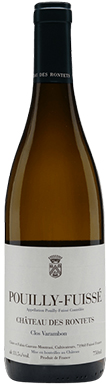
This is produced from the grapes of a 6.5-hectare clos surrounding the Château at 350 meters above the village of Fuissé, too high to be...
2020
Château des RontetsPouilly-Fuissé
Domaine Olivier Merlin, Pouilly-Fuissé, Les Chevrières, Burgundy, France, 2018
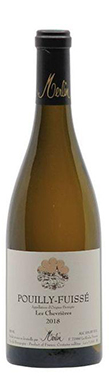
This wine comes from a parcel of very old vines on a moderate slope in Chaintré. The grapes are whole-cluster pressed and lightly settled...
2018
Domaine Olivier MerlinPouilly-Fuissé
Domaine Carrette, Pouilly-Fuissé, 1er Cru En Servy, Burgundy, France, 2020
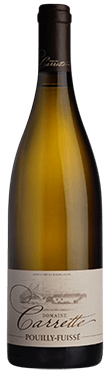
A lovely effort from this young domaine in organic conversion. This comes from a parcel located near the village of Solutré. Luxurious, rich,...
2020
Domaine CarrettePouilly-Fuissé
Eric Forest, Pouilly-Fuissé, 1er Cru Les Crays, Burgundy, France, 2020
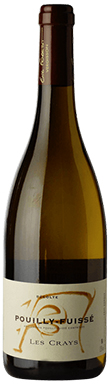
In 2020, there was an uneven ripening in this parcel and Forest waited for physiological ripeness, introducing some very ripe, almost tropical fruit notes on...
2020
Eric ForestPouilly-Fuissé
Château-Fuissé, Pouilly-Fuissé, 1er Cru Les Brulés, Burgundy, France, 2020
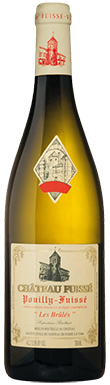
This premier cru site is located at 280 meters elevation but faces due south. The marly soil delivers ripe sunny fruit, and the style...
2020
Château-FuisséPouilly-Fuissé