
Premium Californian Chardonnay: Panel tasting results
This wide-ranging tasting showed the breadth of Californian Chardonnay styles, which reflects the differing palates of local and international drinkers, notes Stephen Brook...


Stephen Brook, Alex Hunt MW and Tim Jackson MW tasted 54 Californian Chardonnays, with 14 Highly Recommended.
Entry criteria: Producers and UK agents were invited to submit latest-release California Chardonnays with availability in the UK and/or US, priced above £40 or $50
Scroll down to see the tasting notes and scores
The verdict
Judges declared themselves perplexed but not surprised by this tasting. Perplexed because it was difficult to come to an overall conclusion – but they had already expected to have this reaction.
California Chardonnay has become extremely diverse in its terroir expression and its winemaking. In the past it was caricatured as buttery and heavy, an opulent crowd-pleaser. Such styles still exist, and were present in the tasting, but they have to sit alongside many other expressions.
Is such diversity positive or confusing for drinkers? Alex Hunt MW had no doubts: ‘Variability and diversity are to be welcomed, if only as a myth-buster. There has never been a single style of Californian Chardonnay. There’s a range of alcohol levels, different uses of oak, varying acidity levels. It’s a good thing that their Chardonnay isn’t a one-trick pony, and that was confirmed by this tasting.’
Quick link: See all 54 wines from this panel tasting
Chardonnay, he added, is ‘a kind of special case, being the one noble variety that’s actually a neutral grape – but the positive side of this is that it’s expressive of place, as well as suited to winemaking interpretation’.
Tim Jackson MW agreed. ‘We could definitely discern a sense of place. To take one example, the wines from Santa Cruz Mountains – though we only tasted a few – were all marked by high acidity. In contrast, there’s still a place for old-school wines, and there were quite a few in the tasting. I too applaud the diversity, although I often had the sense that while the range of wines was representative of California’s different styles, we weren’t necessarily seeing the very best examples.’
Hunt found that his expectations weren’t always met. ‘I expected the wines from warm Napa Valley to be heavyweights, but that wasn’t necessarily the case – perhaps because many came from the Napa side of Carneros,’ he noted.
Jackson had been hoping for more high spots from Santa Rita Hills, but was rather disappointed, though there were good wines.
In pursuit of balance
All of us expected more wines in the style championed by the now-disbanded In Pursuit of Balance (IPOB) movement: fully ripe wines at moderate alcohols and with fine acidity and even raciness. Hunt said: ‘Perhaps some of the boutique wineries that adopt the IPOB philosophy didn’t submit their wines because volumes are low. And although the movement has won much praise, there is room for some scepticism. Such wines can be ascetic and skinny, and that’s not necessarily appropriate for sunny California.’
‘There’s still room for the big oaky styles, as long as they resound with energy and don’t fall flat,’ Hunt continued. ‘The IPOB approach requires high-wire winemaking, which is difficult to achieve.’
Certain wines won no plaudits: the low-acidity, high-alcohol wines that were overpowering and lacked finesse. Jackson observed: ‘We shouldn’t underestimate the strength of the domestic market. Many American drinkers like that style and wineries are happy to produce them. But they’re not necessarily going to win over European palates.’
About 20 years ago Decanter organised a simultaneous blind tasting in London and New York of a dozen Californian Chardonnays. The wine that found the least favour in London – a strapping Carneros Chardonnay with high alcohol – came top in the American ranking. I’m not sure much has changed, despite the best effort of the IPOB crusaders.
The scores
54 wines tasted
Exceptional 0
Outstanding 0
Highly Recommended 14
Recommended 26
Commended 13
Fair 1
Poor 0
Faulty 0
The judges
Stephen Brook
Brook has been a contributing editor to Decanter since 1996 and has won a clutch of awards for his writing on wine. The author of almost 40 books, his works include The Wines of California, which won three awards. Brook also fully revised the last two editions of Hugh Johnson’s Wine Companion.
Alex Hunt MW
Hunt joined the wine trade as a van driver for Oddbins while studying at Oxford. In 2000, he joined Mayfair Cellars, before moving to Berkmann Wine Cellars in 2006, where he is currently purchasing director. He became a Master of Wine in 2010, having submitted a dissertation on ripeness trends in California.
Tim Jackson MW
After falling in love with wine in Chablis in 1994, Jackson became a Master of Wine in 2017. He writes about wine for his website, winebook.co.uk, in addition to hosting corporate wine tastings. Jackson is passionate about teaching consumers about wine, and this was the subject of his MW research paper.
About California Chardonnay
From pioneer plantings, through the heyday of big toasty styles to leaner cool-climate bottles, Californian Chardonnay now offers wine lovers real diversity.
Californian Chardonnay has evolved over the decades just as other varieties have done in this US state drenched in sunshine. In 1970 there were just over 1,000ha planted. Clones were derived from plantings made by Chardonnay pioneers such as Wente and Stony Hill.
Until the 1980s most Chardonnays did not go through malolactic fermentation, and the style could be angular, although other wines were given a full-on oaky upbringing. A few wineries, such as Mayacamas and Chateau Montelena, still eschew malo.
While consumers loved the big oaky styles, winemakers were ill at ease. Doug Meador in Monterey once told me: ‘Only a termite could love California Chardonnay.’
It was Kendall-Jackson that created the first wildly successful Chardonnay brand: Vintner’s Reserve. That was a misnomer, since the wine was a multi-region blend (to give consistency from year to year) and it was born after a stuck fermentation delivered a wine with about 9g of residual sugar. It was a hit. By 1989, 400,000 cases were produced, and that figure soon rose above 1,000,000. A slight sweetness remained the hallmark of the brand.
Contrasting styles
Inevitably there was eventually a reaction against the style. Big toasty Chardonnays with fairly high alcohol tended to taste the same, whatever their regional origin. Efforts were certainly made by wineries in the 1980s to plant Chardonnay in cooler areas such as Carneros, but the style remained hefty.
In the 2000s, however, a new generation, personified by the likes of sommelier Rajat Parr and Santa Barbara winemaker Sashi Moorman, strove to create a different style that was more subtle and more food-friendly. Young winemakers such as Gavin Chanin refused to chaptalise, abandoned lees-stirring, and kept alcohol levels well below the 14% popular at the time. This was not exactly a revolution, as winemakers such as Jim Clendenen and Ted Lemon had espoused a leaner style for decades.
The Santa Rita Hills was identified as cool enough to produce this style, as were parts of Anderson Valley in Mendocino and sectors of the Sonoma Coast AVA that were close to the Pacific’s chilly breezes. To unify this trend, an organisation called In Pursuit of Balance was launched. Viticulture was adapted to bring the fruit to full ripeness at lower sugar levels – which was easier to do in the cool coastal sites rapidly being developed.
Today, In Pursuit of Balance no longer exists, but its programme is still accepted by many wineries. Its appeal will be primarily to European-style palates, but some question whether this reined-in style is appropriate for the Californian climate, as it only delivers in the very coolest sites, which are by definition marginal. Many continue to enjoy the bigger styles of Chardonnay, but at least horizons have been expanded and consumers can decide on the kind of Chardonnay they prefer.
Californian Chardonnay has never been more diverse, and that has to be a positive development.
See all 54 wines from this panel tasting
California Chardonnay: the facts
Total plantings in California (2017) 38,820ha
Monterey 6,867ha
Sonoma 6,320ha
Napa 2,798ha
Santa Barbara 2,290ha
Mendocino 1,876ha
Source: California Wine Institute
California: know your vintages
2018 Steady ripening through a mild summer, especially in Sonoma, gave a fine crop of excellent whites.
2017 A complicated year with a cool spell in August, then record-breaking heat in early September, but most whites had been picked by then.
2016 A cool summer without heat spikes proved excellent for white wines.
2015 The summer was hot and dry, but there was helpful rainfall before harvest, which was extremely early. Chardonnay of good quality, picked by late August.
2014 Cooler than average though with heat spikes in early summer. Excellent quality in Napa and Sonoma.
2013 A normal growing season with good yields and high ripeness.
Top California Chardonnay from the panel tasting:
You may also like:
Burgundy 2017: Full en primeur reportDecanter buyer’s guide: Australian ChardonnayGreat wine route: California’s Central Coast
Ridge Vineyards, Monte Bello Chardonnay, San Francisco Bay, Santa Cruz Mountains, California, USA, 2016
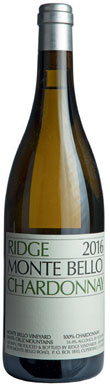

Sweet buttery apple-pie nose, plus apricot and quince. Sleek attack, fresh and poised, taut, with good fruit concentration and an appealing silkiness. There's some tangy...
2016
Ridge VineyardsSan Francisco Bay

Stonestreet, Upper Barn Chardonnay, Sonoma County, Alexander Valley, California, USA, 2015
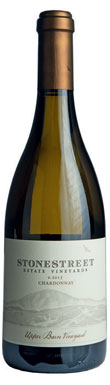
Lush and smoky stone-fruits nose with a sense of underlying power. Density and grip on the palate with impressive weight of fruit. Caramel on the...
2015
StonestreetSonoma County
Chanin, Sanford & Benedict Chardonnay, Santa Barbara County, Sta Rita Hills, California, USA, 2016
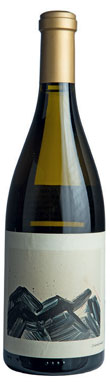
Nicely integrated mealy, patissiere oak, with fresh, ripe lemon and some white peach fruit. Lush and juicy, this shows ample fruit , weight and sufficient...
2016
ChaninSanta Barbara County
Donelan, Nancie Chardonnay, Sonoma County, California, USA, 2015
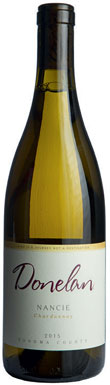
Ripe apple notes here, along with hazelnut and a whiff of flint, plus some creamy richness. Expansive but bright on the palate, with ripe lemon...
2015
DonelanSonoma County
Dutton-Goldfield, Chardonnay, Sonoma County, Green Valley of Russian River Valley, California, USA, 2014
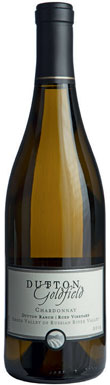
Intensity of ripe lemon and lemon thyme aromatics amidst a subtle layer of mint, toasted almond and cinnamon tones. Showing layers of stony mineral, cream,...
2014
Dutton-GoldfieldSonoma County
Far Niente, Chardonnay, Napa Valley, California, USA, 2017
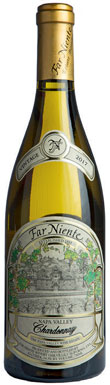
Sweet, buttery stone-fruits nose along with apricot jam and lime. Plenty of acidity, well allied to fruit with oak in the background. This is rather...
2017
Far NienteNapa Valley
Flowers, Chardonnay, Sonoma County, California, USA, 2016
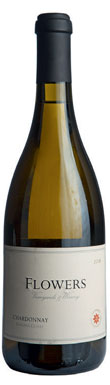
With a saline-maritime character on the nose, this feels decidedly cool-climate in style. The palate is lithe and bright, polished but tense, with mandarin touches...
2016
FlowersSonoma County
Hirsch Vineyards, Chardonnay, Sonoma County, Sonoma Coast, California, USA, 2017
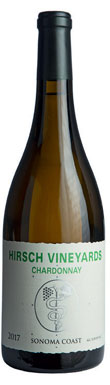
Taut and powerful, lemony-toasty aromas - still very youthful on the nose. Fresh attack, limpid and lively. The palate has precision and cut with a...
2017
Hirsch VineyardsSonoma County
Kesner, Heintz Vineyard Chardonnay, Sonoma County, Sonoma Coast, California, USA, 2014
Apple pie and honey on the nose. A fine line of acidity runs right through the richness of peach and passion fruit, subtle cinnamon spiced...
2014
KesnerSonoma County
Kutch, Trout Gulch Vineyard Chardonnay, San Francisco Bay, Santa Cruz Mountains, California, USA, 2017
Baking spice and background mango fruit. Lively acidity provides lift to the lemon and subtle cinnamon notes and brings freshness and tang.
2017
KutchSan Francisco Bay
Legacy, Chardonnay, Sonoma County, Alexander Valley, California, USA, 2016
A broad warm-climate style with buttered popcorn, ripe lemon, apricot crème brûlée and some hazelnut complexity. Silky-textured, full-bodied and creamy yet with a fine sense...
2016
LegacySonoma County
Morgan, Morgan Double L Vineyard Chardonnay, Monterey County, Santa Lucia Highlands, California, USA, 2015
Broad nose rich, creamy, ripe, pineapple and passionfruit. Flinty, lean, crisp palate that belies the richness of the nose. Finishes creamy and long.
2015
MorganMonterey County
Mount Eden Vineyards, Chardonnay, San Francisco Bay, Santa Cruz Mountains, California, USA, 2015
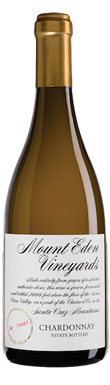
Toasted hazelnuts and lemon sherbet, with some preserved lemon character. Rich and suave but there's a taut quality here too, and it favours tension over...
2015
Mount Eden VineyardsSan Francisco Bay
Tyler, Sanford & Benedict Vineyard Chardonnay, Santa Barbara County, Sta Rita Hills, California, USA, 2016
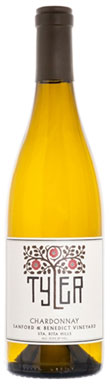
Cool, fresh white peach and lemon, with baking spice overtones. Lean and chalky with crisp acidity, an ultra-modern style.
2016
TylerSanta Barbara County
