
Yohan Castaing: My top 10 Champagnes of 2021
After tasting countless Champagnes for Decanter this year, Yohan Castaing reflects on his personal highlights.


The Champagne region provides a brilliant textbook example to be perused and absorbed by enlightened wine lovers who want to understand the dynamics of what is being played out in French wine regions today.
In a not too distant past, the wheels of Champagne production churned out inimitable sparkling wine with little regard for the impact that the elaborate process had on the environment. Today, quite a different orientation has gained traction. Champagne has become a region where the notion of terroir – which places such importance on the specific source of the raw material, the grapes – has come to the fore, along with the sort of precise haute couture viticulture that is needed to enhance terroir expression while also bringing the added benefit of sustainability for such valuable natural resources.
Scroll down for Yohan Castaing’s top 10 Champagnes of 2021
New ambition
Behind this drive to focus on quality within the whole Champagne region is a mix of both young and experienced growers who combine audacity and ambition.
The winds of change that propel them forward have not swept through the landscape without disruption. There have been moments of tension, or in the best instances, friendly confrontations between independent growers and established Champagne houses.
Economic adjustments have had to be made as the price of grapes rose to the point of raising the spectre of inflation. Stylistic clashes have also come to the fore between those favouring a crisp style and those aiming for vinosity in their Champagnes, or between those championing Chardonnay and those revering Pinot Noir. Their differences notwithstanding, they all obviously share a common ambition, that of producing the best Champagne possible.
Adapting to climate change
In the context of global warming, winemakers have had to adapt. Higher levels of grape ripeness are occurring, and this is having a major impact on the style of the wines as they become more concentrated and reach higher degrees of alcohol.
Viticultural practices and winemaking techniques are having to be adjusted to deal with this evolved state of the raw material. An example is the growing importance of a judicious use of malolactic fermentation.
All of these changes are signs of the focus on excellence in this region as it embraces a wide range of differing visions and strategies, and this accounts for why many observers consider Champagne to be today one of the most dynamic wine appellations of France.
Having travelled through the area several times in the past year, I have been able to witness first hand how invigorating this new context is and to take a fresh look at the region.
In narrowing down the many Champagnes I have tasted to just 10, I have chosen to present a mix of wines from individual growers – whose small production makes it at times difficult for the consumer to track down their bottles – and established houses.
Together they constitute the DNA of Champagne, and together they are writing a new chapter of the long history of the region.
Yohan Castaing’s top 10 Champagnes of 2021
Related content
Matt Walls: my top 10 Rhône wines of 2021
Michaela Morris: my top 10 fine wines of 2021
Salon, Cuvée S, Le Mesnil Blanc de Blancs, Champagne, France, 2012
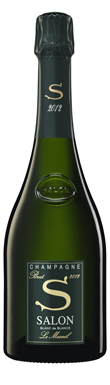

The Salon 2012 has scintillating aromatic brilliance and purity with seductive scents of white fruit, citrus zest and spring flowers capped by a touch of...
2012
Salon

Jacques Selosse, Substance, Champagne, France
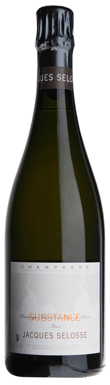
This grand cru blanc de blancs produced with grapes from Avize is the result of a solera started in 1986. Only 11 barrels are produced...
Jacques Selosse
Pierre Péters, L’Étonnant Monsieur Victor (MK12), Champagne, France
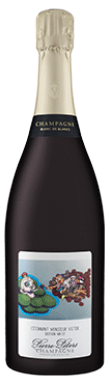
Rodolphe Péters, who now heads the Pierre Péters estate, wants to prove that it is possible to make great wines without necessarily displaying the vintage...
Pierre Péters
Taittinger, Comtes de Champagne Rosé, Champagne, France, 2008
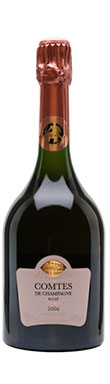
The proportion of Pinot Noir in Comtes de Champagne Rosé has tended to increase in recent years, as evidenced by this 2008 vintage, which is...
2008
Taittinger
Ulysse Collin, Les Roises, Champagne, France
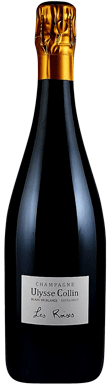
Olivier Collin took over in 2003 the family entreprise located in the village of Congy, which lies southwest of the Côte des Blancs at mid-point...
Ulysse Collin
Dom Pérignon, P2, Champagne, France, 2003
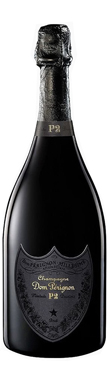
The bouquet of 2003 P2 is striking for its diverse range of complex scents. Succulent and exuberant aromas of white fruit such as pear and...
2003
Dom Pérignon
Laurent-Perrier, Grand Siècle, Itération n°23, Champagne, France
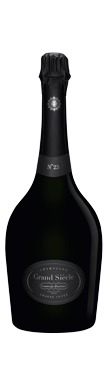
Laurent-Perrier likes to bring out new editions in magnum based on previously released Champagnes that have benefited from prolonged cellaring. This cuvée is a blend...
Laurent-Perrier
Gosset, Célébris Rosé, Champagne, France, 2008
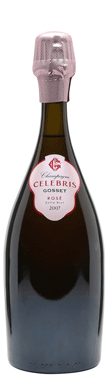
The skillfully crafted Gosset Champagnes remain in good hands with the current cellar master Odilon de Varine, as evidenced by this fascinating rosé Champagne. Over...
2008
Gosset
Drappier, Trop m'en faut!, Champagne, France
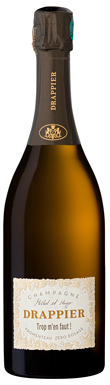
An understated nose of ripe apricots touched with honey, beeswax and dried flowers. The texture is dense and waxy; the finish is long. It is...
Drappier
