Producer profile: Gravner


Tom Cannavan visits Italy’s far northeast to meet Joško Gravner, an enigmatic winemaker who inspires extremes of praise and scepticism alike.
Many things seem to have informed Joško Gravner’s decision, or decisions, to radically change his winemaking direction over the years. Those meant risking everything: his reputation, his thriving business, perhaps even his friends.
Today, Gravner is one of the most revered cult names of Italian winemaking, following a rigorous natural winemaking philosophy. The wine world – not just Italy – pays attention to what he does, and many follow his example. But it was not always thus.
By the 1970s, the young Gravner had joined his family business in Oslavia, an Italian border town a stone’s throw from Slovenia, with vineyards running across that invisible dividing line. Full of confidence, he ignored advice to ‘do a little and do it well’, and instead set out to revolutionise the cellars and take more technical control of the winemaking. Stainless steel tanks replaced the old casks, French oak barriques were installed, and an array of modern equipment was purchased. And it worked. Soon his fragrant, fruity and delicate wines were being awarded the ultimate accolade of tre bicchieri from Italy’s wine bible Gambero Rosso. By the 1980s Gravner was flying high as the flagship producer of the area.

Radical shift
But a business trip to California in the late 1980s saw a road to Damascus moment: tasting many highly rated wines, he realised they ‘did nothing for him emotionally’, says his daughter Mateja. He suddenly understood the same could be said of his own wines: they had become too ‘international’. ‘Little by little I started to get rid of all the equipment,’ he says. Out went the shiny new toys, and back in came large oak casks and a mechanical basket press.
Gravner’s simplification of his winemaking effectively reversed 20 years of modernisation, and it is a path he has followed with absolute conviction since.
The second stopping point on his road to Damascus came in 1996, when hail destroyed 95% of his Ribolla crop, indigenous to the area and Gravner’s great love. With the meagre remaining harvest he decided to experiment, macerating his Ribolla with long skin contact and fermenting using only ambient yeasts.
The success of the experiment (‘The wine was a revelation,’ says Gravner) was not recognised by all. Now, Gambero Rosso’s headline was a different one, which he recalls with a rueful smile: ‘Joško Gravner has gone crazy – please come back Joško.’ If not regarded as ‘crazy’ by all, many viewed his change of direction with doubt, suspicion and, I suspect, fear that the Friuli apple cart was being so decisively overturned. It was a shock for followers of the estate, with more than half of his overseas distributors cancelling their orders in the wake of the Gambero Rosso article. That, points out Gravner, was without having tasted the wines.
Gravner is a quiet, seemingly reserved character, a combination of humble farmer in his working clothes and muddy boots, and Jesuit scholar with a keen intelligence shining behind his eyes. Clearly, he is both deeply thoughtful and stubbornly single-minded. As customers slowly began to appreciate his new amber-coloured wines, he extended his maceration for longer and delved deeper into the oldest wine production methods, culminating in a trip to Georgia in 2000.
Gravner at a glance
- Founded 1901
- Location Oslavia, in Friuli; vineyards in Italian Collio and Slovenian Brda
- Under vine 18ha
- Vineyards Runk in Italy; Hum and Dedno in Slovenia
- Viticulture Farmed organically and based on lunar calendar
- Vinification All fermentation in amphorae, with wild yeasts and no temperature control. All wines have skin contact maceration of about six months. Ribolla bottled after an extra six years in large casks. Riserva released after extra four years in cask and six years in bottle. Rosso released after extra five years in cask and five years in bottle
New obsessions
The traditional use of amphorae, or qvevri, buried underground became his next obsession. By 2001, an initial batch of 11 of these large, handmade, earthenware vessels made the perilous overland trip from Georgia to northern Italy, and a whole new phase of the Gravner story began.
The use of amphorae and other clay or cement pots to ferment and age wines has trended dramatically over the past 10 years or so: it has reached the point where it is rare to visit a wine cellar without at least one concrete egg or amphora standing alongside the steel tanks and barrels. The vast majority of these are ‘experimental’, or used to make one small, idiosyncratic cuvée to sit within a much larger portfolio. But for Gravner it was different: by 2005 the entire production, white and red, was being made in amphora.
Had Gravner finally found peace? Had his winemaking input been reduced enough, to its most fundamental conclusion with organic farming, minimum use of sulphur, wild yeasts, no temperature control and whole-berry maceration? It seems not. In 2012 came another radical decision, another bombshell: everything in his vineyards was grubbed up except the indigenous Ribolla for white wines and Pignolo for red wines. Over the years fans had loved his Breg Bianco, a blend of Riesling, Pinot Grigio, Sauvignon Blanc and Chardonnay; but from 2012, it was no more.

Gravner professes to speak no English, and at times I suspect his boredom threshold for the translated questions and answers of the visiting journalist is set pretty low. During a visit to his newest vineyard in Dedno, Slovenia, he wanders off among the baby vines, plucking a leaf here, straightening a post there, leaving his guests in the capable hands of his daughters Jana and Mateja. At the age of 65, he just wants to get on with it.
This air of detachment should not fool you. Gravner doesn’t miss a trick and is utterly engaged with his wines and his beliefs. Tasting the Chardonnay 1992, I comment on how impressive it is at 25 years old. ‘I made good wine, even before amphora,’ he deadpans, dismissing it as worthy, but a relic of the past.
Making wines with long skin contact is an ancient tradition in this Collio and Brda region that straddles Italy and Slovenia respectively. To an extent Gravner is reviving local tradition, and his example has been followed by many producers on both sides of the border. But his influence is evident much further afield, even in countries with no such history, from California to Australia. He did not create the ‘natural wine’ movement on his own, but he is a role model for it.
I have racked my brains to think of any other winery outside Georgia that has switched 100% of its production to skin- contact wines in amphora. Several are doing far more than ‘playing’ with a vessel or two – José de Sousa in the Alentejo, COS in Sicily, Foradori in Trentino – but no other significant estate has so resolutely committed to these ancient methods. Something else must drive Gravner beyond issues of authenticity and quality, and on my visit a few clues emerged.
Gravner – a timeline
- 1970 Joško Gravner joins the family business
- 1987 Gravner visits California and tastes 1,000 ‘disappointing’ wines
- 1996 Extensive hail damage leads to experimental treatment of Ribolla
- 1997 First vintage released of skin-macerated Ribolla
- 1999 All barriques removed from cellar
- 2000 Gravner visits Georgia
- 2001 First amphora imported from Georgia
- 2005 All production has been moved to amphora
- 2012 All non-native vines grubbed up, leaving only Ribolla and Pignolo
- 2017 After more than a decade of preparation, new vineyards in Slovenia are planted
Unerring vision
Having eaten delicious but simple meals of soup, cheese and homemade salami at the family home, I was entertained one evening at the Michelin-starred La Subida, but Gravner did not join us. Daughter Mateja explained that in the mid-1990s, while carrying out the heavy work to build the terraces and prepare the ground for their new vineyards in Slovenia, Gravner suffered a serious fall. He insisted that he didn’t need to go to hospital, but overnight things took a dramatic turn and he needed emergency surgery for extensive internal injuries. This near-death moment left his digestive system chronically fragile. Today he is extremely careful about what he eats and drinks, is a passionate advocate for organic produce, and can only tolerate simple foods.
Gravner farms organically and works strictly according to the phases of the moon, following the calendar of biodynamics guru Maria Thun. Yet, even though simplicity and nature are at the heart of his philosophy, his wines are not certified organic, and he doesn’t follow all aspects of the biodynamic system.

His suspicion that certification is mostly to do with marketing is on record, but another very personal and poignant part of the story is revealed by Mateja: her brother, Miha, began working with their father in the early 2000s, the plan being that he’d take over the estate one day. He was working towards full biodynamic production when, in 2009, he was killed in a motorcycle accident. ‘My father did not have the heart to continue – this was Miha’s project,’ she tells me. Their sister Jana is now in charge of vineyards, and I’m told the topic is once again under discussion.
Love them or hate them, Gravner’s wines are remarkable. His standard Ribolla, for example, an amber wine, is macerated with skins for six months or more and aged for six or seven years before bottling. A Riserva 2003 has only just been introduced to the market after 14 years – and bottled only in magnum. A tiny production of sweet Ribolla named 8.9.10 is made from botrytis grapes from those three vintages, bottled only in 2015.
Visionary? Philosopher? Iconoclast? Yes to all, but Gravner has something profound to say and is part of nobody’s movement or bandwagon. He is an original thinker.
The Gravner difference: six of the best to try
Tom Cannavan is a widely published and awarded wine writer, journalist and broadcaster, and owner of www.wine-pages.com.
Gravner, Riserva Ribolla (Magnum), Collio, Friuli Venezia Giulia, Italy, 1998
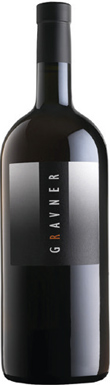

Only 500 bottles produced from some of the oldest vines, magnums only, bottled in 2010. Some botrytis notes and a beautiful vinous nose, a touch of coffee and meat stock. The sublime texture and limpid clarity of the wine is just stunning.
1998
GravnerCollio

Gravner, Ribolla, Friuli Venezia Giulia, Italy, 2007
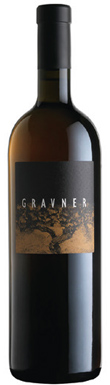
Immediately involving, with a slightly purer, less botrytised character than the 2008. Complex phenolic characters with apricot and orange, marmalade-like quality of bittersweetness. Wrapped in more complex earth and salt flavours and spices too.
2007
Gravner
Gravner, Breg Bianco, Friuli Venezia Giulia, Italy, 2008
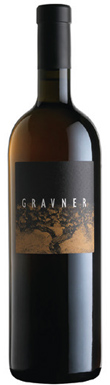
Glowing amber/gold colour. So ripe, boasting notes of dried apricot and tobacco, sweet earth and a touch of spice. Dry with chewy density on the palate, the high tones of lemon rind and lime acidity against the soft, smoky tobacco is pure and long, with lots of salinity on the finish.
2008
Gravner
Gravner, Breg Bianco, Collio, Friuli Venezia Giulia, Italy, 1998
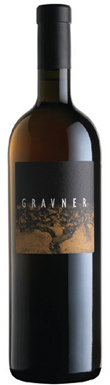
Pre-amphora period, made in big barrels with seven days of skin contact. Gorgeous nose, with honey and sesame seed, a definite sense of sweetness and the latent vibrancy of the fruit – the Sauvignon and Riesling – is still discernible in the juicy citrus to finish.
1998
GravnerCollio
Gravner, Ribolla, Friuli Venezia Giulia, Italy, 2008
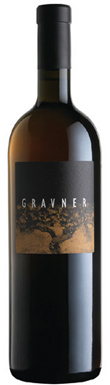
The nose shows orange peel and spices, nuttiness and fragrant tobacco. The palate has huge presence: a touch of toffee and sour lemon, the bitter character so grippy and fascinating, a touch of botrytis evident, finishing with spicy intensity.
2008
Gravner
Gravner, Breg Rosso, Collio, Friuli Venezia Giulia, Italy, 2004
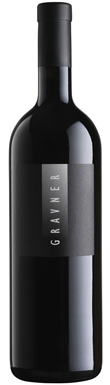
100% Pignolo, and amazingly youthful for a 12-year-old wine. Inky, dark and meaty, though with a fine, high note to the aromatics of herbs and flowers. Made in big, open barrels, the fruit has cherry and ripe red plum, stalky acidity; grip powers the finish.
2004
GravnerCollio
