
Producer profile: Paolo Scavino
Stephen Brook uncovers a forward-looking Barolo producer based in Castiglione Falletto...


Enrico Scavino left school in 1951 so that he could begin helping his father, Paolo at the family estate. Nothing unusual about that, except that Enrico was just 11 years old.
Over 70 years later, he’s still there, although now assisted closely by his daughters Enrica and Elisa. Enrica focuses on marketing and administration, while Elisa has studied viticulture and winemaking. Together, the family has built up one of the most respected estates in Barolo, with an enviable record of consistency.
I recently asked Elisa what made it so special. ‘It’s the heart of the estate,’ she responded. ‘We love the wines from Castiglione, and not just ours! There are other great sites here: Cavallotto’s Bricco Boschis, Mascarello’s Monprivato, and many others.
‘Bric del Fiasc isn’t the most powerful wine you’ll find in Barolo, but we find it displays the best balance and elegance. The soils in the vineyard are complex, with both sand and limestone, and they are rich in iron. This gives the wine its complexity and longevity too.’
Scavino’s range of Barolos has evolved over the years. The estate was well known for its Cannubi from La Morra, but this came from a rented vineyard and the lease has now expired. So there is no more Cannubi, and there is also no more Carobric, a blend of three sites including Cannubi.
Since 2001, however, Scavino has acquired more vineyards: Bricco Ambrogio in Roddi, Monvigliero in Verduno, Ravera in Novello, and Prapò in Serralunga. In addition, there are holdings in La Morra’s Rocche del’Annunziata, which is only made as a Riserva.
When Scavino bought these vineyards they were not that highly regarded, but today sites such as Monvigliero are greatly esteemed and many estates have acquired parcels here. Was it by chance that Scavino were pioneers of formerly obscure sites?
‘It’s mostly chance,’ says Elisa. ‘My father had admired Monvigliero for some time, and because it wasn’t seen as prestigious, it didn’t attract the attention of other producers such as Gaia and Giacosa. So when he got the chance to buy it, he did so.
‘As for Bricco Ambrogio, it was Domenico Clerico who told my father a parcel was for sale. He inspected it and immediately saw its potential. He bought it and it’s now our largest vineyard.’ Other sites, such as Ravera and Prapò, would follow in years to come.
Enrico was part of the generation that revolutionised the production of Barolo in the 1970s, with Clerico, Aldo Conterno and Elio Altare among its other leaders. They are best known for introducing barriques to the region’s cellars, but they also reduced yields radically and practised a more subtle vinification than their predecessors.
Paolo Scavino at a glance
Owners Scavino family.
Founded 1921
Location Castiglione Falletto
Surface 30 hectares
Top vineyards and wines Bric del Fiasc and Monvigliero
Production 180,000 bottles
In the cellar
Scavino was among the first to introduce roto-fermenters, which keep the skins in suspension during fermentation, although he has now reverted to more conventional steel vats. Nor was he an avowed modernist, and when I’ve visited the estate in the past, I’ve always been struck by Enrico’s pragmatic approach to ageing his wines.
Enrico did use a proportion of new barriques in the past, but they were never dominant. Today the Barolos are fermented in temperature-controlled steel tanks, using a submerged-cap vinification technique employing only indigenous yeasts. However, the estate also conducts some fermentation in wooden tanks.
Ageing today begins in casks or used barriques for 10 months, and continues for a further 12 months in large French casks. ‘It’s partly a practical matter,’ explains Elisa. ‘We do over sixty vinifications each year, so when we can’t fill a cask, we put the leftover wines into smaller barrels.’
Looking ahead
There are no current plans to expand the estate further, given the high cost of land and vineyard development. ‘But we’d never say “never”,’ says Elisa. New Barolos will nonetheless be added to the range: from the 2020 vintage, there will be a small quantity of Rocche di Castiglione, made from the wine that used to contribute to the Carobric blend. With vines in Bussia, they are also considering a separate bottling of this cru, but no firm decision has yet been made.
After the hot years of 1997 and 2000, Scavino became aware that the climate was indeed changing, and were swift to adapt. They installed netting over the rows, not only to protect the vines from frequent hailstorms but to filter the ever-stronger sunlight, so as to avoid burning or cooking the bunches. They also practise some irrigation in very dry summers, but it’s not systematic. And being aware that conventional tractors can compact the soil, they are contemplating using drones to spray the vineyards.
The farming is not organic but Elisa insists, ‘we make intelligent use of natural products and rely on the knowledge we’ve acquired over many decades as well as common sense.’
Elisa agrees that Barolo overall has come a long way since the 1980s and 1990s, when the wines were often tannic, tarry and overbearing. ‘There has been a change in style among most producers, and we’re all making better wines. The weather has changed, and riper vintages give softer tannins. We pay a great deal of attention to maceration periods. In 2016 we could do a long maceration, but that same period would have wrecked the more delicate 2017 and 2018 vintages. We need to be very sensitive about issues such as the date of harvest, fermentation temperature, length of maceration and so forth. We are moving in the direction of shorter macerations and earlier bottling to preserve more of the wine’s freshness and energy.’
Freshness, texture, and finesse remain the hallmarks of the Scavino style, and quality is now effortlessly high.
Paolo Scavino: Tasting the 2019s, plus a mini-vertical of Bric del Fiasc
Related articles
- Barolo 2019: vintage report & 139 recommendations
- Ceretto: producer profile & 19 wines tasted
- World’s greatest vineyards: our top 12
Paolo Scavino, Barolo, Piedmont, Italy, 2019
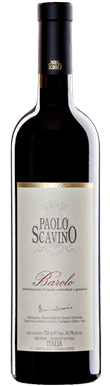

Scavino's regular Barolo is a blend from seven vineyards, each fermented and aged separately before blending. The nose is discreet but pretty and fragrant, with...
2019
Paolo ScavinoBarolo

Paolo Scavino, Ravera, Barolo, Novello, Piedmont, Italy, 2019
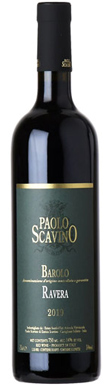
The wine comes from a lofty and slow ripening site in Novello, which usually delivers a Barolo with pronounced acidity. The red-fruits nose is delicate...
2019
Paolo ScavinoBarolo
Paolo Scavino, Bricco Ambrogio, Barolo, Roddi, Piedmont, Italy, 2019
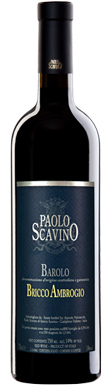
From a south-facing site on marne and limestone soils, this is one of Scavino's most important wines in terms of volume. The nose, which displays...
2019
Paolo ScavinoBarolo
Paolo Scavino, Prapo, Barolo, Serralunga d’Alba, Piedmont, Italy, 2019
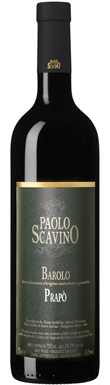
Sunny and well ventilated, Prapo was only added to the range in 2015, and the vines are still young. Relatively cool, it tends not to...
2019
Paolo ScavinoBarolo
Paolo Scavino, Monvigliero, Barolo, Verduno, Piedmont, Italy, 2019
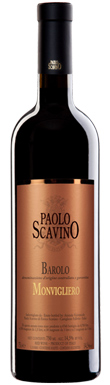
Scavino first bottled Monvigliero as a separate single-vineyard wine in 2007. Only 0.83 hectares in size and situated on limestone soils, its proximity to the...
2019
Paolo ScavinoBarolo
Paolo Scavino, Bric del Fiasc, Barolo, Castiglione Falletto, Piedmont, Italy, 2019
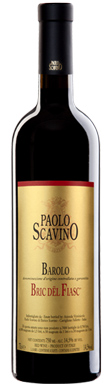
The nose of Scavino's flagship Barolo is less exuberant than that of Monvigliero, but it shows luxurious raspberry fruit and an intriguing iron-like note too....
2019
Paolo ScavinoBarolo
Paolo Scavino, Bric del Fiasc, Barolo, Castiglione Falletto, Piedmont, Italy, 2016
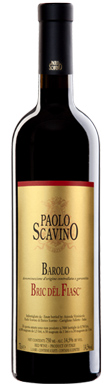
This great vintage encouraged the Scavinos to extract more aggressively than usual. The nose is intense, with complex aromas of cherries, roses and liquorice. Fine...
2016
Paolo ScavinoBarolo
Paolo Scavino, Bric del Fiasc, Barolo, Castiglione Falletto, Piedmont, Italy, 2011
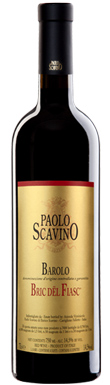
On release, this 2011 was fleshy and forward but lacked some vigour. Today, this sometimes underrated vintage is coming into its own. The nose is...
2011
Paolo ScavinoBarolo
Paolo Scavino, Bric del Fiasc, Barolo, Castiglione Falletto, Piedmont, Italy, 2008
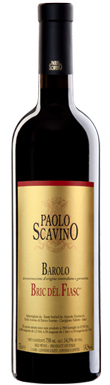
This classic year was saved by a fine September, and though some wines have very firm tannins, Scavino's 2008 is now approachable. The nose, packed...
2008
Paolo ScavinoBarolo
Paolo Scavino, Bric del Fiasc, Barolo, Castiglione Falletto, Piedmont, Italy, 2006
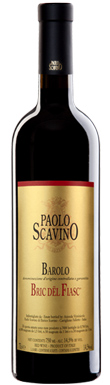
The tannic, structured 2006 Barolos have needed time to show their full potential. This Bric del Fiasc is unusually dark in colour and aromatically subdued....
2006
Paolo ScavinoBarolo
