
Wynns Coonawarra Estate: Producer profile
The winery that put Coonawarra on the map for wine drinkers in the 1950s has grown to become one of Australia’s best-known names. Huon Hooke charts its history and the Decanter team tastes some older vintage and new releases, including the 2022 Black Label Cabernet Sauvignon and 2021 Michael Shiraz.


Wynns Coonawarra Estate is the undisputed grandaddy of Coonawarra. The winery is the oldest and longest-continuing producer of wine here, owning the cream of the region’s vineyards. Its fame is second to none.
So is the quality of its wines, which under senior winemaker Sue Hodder, has never been better. No wonder Wynns is one of the jewels in the crown of its owner, Treasury Wine Estates, topped only by Penfolds.
Scroll down for tasting notes and scores of new releases and older vintages from Wynns Coonawarra Estate
Yet Wynns hasn’t been content to rest on its laurels. With viticulturist Allen Jenkins in charge, the estate has invested major cost and effort into improving its 500ha of vineyards. The lion’s share are on the revered terra rossa soil over limestone, largely responsible for the success of Coonawarra wines.
Jenkins and team used aerial infrared photography to soil-map the vineyards, and each season they perform thousands of bud dissections in an effort to better understand their vines. They have re-trellised, replanted or reinvigorated many of the old vineyards which had been allowed to run down.
All of these changes have improved the wines, allowing Hodder and winemaker Sarah Pidgeon to harvest ripe grapes earlier and produce wines with lower alcohols. Today, 13% is normal, where not so long ago the same wines were 14%.
At the same time, the use of oak has been moderated with the result that the wines – which are mostly Cabernet Sauvignon, Shiraz and blends – not only avoid overt oakiness, but are more elegant and refreshing.
Hodder no longer feels pressure to make ‘big’ wines, as she did when starting at Wynns in the early 1990s. Today’s wines will age just as well as in the past, but are also delicious to drink young.
Ageworthy wines
The first-ever pure Cabernet Sauvignon, the 1954 vintage, was still drinking well at 63 years of age. A retrospective tasting in 2017 to mark 60 vintages of Black Label attested to their longevity – virtually every wine was still enjoyable.
The Black Label Cabernet is the standard-bearer for Wynns and available in all major supermarkets in Australia. While the recommended price is about A$45 (£25) it’s readily buyable in Australia for half that. Why? Because it’s made in large volume – though the numbers are never divulged. It’s a classic case of price driven down by unfashionability, due to a perception of unlimited supply. The Cabernet drinker is the winner.
Wynns Coonawarra Estate in brief
History: The winery dates to 1897 but David Wynn bought it in 1951. Today it is part of Treasury Wine Estates.
Top wines: Black Label Cabernet Sauvignon is the best-known wine, with the longest history. Icon wines are John Riddoch Cabernet Sauvignon and Michael Shiraz. Occasional single-vineyard bottlings include Harold Cabernet Sauvignon and Johnson’s Block Cabernet Sauvignon.
Other wines: The White Label range includes a Shiraz, Chardonnay and a very good Riesling. The Cabernet-Shiraz-Merlot blend (with a distinctive red stripe label) vies with White Label Shiraz as Coonawarra’s biggest-selling wine. V&A Lane Shiraz and Cabernet-Shiraz are sourced from southern Coonawarra and made in a lighter, more elegant style. The Gables and The Siding ranges offer less expensive reds.
In her 25 years at Wynns, Hodder has brought positive changes. She phased in a pure French oak regime for the Cabernet while gradually eliminating American oak. In the cellar, she uses a variety of fermenters and sources barrels from different coopers. But there’s been a trend towards larger formats, with puncheons and hogsheads as well as barriques.
‘I’ve learned to be confident in making medium-bodied wines, which the region naturally produces,’ says Hodder.
‘Earlier picking is part of that, and consequently less acid addition. But viticultural changes have meant the vines are in better balance and taking up less potassium, which means we have lower pHs.’
Vineyard work
Indeed, the biggest improvements have been in the vineyard, where Jenkins has been pivotal. He says that Wynns has replanted 25% of its vineyards in the past 10 years. When he arrived in 2002, many trellises were falling down and needed renewing.
‘Much vineyard was renovated to remove the hedge-like mass of wood that had accumulated during the era of mechanical and minimal pruning. We mapped vineyards to identify areas of low and high vigour, as this has ramifications for unevenness in both yield and ripeness.
‘It’s also meant rejuvenating old vines and establishing new cordons, putting the correct varieties on the appropriate sites, with Cabernet on the best Cabernet soils. We also used the best clones and matched them with the appropriate rootstocks,’ says Jenkins.
He has replanted with material from selected vines on Wynns’ own vineyards, as well as new French clones and heritage Australian clones such as the Reynell selection and the Houghton clone.
With a view to getting pruning levels right (which affects crop level the following season), between 5,000 and 10,000 buds are dissected annually before the pruners arrive; this has been ongoing for nearly 20 years. Bud dissection helps in predicting the expected crop level, so pruners can prune in a more precise manner.
Harvesting the best possible fruit at the ideal moment of ripeness is probably the area where the biggest strides have been made. It is also where there is greatest potential for further improvement.

Visionary founders
It’s all a far cry from 1951 when David Wynn went against the wishes of his father Samuel, a Jewish refugee from Poland who made good as a Melbourne restaurateur and wine merchant, and bought the winery – then named Chateau Comaum – and surrounding vineyards and pasture land for £22,000.
John Riddoch founded the Chateau Comaum winery in 1897. The Scotsman arrived in Coonawarra (then known as Penola) from the goldfields in 1861 and farmed sheep. Wool being highly profitable back then, he made a lot of money.
Believing his land was suitable for growing fruit and vines, he established the Coonawarra Fruit Colony in 1890.
In 1891 he had 400ha of his land surveyed and divided into blocks which he leased to other farmers. He planting his first vines the same year. Interestingly, they were Cabernet Sauvignon and Shiraz, with some Malbec and Pinot Noir. Riddoch’s first vintage was in 1895.
The project was so successful that in 1898 he employed the region’s first trained winemaker, Ewen McBain, an early graduate of Roseworthy Agricultural College.
But Riddoch died in 1901 and the Federation of Australia in 1900, which united the self-governing colonies of Queensland, New South Wales, Victoria, Tasmania, South Australia and Western Australia, saw the removal of trade barriers, which meant Coonawarra could no longer compete commercially.
From 1918 to the mid-1940s all of the estate’s grapes went to brandy distillation and the property fell into disrepair until the Wynns renovated it.
Wynns Coonawarra Estate – a timeline
1897: John Riddoch builds a triple-gabled winery called Chateau Comaum
1951: David Wynn purchases the winery and renames it Wynns Coonawarra Estate
1952: Ian Hickinbotham makes the first wine, S Wynn & Co Coonawarra Estate Claret
1954: The first vintage of Wynns Coonawarra Estate Cabernet Sauvignon, informally known as Black Label
1982: The first vintage of limited-release John Riddoch Cabernet Sauvignon
1993: Sue Hodder arrives at Wynns and becomes senior winemaker in 1998
2004: Release of the first single-vineyard wine, Harold Cabernet Sauvignon 2001
2008: The first V&A Lane wines are produced
2017: Black Label Cabernet Sauvignon celebrates 60 vintages
David had sniffed the wind and realised table wine was going to be a big thing in Australia, where people were drinking mostly beer and sweet local ‘Sherry’ and ‘Port’ at the time.
He was a renaissance man, interested in the arts, so he commissioned artist Richard Beck, to make a woodcut of the triple-gabled winery frontage. It is still the centrepiece of the label.
David also made history by putting a map on the back label, to show drinkers where the still-unknown Coonawarra was.
He kicked off an advertising campaign to promote Wynns Coonawarra Estate wines, always emphasising quality, and the pleasure and sophistication of a glass of wine with a meal.
Bet on black
It is ironic that today Wynns Coonawarra Estate Black Label Cabernet Sauvignon is one of Australia’s greatest wines, as well as one of the most heavily discounted.
However, followers of fashion ignore it at their peril. The fact that it’s also one of Australia’s best value for money wines should not be a turn-off. There is never an off vintage these days (even the 2011, from a notoriously wet summer, is excellent). And in the great vintages – such as 1982, 1990, 1991, 1996, 2006, 2012, 2015, 2018 and the new release 2019 – it is outstanding value for money, even at the full retail price.
With the improvements in viticulture and winemaking, coupled with the superior screwcap closure introduced with the 2006 vintage, the wine is more consistently good than ever. The latest quality acquisition at Wynns is an optical grape sorter, which Hodder says is one of only three in Australia.
One luxury of tasting 60 vintages of the same wine is to chart the industry’s fashions. The low-alcohol and sometimes herbaceous wines of the late 1970s and early 1980s (although on this occasion the 1980 was the only wine from this period clearly showing the malaise), contrast with the riper, juicier, higher-alcohol wines of the 1990s and early noughties.
Meanwhile the large-vat-matured (no small oak) wines of the 1950s and 1960s contrast with the more oaky (barrique- and hogshead-aged) wines of the 1990s. Then the wines of the Hodder era sensibly revert back to more subtle, better-balanced oak.
The quality across the 60 years was quite outstanding. Since 2006 the wines have, if anything, been even more consistent.
This article was originally published in 2018, with updates in 2020 and 2023.
Wynns Coonawarra Estate: new releases and more…
The following are a selection of tasting notes of the current 2024 releases and older vintages from a number of Decanter contributors. Click here to read about Wynns Coonawarra Estate’s icon Cabernet John Riddoch and tasting notes of 12 vintages
Related content
Wynns’ John Riddoch: an Australian Cabernet icon
Behind the label: Wynns John Riddoch 2018
Penfolds Collection 2023: Global ambitions underlined
Wynns Coonawarra Estate, Black Label Cabernet Sauvignon, Coonawarra, South Australia, Australia, 2019
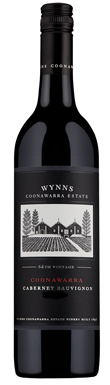

The 64th vintage of this iconic collector's favourite, delicious now but which will amply reward up to two decades of cellaring. Produced from the top...
2019
Wynns Coonawarra EstateCoonawarra

Wynns Coonawarra Estate, Black Label Cabernet Sauvignon, Coonawarra, South Australia, Australia, 2018
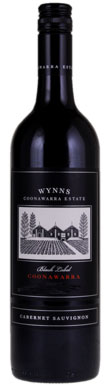
<p>Big oak-framed shoulders and complexity shows in brooding black fruits and blood-red berries. Cooler weather during the 2018 harvest has seen the fruit retain strong...
2018
Wynns Coonawarra EstateCoonawarra
Wynns Coonawarra Estate, Black Label Cabernet Sauvignon, Coonawarra, South Australia, Australia, 2015
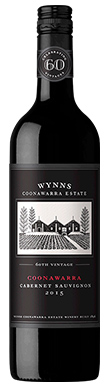
Youthful, fresh bouquet of bright blueberry, raspberry and mulberry. Elegant and intense, with fine-boned structure and a long finish. Time will reveal it to be...
2015
Wynns Coonawarra EstateCoonawarra
Wynns Coonawarra Estate, Black Label Cabernet Sauvignon, Coonawarra, South Australia, Australia, 2012
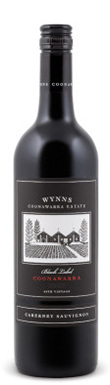
Made from the top 20-25% of Cabernet fruit from Wynns’ sizeable Coonawarra estate, this 57th vintage brims with sophistication and pedigree. Nowadays medium-bodied and matured...
2012
Wynns Coonawarra EstateCoonawarra
Wynns Coonawarra Estate, Black Label Cabernet Sauvignon, Coonawarra, South Australia, Australia, 2010
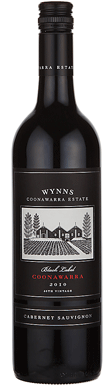
Very deep ruby colour. Elegant, creamy, vanilla oak, eucalyptus and cassis nose. Cool, delicate and intense. Opulent ripe rich palate packed with black cherry and...
2010
Wynns Coonawarra EstateCoonawarra
Wynns Coonawarra Estate, Johnson’s Block Cabernet Sauvignon, Coonawarra, South Australia, Australia, 2014
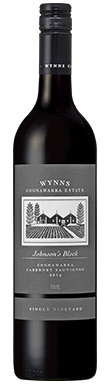
From the oldest Cabernet vines in Coonawarra, planted in 1954. The bouquet initially subdued but ripe, rich and exuding berry and violet notes. It gradually...
2014
Wynns Coonawarra EstateCoonawarra
Wynns Coonawarra Estate, Harold Single Vineyard Cabernet Sauvignon, Coonawarra, South Australia, Australia, 2018
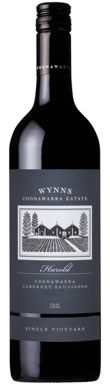
Proudly old fashioned, this unpretentious Cabernet speaks of red earth richness as much as ripe blueberry and tart rhubarb. Gentle tannins frame the fruit weight,...
2018
Wynns Coonawarra EstateCoonawarra
Wynns Coonawarra Estate, V&A Lane Cabernet-Shiraz, Coonawarra, South Australia, Australia, 2018
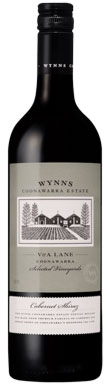
Sumptuous and smooth, this luxurious blend benefits from the specific characteristics of fruit from the V&A Lane vineyards – slender in profile, but rich and...
2018
Wynns Coonawarra EstateCoonawarra
Wynns Coonawarra Estate, Black Label Old Vines Shiraz, Coonawarra, South Australia, Australia, 2022
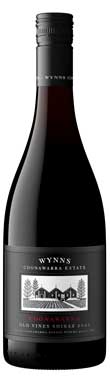
Vine age makes a keen difference here when compared to Wynns’ other Coonawarra Shiraz, with the Old Vines Shiraz coming from the Undoolya Vineyard, planted...
2022
Wynns Coonawarra EstateCoonawarra
Wynns Coonawarra Estate, Michael Shiraz, Coonawarra, South Australia, Australia, 2021
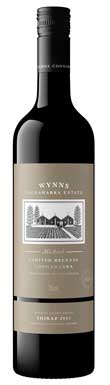
Expensive icon wines must make bold declarations and this is a statement about power expressed through structure rather than heft. The black-toned fruit with hints...
2021
Wynns Coonawarra EstateCoonawarra
Wynns Coonawarra Estate, Michael Shiraz, Coonawarra, South Australia, Australia, 2018
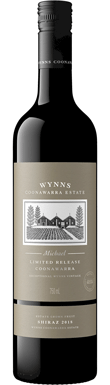
With a rub of dried bay leaf, smoked paprika and black olive layers, the ripe blackberry and jubey blackcurrant fruit is deliciously savoury, soft and...
2018
Wynns Coonawarra EstateCoonawarra
Wynns Coonawarra Estate, Messenger Single Vineyard Cabernet Sauvignon, Coonawarra, South Australia, Australia, 2021
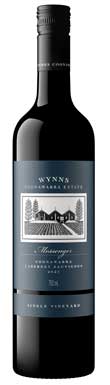
The Messenger Vineyard, a dry-grown plot in the southern section of Coonawarra’s Terra Rossa strip, shows perfume and silkiness in a mild year like 2021....
2021
Wynns Coonawarra EstateCoonawarra
Wynns Coonawarra Estate, Black Label Cabernet Sauvignon, Coonawarra, South Australia, Australia, 2022
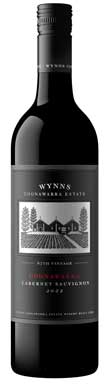
With a history dating back to 1954, this sturdy multi-site blend of Cabernet Sauvignon fruit has rightly remained a benchmark for value. It shows the...
2022
Wynns Coonawarra EstateCoonawarra
Wynns Coonawarra Estate, Michael Shiraz, Coonawarra, South Australia, Australia, 2008
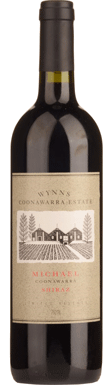
A touch of sweet jubey fruit to the nose hints at the soft, supple flavours of blackberry, mulberry, cinnamon-stewed plums and summer berry compote fruit...
2008
Wynns Coonawarra EstateCoonawarra
Wynns Coonawarra Estate, V&A Lane Cabernet Shiraz, Coonawarra, South Australia, Australia, 2022
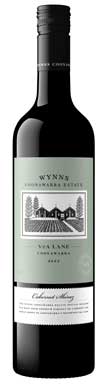
Striking a keen balancing point between cool, leafy Cabernet Sauvignon and juicy joven-style Shiraz comes down to the strength of a long true acid line...
2022
Wynns Coonawarra EstateCoonawarra
Wynns Coonawarra Estate, Black Label Old Vines Shiraz, Coonawarra, South Australia, Australia, 2018
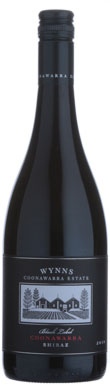
Generous and round in its flavours, this has the type of heft and girth in a medium-bodied style that keeps traditional Shiraz fans smiling. Judicious...
2018
Wynns Coonawarra EstateCoonawarra
Wynns Coonawarra Estate, V&A Lane Shiraz, Coonawarra, South Australia, Australia, 2022
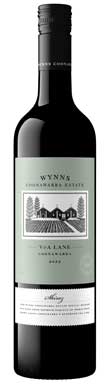
This vineyard ripens early each year, so its Shiraz grapes are treated with delicacy, to arrive at a significantly lower alcohol level of 12.4% and...
2022
Wynns Coonawarra EstateCoonawarra
Wynns Coonawarra Estate, V&A Lane Shiraz, Coonawarra, South Australia, Australia, 2018
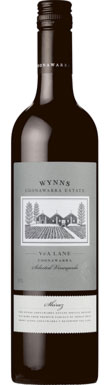
A brave, distinctive single-vineyard wine that speaks deliberately of site, this is bound to polarise Shiraz drinkers. Lean and defined by its acid seam rather...
2018
Wynns Coonawarra EstateCoonawarra
Wynns Coonawarra Estate, The Siding Cabernet Sauvignon, Coonawarra, South Australia, Australia, 2021
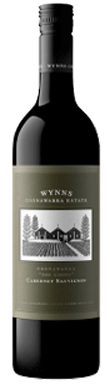
91
Wynns was the first winery to be established in Coonawarra, by John Riddoch back in 1896. The renowned terra rossa soils of the region and the expert winemaking have come together to produce a fantastic Cabernet for the money, deep and rich and generously fruited in style – all that and yet under 14% in alcohol. Inky in the glass, and filled with juicy dark blueberry, plum and blackcurrant fruit, plus hints of pine and eucalyptus. The wine matured for 14 months in a mix of new and older French oak, giving structure, and present but not harsh tannins. Lovely balance, velvety and with a cocoa richness.
2021
Wynns Coonawarra EstateCoonawarra
Wynns Coonawarra Estate, The Siding Cabernet Sauvignon, Coonawarra, South Australia, Australia, 2019
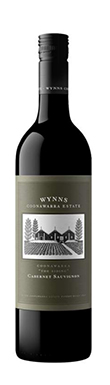
90
Heady aromas of burning sage, pine, green leaves and pyrazine lead onto a sweet and rich palate. It has good varietal typicity as the green bell pepper, blackcurrant and eucalyptus notes meld together nicely. Tasty, present tannins give a long impression in the mouth and the body is thick and full. Perhaps a little too thick as it lacks a little freshness and lift. But the tannins lend good structure and a graphite note appears on the finish. I want to drink this with some savoury, umami food to counteract the sweet fruit.
2019
Wynns Coonawarra EstateCoonawarra
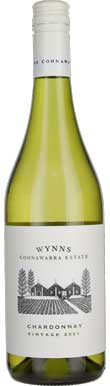
Wynns Coonawarra Estate, Chardonnay, Coonawarra, South Australia, Australia, 2021
90
From an estate more renowned for its reds comes this elegant Chardonnay. The acidity is gentle, but there's enough to refresh and lift aromas and flavours of yellow peach and ripe pear. A lovely cashew creaminess coats the palate, with has a dusting of oak spice. Easy to enjoy.
2021
Wynns Coonawarra EstateCoonawarra
