
Querciabella: Producer profile
Susan Hulme tastes this Tuscan estate's flagship red and white wines including a new ten wine vertical of Batàr spanning the vintages 1998 to 2018.


Susan Hulme MW takes a look at this Tuscan estate, a pioneer of sustainable viticulture in Italy...
Querciabella’s wines have been on my radar for a while, since I first tasted them at an event hosted by their sole UK importer, Armit. Querciabella has 74ha of vineyards in prime locations within the Chianti Classico zone – Greve, Panzano, Radda and Gaiole – together with another 32ha in Maremma on Tuscany’s Etruscan coast.
Founded in 1974, Querciabella, or ‘beautiful oak’, is notable for the choices made by owner Sebastiano Cossia Castiglioni.
The estate was a pioneer in sustainable viticulture, converting to organics in 1988 and biodynamics in 2000. Since 2010, in keeping with the owner’s vegan principles, they have practised what they term ‘cruelty-free biodynamics’ – only using non animal-derived products at every stage of the process.
Today, Querciabella is one of the largest biodynamic and organic estates in Italy.
Scroll down to see Susan’s new Querciabella tasting notes and scores including a vertical of Batàr
Batàr
Batàr is one of Italy’s finest white wines. First produced in 1988 as a Pinot Bianco/Pinot Gris blend, it started off as just one-and-a-half barrels of wine made from an abandoned vineyard. It wasn’t sold commercially – instead the wine was given to family and friends.
The name and the blend evolved in the early years, from ‘Bâtard-Pinot’ to ‘Bâtard’ and finally to ‘Batàr’. Since 1992, the blend has settled on an approximate 50/50 split between Chardonnay and Pinot Bianco – although vintages such as 2002 demanded a less equal division.
Today, 14,000-15,000 bottles of Batàr are made annually from just over five hectares of vineyards, of which 2.6ha are planted with Chardonnay at 300 metres, and 2.5ha with Pinot Bianco at 600 metres. This high altitude is a big advantage, especially in hot vintages as many recent ones have been.
Manfred Ing, the young South African winemaker who joined Querciabella in 2010, has influenced the style of Batàr in a very positive way, making wines that are more precise, focused and clearly delineated. He has reduced the amount of new oak from 50% to 20%, and reduced bâtonnage, which has made the wines leaner and more elegant.
Ing also introduced some rows of the very impressive Henri Gouges Pinot Blanc clone to the blend.
Batàr has a distinctive Tuscan personality which sets it apart from its Burgundy namesake, demonstrating a strong identity and ability to age.
Chianti Classico
There seems to be a big leap forward in quality with the 2015 vintage of Querciabella’s Chianti Classico. Manfred Ing puts this down to several key factors: the coming to fruition of all the hard work in the vineyards, a ‘near-perfect’ vintage, and a different oak regime.
For the first time, the blend includes equal parts of fruit from Greve, Radda and Gaiole. It’s also the first year where more 500l tonneaux were used, rather than 225l barrels. As Ing comments: ‘The reduced oak influence allows the fruit to express itself, giving the perfect platform for the Sangiovese to evolve without hiding anything behind make-up – Sangiovese in its purest form.’ I couldn’t agree more.
Camartina
Querciabella has produced its signature SuperTuscan, Camartina – a blend of Cabernet Sauvignon, Sangiovese and the ocassional dash of Merlot – since 1981. The vines are grown in the estate’s breezy vineyards in Ruffoli, at altitudes of up to 600 metres.
The wines of Querciabella
Batàr A high quality white made from an unusual blend of Chardonnay and Pinot Bianco. Average production of 15,000 bottles
Camartina A blend of Sangiovese and Cabernet Sauvignon. Average production of 12,000 bottles
Chianti Since 2010, Querciabella’s Chianti Classico and Chianti Classico Riserva have been made with 100% Sangiovese. Previously there had been a small percentage of Cabernet Sauvignon in the blend. To my mind this has proved to be a positive move. Average production of 90,000 bottles (Chianti Classico) and 10,000 bottles (Chianti Classico Riserva)
Mongrana A blend of Sangiovese, Merlot and Cabernet Sauvignon from coastal vineyards in Maremma. Average production of 130,000 bottles
Palafreno A 100% Merlot wine from the best plots in Greve. Average production of 3,000 bottles
Turpino A blend of Cabernet Franc, Syrah and Merlot from holdings in Maremma and Greve. Average production of 20,000 bottles
Susan’s Querciabella tasting notes:
Related content
Chianti Rùfina: regional profile plus top wines worth seeking out
Tasting Col d’Orcia Poggio al Vento wines: 1990 – 2010
Tuscan IGT wines: panel tasting results
Querciabella, Batàr, Toscana, Tuscany, Italy, 1998
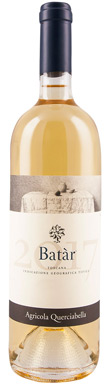

The name Batàr is in part an homage to the great Burgundian Bâtard wines; illegitimate also because Batàr is a white wine in Sangiovese country....
1998
QuerciabellaToscana

Querciabella, Batàr, Toscana, Tuscany, Italy, 2001
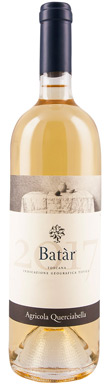
Sauternes-like colour but a contrasting nose of mineral, flint and fresh mushroom. Compared to the 1998, the 2001 is much tauter, more precise and more...
2001
QuerciabellaToscana
Querciabella, Batàr, Toscana, Tuscany, Italy, 2002
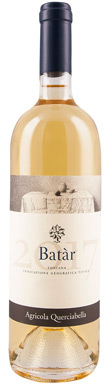
2002 was such a difficult vintage that it still brings a tear to the eye of older locals. Spring was wet and rain continued through...
2002
QuerciabellaToscana
Querciabella, Batàr, Toscana, Tuscany, Italy, 2005
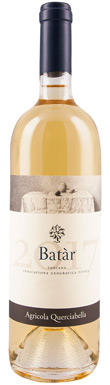
The 2005 winter was very rainy with low temperatures. Spring was mild but the summer cool. The wine's maturation in 50% new oak shows -...
2005
QuerciabellaToscana
Querciabella, Batàr, Toscana, Tuscany, Italy, 2011
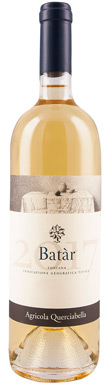
2011 was winemaker Manfred Ing's second vintage and is a great testament to his skill and influence. It was such a hot vintage and the...
2011
QuerciabellaToscana
Querciabella, Batàr, Toscana, Tuscany, Italy, 2013
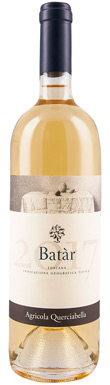
One of the stars of the tasting, the 2013 has a restrained nose with cream, lemon pie, peach and flint. It is linear, pure and...
2013
QuerciabellaToscana
Querciabella, Batàr, Toscana, Tuscany, Italy, 2014
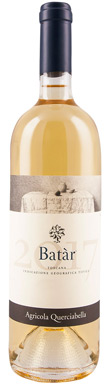
2014 was a complicated vintage. March was really warm, so the vines hurried to budburst; a cold, wet summer followed with several hail and thunder...
2014
QuerciabellaToscana
Querciabella, Batàr, Toscana, Tuscany, Italy, 2016
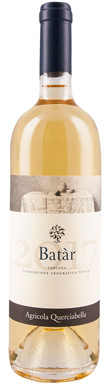
This 2016 is just so complete and balanced. The key was a not-too-hot summer and large diurnal differences at night which led to a longer,...
2016
QuerciabellaToscana
Querciabella, Batàr, Toscana, Tuscany, Italy, 2017
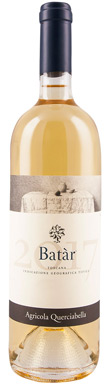
2017 was hot and one of the driest vintages on record but Ing believes 'the vines adapted because it was dry throughout the season.' For...
2017
QuerciabellaToscana
Querciabella, Batàr, Toscana, Tuscany, Italy, 2018
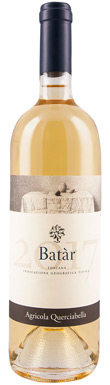
2018 was the opposite of the 2017 vintage. It was cool and fresh with more rainfall and has produced this textbook Batàr. Bright green-gold, it's...
2018
QuerciabellaToscana
