
R. López de Heredia: profiling the iconic Rioja bodega
Simon Field MW takes a look at the iconic Rioja Alta estate whose philosophy focuses on a blend of 'tradition and tradition'.


The Barrio de la Estación in Haro is a wine lover’s paradise; think the Avenue de Champagne with a more human touch!
Among the jostling excitement of so many famous names, so close together (Muga, La Rioja Alta, Roda, CVNE among others), one landmark stands out; the striking scarlet tower inscribed with the name López de Heredia.
Known locally, in Basque, as the Txori Toki (meaning bird tower), the edifice was put up under instruction of the eponymous founder Don Rafael López de Heredia in 1877, and has since 1886 adorned the labels of this fantastically special Rioja.
Scroll down for Simon Field MW’s López de Heredia tasting notes and scores
Why so special?
Well, in a world where virtually every wine producer describes a philosophy in terms of a blend of tradition and innovation, López de Heredia can make a very good claim to be the only producer whose philosophy focuses on a blend of tradition and tradition.
The past is not what it used to be, someone once said, but a mere five minutes (it’s usually several hours) listening to the fabulous Maria José López de Heredia, fourth generation scion who runs the Bodega with her sister, winemaker Mercedes and brother, vineyard manager Julio Cesar, makes it abundantly clear that the past is the present and that their coincidence is a more than worthy celebration of all that has made Rioja one of the greatest wine regions in the world.
Things have to change to stay the same, as someone else said; in the case of López de Heredia nothing changes and everything stays the same; logically, wonderfully and memorably.
López de Heredia wines
The family produces four different labels;
- Tondonia itself, the flagship, covering 100 hectares
- Bosconia, 15ha, with more clay in the soil
- Cubillo, relatively younger wines, for Crianza reds only
- Gravonia, produced from the 45 hectares of the Viña Zaconia vineyard and devoted to white grape Viura only
The vineyards are key, of course, their personalities drawn from the relative proximity of the Ebro river, then afforded more precise detail through their varying aspects and soil structures.
I was lucky enough to help with the vintage in 2012, a slightly damp harvest, and was struck by the thick texture of the soils down by the river. It was hard work to pick the grapes, but impossible not to feel a sense of pride, brandishing the traditional coqueta knife and then depositing the fruit in the distinctive red wooden comportas.
Whence to the winery itself with its wonderfully idiosyncratic architecture, halfway between a granary and an art deco museum, the lower levels vaulted and cobwebbed (Miss Havisham would be at home here) and oak everywhere, none of it new, but all of it expertly curated by an in-house cooper.
There are 14,000 Bordeaux-size (225 litre) Appalachian barrels here and 72 large oak vats (ranging in size from 60 – 640 hectolitres) used for fermentation, maceration and storage.
My job, after the rigours of picking, was to help with the pumping over of the must; I stood on top of one of the larger vats, spraying the cap with gushing red nectar, hoping, all the time, that I was doing it correctly. Seemingly I was, as every hour or so a colleague would approach with a porrón filed with a liquid which clearly wasn’t water. I only later found out that the refreshment had come from the settling vat which contained what was destined to become, who knows when, Tondonia Blanco Gran Reserva. Such a perk was seldom, by which I mean never, declined!
Ageing
Time is key here of course; the 6,000 sq-metres of cellars age the barrels, over six years for Reserva, a decade at least for Gran Reserva.
Indeed, at the time of writing, we still await the release of the Tondonia Gran Reservas white and red 2001, a legendary vintage in store and promised for 2021.
A tasting in the cellars with Mercedes is as instructive as it is pleasurable; hers is a fascinating philosophy of consistency, almost Champenois in scope, which means that she is happy to cross-blend vintages to achieve a house style. Only up to 15% from a previous vintage, of course!
The rest of the work is left to the wood itself; the more natural the process the better; hence deference to the natural yeast which accumulate in this very specific environment, hence the lack of need to filter, nature having cleansed the wine over time, the bi-annual racking formalising the process.
The cellars assume a quiet nobility; their names are steeped in a heritage of Catholic patience; la Dolorosa and El Cementerio among them.
Demand
The wines themselves are now the height of fashion, their style described simply by Maria José as ‘vinos finos’, more specifically the ultimate expression of the region of La Rioja Alta.
I recall that only a decade ago the dusty inventory of Gran Reservas stretched back to such iconic years as 1964 and 1968, many vintages available in good volumes. Today, however, everyone wants the wines; the sisters have tried to accommodate the demand while not forsaking the patrimony. A difficult task, given the global fascination and thirst.
And what has furnished this incredible demand? Essentially a modus operandi of non-intervention and patience!
The wines are dry, often described as savoury or salty; incredibly food friendly, with a resonance on the mid-palate born out of naturally persuasive acidity and perfect oak integration, as the mechanic of slow barrel esterification forge a unique identity.
The same is evidenced with the white wines; waxy, toasty notes and an extraordinary yeasty herbal backdrop self-evidently defying eloquent description, and once more wrapped in crisp and pure acidity. And as for the rosado, at least ten years old on release… what can one say?
Say nothing and savour the wines; leave the talking to the effervescently articulate Maria José and understand that when she describes the ‘anthropological cultural significance’ of her project, she is speaking from the heart.
The wines, the people and the bodega alike are all to be cherished.
Simon Field MW’s top 10 López de Heredia wines
See also:
Rioja gran reserva: Panel tasting results
The best Rioja vintages to drink now
Why do bottles of Rioja have gold mesh – Ask Decanter
R Lopez de Heredia, Viña Tondonia Gran Reserva, Rioja, Alta, Rioja, Spain, 1999
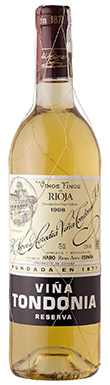

Six years in barrel, and now another 15 in bottle; plenty of time to take the road less travelled, or less travelled these days at...
1999
R Lopez de HerediaRioja

R Lopez de Heredia, Viña Gravonia Crianza, Rioja, Alta, Rioja, Spain, 2011
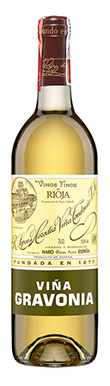
The 24 hectares of Viura from the Viña Zaconia vineyard are located at a mere 200 yards from the Bodega, the marginally higher percentage of...
2011
R Lopez de HerediaRioja
R Lopez de Heredia, Viña Tondonia Reserva, Rioja, Alta, Rioja, Spain, 2010
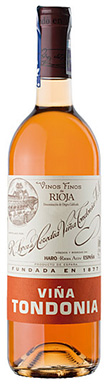
One of the great ‘classic’ European vintages, 2010 was as fêted in Rioja as it was in Bordeaux; a great showcase, then, for one of...
2010
R Lopez de HerediaRioja
R Lopez de Heredia, Viña Bosconia Reserva, Rioja, Alta, Rioja, Spain, 2007
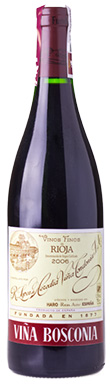
There was a poor fruit set in 2007, and, as a result a rather short crop. The quality for the region is officially designated ‘very...
2007
R Lopez de HerediaRioja
R Lopez de Heredia, Viña Tondonia Reserva, Rioja, Alta, Rioja, Spain, 2008
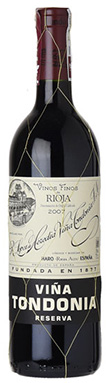
The flagship wine from the estate, its Tempranillo grapes wrapped in an alluvial amphitheatre overlooking the Ebro, its wines barrel aged for six years. The...
2008
R Lopez de HerediaRioja
R Lopez de Heredia, Viña Bosconia Reserva, Rioja, Alta, Rioja, Spain, 2008
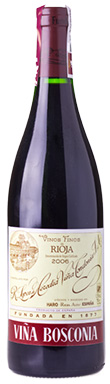
Child of a cooler and somewhat temperamental vintage, the 2008 boasts a rich garnet colour and authoritative aromatics of crushed blueberry and pot pourri, with...
2008
R Lopez de HerediaRioja
R Lopez de Heredia, Viña Bosconia Reserva, Rioja, Alta, Rioja, Spain, 2006
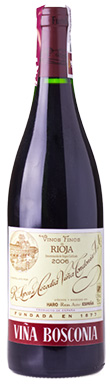
A helter-skelter of a vintage (frost in April, hail in July, rain during the early part of the harvest) but overall well received, and the...
2006
R Lopez de HerediaRioja
R Lopez de Heredia, Viña Cubillo Crianza, Rioja, Alta, Rioja, Spain, 2011
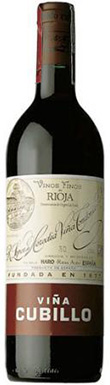
A touch warmer than 2010, 2011 sometimes yielded rather potent wines in Rioja. Not so this Cubillo, its wonderfully seductive structure boasting the fleshy dark...
2011
R Lopez de HerediaRioja
R Lopez de Heredia, Viña Cubillo Crianza, Rioja, Alta, Rioja, Spain, 2012
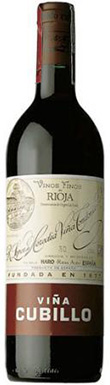
The Cubillo Crianza is aged for three years in barrel and then at least two more in bottle before release, and therefore could technically fall...
2012
R Lopez de HerediaRioja
