
Regional profile: Jumilla plus 10 wines worth seeking out
In Spain’s sun-baked southeast, straddling the regions of Murcia and Albacete, the DO of Jumilla is something of a rising star – thanks to a clutch of new-wave producers dedicated to making character-filled wines from traditional varieties.


In Jumilla, the odds are that you will bump into someone wearing sturdy boots, with a trowel and a magnifying glass in their backpack. These are the tools of the seekers after soils – the geologists. I met a jovial party of them from Holland at the next table on my first night of my stay in the region.
The fact that Jumilla is such a favourite with geology students can be taken as a guarantee that these diverse soils will make fine wines, too. Take a walk in the vineyard at the foot of one of the region’s two extinct volcanoes, and you will understand.
Scroll down to see Sarah Jane Evans’ pick of 10 Jumilla wines
Jumilla is located at the eastern part of the Baetic Cordillera, which extends to the Rif and Tell mountains in north Africa, and across to the Apennines. The soils are a mix of marine origin and calcareous, with good permeability and capacity for water holding. The lack of organic matter has been significant in holding off the phylloxera louse in many places.
It’s an extraordinary landscape, pre-desert, and has an extreme climate. It is windy, too, as evidenced by the wind farms marching across the hillsides.
In winter, the thermometer sinks to zero. In summer, it rises to 40°C and more, though with the relief of cooler nights: ‘It’s brutal,’ they say at Carchelo. Bodegas Carchelo is in the shadow of an astonishing salt mine that extracts and refines salt from a saline diapir (a geological intrusion into the rocks above) far below ground.
Dry-farming bush vines is demanding, and many farmers here are choosing to replace their vines with the easier economy of almond trees. It’s a pity. Monastrell (see ‘at a glance’ box, below) has, for too long, been left in the second rank of grape varieties. Yet this is the grape of France’s Bandol, of Domaine Tempier, with a significant role in Château de Beaucastel in Châteauneuf-du-Pape (30% of the 2020 and 2021 vintage blends). Known as Mourvèdre in France, the variety originated in Spain, probably in Valencia. Confirmation comes in Wine Grapes (Robinson, Harding & Vouillamoz, 2012) which instructs readers looking to learn about the variety: ‘Mourvèdre, see Monastrell’.
Jumilla is not far from the coast – some 50km – but the Mediterranean’s influence is slight. The climate is dry and continental. Traditionally, this has led to a style of Monastrell that is rich and full of jammy fruits. Overlaid with extended barrel ageing, this makes an impressive mouthful, layered, with alcohol easily reaching 14.5%.
There is still a global market for wines of this nature. However, a new generation are reflecting their own vineyards more narrowly and making wines that they would prefer to drink. As a result I’m delighted to find words such as ‘precise’ and ‘linear’ creeping into my tasting notes, where once I used to say ‘bold’, ‘jammy’ and ‘full-bodied’.
Surely bush-vine Monastrell, raised in the heat, with its small berries, is never going to make a lightweight wine? In fact, there are different ways to handle the fruit. José María Vicente, the expert at this variety, is blunt: ‘Monastrell badly made has raisined fruit and low acid.’
Today, at Vicente’s Casa Castillo, we can savour the pleasure of his careful years of massal selection (taking cuttings from the best-quality old stock in a vineyard or area, to preserve clonal variation). The result: a larger berry with greater juice-to-skin ratio. He has been able to increase the quantity of must obtained at pressing by 50% from the same vineyard, simply by increasing berry size over time. Then, in the winery, he follows on with short maceration at a higher temperature.

Jumilla at a glance
DO Created in 1966, the oldest in the region
Vineyards More than 22,700 ha (2020), between the provinces of Albacete and Murcia; 40% are around the town of Jumilla itself; about 80% of the vineyard area is dry farmed
Altitude On a high plateau at 400m-900m
Producers 1,800 growers, 39 registered wineries
Wines Red 90%, white 5%, rosado 4%, sweet and fortified 1%
Grapes Red The dominant variety is Monastrell, accounting for 80% of the total vineyard area. Also Cencibel (Tempranillo), Garnacha Tintorera (Alicante Bouschet), Garnacha, Cabernet Sauvignon, Merlot, Syrah, Petit Verdot. A Jumilla Monastrell must contain 80% of that variety
Grapes White Airén, Macabeo, Pedro Ximénez, Malvasía, Chardonnay, Sauvignon Blanc, Moscatel de Grano Menudo (‘small grain’)
Vines 1,000ha are own-rooted (known as ‘pie franco’); they are more than 50 years old, dating back to the time when grafting was not compulsory. Phylloxera arrived in 1989, although some soils are still resistant to the pest
Climate 3,000 hours of sun annually; average rainfall 300mm: both contribute to climatic conditions which avoid extremes of vintage variation
Organics The climate also enables organic farming: more than 90% of vineyards are farmed organically
Source: vinosdejumilla.org
Growing & grapes

Driving across the denomination, it is possible to feel oneself transported to a different time, as medieval castles appear on the hillsides. Similarly, some wines are still trapped in a traditional style. But there’s one area in which Jumilla can innovate and take the lead, thanks to the climate: organics. It places the DO ahead of some of the international competition. It carries its advantage lightly, though, maybe even diffidently. Only one of the wines I have chosen (see tasting notes, below) says ‘organic’ on the front label. Or is it that organic is still not a key selling point?
The ‘at a glance’ box (above) shows the wide range of varieties in Jumilla vineyards. However, beyond Monastrell, their numbers are small to minute. Although Monastrell is the key grape, that didn’t prevent producers from bringing in international varieties, which can work in blends.
White varieties are surely a lost cause, only good for distillation? Surprisingly not. Juanjo Cerdán at Cerrón makes a strong case for Airén. He says the grape is completely adapted to its environment. He has been working with 0.5ha in a vineyard which his aunt gave him for his birthday in March this year. Stratum El Cerrico is fermented in a 350-litre tinaja, and then matured in 600L oak, resulting in a fresh, linear, chalky original.
Bodegas Luzón even has a sweet Sauvignon Blanc. When it comes to sweet wines, though, Monastrell is the king. Across this southeastern region, not just in Jumilla, producers make delightful fortified sweet Monastrell. Olivares is a fruity delight, with layers of figs and Morello cherries, made for chocolate or blue cheese.
Ancient and modern
Jumilla is steeped in history. Every visitor should make a pilgrimage to the astonishing hilltop settlement of El Tolmo de Minateda. It was occupied from Neolithic times, through the Pax Romana, to the Visigoths and on to Islamic occupation until the 11th century. There were still people living on its slopes as late as the 1960s. The site was not fully explored until the 20th century.
For me, the most striking sight was the outline of the Visigothic cathedral, the bishop’s palace to one side, and the tombs of men, women and children close by. Jumilla was once a strategic stopping-off point on the way to and from the Mediterranean. Take time to explore its sites, and step back into its history, between the wine tourism. Visiting Jumilla, you encounter the striking contrast between its ancient and modern history; just as you can acknowledge the transformation of its wines over the 50-plus years of DO Jumilla’s existence.

In response, the market for Jumilla wines is changing. I’ve received half a dozen emails in as many months from importers in the UK wanting to know my thoughts about Jumilla and any recommendations. They see the region as a source of great-value wines, which is the major demand for retailers and consumers.
Jumilla does indeed represent good value, but it has the potential to be so much more. Indeed, that ‘value’ image can be damaging to the reputation of those who make fine wines. José María Vicente says he is happy as he is, producing wines within the DO, despite the clamour for his wine in light of his Casa Castillo Pie Franco 2020 being awarded a 100-point score by a major US publication in May this year. ‘We don’t make wine for rich people,’ he insists.
Costs are rising at every stage of vineyard to consumer but, in words of universal application, he adds: ‘Wages are an investment, not an overhead.’
Eight (or nine) Jumilla producers to know
Bodegas Alceño & Silvano Garcia
Cheating slightly, I know, but while you’re in downtown Jumilla it’s important not to miss out both Alceño and Silvano García, two producers you will find not far from each other there – I have taken the liberty of choosing both. Silvano García not only runs the winery (founded in 1925) but is also president of the local consejo regulador. Alceño was founded in 1870 when the French put the spotlight on Jumilla – it has vineyards, known as the Laderas del Volcán, below the Cancarix volcano.
Bodega Cerrón
The new one that everyone in the Spanish wine world is talking about. Brothers Carlos and Juanjo Cerdán are taking their father’s organic wines to the next stage with their Stratum series. Biodynamics (certified in 2022), amphorae, concrete tanks: despite the buzzwords in the winery, the vineyard is their focus, and they are working up to 980m altitude with small parcels.
This is Jumilla’s largest cooperative, founded in 1934. With the help of outside consultants it is an impressive machine today, with its forests of brightly painted tanks. Its Gémina (named after the original name of Jumilla) Selección Monastrell 2019 won a Bronze in the Decanter World Wine Awards 2021 competition. They have access to sufficient volumes of grapes to be able to release sets of three single-vineyard wines reflecting the varying geology and terroirs of the DO.
Casa Castillo
The treasure in Jumilla – a winery first established by French émigrés during the 19th century. Today, we can enjoy the results of José María Vicente’s intense, undeviating focus on his family estate (174ha). Year by year, using massal selection, always choosing the best way and not the easiest, has resulted in a truly exceptional selection of wines. Vicente sums it up as follows: ‘Our daily battle is to make the best wines possible.’ Among Spain’s greatest. @casacastillo_bodega
El Nido’s arrival rightly caused a stir. Australian winemaker Chris Ringland was invited to come to Jumilla to create a polished, top-of-the-range duo. The Gil family (see below) provided the impressive vineyards of Monastrell and Cabernet Sauvignon, as well as the winery; Ringland brought his Antipodean magic. El Nido (Cabernet dominant) is favoured by many; I’m more inclined to Clio (Monastrell dominant).
The Gil family are extensive landowners across Spain; in Jumilla they have more than 300ha of certified organic land. With their ‘label’ series (yellow label, blue, etc), they created a strong, recognisable brand within the DO. They also have a major focus on sustainability, recycling and composting: the Jumilla estate uses 100% renewable energy and is a zero-waste facility. Member, Wineries for Climate Protection.
An artisan project? Yes – and no. Yes, because Parajes makes just two wines, and works with growers. Winemaker Maria Jover previously worked at Vega Sicilia in Ribera del Duero. At the same time, Parajes’ parent Vinival is a major bulk wine producer. Informal packaging with handwritten labels add to the handmade image. Nevertheless, the approach is promising – especially the top Terraje.
The third generation, Elena Pacheco runs her family winery with her sisters and nephew, producing a lively, great-value range. She also runs Viña Elena with Isio Ramos. While the former is mainstream, the latter (named Bruma del Estrecho Marín) are very different reflections of terroir. There’s more: spot the demijohns of Airén in the winery with a layer of flor.
Mostly Monastrell: Evans’ pick of 10 Jumilla wines
Related articles
- Beyond Rioja & Ribera del Duero: Spain’s top-scoring red wines
- Reviving Rioja’s old vine heritage
- Exclusive review of the new Priorat classification plus 12 wines worth seeking out
Juan Gil, Blanco, Jumilla, Spain, 2021
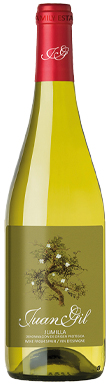

There’s more to Jumilla than Monastrell. Juan Gil, better known for its red wines, also makes this lively, aromatic, scented dry Moscatel. Note that it’s...
2021
Juan Gil

Casa Castillo, Pie Franco, Jumilla, Spain, 2020
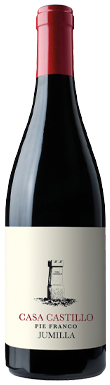
Pie Franco means ‘on its own roots’ – part of Jumilla’s old vine heritage. This 2020 is surely the best yet – though José María...
2020
Casa Castillo
Bodegas Cerrón, Stratum Wines Los Yesares, Jumilla, Spain, 2020
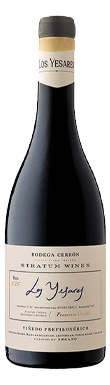
In the Stratum wines range there is plenty to like, as the Cerdán brothers develop their young project to recuperate old vines, working biodynamically. Los...
2020
Bodegas Cerrón
Casa Castillo, La Tendida, Jumilla, Spain, 2020
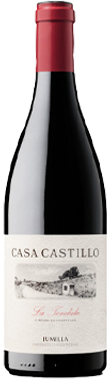
New from Casa Castillo, this comes from younger Monastrell (85%) and Garnacha vines, fermented with about one third whole bunches and indigenous yeasts, followed by...
2020
Casa Castillo
Parajes del Valle, Terrajes, Jumilla, Spain, 2018
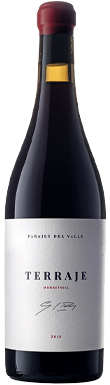
The top wine of this new project, from two parcels of 30- to 40-year-old Monastrell. Winemaker Maria Jover and team play with the oak to...
2018
Parajes del Valle
Carchelo, Muri Veteres, Jumilla, Spain, 2017
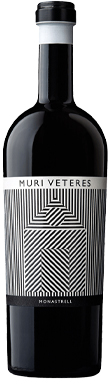
The Carchelo winery lies at the foot of the Sierra de Carche, east of Jumilla town, and was founded in 1990 to focus on red...
2017
Carchelo
Ego Bodegas, El Goru, Jumilla, Spain, 2020
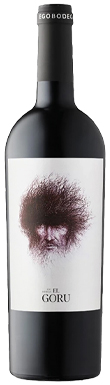
Ego is one of the youngest wineries in Jumilla, founded in 2011 by Santos Ortiz and Ioana Paunescu. El Goru is a rich, seductive blend...
2020
Ego Bodegas
Viña Elena, Familia Pacheco Organic, Jumilla, Spain, 2020
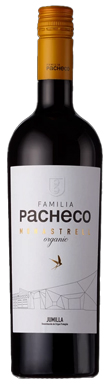
Elena Pacheco’s wines from single plots in the Estrecho de Marín valley are sold as Bruma del Estrecho but are yet to be widely exported....
2020
Viña Elena
Luzón, Organic Monastrell, Jumilla, Spain, 2021
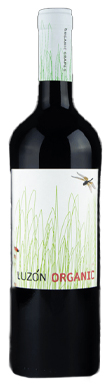
Bodegas Luzón is one of Jumilla’s most historic wineries, founded in 1841. It became a cooperative until its purchase in 2005 by its current owners,...
2021
Luzón
Olivares, Olivares Dulce, Jumilla, Spain, 2017
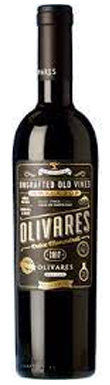
Olivares has an impressive expanse of old-vine, ungrafted Monastrell. The standout is its sweet wine. Fermentation is stopped to give a balance of 16% alcohol...
2017
Olivares
