
Relaunch: Charles Heidsieck Mis en Cave Champagnes
Giles Fallowfield reports on a vertical tasting of Charles Heidsieck's re-released 'Mis en Cave' Crayères collection - a Champagne that was a radical concept when first pioneered.


Pre-millennium, the majority of non-vintage Champagne was made with very little reserve wine.
Most blends – and this includes nearly all of the major Champagne marques – came from one harvest base year, with relatively small amounts of reserve wine included, typically from the previous or two previous harvests. Reserve wine was barely 15% of the blend, and often a lot less.
Scroll down to see Giles Fallowfield’s Charles Heidsieck Mis en Cave tasting notes and scores
So it was a radical move when, back in 1985, Charles Heidsieck head winemaker Daniel Thibault – ‘the nearest thing to a genius the region has seen since the war,’ to quote the late wine writer Nick Faith – set about completely changing the make-up of the brand’s Brut Réserve NV by incorporating large amounts of older reserve wine in the blend, going back as many as eight years.
Thibault was encouraged to build up the large stocks of reserve wine he needed to work his magic by the brand’s new owners Rémy Martin, at the cost of allowing sales to fall substantially.
Extra ageing
To mark the significant change in its make-up, the wine was relaunched as Brut Réserve Mise en Cave, with the year it was first cellared printed above the main label, this indicating the considerable extra ageing this cuvée received, compared to its non-vintage peers. At least that was the idea.
The first official release, ‘Mis en Cave 1992’, included 40% reserve wine from eight different vintages and 60% from the base year of 1991, and went on sale in 1997. No major Champagne houses aged their non-vintage nearly that long, other than Krug – which, perhaps no coincidence, Rémy also owned.
While the Mis en Cave label was not used until the 1992 release, Thibault changed the style from the outset, his aim to showcase the quality of the non-vintage blend. The wines became unusually rich and texturally complex, showing a distinct touch of vanilla with age that suggested oak, though none whatsoever was used.
In the run-up to the Millennium (May 1999), blends going back to that based on the 1986 harvest were re-released by Rémy under the ‘Mis en Cave’ label that hadn’t been used for them initially, as part of a spectacular ‘oenotheque collection’ of 16 Champagnes. This included the 1986-based wine in jeroboam, now labelled Mis en cave 1987, plus a 1988 and 1990 Mis en Cave in bottle (75cl) – all three of which are included in this tasting, 30 years or more on.
Cult following
By mid-1997 there were three different Mis en Cave wines on the market at the same time, 1992, 1993 and 1994 – all demonstrating how high-quality, non-vintage Champagne ages on its lees and develops over time. While these wines had a small cult following, including this writer, and won just about every accolade going on the wine award circuit, inexplicably they were not really commercially successful.
Part of the problem, it seems, was that people didn’t understand the Mis en Cave concept, and many thought the year date indicated a vintage Champagne. Mis en Cave Brut Réserve 1998, launched in May 2003, was the last non-vintage release to carry this epithet on the bottle, though the name was still used to market the wines.
By the time Rémy, which had clearly lost interest in Champagne, selling Krug to Moët Hennessy just before the Millennium, sold Charles Heidsieck to the luxury goods EPI group in 2011, sales had dwindled to just 350,000 bottles. Director of the house Stephan Leroux characterises the period of Rémy ownership from 1985 to 2011, as one with ‘no pilot in the plane. Sales fell from 5m to 1m in the first 10 years,’ he says.
New chapter
The current owner EPI has made great strides in restoring Charles Heidsieck’s reputation and gradually/steadily rebuilding sales. The quality of the wines has never faltered under the stewardship of talented chefs de caves, with Regis Camus initially following Thibault, who died prematurely in 2002, and Cyril Brun moving from Veuve Clicquot to take the helm in May 2015.
All the ‘Mis en Cave’ wines are being re-released, and in a Zoom vertical tasting, held simultaneously in 12 countries, Brun talked journalists through eight wines, starting with his own first such creation, Mis En Cave 2017, elaborated from the 2016 harvest.
Brun says the style, ‘ping pongs between reduction and oxidation. Texturally it’s silky, partly created by super small bubbles. It’s not so much ripe fruit as dried fruit with smoky roast notes too.’ For the first time he has introduced some oak ageing into the blend: ‘It helps knit the elements together, bringing more textural complexity earlier in the wine’s evolution, the equivalent of an extra year on its lees.’
Now when devotees of Charles Heidsieck find a note of vanilla in the Brut Réserve, they will know the oak influence is actually there, albeit subtle and in the background.
Wines are available from The Finest Bubble.
See Giles Fallowfield’s Charles Heidsieck Mis en Cave tasting notes and scores
You may also like
First taste: Brad Pitt and partners reveal rosé Champagne ‘Fleur de Miraval’Philipponnat: Producer profileProducer Profile: Pol Roger, plus tasting the 2013 Brut VintageFirst taste: Krug’s 2006 releasesCristal Vinothèque: The ultimate luxury fizz?
Charles Heidsieck, Brut Réserve Mis en Cave, Champagne, France, 2017
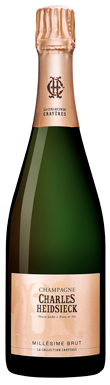

Cyril Brun’s first blend of Brut Réserve after becoming cellarmaster has more, but younger, reserve wine than its predecessors, while 5-6% is also aged in...
2017
Charles Heidsieck

Charles Heidsieck, Brut Réserve Mis en Cave, Champagne, France, 2008
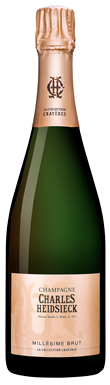
While clearly no longer youthful, this wine nevertheless retains some freshness. It’s based on the 2007 harvest, where Chardonnay fared the best of the three...
2008
Charles Heidsieck
Charles Heidsieck, Brut Réserve Mis en Cave, Champagne, France, 2001
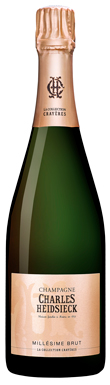
Based on a year that wasn’t that widely released even though it was the ‘millennium’ vintage, this shows an attractive generosity with a warm spiciness,...
2001
Charles Heidsieck
Charles Heidsieck, Brut Réserve Mis en Cave, Champagne, France, 1996
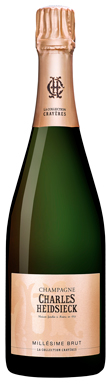
Although blended from the fine 1995, probably the best in the 1990s, this example doesn’t quite sing as expected, but some bottle variation is bound...
1996
Charles Heidsieck
Charles Heidsieck, Brut Réserve Mis en Cave, Champagne, France, 1993
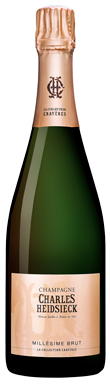
For current cellarmaster Cyril Brun, this wine – base wine 1992 – demonstrates the importance of blending and the beneficial influence of top-notch reserve wines,...
1993
Charles Heidsieck
Charles Heidsieck, Brut Réserve Mis en Cave, Champagne, France, 1990
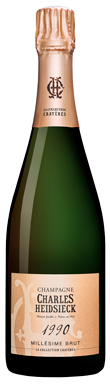
Blended from the ripe 1989, the middle vintage in one of Champagne’s great trilogies (1988-1990), this is a star in the line-up of Mis en...
1990
Charles Heidsieck
Charles Heidsieck, Brut Réserve Mis en Cave, Champagne, France, 1988
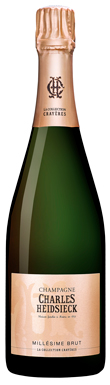
Shows oxidation and has moved very much into the territory of tertiary aromas with mushroom, smoke, complex savouriness and notes of torrefaction. This is, as...
1988
Charles Heidsieck
Charles Heidsieck, Brut Réserve Mis en Cave, Champagne, France, 1987
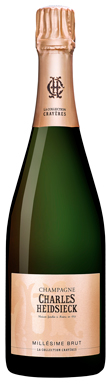
The first wine in the new Mis en Cave range that Thibault made, it’s extraordinary how well it still stands up today, even if it...
1987
Charles Heidsieck
