
Reyneke: South Africa’s holistic wine farm
Johan Reyneke, the owner and viticulturalist of South Africa's only biodynamic wine farm, chats with Tina Gellie about the real meaning of sustainability during a virtual tasting of his latest releases.

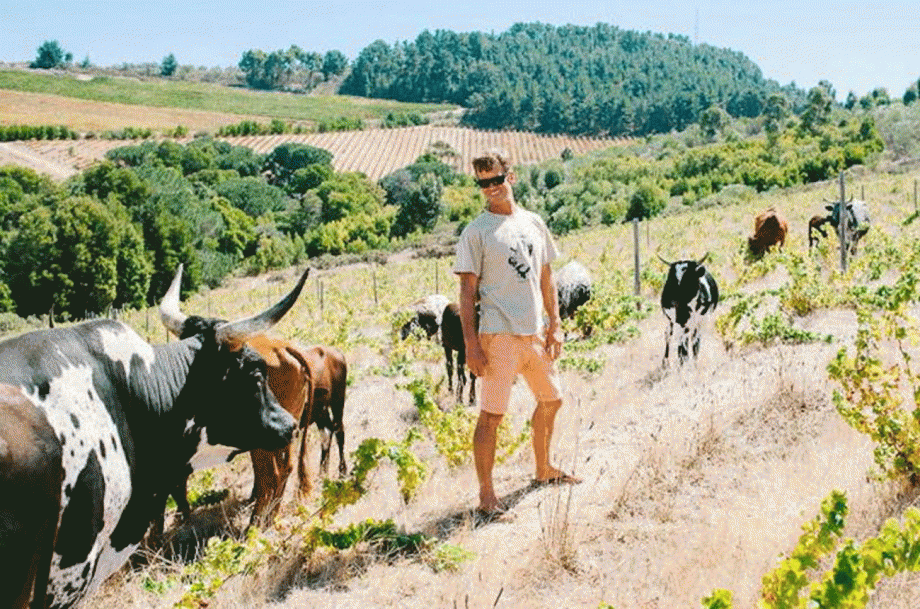
It was when working as vineyard labourer 30 years ago that Johann Reyneke knew sustainable farming was his future.
Sustainability is a real buzzword today. The term is often thrown around without much meaning on winery tech sheets, websites and promotional material, seemingly to suggest that an estate might not be certified organic or biodynamic, but that they still ‘respect’ the soil.
But Reyneke, owner and viticulturalist of South Africa’s only biodynamic wine farm, says he learned ‘through a fascinating and rewarding journey’ that sustainability was an entire philosophy. It wasn’t just about vine and soil health, but ensuring the wellbeing and empowerment of workers, and building an economically viable, self-sufficient business.
Scroll down for tasting notes of the latest releases from Reyneke Wines
In the early 1990s, Reyneke took a job as a farm labourer in Stellenbosch’s Polkadraai Hills during the day while studying for a master’s degree in environmental ethics at night. He quickly realised the sustainable farming approach he was learning in his books wasn’t what was happening in the vineyard.
‘I didn’t really know what organics and biodynamics were then, but I knew I didn’t like working with herbicides, pesticides and fungicides,’ he explains in a recent webinar.
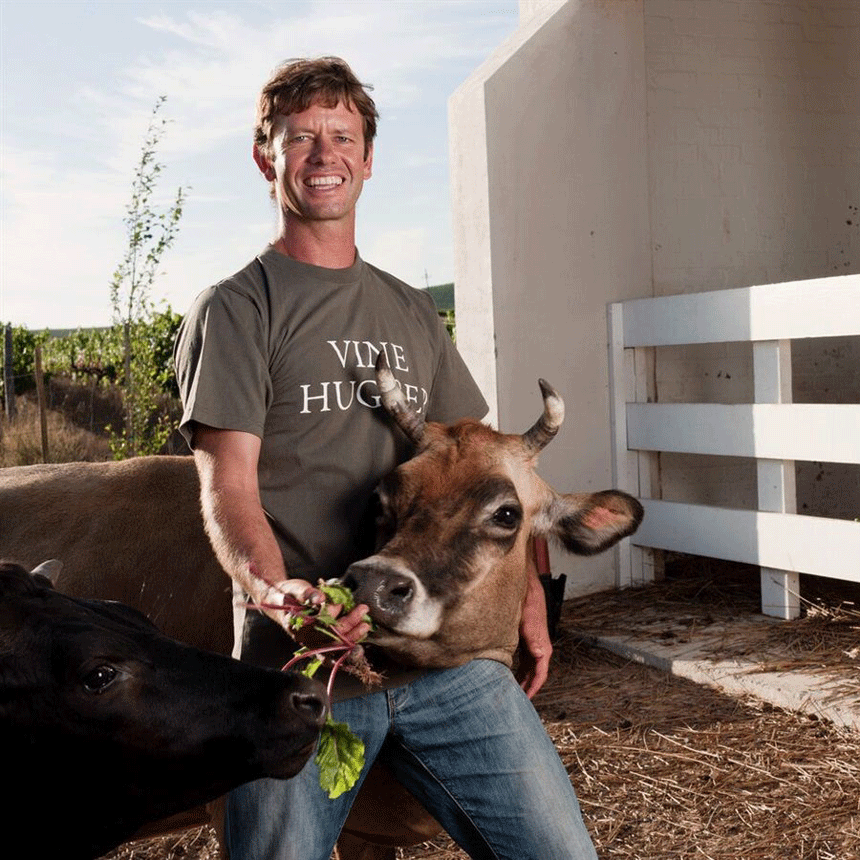
Eliminating all chemicals on a trial block of vines on the family farm saw him overrun with pests and disease. He was then introduced to one of the Cape’s pioneering biodynamic farmers, Jean Malherbe, who ‘re-educated’ him. ‘She told me I was being organic by neglect, not by design,’ he said. ‘I realised I’d need to learn not only to farm with grapes but also farm with soils.’
Later, a meeting with Geisenheim University professor Uwe Hoffman further cemented the correlation between soil health and vine health. Within four years Reyneke’s grapes were flourishing.
‘A place of opportunity’
Today he farms more than 125ha – rented plots as well as estate vineyards on the family farm Uitzicht in the Polkadraai Hills, 14km from the ocean at 300m on granite outcrops.
‘If we only used estate grapes it wouldn’t be enough to afford success to everyone,’ he explains. ’We were the first to go down this route – to start a community with other farmers, getting them certified organic and then buying their grapes to blend with our own.
‘I don’t want organic wine to be an exclusive product. I want it to be more available and affordable to more people.’
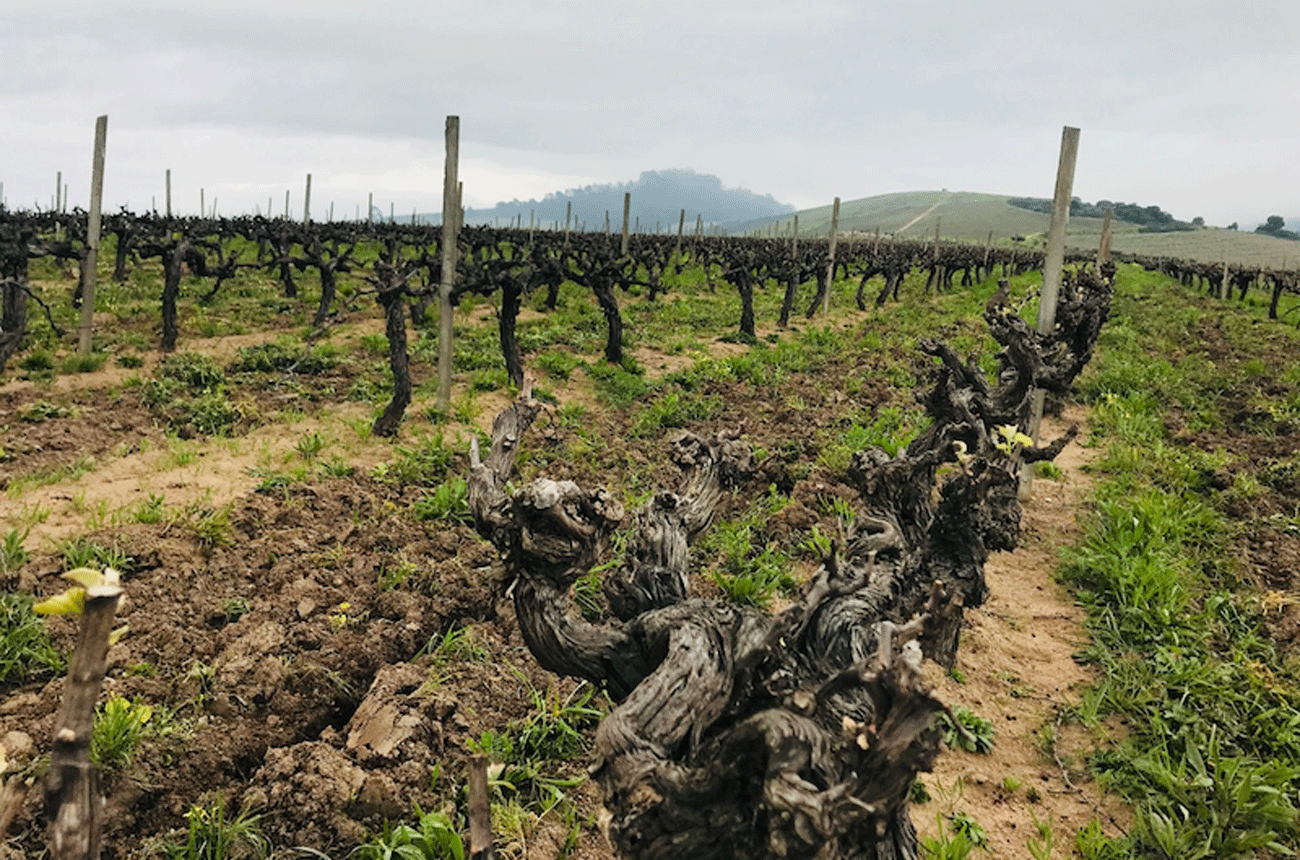
Under cellarmaster Rudiger Gretschel and winemaker Nuschka De Vos, the wines are also made in a ‘less is more’ approach. ‘If you control the vineyard with chemicals, that domination of nature has to continue in the cellar with lots of intervention and additives,’ he says.
‘My soil is good, the vines are healthy and there’s no gymnastics in the winemaking. Wine should not be made in the cellar, it should be grown in the vineyard.’
Reyneke is also firm in his vision for growing his community. ‘My wine farm is not a business for me, it’s a place of opportunity,’ he observes.
‘I suck at money. It’s good for surfboards, but if I was in it for the money I would have quit a long time ago. What I do is about the people, the soils, the insects, the animals. The farm is alive and nothing gives me greater joy. It’s there for future generations and it gives people the opportunity to upskill themselves, to have a dream, to have a house, to send their kids to university.’
Cornerstone of the business
Reyneke, with his surfer’s tan and beaming white-toothed smile, turned 50 on 31 December. It’s hard to believe. He recalls back to the days 30 years ago when he was a farm labourer.
‘People working with me in the vineyard were old enough to be my parents. They had newspapers stuffed down their clothes to keep warm. I got to put my expensive wetsuit on and then my expensive clothes on top.
‘The vineyards are the most important part of making wine yet they were full of chemicals. How is it fair that farm workers have to suffer in that toxic environment – and for 90 Rand a week? You can’t live on that.’
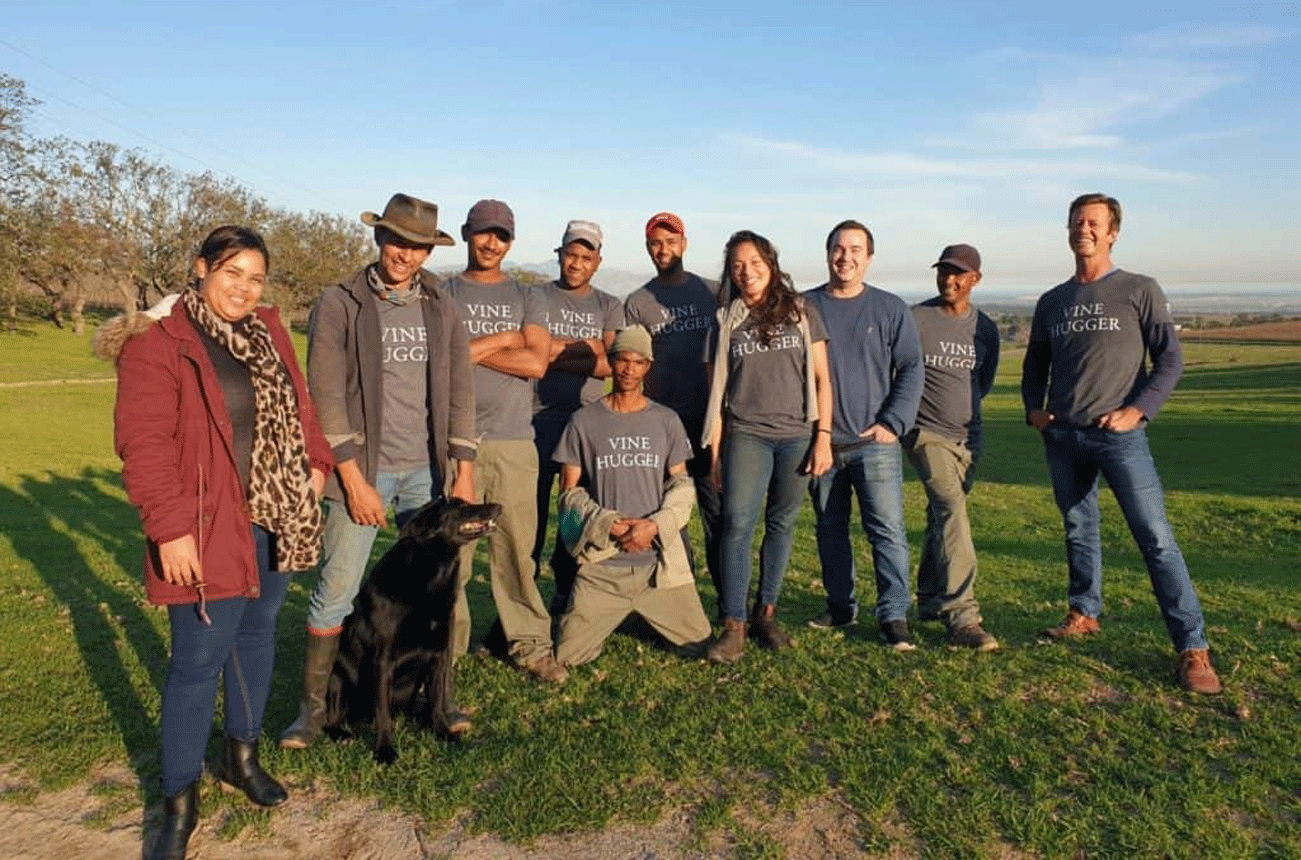
He said when he took over the family farm his aim wasn’t just to run it biodynamically and self-sufficiently, but to also get his farm labourers out of poverty. ‘So we decided to create their own wine brand,’ he explains.
‘So here I was fronting up at the bank, a philosophy student in my 20s along with some illiterate colleagues, asking how we could set up this enterprise. The bank manager just looked at me…’
But he listened, and the result was Cornerstone, Reyneke’s red Bordeaux blend. Proceeds from the wine sales fund housing, education and pension funds for the workers – the cornerstone of the business and an integral part of Reyneke’s holistic and biodynamic principles.
Reyneke: tasting the latest releases
You might also like…
Donovan Rall: six new releases from this South African star
Expert’s Choice: South African old-vine Chenin Blanc
How do organics and biodynamics affect a vineyard’s carbon footprint?
Reyneke, Biodynamic Chenin Blanc, Polkadraai Hills, Stellenbosch, South Africa, 2019
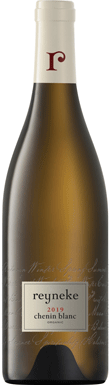

A nimble, vital and textured Chenin from the oldest vineyards (44 to 46 years old) on the Reyneke farm. Whole-bunch pressed then naturally fermented in...
2019
ReynekePolkadraai Hills

Reyneke, Biodynamic Sauvignon Blanc, Polkadraai Hills, Stellenbosch, South Africa, 2019
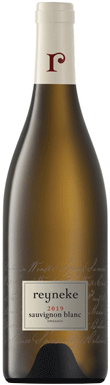
So much juiciness and vibrant acidity – lipsmacking and delicious. It's a mix of early- and late-picked fruit, all whole-bunch pressed and racked into older...
2019
ReynekePolkadraai Hills
Reyneke, Organic Sauvignon Blanc-Semillon, Western Cape, South Africa, 2019
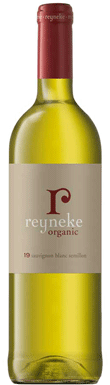
A blend of 54% Sauvignon Blanc and 46% Semillon, a third from estate vines, where Semillon gives length and weight and an exotic grapefruit twist,...
2019
Reyneke
Reyneke, Biodynamic Syrah, Polkadraai Hills, Stellenbosch, South Africa, 2018
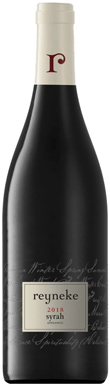
Super quality for the price for this delicious biodynamic field blend of Syrah. Gorgeous aromas leap from the glass: smoky, earthy rooibos tea, warm lavender...
2018
ReynekePolkadraai Hills
Reyneke, Biodynamic Cornerstone, Polkadraai Hills, Stellenbosch, South Africa, 2017
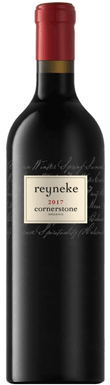
Reyneke sees his farm workers as the cornerstone of the business, so proceeds of this wine help them and families with housing, education and pensions....
2017
ReynekePolkadraai Hills
Reyneke, Organic Shiraz-Cabernet Sauvignon, Western Cape, South Africa, 2019
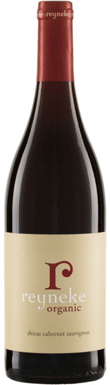
Youthful aromas of ink, violets, blue berries and liquorice. The smooth-textured palate is more deep, dark and meaty, with damson jam, pomegranate molasses and oak...
2019
Reyneke
