
Ribera del Duero adopts the new old ways
It’s not so much a new direction for winemakers in Ribera del Duero, but a growing recognition that traditional methods and wine styles set aside by the previous generation can now provide a way ahead to revitalise the region.


The motivation for this piece was, at the outset, to document the evolution of the exciting projects that, over the last 20 years, have been carving out an ‘alternative’ face of Ribera del Duero. It quickly became apparent that the real story concerned the efforts of the producers behind these projects to save the region from socio-economic decline.
Throughout the 1950s and ’60s, Spanish people fled rural areas, creating what became known as España vacía (‘empty Spain’): large swathes of the country’s interior suffering from continued depopulation, and a decline in access to public services and infrastructure as a result.
Old vineyards and wineries were left behind, and with them, a winemaking tradition yielding wines that were restrained, fresh and pleasantly rustic. The exodus created opportunities for cooperatives and other big players to consolidate their presence. In Castilla y León in the country’s northwest, a bold new style of Ribera del Duero wines emerged, to great commercial success.
Seven modern examples of Ribera del Duero listed below
Back to the soil
Pablo Arranz and Andrea Sanz (pictured below) of Magna Vides in La Aguilera, north of Madrid, explain that they wanted to return and ‘fill the gap created by our parents’ generation’, while also preserving the heritage left by their grandparents: ‘Not only the vineyards we inherited, but also the magical memories – images, smells – of how they made the wines.’
Similar feelings motivated Jorge Monzón of nearby Dominio del Aguila to return to Ribera following education in Madrid, Bordeaux and (crucially) Burgundy: ‘I wanted to drink from the source, before industrial winemaking became dominant.’
For these small projects that emerged at the dawn of the 21st century, a stylistic departure from the modern, muscular style of Ribera del Duero was as much a choice as an inevitability.
Working mainly with old field blends (Arranz and Sanz have so far identified 20 varieties in their Aguilera vineyards), their wines are inherently different to the Tinto Fino-dominant wines that consumers know as Ribera del Duero today. In 2023, the flagship Tinto Fino (Tempranillo by its local name) represented 97.4% of the region’s production, according to annual data from the region’s consejo regulador.

Picking dates
‘Many people ask why I don’t make an Albillo [Mayor],’ says Germán Blanco of Quinta Milú. ‘I tell them that I can’t. Otherwise my reds won’t be as good. These white grapes add an element that is part of the wines’ identity.’
Colour is not the only factor at play in field blends: with all grapes harvested at the same time, the different maturation points of co-planted varieties means that some are picked before or after phenolic maturity is fully achieved.
What’s more, many of these producers are not afraid to harvest Tinto Fino itself at lower potential alcohol than most of their market-leading counterparts would consider desirable or acceptable.
Monzón even suggests that the accepted idea of technical maturity might be misleading – an issue also raised by Terry Kandylis, prominent London-based sommelier and co-founder of Bendito Destino in Canalejas de Peñafiel.
Says Monzón: ‘We have to question how the indicators associated with so-called phenolic ripeness are interpreted, as well as the [vineyard] practices that had been introduced – aggressive green prunings for example – that focused on [obtaining maximum] colour and alcohol. I am guided, above all, by aromatic maturity.’

On the shoulders of giants
The identity of these small projects is rooted in tradition and place. This has given producers the confidence to highlight the geographical diversity and complexity that had perhaps been overlooked by the brand-led regional blends.
However, the idea that specific terroirs and restraint are an essential part of Ribera’s identity is not unanimously embraced. Xavier Ausàs spent 25 years at Vega Sicilia, 17 as technical director (he left in 2015), creating regional blends to perfection.
He says Ribera’s identity is ‘powerful elegance – we shouldn’t shy away from it’.
Still, Ausàs’ blending acumen relies on a deep understanding of Ribera’s many terroirs. Now at the helm of his own eponymous project, he explains: ‘From Nava de Roa I get structure and intense blue fruit; from Gumiel de Mercado, cool red fruit; from Roa de Duero, chalky minerality; and from Moradillo de Roa (where the highest parcels are at 950m elevation), fresh acidity.’
For Ribera del Duero’s most prized names – Vega Sicilia, Pingus, Pago de los Capellanes – it was a fundamental understanding of the region’s terroirs that enabled them to forge the modern style that catapulted Ribera onto the global fine-wine stage.
A line can be drawn between their commercial success and the emergence of, and excitement around, newer, smaller, off-piste projects – some of which, like Dominio del Aguila, now have their own cult following.

Structual poise
There is a feeling of creative shift and hopeful renewal in the air in Ribera as producers, large and small, explore intra-regional diversity with more confidence. This enables them to differentiate themselves, while challenging each other, stylistically as well as philosophically.
‘There are a number of exciting projects changing the face of Ribera del Duero,’ explains Sergio Avila of Cruz de Alba in Quintanilla de Onésimo. ‘The wines produced across the region are very different now from what they were 10 years ago – there’s more freshness and less intervention. There’s obviously a response to changing tastes and market demands.’
This evolution has no doubt been catalysed by the success that new names have achieved in export markets – such as Dominio del Aguila and Quinta Milú in the UK.
There is something more than simple quality that makes all these wines distinctive. It’s a strength of character and structural poise that relies, as Ausàs puts it, ‘on definition rather than hormones’. The weight of the ‘power in the elegance’ might be different, but there’s a shared quest for detail, focus and underlying freshness.

Taking the heat
Climate change has also been a catalyst for the region’s evolution and soul-searching. ‘Sustainability and precision viticulture are no longer a fashion; they’re a necessity,’ says Avila, who pioneered biodynamic farming in the region. Monzón and Blanco echo this sense of urgency, particularly after years of severe drought.
They believe that traditional field blends offer an ideal blueprint for new, climate change-resilient plantings because of the genetic diversity inherent to the vines. Arranz and Sanz are already putting this principle into action by making massal selections – propagating vines by taking cuttings from the best existing ‘mother vines’ on an estate – of their older plots.
The traditional training system is another important variable: ‘Bush-training is naturally much more suited to protecting the grapes from intense sun and heat,’ concludes Blanco. Elevation – Ribera del Duero’s vineyards sit between 720m and about 1,100m – and limestone-rich soils are two other climate change-mitigating factors.
Regardless, wines with higher alcohol are seen as an inevitability. According to these producers, this further justifies the need to rethink the work in the vineyard and, says Blanco, ‘the ever-greater importance of working more gently in the cellar’.

The path ahead
The mid-century rural exodus paved the way for the consolidation of the region’s most established names and the development of modern Ribera del Duero wines.
If their identity is now being questioned by new blood, it is worth noting that the bigger stakeholders – cooperatives and privately owned wineries of a certain scale – have nevertheless been fundamental to the continuity and viability of viticulture in the region.
Ribera’s 26,123ha are split, according to the consejo regulador, into 63,630 individual parcels, with 7,877 growers supplying fruit to only 311 wineries. This granularity can be a challenge, but it’s also an opportunity.
It creates space for experimentation and for younger winemakers to tap into an invaluable pool of older vines (28% of the region’s vineyards are more than 30 years old and 8.2% are more than 80 years old) and historical field blends.
The path to a successful future for Ribera del Duero will rely on producers, large and small, reflecting on the region’s heritage, tackling climate challenges and rebuilding a social infrastructure – schools, hospitals and so forth – that will enable families to thrive here.
In the meantime, an exciting array of new projects is already introducing the region to a younger audience seeking fresher, lower intervention, ready-to-drink wines, building on the success of the bolder styles that have already made Ribera del Duero a household name.
Seven wines that show the present and future of Ribera del Duero
Related articles
- Ribera del Duero: Panel tasting results
- Unearthing Ribera del Duero
- Ribera del Duero: Eight producers to watch
Bendito Destino, El Olmar, Ribera del Duero, Castilla y Léon, Spain, 2021
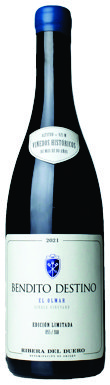

London-based sommelier Terry Kandylis came upon centennial field blends, at risk of abandonment, during a visit to Ribera del Duero and knew he had to...
2021
Bendito DestinoRibera del Duero

Magna Vides, Tinto, Ribera del Duero, Castilla y Léon, Spain, 2022
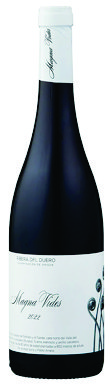
Pablo Arranz and Andrea Sanz, partners in business and life, started Magna Vides as a side project, determined to preserve the legacy of their grandparents....
2022
Magna VidesRibera del Duero
Ausàs Bodegas y Viñedos, Interpretación, Ribera del Duero, Castilla y Léon, Spain, 2021
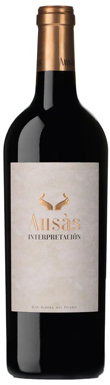
For his eponymous project, Xavier Ausàs, winemaker of Vega Sicilia fame, produces a single wine, conveying his personal interpretation of Ribera del Duero Tempranillo. By...
2021
Ausàs Bodegas y ViñedosRibera del Duero
Dominio del Aguila, Reserva, Ribera del Duero, Castilla y Léon, Spain, 2020
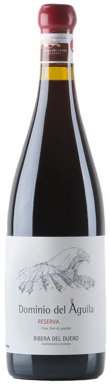
Dominio del Aguila, the brainchild of husband-and-wife team Jorge Monzón and Isabel Escudero, is one of the leading names of ‘new Ribera del Duero’. With...
2020
Dominio del AguilaRibera del Duero
Cruz de Alba, Finca Los Hoyales, Ribera del Duero, Castilla y Léon, Spain, 2017
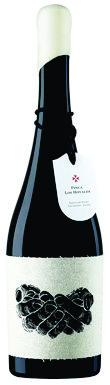
Sergio Ávila has been farming Cruz de Alba’s 40ha of vines organically since 2006 and following biodynamic practices since 2008, with the estate attaining Demeter...
2017
Cruz de AlbaRibera del Duero
Pagos de Anguix, Costalara, Ribera del Duero, Castilla y Léon, Spain, 2020
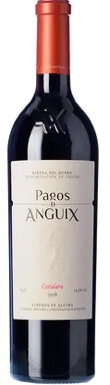
Joan Juvé Santacana, of leading Cava producer Juvé y Camps, had long yearned to develop a project in Ribera del Duero. The desire would be...
2020
Pagos de AnguixRibera del Duero
Quinta Milú, La Cometa, Ribera del Duero, Castilla y Léon, Spain, 2021
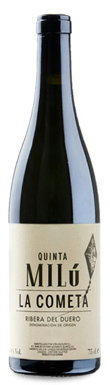
Freshness and fluidity are the principles that guide Germán Blanco, the face behind Quinta Milú. The project sources fruit from 20ha in and around La...
2021
Quinta MilúRibera del Duero
