
Rioja’s village wines: The names to know and bottles to seek out
The names of Rioja’s distinctive villages were never celebrated on wine labels – until recently. New legislation is changing the game, giving due recognition to the villages and their producers, and highlighting the diversity of the region as a whole.


The year 2017 was a memorable one in Rioja for two reasons. First, on 28 April, came the great frost, which also wreaked its chilly havoc over Bordeaux and swathes of northern Europe. Some producers were lucky enough to suffer less than others, but even then, the vintage was greatly reduced. In due course, nature revived – as it nearly always does.
The second event has caused more long-lasting effects. This was the decision to introduce a category of Vinos de Municipio, commonly translated in English as ‘village wines’.
Scroll down to see tasting notes and scores for 10 great Rioja village wines
It sounds like a long overdue step to give recognition to Rioja’s villages. After all, this is one of the many charms of Rioja. As you drive through the wine country, a series of strikingly lovely villages are stretched out along the road, each one beckoning the visitor.
The fortified hilltop village of Laguardia, still with its medieval gates, is one such site. Labastida, named after its medieval bastion, is obvious, and its Church of Nuestra Señora de la Asunción is visible for miles. San Vicente de la Sonsierra also stands out, its modern buildings clustered below a hill topped by its church and castle. To the east, there is completely different countryside, with towns such as Quel, with its striking ‘barrio de bodegas’. To the far west is Cuzcurrita, with its castle and walled vineyard.
Rioja has had a fine history of brands, yet the various grape sources and the individual villages were never mentioned on the label. Of course, there were some producers who had established their own vineyards: Marqués de Murrieta, R López de Heredia and, more recently, Jesús Madrazo’s pioneering father at the Contino estate, for example.
Finally, with this Vinos de Municipio legislation, Rioja is at last highlighting the variety and diversity of its region. The only problem is numbers. The regional consejo lists 145 registered municipalities: 77 in Rioja Alta, 50 in Rioja Oriental and 18 in Rioja Alavesa.
In recent times, other parts of Spain have been introducing village wines (or ‘vinos de pueblo’) to their denomination system – most notably Priorat, where they form an intermediate step on a quality ladder. Alvaro Palacios was one of the drivers behind the Priorat classification, as his nephew Ricardo has been in Bierzo. Palacios’ family winery in Rioja Oriental has been working in the same direction in Rioja.
Time for change

Across Rioja, producers are now focusing on working in their villages and expressing the character of their place. Thus, in my opinion, Rioja’s rule change was long overdue – and I am not the only one to think that.
Winemaker Giles Cooke MW, a Garnacha specialist working in Australia and Rioja, says: ‘I don’t have any village wines in Rioja at present, but I love the idea of mapping Rioja in ever greater detail and bypassing the notion that Rioja is just one grape, aged for different periods of time. With more time, I’d love to express different villages through the medium of Garnacha, which I believe to be one of the most faithful carriers of terroir.’
The problem is that the current regulations only allow Cooke to make a village wine from vineyards in the municipality of his winery, with up to 15% of fruit from bordering municipalities (see box, below). Although he is an entrepreneurial spirit, Cooke cannot yet make village wines in his winery from any other village in Rioja.
What is a village wine?
‘The name of a zone or municipality can only be applied to a wine when it is made exclusively with grapes from such production area or municipality, and ageing, as the case may be, and bottling take place within them.
‘Exceptionally, a wine may be considered to come from the area or from the municipality if its vinification includes no more than 15% of grapes from registered vineyards in municipalities bordering the area, or municipality where the operator is located, and provided that it is accredited by a legally valid title, that such operator has had that 15% of grapes at its disposal for no less than 10 years.’
Source: riojawine.com
Village character
Setting aside the regulations for the moment, let’s look at what village wines can tell us.
Think about Priorat’s villages. They are geographically distinctive: stand on top of one of the surrounding outcrops and you can identify most of them by shape. Yet Priorat only has a large handful of villages. They have precise maps of vineyard land and have clear evidence of the different terroirs. Can you taste the wines blind and identify the villages? Possibly, yes – maybe one or two. Priorat’s recent history is short, yet I believe that in time one could come to recognise several of the villages blind.
What about Rioja’s 145 villages? Maybe five might be recognised blind today, and another 20 or so could be recognised in the future. Agustín Santolaya, managing director of Bodegas Roda in Haro, strikes a cautionary note: ‘I believe that a good vineyard in a “poor” village is far superior to a bad vineyard in a village that is thought to be better. That’s because we are in a zone that is fairly close to the limit of production.
‘Aspects, slopes, erosion and depth of soil make a real difference. You can get a much larger yield in the fresh valleys (with their deep soils) than you can on the dry, shallow slopes – yet both can be in the same village.’
Antonio Remesal Villar and Alberto Gil, co-authors of Rioja: Vinos Silenciosos (Los Aciertos, 2019), echo this approach in their book, using altitudes, rivers and traditions to define stylistic boundaries in the region.
Meanwhile, Spanish wine writer Amaya Cervera emphasises the role of the cooperatives: ‘They have preserved a certain village wine character. That’s why Rioja’s largest producers usually have agreements with them to source a particular wine style for their blends.’
Raquel Pérez Cuevas (of Bodegas Queirón in Quel) agrees. She points out that for many years, co-ops dominated wine production in Rioja Oriental – and this delayed building its reputation. Only now are there enough privately owned wineries in Oriental producing and selling wines to establish village profiles.
One region, many identities
No decision is simply made in Rioja. With its 574 bodegas and 14,800 growers, it has many conflicting interests: commodity wines versus wines with a pedigree; large wineries versus small ones; cooperatives versus family bodegas; grape growers versus landowners; brand owners versus terroir producers; age designation wines (reserva, for example) versus ‘generic’ category wines that only declare the vintage. The list goes on.
In Rioja, with the dominance of a few major producers on its regulatory board, that has been difficult. Add to this the fact that ‘Rioja’, as we know it, is not a single unit of local government. It consists of four ‘counties’: La Rioja is the largest, Alava the second, with a little of Navarra and a tiny amount of Castilla y León.
One recent sign of the rumble of dissatisfaction with the management of Brand Rioja has been the movement by some producers in Alavesa to create a separate entity, ‘Viñedos de Alava’. David Williams explores this elsewhere in the Rioja 2023 guide. Will enough producers join Viñedos de Alava and break away? At present, as Williams notes, there seems to be little enthusiasm for change.
Whatever the outcome over the coming years, the solid edifice of Brand Rioja is changing. This makes it all the more enjoyable because the choice for us, as consumers, is ever more diverse. The formal recognition of village wines is just part of Rioja becoming more confident, willing to talk about its different soils, cultural influences and new-generation producers.
Diversity in action

Tao Platón, who runs the Rioja business of Península Vinicultores, which owns Bodegas Bideona, is ready to talk about and taste the diversity. The mission at Bodegas Bideona is to produce ‘vinos de pueblo, de paraje, y de parcela [village, single-vineyard, single-plot wines] from historic low-yielding vineyards in Rioja Alavesa’.
The classic categories, ‘from joven to gran reserva’, are not their choice. It’s worth noting that Península’s founders (Andreas Kubach MW, Sam Harrop MW and the Izagirre family) chose to start up in Rioja Alavesa, and picked Villabuena for their winery, which opened in 2021.
Platón shows me around the new facility at Bideona. It has the capacity to make different wines from different villages – just as top producers do in Burgundy. Bideona had to challenge the regulations head on. Prevented from naming the actual village origin of their wines, because it didn’t have a winery in the town, it found a solution in the branding: Leza is named L3Z4 on the label, Laguardia L4GD4.
Platón talks excitedly about Leza as we drive through the vineyards. ‘It’s the highest in the area and with lovely old vines,’ he enthuses. A puzzle is why there are no famous wines from this site, given its clear quality. He explains the absence of wineries: ‘Top wineries such as Marqués de Riscal bought the fruit, but there was no winery established here.’ Simply put, there was no particularly ambitious winery in the village to build Leza’s profile.
This is a similar story for many of the wineries in Rioja Oriental. They supplied fruit to the big names of Rioja Alta or Rioja Alavesa but were lost in the blend. Tudelilla, for instance, has long been recognised as a top village for Garnacha, but for many years it did not have a public profile. Bideona wasn’t the first to find a way around the regulations. Telmo Rodríguez, with his project to recognise the individual character of Lanciego, established the Lanzaga brand – a version of Lanciego (Lantziego in Basque). Alvaro Palacios, meanwhile, took to embossing ‘Alfaro’ on the front label of his Palacios Remondo wines, rather than printing it in ink.
When I met Rodríguez in Jerez in October 2022, I asked him for his list of Rioja’s key villages. Abalos, San Vicente de la Sonsierra, Rivas de Tereso, Lanciego, Salinillas and Briñas rolled quickly off the tongue. One could add Alfaro, Baños de Ebro, Cenicero, Elciego, Elvillar, Labastida, Ollauri and Quel. Some of these have a winemaker who has established its contemporary style and reputation. Elvillar, for instance, has returned to the map with Bodegas Bhilar, Lanciego with Telmo Rodríguez, and Alfaro with Alvaro Palacios.
It’s almost six years since the village legislation was enacted, and it is clearly not the last word on the topic. The future should bring more flexible ways of categorising Rioja’s diversity. As Santolaya reflects: ‘Legislation always runs behind reality, and then ends up adapting itself to the outcome.’ In the meantime, he adds: ‘I believe recognising the identity of village wines is a great piece of work because it builds the self-esteem of the growers, and at the same time the viticulture value of the villages.’
Eight Rioja villages and their producers
Alfaro
Rioja Oriental
Palacios Remondo is the winery of Alvaro Palacios’ family. Returning to Rioja, his aim was to recognise the quality of the Garnacha from the area, and to invest in grafting over the formerly fashionable Tempranillo of his father. The results are impressive. He is by no means the only producer in the area but has proved a beacon for international recognition of the long-ignored Rioja Oriental.
Briones
Rioja Alta
The remarkable Vivanco Museum of Wine Culture is reason enough to stop off in Briones. But there is more: the wineries of Miguel Angel de Gregorio and the Merino family, as well as Vivanco’s own set-up. De Gregorio’s Finca Allende focuses on the pure expressions of Tempranillo and of Viura, reflecting the area’s gravelly, red clay soils. Miguel Merino Jr now runs his late father’s winery, continuing and developing the wines. His Mazuelo (still rare in Rioja) is a particular favourite of mine.
Elvillar
Rioja Alavesa
The village of Elvillar has been put on the wine map by local son David Sampedro and his Bodegas Bhilar. Though Sampedro’s family have been working in wine for generations, it’s almost as if Elvillar is Sampedro, rather than the other way round. His work in the vineyard has taken him back to some of the old ways, avoiding treatments in favour of biodynamic practices.
Labastida
Rioja Alavesa
This was the birthplace of Manuel Quintano, the priest who brought the art of winemaking back from Bordeaux in the 18th century, but was sadly ahead of his time, and failed to convert the local growers. Today, the most well-known winery in the municipality is Remelluri, run by Telmo Rodríguez and his sister Amaia.
Laguardia
Rioja Alavesa
One of the most striking wineries in picture-perfect Laguardia is Viñedos de Páganos, with a dramatic entrance to its underground cellars. Elsewhere, Javier San Pedro Ortega, with his eponymous winery, is the fifth generation of growers – his father’s winery is Vallobera and his uncle is Pujanza’s Carlos San Pedro, who uses fruit from one of Laguardia’s highest vineyards for his Pujanza Norte.
Quel
Rioja Oriental
This is one of the villages of Rioja Oriental that’s gradually gaining recognition as private wineries become established. Javier Arízcuren and Bodegas Queirón are the names to watch out for here.
San Vicente de la Sonsierra
Rioja Alavesa
A noble list of producers is attached to this glorious and historic village, including Abel Mendoza, Contador and newer ventures including José Gil and Cuentaviñas (winery of Eduardo Eguren, next generation of the Sierra Cantabria wine family).
Villabuena de Alava
Rioja Alavesa
Neatly at the centre of the triangle of Leza, Samaniego and Baños de Ebro, Villabuena has been at the heart of winemaking in the area, with its many underground calados (cellars). For Bodegas Bideona, looking to make wines from the best terroirs across Alava, this was the ideal place for its winery. Among many other names, it’s worth seeking out Sandra Bravo (at Sierra de Toloño) and Luis Cañas.
A selection of 10 distinctive Rioja village wines
Related articles
- Top Riojas to enjoy this winter
- Rioja gran reserva: my top 20
- Rioja’s rising stars: the winemakers to watch out for
Abel Mendoza, Risueño, Rioja, Northern Spain, Spain, 2021
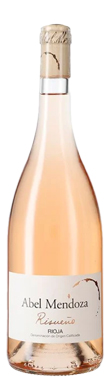

No tasting of village wines, or varietal ones, is complete without Abel Mendoza and his wife Maite Fernández. These are typical of the viñateros who...
2021
Abel MendozaRioja

Bideona, Bideona L3Z4 Leza, Rioja, Northern Spain, Spain, 2019
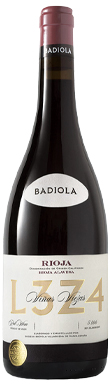
Of Bideona's village wines, this is the most powerful. It's a well-built wine, with dark fruit, damson and black cherry, wild herbs and firm tannin....
2019
BideonaRioja
José Gil, San Vicente de la Sonsierra, Rioja, Northern Spain, Spain, 2020
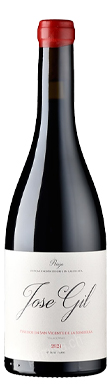
A very good place to start discovering the character of San Vicente de la Sonsierra. José Gil is from a local wine-growing family. In 2016,...
2020
José GilRioja
Miguel Merino, Viñas Jovenes, Rioja, Northern Spain, Spain, 2019
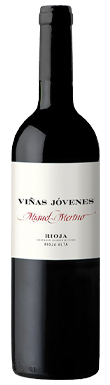
Miguel Merino Jr is one of two key names in Briones (with Miguel Ángel de Gregorio of Finca Allende). These vines, planted in 2001, are...
2019
Miguel MerinoRioja
Bodegas Pujanza, Hado, Rioja, Northern Spain, Spain, 2018
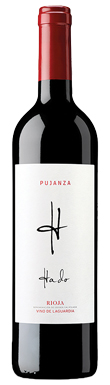
For a taste of Laguardia, stop off at Bodegas Pujanza. This ‘vino de Laguardia’ is a blend of local vineyards, separated into 23 parcels. Fermented...
2018
Bodegas PujanzaRioja
Bodega Abeica, Colección de Viñedos, Rioja, Northern Spain, Spain, 2020

Fifth-generation siblings Isabel, Ricardo, Pachi and Raul have transformed this family winery in Abalos, focusing on artisan and sustainable production. The wines clearly proclaim their...
2020
Bodega AbeicaRioja
Artuke, Rioja, Northern Spain, Spain, 2021
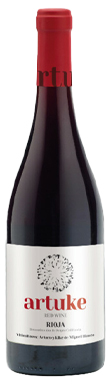
A juicy, delicious charmer, this is very typical of the winemaking tradition in this part of Rioja: unoaked, fermented in concrete and with carbonic maceration....
2021
ArtukeRioja
Bodegas Bhilar, Phincas, Rioja, Northern Spain, Spain, 2018
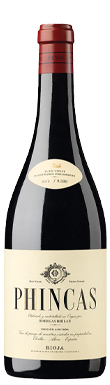
David Sampedro has a clear vision and has put his home town firmly on the modern wine map. Working with his wife Melanie Hickman in...
2018
Bodegas BhilarRioja
Bodegas Lanzaga, Corriente, Rioja, Northern Spain, Spain, 2018
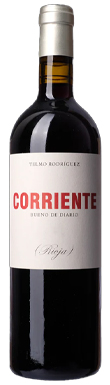
Lanzaga is Telmo Rodríguez’s way of getting round the appellation rules – these are wines from Lanciego/Lanziego. The junior in the line-up, this is great...
2018
Bodegas LanzagaRioja
Marqués de Riscal, Finca Torrea, Rioja, Northern Spain, Spain, 2017
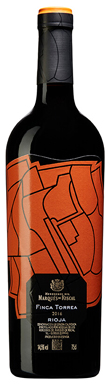
Finca Torrea declares itself a wine of its village: ‘Vino de Elciego’, and it's a different style from the established, long-lived classics of the house....
2017
Marqués de RiscalRioja
