
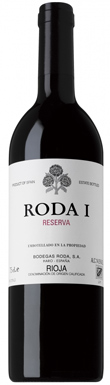
Top Roda I, Rioja Reserva wines to try


See which wines Sarah Jane Evans recommends for the cellar and the dinner table, and read her report on an estate that encourages vintage variation to shine through; with years oscillating between Mediterranean and Atlantic influence.
Scroll down to see the ratings and tasting notes, available exclusively for Premium members
Roda I, Rioja Reserva: What to know
Roda is the baby of the Barrio de la Estación, in Haro’s Station district in la Rioja Alta, founded in 1987.
When it launched Roda I in 1992, it brought a definite shock of the new. Yet today, Roda has become the essence of fine-tuned classicism. As part of the 30th anniversary celebrations, Roda held a comparative tasting of three paired vintages, all from top years in Rioja.
It illustrated Roda I’s focus on reflecting the vintage, whether cooler Atlantic, or warmer Mediterranean.
Roda’s founders Mario Rotllant and Carmen Daurella, had a background in drinks distribution. Their goal was a top quality wine, and they fastidiously researched Catalunya and Ribera del Duero before choosing Rioja.
Rotllant says, ‘I wanted a wine to enjoy now, but that could live longer and was complex.’ They fixed on the remarkable site in the Barrio, with its subterranean cellar that opens out at the foot of the hill. They named the business Roda after their surnames.
Article continues below the wines.
See the tasting notes and ratings
More about Roda
Just as the bodega was built on the old foundations, it’s not too far-fetched to say that it was also built on the foundations of the old wisdom of Rioja. The key to its success was the initial research into the best vineyards in Rioja Alta (Roda owns 70 hectares and works with another 50).
Rotllant stresses, ‘we were always looking for perfection. I never wanted the team to take a decision thinking about the cost. We never make a blend to build volume’. To make this work, he explains, the wines were launched at a higher price than was usual at the time, though with moderate increases since.
Rotllant points out that since Roda came into profit in 1998, it has not made a loss. Every year 7% of gross turnover goes into research. Roda became known for its Tempranillo Seed Bank, which has identified over 500 morphotypes in Rioja. Its Familia Roda 107 collection gives growers internationally access to better Tempranillo material.
The young viticulturist Agustín Santolaya worked on that project to find the best vineyards. In 1998 he was appointed as Roda’s General Manager. Under his guidance since, the range has grown slowly.
The original Roda II is now called Roda to avoid the idea that it is a second wine. Into this goes the fruit with a mainly red flavour profile, while Roda I has a black fruit profile.
Roda I is, in principle, all Tempranillo, though 1994 contained Garnacha, ‘because it showed a black fruit profile that year’.
From 2009, Roda I contained a dash of Graciano; says Santolaya, ‘climate change is forcing us to use a little to bring down the pH naturally and to bring freshness’. The bodega uses French oak, both for fermentation and for ageing.
Roda I’s initial ageing of 24 months in barrel and 12 months in bottle in the 1994/1995 was reduced to 14-16 months in barrel and 20 months in bottle by 1997.
The early use of 1/3 new, 1/3 one year, and 1/3 older barrels changed by 1997 to new and one year barrels in more or less equal proportions, medium toast, made by 10 different coopers.
Stylistically, the vertical showed how much the team got right at the outset and how the winemaking has developed subtly while reflecting vintage variation.
Editing by Chris Mercer.
More articles like this:

The 75 most exciting wines of 2017
Find a new wine to try this festive season...

How the Médoc classified wines taste now: Bordeaux in bottle 2015
Jane Anson tastes the 2015 wines in-bottle...

Credit: Ian Shaw / Alamy
Best Rhône 2016 wines: The top scorers
See the top rated wines...
Roda, I Reserva, Rioja, Northern Spain, Spain, 1994
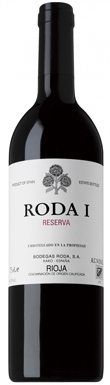

Agustín Santolaya, Roda's general manager, likes to describe the 1994 as 'austere', which might be interpreted as 'lean', but this is anything but. It's a...
1994
RodaRioja

Roda, I Reserva, Rioja, Northern Spain, Spain, 1995
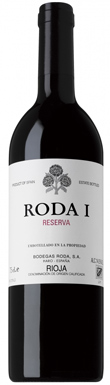
A fine year, with perfectly balanced rainfall. However the unusually high October temperatures gave the team memorable problems with fermentations: 'suddenly everything stopped. We were...
1995
RodaRioja
Roda, I Reserva, Rioja, Northern Spain, Spain, 2005
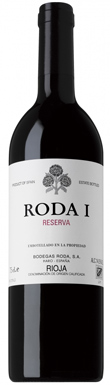
A fine contrast to 2004. It's typically Mediterranean in style, with less than 400mm of rain making for a dry, healthy vintage. Darker in colour...
2005
RodaRioja
Roda, I Reserva, Rioja, Northern Spain, Spain, 2010
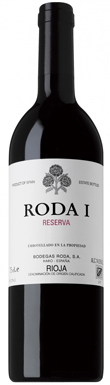
2010 was a memorably perfect harvest, with a wet start followed by a very dry summer that ensured no risk of disease. Altogether it was...
2010
RodaRioja
Roda, I Reserva, Rioja, Northern Spain, Spain, 2011
Oz Clarke: Good: full, ripe and serenely balanced, the tannin nips just enough to enliven the rich strawberry and cranberry fruit, with hints of spicy...
2011
RodaRioja
