Sassicaia masterclass at Decanter’s London Fine Wine Encounter 2022
Tenuta San Guido's Priscilla Incisa della Rocchetta and Susan Hulme MW presented a rare vertical tasting of Sassicaia at the recent Decanter Fine Wine Encounter in London. Relive the masterclass below with notes and scores on all the wines.


There was an intense stillness of anticipation and excitement in the audience at this Decanter Masterclass as Priscilla Incisa della Rocchetta, head of external relations for Tenuta San Guido, and I prepared to present a rare vertical tasting of Sassicaia, starting with the 1999 vintage and finishing with the most recent, the 2019.
Priscilla opened with an account of the estate and the origins of Sassicaia; the dream and passion of her grandfather, Marchese Mario Incisa della Rocchetta and the life’s work of her father Marchese Nicolò, helped by legendary winemaker Giacomo Tachis.
Sassicaia was the first wine in Bolgheri to use Bordeaux grape varieties to create a wine of world-class quality and international renown, an achievement which was a catalyst for change in Italy. As Angelo Gaja once commented, ‘with Sassicaia, Italian wine learned to speak a foreign language.’ In 1983, Bolgheri DOC was created and in 2013, Bolgheri DOC Sassicaia was established, the first ever single-wine DOC.
Scroll down for Susan Hulme MW’s notes and scores for 10 vintages of Sassicaia going back to 1999
During the masterclass, Priscilla explained that Sassicaia is a wine that reflects where it comes from, with the distinctive character and identity of its terroir, while also expressing the unique character of each vintage. These are wines of elegance and balance more than body and power, wines with long ageing potential which are also approachable at a young age.
I have to concur; Sassicaia is a wine with amazing finesse and understated elegance. The balance between intense concentration, its rich velvety texture and thrilling acidity is special to Sassicaia.

A Sassicaia perspective: 10 wines across 20 years
1999
From magnum. The tasting opened with the 1999, a year which was hot and generally considered good, but the wine was somewhat overlooked on release – perhaps because it had been preceded by three excellent vintages: 1996, 1997 and 1998. Remarkably, at 23 years old, it still displays great vivacity and liveliness with no sign of tertiary or oxidative characteristics.
2002
From magnum. 2002 was virtually written off at the time as a poor vintage, and many producers did not release their wines. Tachis was concerned about the reputational impact of releasing a wine in such a year, but Marchese Nicolò believed in it. Many years later, his decision has been vindicated: the wine showed beautifully between the two hot vintages of 1999 and 2005, with the 2002 looking youthful, concentrated and alive.
2005
From magnum. The 2005 vintage was very similar to the 1999 in that it was quite hot, but by 2005 there was a larger surface area of vineyard from which to source grapes. The more recently planted vineyards had come of age, much more so than they had in 1999. The production was not high, and some berries were not perfectly ripe, with some green elements, but this gave the Sassicaia team more acidity and brightness. With lovely nervosity and dry, clipped tannins, the wine still feels energetic and young.
2006 & 2008
From magnum. 2006 and 2008 were both considered very good vintages and have lived up to their reputation. Priscilla observed that ‘8’ is considered the family’s lucky number: the first Sassicaia released was the 1968; in 1978 Sassicaia came first in a Decanter blind tasting of Bordeaux blends (beating 33 other wines and bringing Sassicaia to the attention of the wine world); and in 1988 Robert Parker gave the 1985 vintage of Sassicaia 100 points. The audience greatly appreciated the 2008 in particular: it was showing a beautiful balance of concentration and freshness.
2011
From magnum. 2011 was a hot, dry vintage in most of Tuscany but for Tenuta San Guido, with its range of vineyards at different altitudes and protected by woods, it was a very good year. The 2011 has a more open, sunny personality on the nose, its bright cheerfulness contrasting with the more brooding, dark woodland fruit character of several of the other vintages. After 2011, Carlo Paoli, director of winemaking, started growing grass on alternate rows to protect the soil from intense summer heat, reduce water evaporation and soak up excess water in wetter vintages.
2013
From magnum. For me, the 2013 is the epitome of perfect harmony and seamlessness, flowing across the palate almost without beginning or end. There’s great precision and definition in the aromas and an inner harmony. It was not rated especially highly when it was released but perhaps now, after ten years, it is just beginning to come into its own.
2015
The 2015 received critical acclaim on release. It was a hot year and the wine bristles with ripe blackberries and creamy, spicy oak, somewhat at odds with the elegant style favoured by Tenuta San Guido in vintages such as 1988, 2008, 2013 and 2016.
2017
2017 was an extremely dry and hot year but because of the expertise of Carlo Paoli and his team in the vineyards and in the winery, the nose is wonderfully fragrant with clear and transparent aromas, and there’s a beautiful harmony and freshness on the palate.
2019
2019, with its return to more normal weather patterns, was a dream vintage. This is an absolutely beautiful wine but it may be better to wait another five or six years before starting to drink it; in general, Sassicaia is best after about 10 years, with a life expectancy of another 20.

Audience questions
Question: ‘In the light of climate change, are there likely to be changes to the Sassicaia blend or in methods of production?’
Priscilla Incisa della Rocchetta: ‘As Cabernet Franc is more difficult to ripen in very hot vintages, they have started to reduce the percentage slightly. The time spent in oak may also increase.’
Question: ‘Which Premier Cru Classé [Bordeaux] would you say is most like Sassicaia?’
Priscilla Incisa della Rocchetta: ‘For me it would be closest perhaps to Château Lafite [Rothschild], with its depth of richness and texture, the extremely elegant weight and acidity, and its haunting fragrance.
Susan Hulme MW’s notes and scores from the Sassicaia Masterclass:
Related articles
- DFWE London masterclass featuring Ornellaia: Four Decades of a Tuscan Icon
- Decanter’s London Fine Wine Encounter 2023: Priority booking now open
- Ornellaia Bianco: A link to the past
Tenuta San Guido, Sassicaia, Bolgheri, Sassicaia, Tuscany, Italy, 1999
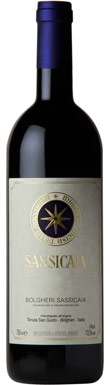

1999 was a warm vintage and a very hot summer throughout Tuscany, but it was not as hot as 2005 or 2003. There was no rain in spring and summer, so the harvest was earlier than usual, starting in August and ending mid-September. The 1999 Sassicaia was undervalued a little when it first appeared on the market, and it was only appreciated later. This was because it came after vintages like 1996, 1997 and 1998 which were all excellent. Today this wine still looks sprightly and alive. There are aromas of sweet grass, hay, spice, and the fresh leather notes of a mature wine, but the nose is not oxidative or tertiary. There is a spine of fresh acidity giving vibrancy and lingering, fine, grainy tannins. This wine has aged very gracefully. It is mature and drinking now.
1999
Tenuta San GuidoBolgheri

Tenuta San Guido, Sassicaia, Bolgheri, Sassicaia, Tuscany, Italy, 2002
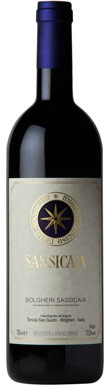
The 2002 vintage was considered one of the worst vintages ever to produce grapes. It was so rainy and wet that many producers decided not to produce wine in Bolgheri. Giacomo Tachis, Tenuta San Guido’s famous winemaker, was very concerned at the time about releasing this wine, but Marchese Nicolò Incisa Della Rocchetta believed in it. The 2002 still looks youthful and shows a good concentration and intensity of flavours. The fruit expression is cool, dark berried fruit with forest floor notes that call to mind the dark woods surrounding the original Castiglioncello vineyard. A strict selection took place and only 90,000 bottles were produced that year, whereas normally a typical production is between 200,000 to 240,000 bottles.
2002
Tenuta San GuidoBolgheri
Tenuta San Guido, Sassicaia, Bolgheri, Sassicaia, Tuscany, Italy, 2005
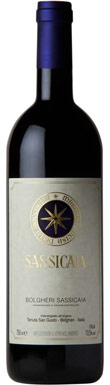
The 2005 vintage was very similar to the 1999 in that it was quite hot, but by 2005 there was a larger surface area of vineyard from which to source grapes. The more recently planted vineyards had come of age, much more so than they had in 1999. The production was not high, and some berries were not perfectly ripe with little green elements, but this gave the Sassicaia team more acidity and brightness. 2005 did not have a great reputation when released because 2004 was a great year and then everyone was excited and waiting to see 2006 and 2007. 'Today 2005 is one of the most requested vintages,' says General Manager Carlo Paoli, 'it’s a good compromise between freshness and concentration.' On the nose it is a little more fragrant with open, sunny, brighter more transparent aromas. On the palate there is an edgy nervosity and tangy, juicy acidity, which I love, together with dry, clipped tannins. The wine still feels energetic and young.
2005
Tenuta San GuidoBolgheri
Tenuta San Guido, Sassicaia, Bolgheri, Sassicaia, Tuscany, Italy, 2006
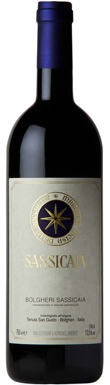
The 2006 Sassicaia still has a dark garnet colour while nose has an impression of smoke and crushed dried flowers and some subtle, charred toast notes of oak. On the palate there is a lovely, soft, velvety texture together with dark, bramble fruit flavours. The fruit feels cooler in nature with leafy blackberry notes and again a thrilling spine of acidity. For Priscilla Incisa Della Rocchetta and the Tenuta San Guido team the 2006 was 'a rather fresher vintage … an elegant wine with good structure, the classic Sassicaia style with notes of juniper, myrtle, and Mediterranean forest, characteristic of this wine and the terroir where it is produced.'
2006
Tenuta San GuidoBolgheri
Tenuta San Guido, Sassicaia, Bolgheri, Sassicaia, Tuscany, Italy, 2008
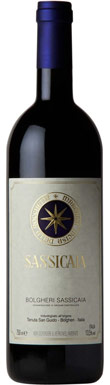
The 2008 Sassicaia has plenty of dark fruit and it is still tight and youthful. On the palate there is bright acidity and a vibrant, energetic quality about this wine. The tannins are very fine and beautifully integrated into the body of the wine. There is a lovely range of flavours with savoury, tea leaf, smoke and tobacco notes. There is plenty of depth and concentration but also great finesse. Priscilla Incisa Della Rocchetta notes that the number '8' is a lucky one for Tenuta San Guido. They released their first vintage with the 1968 and won the best Cabernet in the Decanter blind tasting in 1978. This 2008 is also one of the great vintages for Sassicaia.
2008
Tenuta San GuidoBolgheri
Tenuta San Guido, Sassicaia, Bolgheri, Sassicaia, Tuscany, Italy, 2011
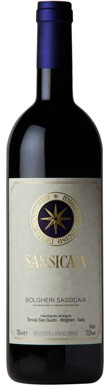
The 2011 Sassicaia comes from a vintage with a cold winter, a mild spring with abundant rains and a very good difference in temperatures between night and day during the summer and there were sunny days during the harvest. You can feel this sunny bright personality in the wine. The nose is open and accessible with aromas of bright red fruit and cream. On the palate there are contrasting flavours which are a little green and firm but these are enveloped in a luxurious texture and weight.
2011
Tenuta San GuidoBolgheri
Tenuta San Guido, Sassicaia, Bolgheri, Sassicaia, Tuscany, Italy, 2013
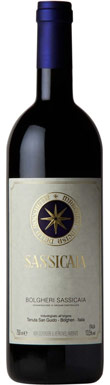
The Sassicaia 2013 is just beautiful, and it takes a leap forward in quality. There is even greater precision and transparency with the aromas and flavours, there is a wonderful harmony and ease on the palate and there are even finer, and more seamless tannins on this wine. According to my co-host, Priscilla Incisa Della Rocchetta 2013 was a 'record vintage for Sassicaia'. Carlo Paoli adds, 'spring arrived early but without excess, summer started slowly and was only hot for 20 days and they started harvest mid-September for Cabernet Sauvignon. Everything was slow, calm and beautiful.' The 2013 is at the beginning of its drinking window and drinking beautifully now, but it still has a long time to go.
2013
Tenuta San GuidoBolgheri
Tenuta San Guido, Sassicaia, Bolgheri, Sassicaia, Tuscany, Italy, 2015
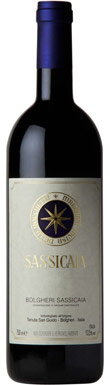
The 2015 vintage was also a very hot vintage and produced a bolder, riper style of wine which was much loved and appreciated by wine critics and collectors alike, but for Tenuta San Guido themselves it was less typically Sassicaia and a little less elegant and reserved than their preferred style. However, it is a wine with a lot of charm. It is big, bold and full bodied with aromas of toast and cream and plenty of ripe blackberries. This 2015 has a young, forceful personality that’s hard not to like. Full of charm.
2015
Tenuta San GuidoBolgheri
Tenuta San Guido, Sassicaia, Bolgheri, Sassicaia, Tuscany, Italy, 2017
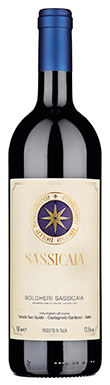
This 2017 Sassicaia is wonderfully fragrant on the nose, but it needs an hour or more to really open up. 2017 was a very difficult vintage mainly because it was so dry it didn't rain for most of the summer and for much of the spring. The vines were stressed, and a lot of fine tuning and management was needed in the vineyards and in the winery to get the best results. But what I love so much about this 2017 is that Carlo Paoli and the Tenuta San Guido team have done a brilliant job. There is a lovely harmony on the palate and a lovely mouth-watering freshness and acidity which is a signature of Sassicaia but more of a challenge in this vintage. There is a little dry twist to the tannins on the finish, but they are beautifully integrated into the rest of the wine and this after all is a signature of the 2017.
2017
Tenuta San GuidoBolgheri
Tenuta San Guido, Sassicaia, Bolgheri, Sassicaia, Tuscany, Italy, 2019
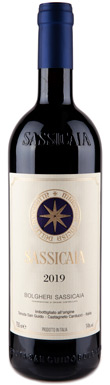
Sassicaia is a fresh Mediterranean wine with elegance and although concentrated, it's almost never huge - and definitely not this 2019, which is arguably leaner than expected for a Bolgheri. However, this style is the signature of this great wine: extremely elegant lavender scents alongside bramble fruit, leafy Mediterranean spiciness and cedar wood length, supported by ripe, polished tannins and poised, savoury fruit. It recalls some of the classic vintages of the 1980s; its chiselled balance suggests long ageing potential. The traditional blend for this wine is 90% Cabernet Sauvignon and 10% Cabernet Franc, aged for 25 months in oak (one-third new).
2019
Tenuta San GuidoBolgheri
