
Screaming Eagle: More than the sum of its parts


A trip to California arranged for MWs in late 2018 gave Tim Jackson MW a rare opportunity to taste the component parts of this super-priced wine. Did the finished article live up to expectations?
Screaming Eagle: California’s uber-cult Cabernet, a massive, super-ripe and tannic, 200% new oak, $1,500 Napa fruit-bomb, right?
Screaming Eagle wines sweep away such prejudices with their pure fruit, firm yet elegant tannins, beautifully handled oak and incredible length. These are wines of superb finesse that justify the hype.
At 14.8% ABV, the flagship Cabernet Sauvignon has the ripeness expected of Napa, but its underlying freshness, coupled with a perfumed, floral character balances this exceptionally. The Margaux of Napa Valley, perhaps?
Creating an identity
Screaming Eagle is a single 19.4ha vineyard in the Oakville AVA, halfway up Napa Valley. Here, the cooling fog influence is moderate and the warm macroclimate is conducive to well-ripened Cabernet Sauvignon.
Indeed, the gravelly benchlands of Oakville and neighbouring Rutherford are famed for Cabernet vineyards like To Kalon and Martha’s Vineyard. Screaming Eagle’s vines are located on the east side of the valley, just off the Silverado Trail that abuts the Vaca mountain range, and though most of the vineyards on the floor of Napa Valley are flat, Screaming Eagle’s sit on a small rise.
Here, the gentle north-facing slope thereby moderates the sunshine intensity, while its proximity to the mountains creates unusual air-circulation patterns that cool the vines.
These two elements give Screaming Eagle a mesoclimate that prolongs ripening, adding both acidity and floral-perfumed character to the ripeness of fruit, giving a real sense of place to the wines. Both soil and winemaker also play major roles in the identity of the wines.
The tasting
All this became evident at a tasting that included a series of wines from key vineyard blocks – the blending components for the 2016 wines. Two flights of blending components helped to demonstrate how a skilled winemaker can maximise expression of ‘place’.
Sales and marketing director Mary Margaret McCamic MW and Nick Gislason, winemaker at the estate since 2010, explained that the vineyard is a convergence zone for three different soil types, including gravelly, volcanic soils on the Vaca side of the Oakville Bench.
Based on these soil types, the 19.4ha vineyard is divided into 50 blocks, each of which is individually managed. They are all vinified separately, as are press fractions from each plot, giving over 100 components in total, all differing expressions of Screaming Eagle’s vineyard. The estate continues to invest in research to refine the boundaries of each plot through tasting, annual crop analysis and soil mapping. This research should further improve the estate’s ability to capture the vineyard’s distinctiveness.
The components
Flight 1 comprised three Merlots from the same clone and rootstock, all from a 1.2ha zone on the east side of the property. Differences in soil and water availability drove the variance in styles observed.
16ME-Old C1 Block 2016
From very gravelly, stony soils that typically bring freshness and life to the blend. The wine is intensely plummy and perfumed, with powerful aromatics and integral creamy oak, underpinned by fine-grained but firm tannins and brisk acidity; a perfect candidate for both Screaming Eagle and The Flight. 95
16ME-Old C2 Mid Block 2016
C2 is located 40 feet further south than C1, on old creek-bed soils with less iron and more silica, which produce less vigorous plants with smaller berries. Because of its roundness and structure, this normally provides the base for The Flight, as is the case for the 2016. With less overt red fruit aromatics and a dusty, chalky minerality, this has much broader, voluptuous fruit flavours and firmer, more powdery tannins than C1. 94
16ME-Old C2 East Block 2016
Richer, loamier soils further east give more vigour, larger vines and bigger bunches. This has a distinctive character of blueberry, raspberry, violets, peppery overtones and a coriander oak expression, plus a notable saltiness to its long finish. Ultimately, the strong personality of this plot didn’t fit harmoniously in any blend, so this didn’t make either finished wine in 2016. 94
Flight 2 covered the Cabernets: four Cabernet Sauvignon blocks and one Cabernet Franc block. These were split into B blocks in the east and D blocks in the west. The later-harvested D blocks tend to be more structured and powerful: D1 NE was harvested nearly five weeks after B1.
16CS-B1 Block 2016
‘Clone 6’ Cabernet Sauvignon gives small berries which, in 2016, produced a deep, densely coloured and brooding wine with dusty, earthy minerality, white pepper spice and underlying pure cassis fruit. Firm, chalky tannins and bright acidity give plenty of structure, and this dense but spicy wine ultimately gives depth to The Flight 2016. 95
16CS-Old B Upper 2016
‘Clone 7’ Cabernet Sauvignon on 110R rootstocks can produce more open wines. A lighter colour than B1, it has more focused cassis fruit, with floral notes and approachable ripeness of fruit and tannins. This richer, supple component only went into Screaming Eagle Cabernet Sauvignon in 2016. 94
16CS-Old D1 Mid 2016
The Cabernet Sauvignon vines here are grown on 10-12 feet of very stony and well-drained soil, but with a hard pan beneath that provides limited water, stressing the plants into providing quality fruit. Chocolatey oak and crushed rock minerality are joined by a great precision of spicy cassis fruit and floral tones. It has compact, firm tannins with a very long finish, but carrying some of the mid-palate ‘hole’ often found with Cabernet Sauvignon. This typically dense, structured and spicy wine was used in small quantities for both wines. 95
16CS-Old D1 NE 2016
Cabernet Sauvignon from this plot normally lends a rich blending component for Screaming Eagle Cabernet Sauvignon. In 2016, its deep black-ruby colour and fuller-bodied style, with a plumminess to the cassis fruit, breadth of mid-palate flavour and plenty of powerful, compact tannins, showed exactly how that ‘filler’ role is played. 96
16CF-B4 2016
The Cabernet Franc here usually provides spice and fills in the gaps in The Flight. It’s a deep ruby-purple, with classic Cabernet Franc tobacco lift and white pepper, supported by dense, juicy black cherry fruit and firm, powdery tannins. Only medium-long, it has some warmth on the finish. 93
Screaming Eagle: The finished wines
Screaming Eagle at a glance:
• The estate was founded by Jean Phillips in 1986. Existing vines were quickly replanted
• Screaming Eagle Cabernet Sauvignon was launched in 1995, with 1992 the first vintage, made by legendary winemaker Heidi Barrett
• Second Flight was launched in 2012, with 2006 the first vintage, and is made as a 55-75% Merlot wine, subsequently renamed The Flight
• 25-30% of wines made in any vintage make it into either wine, with the rest sold off
• 500-850 cases of each wine are produced per year. Almost all is sold to mailing list members, with a maximum 3-bottle allocation
• Cabernet Sauvignon 2016 was released to mailing list members at $1,050 per bottle and The Flight at $550
You might also like:
Top Napa Cabernet wines for the cellar
Top California Cabernet 2015 wines: Full vintage report
Comparing Cos d’Estournel wines: 2000 to 2016
Screaming Eagle, Cabernet Sauvignon, Napa Valley, Oakville, California, USA, 2016
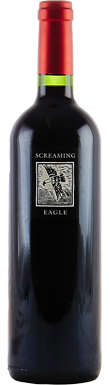

Deep ruby in colour, with a youthful, precise nose of pure, ripe cassis fruit, subtle, integral cedar oak and fresh earth minerality. Some toasted spice...
2016
Screaming EagleNapa Valley

Screaming Eagle, The Flight, Napa Valley, Oakville, California, USA, 2016
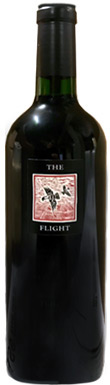
A deep ruby-purple colour, this has a rich, precise, dusty plum and cassis character. The floral lift and subtle clove-coriander oak gives some complexity, even...
2016
Screaming EagleNapa Valley
