
Searching for the soul of Nerello Mascalese
Captivated by the complexity of Nerello Mascalese, and its ability to shine in youth and with age, our author sets out to discover its essence.


Had I been writing 50, even 20 years ago about Nerello Mascalese – the Sicilian grape variety believed to have originated on the plain of Mascali, between Mount Etna’s eastern slope and the coast – this story would have been simple: an unfussy, high-yielding grape that ripens reliably and embraces Sicily’s oppressive heat.
Its thin skin makes a bright red wine with good acidity and limited tannins. Grown around Mt Etna, the vast majority of Nerello Mascalese – with its serviceable amount of alcohol and body – was transported as must [the freshly pressed, unfermented juice of grapes with all the accompanying solids] in bulk down the mountain on a dedicated train track that delivers it to the port of Riposto.
But today, Nerello Mascalese is taken seriously as a standalone variety and the story has become far less straightforward.
Scroll down for six Nerello Mascalese recommendations
Intriguing, inscrutable – and delicious
With considerate wine-growing that respects the fruit and allows terroir to shine through, this grape reveals itself to have many, sometimes seemingly contradictory, facets. The wines it makes today can take you into extraordinary territory, bordering on inscrutable, in the yummiest of ways.
At their best, they are bright, mineral-driven wines, charming and food-friendly, yet bearing a poetry and gravitas that brings to mind fine Burgundy or Barbaresco. This is an easygoing variety whose beauty can make one weep!
If complexity and evanescence, alongside deliciousness, is what makes for great wines, then today’s Nerello Mascaleses are intriguingly great.
How does that happen? And how can Nerello Mascalese at all price points show exceptionally well when young and fresh, but also be suited to being aged for a decade or more?
Preparing for this article, as the contradictions mounted, I found myself asking: what are the essentials of Nerello Mascalese? Wherein lies its soul? The only thing for it was to travel to the heart of its production: Mount Etna.
Hard to define

Until recently, it wasn’t actually that easy to find 100% Nerello Mascalese wines; before 2012, both tradition and the law required Etna DOC Rosso to contain a minimum of 80% Mascalese and 10%-20% Nerello Cappuccio.
Indeed, field blends with additional, often unidentified varieties, such as Grenache, were the norm. Many Sicilian reds calling themselves Nerello Mascalese are still made this way, and they offer a clue as to why the variety can seem so hard to characterise.
Field blends may have good intentions but they were not going to help me understand Nerello Mascalese. For that, I needed to pay a visit to Benanti, a leader in promoting and producing first-rate wines on Etna.
In the 1980s, Giuseppe Benanti (pictured, above), an avid wine lover and native Sicilian, began a passion project, purchasing and developing vineyards in four (eventually five) distinctive contrade, or vineyard ‘zones’, around Mt Etna.
He applied rigorous scientific methods to understand the complex set of soil and climate variables that account for the great diversity found among all the contrade in this volcanic terroir.
To ensure a full expression of the vineyard in each bottle, Benanti limited the winemaking factors influencing his fruit by restricting himself to a select few yeast strains isolated from his vineyards and cellar, fermenting in stainless steel and ageing his reds in predominantly neutral oak.
Today, Giuseppe’s twin sons, Salvino and Antonio, remain faithful to this approach. They are quick to playfully rib each other, but they are quicker still to speak passionately and seriously about their wines and their DOC.
‘Of course, making wine must leave some room for a personal approach, but we think that there should be some kind of limit to the creativity… to respect the place.’ In doing so, Giuseppe says, one can clearly see ‘how obvious it is that the local climate, and culture, and soil really characterise the wine’
Terroir tells all

And herein lay the answer I had been looking for: these wines are changeable because this variety is exceptional in allowing for the purest translation of terroir. The growing conditions on Mt Etna are so varied.
It has four active craters spewing lava and about 300 extinct craters, each with its own unique soil composition. The age of all the lava flows and their state of erosion is another factor, dating from thousands of years old to almost present day.
Then there is the elevation and aspect of each vineyard site, from about 400m to 1,000m above sea level. The south side of the volcano sees hot sunny days tempered by ocean winds, producing generous, approachable wines, whereas the climate on the northern slope is much cooler, giving elegance and austerity.
The eastern slope – cool, wet and windy, exposed as it is to the ocean – is where Carricante, Sicily’s great white grape, thrives. The west is not favoured for viticulture and is not a part of the Etna DOC.
Salvino Benanti explains: ‘Mascalese has surpassed the boundaries of the Etna appellation… with completely different results. It will become a bigger wine [when] made in warmer conditions.’
Indeed, the majority of Nerello Mascalese is grown not on Etna, but throughout the rest of the island. A notable example comes from Fabio Sireci and Melissa Muller, husband and wife proprietors of Feudo Montoni in the centre of Sicily.
At 500m-750m on a high plateau between two mountains, surrounded by wheat fields, the property is remote and in effect cut off from all other viticulture on the island.
According to Sireci, wine has been made here for more than 2,000 years; the present-day winery structure was purpose-built in 1469.
The Sireci family bought the property in the late 19th century and have been quietly making wine in the traditional method – that is, vinification and ageing in concrete vessels, using native yeasts and relatively cool fermentations – ever since.
The land has always been farmed organically and has been certified for the last 20 years.
A reference point
Feudo Montoni’s isolation has given it an important place in Sicilian viticulture. The first of the Sirecis to own the property brought in vines from Catania, the municipality at the base of Mt Etna.
No vine stock has been introduced to the estate since then. All new vineyard material is propagated solely from vines already on the property.
This means that Montoni’s Nerello Mascalese stands as a genetic reference point, its DNA helping to confirm that this variety originated as a natural cross between Sangiovese and Mantonico Bianco [as cited on the VIVC Vitis International Variety Catalogue].
‘Now, of course, Nerello Mascalese is very famous in Etna, where it has a beautiful expression,’ Sireci says. ‘But Nerello Mascalese is not a Sicilian original grape. Looking back several millennia, we think that Vitis vinifera in Italy came from Georgia and the Caucasus mountains, passing through Greece, and arrived in Puglia, in the south of Italy.’
It took Sireci 20 years and the encouragement of Muller to decide to bottle his Mascalese as a standalone variety.
‘There is too much Nerello Mascalese that’s not made with a clear vision of what it can be,’ he laments. ‘Twenty years ago, our wines were not understood by the market.’
But now he and Muller have happily found a new audience that appreciates their delicate, true-totype red and rosé iterations of Nerello Mascalese, which stand as further testament to the grape’s ability to express terroir when treated with care and restraint.
Territories new

At home in northern California, I approach Kevin Harvey, North America’s sole producer of Nerello Mascalese, curious to understand what he sees in the variety that justifies the lengths to which he has gone to produce his wine.
With a proven track record in Pinot Noir and Chardonnay under his Rhys Vineyards label, Harvey is a vintner who does his homework and doesn’t believe in half-measures – he and his team had to import the Nerello Mascalese vine stock from Europe and put it through the UC Davis Clean Plant Program before propagation and planting could begin.
They spent years studying the soil and climate of their site to ensure that it would be a good match and they engaged Sicilian winemaker Salvo Foti as their mentor. And – just like winemakers on Mt Etna – they have found that meticulous viticulture, a hands-off approach and minimal new oak has brought about the best results.
‘We really only like varieties that express terroir,’ he explains. ‘Like all Italian wines, it’s a great food wine.’ But more importantly, he says: ‘Some of these great sites [in California], as they continue to warm up, are going to need grapes that are a better match [to the climate].’
Nerello Mascalese’s ability to retain acidity in hot climes makes it a great fit.
After visiting the vines, I sit down with Harvey and his team. It just so happens that this is the first vertical of their Nerello Mascalese they’ve tasted together.
Harvey jokes: ‘You need at least three wines for a flight and [with the 2021 ready] we finally have that!’
The success of his Aeris label means they can now provide a California benchmark – and vine stock – to others looking for varieties with the potential to thrive in our changing climate.
Key to its appeal
Nerello Mascalese’s changeability – in the bottle, in the glass, from site to site – is what defines it and makes it so appealing.
Salvino Benanti echoes a conclusion I had been coming to: ‘I think the beauty of Nerello Mascalese is that it can be enjoyed young and with age.’
This is not a fickle soul, but an ever-evolving entity in a constant state of flux; impossible to capture but worthy of the attempt. We are only just scratching the surface of what this grape is capable of, both on Mt Etna and around the world.
I for one am delighted that this is a story that will need to be written time and again.
Nerello Mascalese: Nowell-Smith’s six to try
Related articles
- Etna Rosso: Panel tasting results
- The elegance of Bertani: From ‘cru’ Valpolicella to legendary Amarone
- Rosso di Montalcino: Superb Sangiovese on the rise
Murgo, Murgo Brut, Sicily, Italy, 2021
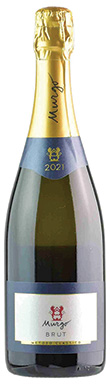

It's not often that one finds complexity and balance in an affordably priced, traditional-method brut, but Murgo delivers. In doing so, we see that Nerello...
2021
Murgo

Feudo Montoni, Rose di Adele Nerello Mascalese, Sicilia, Sicily, Italy, 2023
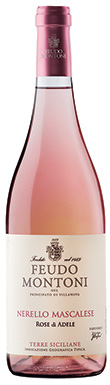
An inviting pale salmon pink colour, this rosé is crisp and refreshing, perfect for sipping on a warm summer evening, but it also has enough...
2023
Feudo MontoniSicilia
Benanti, Contrada Dafara Galluzzo, Etna, Sicily, Italy, 2022
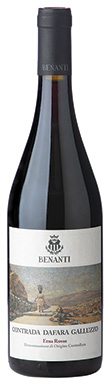
Coming from 750 metres above sea level on the cool northern slope of Mount Etna, it has a deeper colour than its warmer-climate counterparts. The...
2022
BenantiEtna
Aeris, Centennial Mountain Nerello Mascalese, Sonoma County, California, USA, 2021
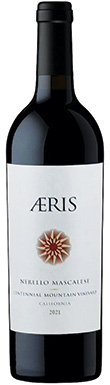
Considerably richer, bigger, and darker than Aeris's inaugural 2018 vintage of this wine, this is similar in terms of its complexity and ability to change...
2021
AerisSonoma County
Feudo Montoni, Terre Di Elio Nerello Mascalese, Terre Siciliane, Sicily, Italy, 2020
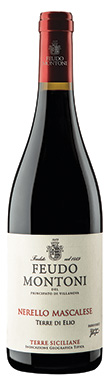
A great example of a well-made Sicilian Nerello Mascalese that does not come from Mount Etna. It misses the mineral, chiselled nature of an Etna...
2020
Feudo MontoniTerre Siciliane
Passopisciaro, Passorosso, Etna, Sicily, Italy, 2021
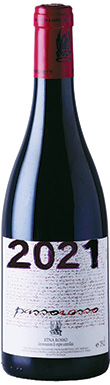
The light garnet colour of this Nerello Mascalese is typical of many Etna rossos. The aromas are gorgeous, and impactful for such a delicate looking...
2021
PassopisciaroEtna
