
Sicily’s wine evolution plus 10 top wines worth seeking out
The volcanic island’s path to international wine success has been somewhat rocky, but has changed course in recent years thanks to a handful of farsighted families and wineries. Carla Capalbo charts the change and selects 10 brilliant Sicilian wines.


Sicily is recognised today as being one of the world’s most exciting wine-producing regions, with wine lovers and tourists flocking to sample its myriad wines and enjoy the island’s cultural riches, scenery and delicious food.
The once-obscure Nerello Mascalese, star grape of the rediscovery of Mount Etna as a winemaking presence, is drawing comparisons with Burgundy and Barolo.
Native Nero d’Avola and indigenous whites – including Carricante, Catarratto, Grillo and Zibibbo – now appear regularly on international wine lists.
There are organic and biodynamic wineries to discover, while many estates offer holiday accommodation.
Scroll down to see tasting notes and scores for Carla Capalbo’s top 10 Sicilian wines
It wasn’t always thus. Sicily’s wine history stretches back millennia, to the Phoeniciansand the Greeks, but its transformation to a modern wine culture was slow, albeit with a burst in the late 19th century. It has accelerated in the past 25-30 years thanks to a handful of pioneering estates.
Land reform shake-up
Sicily’s transition to modern practices was neither direct nor painless. Strong, often invisible forces often proved resistant to the idea of changing a system that afforded control, riches and power to the few.
Sicilian agriculture followed a centuries-old feudal model in most areas until the Italian land reform laws of the 1950s and ’60s broke up its largest landowner holdings – limiting them to 200ha each – and gave the former sharecroppers their own plots. While this liberated some tenants, it caused problems for others.
Only a handful of families bottled their wines, including Duca di Salaparuta and Tasca d’Almerita. Large cooperative wineries were created to assemble thousands of individual growers, and to pool the costs of vinifying and selling the resulting wine.
Much was (and is) sold as bulk wine to northern Italy – including Tuscany and Piedmont – and to France and Germany, where the concentrated colour, alcohol and body of Sicilian sun-ripened grapes bolstered weaker wines. Another large portion was (and is) distilled as alcohol.
There was little incentive to change: co-ops enabled access to EU subsidies and offered block votes to those in power, while individual land workers rarely had the opportunities to become independent.
Forward thinkers
Luckily, a handful of people had other ideas.
From 1973, Diego Planeta, an ambitious Sicilian entrepreneur, was president of the large Settesoli co-op in Menfi, on the island’s southwest coast. He helped Settesoli move from producing bulk wine to bottling and selling millions of bottles of better wine – more than half of its output – by the 2010s.
Planeta’s hunch that overseas markets would accept Sicilian wines if they followed international styles of winemaking led to extensive plantings of what the Italians call vitigni internazionali – international grape varieties – including Chardonnay, Cabernet Sauvignon and Merlot. When, in 1985, he became president of the powerful Istituto Regionale della Vite e del Vino, the state-owned institute tasked with improving the island’s winemaking abilities, he expanded his ideas and influence.
He planted experimental vineyards and brought in outside consultants, including oenologist Giacomo Tachis, whose Bordeaux-influenced style had created some of the 1990s’ legendary SuperTuscans.
See all of Decanter’s Sicilian wine tasting notes and scores
Planeta’s eponymous family winery was established in the late 1980s and is still one of the island’s most internationally recognised. Run today by Diego’s daughter and nephews, Planeta’s wine portfolio from five Sicilian areas includes international and native Sicilian grapes.
Both Planeta and another early estate, the Rallo family’s Donnafugata, originating in Marsala at the far-western end of the island, understood the importance of marketing their wines within the context of the generous hospitality of their beautiful birthplace.
Whether Sicily would have accelerated its position on the world stage without relying on international varieties is an open question. Certainly they facilitated acceptance by wine drinkers who had little knowledge of Sicily beyond what they’d seen in the movies.
Passion for Marsala
The Marsala area produced another important wine pioneer, Marco De Bartoli. His passion for Sicily’s history and wine culture led to a different approach to renewal.
A rebel from the outset, De Bartoli left his family’s important Marsala-making winery, Carlo Pellegrino, to become a racing-driver before settling at Samperi, a country farmhouse near the city.
De Bartoli was incensed about the fall from grace of the area’s noble wine, [fortified] Marsala. That a wine favoured by Admiral Horatio Nelson, who popularised it within the British Royal Navy at the turn of the 19th century, and with such an important history, should have been reduced to a travesty blended with eggs or chocolate and drunk from thimbles was an outrage he couldn’t accept. (His favourite saying was: ‘Grande vino, grande bicchiere’ – great wines deserve big glasses.)
He amassed a collection of barrels of original Marsala, gathered painstakingly from local houses and containing wines that dated back more than 100 years, and blended them with his own to produce extraordinary, complex wines that were true to his ideals (Marsala uses a process similar to Sherry’s solera blending method). He bottled several versions, including the unfortified Vecchio Samperi, which became one of Italy’s most recognised wines.
On the island of Pantelleria he relaunched the local dessert wine, Passito di Pantelleria, made from sun-dried raisins of the local Zibibbo grape (Muscat of Alexandria): Bukkuram is a wine of extreme opulence and energy.
De Bartoli also saw the potential in the native grapes Catarratto, Grillo and Zibibbo. He was the first to make memorable dry wines from them, setting a trend that has endured. Today his three children continue his legacy, producing both his wines and some new ones, including the organic Integer line.
Lofty ambitions
Change was afoot elsewhere, too. From Regaleali, an imposing villa in the heart of Sicily, the noble Tasca d’Almerita family continued to innovate despite losing swathes of holdings under land reform. Count Giuseppe Tasca had travelled to France and drunk great Bordeaux and Burgundy.
His Rosso del Conte, first produced in 1970, is claimed as the first single-vineyard wine of native varieties Nero d’Avola and Perricone, and proved that well-made Sicilian wines could age successfully.
With the family’s younger generation now at the helm, Tasca has expanded its vineyards to include estates on Etna and Salina, and has taken over the winemaking of Grillo on the fascinating Phoenician island of Mozia.
Sicily’s new wave owes a debt, too, to Giambattista Cilia and Giusto Occhipinti at COS (the third of the original founding trio, Cirino Strano, has since left).
In the 1980s, young, full of ideas and inspired by the work De Bartoli had been doing in Marsala and Pantelleria, they set up their business on a shoestring in a little-known area of the island’s southeast, near Vittoria. They wanted to retrace the origins of winemaking and began by crushing their grapes by foot. They were keen on both international and native grape varieties.
Over time, their methods evolved to include clay jars (anfore) for much of the winemaking, and they introduced a biodynamic approach to the certified organic vineyards. COS is known for its fine Cerasuolo di Vittoria (made from Frappato and Nero d’Avola) and a range of wines that reflect its ongoing commitment to low-interference principles.
Etna evolves
Mount Etna, mainland Europe’s largest active volcano, dominates eastern Sicily and its modern wine scene. Here, wine was also once produced in bulk, sent directly into the holds of waiting ships by canals dug down the mountainside. While a few estates did bottle some wines there, including Barone di Villagrande and Murgo, it was the efforts of pharmacist Giuseppe Benanti and his then winemaker Salvo Foti who brought attention to the potential of the volcano’s native grapes: reds Nerello Mascalese and Nerello Cappuccio, and white Carricante.
Their bottlings of the red Rovittello and the white Pietra Marina – first produced in 1990 – proved to be the catalysts for a new wave of winemaking on the flanks of the volcano.
‘COS is known for its fine Cerasuolo di Vittoria and a range of wines that reflect its ongoing commitment to low-interference principles’
The complexity and ageing potential of the Carricante was a revelation, while the reds drew comparisons with the finesse of Pinot Noir and austerity of Nebbiolo. Foti has dedicated his work to Etna’s wines and now runs his own project, I Vigneri (see ‘Italy at altitude’, p20).
In the early 2000s, three outsiders who invested in vineyards on Etna helped focus the international spotlight on its unique terroirs.
When Andrea Franchetti, a producer of niche wine in Tuscany, bought abandoned vineyards on the northern slopes in 2000, it caused a stir in the wine world.
Soon afterwards, Marco de Grazia, a Tuscan-American and longtime champion and importer of Italian artisan wines, settled nearby at Tenuta delle Terre Nere.
De Grazia, an expert on Burgundy, understood Etna’s potential for creating elegant, long-ageing wines, especially whites. He encouraged other local producers to improve and bottle their wines, including Giuseppe Russo of Girolamo Russo. Belgian Frank Cornelissen also settled in the area in 2001 and ignited the passion for natural and experimental wines on its slopes.
Thanks to this great cast of dedicated winemakers – and many more – today Sicily and its islands offer an incredibly exciting diversity of grape varieties, terroirs and wines to explore and, of course, to drink.
Capalbo’s pick: 10 delicious Sicilian wines
See also
Best Italian white wines for summer
My top 20: food-friendly wines from around Italy
Barolo 2017 vintage report: 120 wines tasted
Benanti, Pietra Marina Bianco Superiore, Etna, Sicily, Italy, 2016
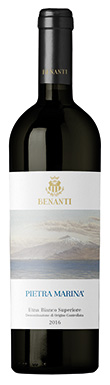

This definitive wine of pure Carricante is given extensive contact on the lees, without wood, taking its structure from the grapes and terroir. Pale with...
2016
BenantiEtna

Marco De Bartoli, Integer Grillo, Terre Siciliane, Sicily, Italy, 2018
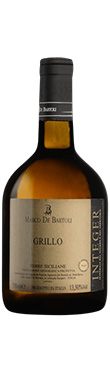
Light burnished gold. The nose is rich, with aromatic and salty notes leading to an energised, complex, clean palate with a very long, salivating finish....
2018
Marco De BartoliTerre Siciliane
Tasca d’Almerita, Nozze d’Oro, Sicily, Italy, 2018
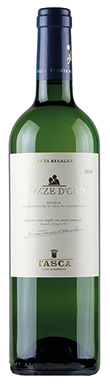
A blend of two-thirds Inzolia with Sauvignon Tasca (a varietal selection cultivated at the Regaleali estate), this charming classic is light bright gold, with hints...
2018
Tasca d’Almerita
Tasca d’Almerita, Mozia Grillo, Sicily, Italy, 2019
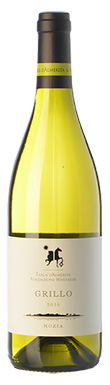
Pale with yellow-gold highlights. Sappy and saline, with aromatic notes, this is crisp, clean and salty, displaying fine acidity and lots of character. Made on...
2019
Tasca d’Almerita
I Vigneri, Aurora, Sicily, Italy, 2019
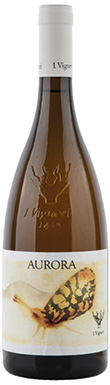
This pale gold, linear Carricante from Etna has bright citrus notes with hints of pear, bruised apples and broom blossom. On the palate it’s fine-textured,...
2019
I Vigneri
COS, Cerasuolo di Vittoria delle Fontane, Sicily, Italy, 2014
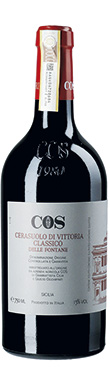
Frappato and Nero d’Avola aged in large Slavonian barrels. Cherry-red colour with a floral nose of raspberries and fragrant red fruits. It has lovely acidity...
2014
COS
Tenuta delle Terre Nere, Calderara Sottana Rosso, Etna, Sicily, Italy, 2017
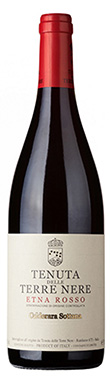
This single-vineyard wine is made with fruit from old Nerello Mascalese vines on Etna’s north face. It displays Burgundian hues and typical Nebbiolo elegance, and...
2017
Tenuta delle Terre NereEtna
Planeta, Santa Cecilia, Noto, Sicily, Italy, 2017
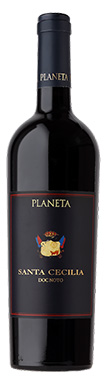
This pure Nero d’Avola is quintessentially Sicilian: rich in colour and full of ripe blackberry fruits, it has a silky texture and finely balanced wood...
2017
PlanetaNoto
Donnafugata, Ben Ryé, Passito di Pantelleria, Sicily, Italy, 2018
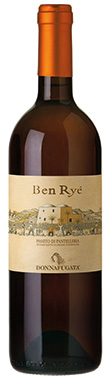
Caramel-gold in hue, this elegant passito (grapes concentrated by drying) speaks of the sweet Zibibbo grapes it’s made from, and their volcanic island. Exotic perfumes...
2018
DonnafugataPassito di Pantelleria
Marco De Bartoli, Vigna La Miccia Superiore Oro, Marsala, Sicily, Italy, 2016
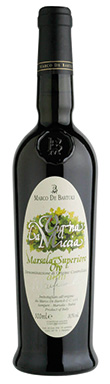
Groundbreaking when it first appeared in 1985, this elegant young Marsala made from 100% Grillo is a rich amber-caramel colour, with a nose of toasted...
2016
Marco De BartoliMarsala
