Siepi: ‘A new era’
Tasting five vintages of Castello di Fonterutoli's flagship red wine, Siepi, culminating in the 2020 vintage which launches on La Place de Bordeaux today.


Siepi is a blend of 50% Sangiovese and 50% Merlot grown in the Chianti Classico area. This combination of Sangiovese’s structure and acidity along with Merlot’s plushness and softness is Siepi’s calling card.
Treated with 70% new oak and bursting with ripe, plush fruits, spice and florals, Siepi offers drinkers a distinctly SuperTuscan experience. While some producers in Tuscany are finding it harder to work with Merlot in the face of increasingly warmer growing seasons (Cabernet Franc seems to be gradually replacing Merlot as the new darling of Bolgheri, for example), Castello di Fonterutoli is sticking to its guns.
This decision is made easier not only by the fact that Merlot is an equal partner in the historic blend, but also that the vineyard’s soils and microclimate help to keep the Merlot in check, avoiding any accusations of overripeness.
A recent five-vintage vertical tasting with Giovanni Mazzei – the 25th generation of the Mazzei wine dynasty and the group’s export director – helped demonstrate the great strides that have been made over the last few years to make Siepi more accessible in its youth, while also dialling back the oak for a more elegant character to suit contemporary tastes.
Giovanni explained that although the 50/50 blend of Sangiovese and Merlot at the heart of Siepi has remained the same since 1992, there have been other important changes, both in the vineyard and in the cellar.
The Siepi vineyard

Located in Castellina in Chianti, Siepi’s 14-hectare vineyard is situated on a southeast-facing plateau between 220 and 310 metres above sea level. Encircled by forest, the vines growing here enjoy the cooling effect of the trees, while the soil, dominated by aberese marl with limestone and clay, is well draining – yet importantly the clay holds enough water to alleviate any stress to the vines in drier conditions.
The Sangiovese comes from two south-facing plots, ‘Vallone’ and ‘Poggione’, totalling 3.1ha. The vines planted in 1997 derive from a massal selection of the best clones, while the vines planted more recently in 2011 were also propagated from some of the best Sangiovese vines already in the vineyard – a selection of a selection, if you will.
The Merlot comes from a single southwest-facing plot, ‘Il Piano’, of 2.9ha. Planted in 1986 and 1987, these vines derive from a massal selection of the best vines of the estate originally planted in the 1970s.
The vineyard has been farmed organically since 2006, and occassional anti-fungal treatments consist of no more than sulphur and copper. Organic fertiliser is used in conjunction with cover crops, of which fava beans in particular help to release nitrogen into the soil – important for the health of the vines and the quality of the grapes.
Stricter selections
Since 2018, Siepi has been the product of a stricter vineyard selection and since 2019, a new optical selector has been employed to tighten up quality control even further.
‘Between 2007 and 2012, there was a big change in elegance,’ said Giovanni, explaining that 2007 was the first vintage made in the new gravity-fed cellar, which allowed for improvements to the wine.
Parcels are today fermented individually in 100hl tapered oak vats using indigenous yeasts. Submerged-cap fermentation was introduced for the Sangiovese in 2018 – an important step towards Siepi’s more elegant character in the most recent vintages.
Tweaking the oak
After fermentation is complete, the Sangiovese is racked to untoasted tonneaux, treated with steam to open the pores and then heated over a large convection oven to achieve a toasted quality without the overt charring a naked flame creates. This is another recent change, as previously both the the Merlot and the Sangiovese were racked to lightly-toasted barriques.
The oak barrels have always been sourced from a wide variety of tonnelleries, yet while the amount of new oak has remained the same (around 70%), more Austrian oak and less French oak have been selected since the 2019 vintage, in order to give a less pronounced but still complex oak character.
The wines mature for around 17 months before final assemblage, after which Siepi spends four months in concrete vats before bottling, an additional step introduced for the first time with the 2016 vintage.
Giovanni said that 2019 marked a new stylistic era for Siepi, where the wine is more accessible early in its life, more fruit-forward too; the result of all of these small changes over the last few years. While I singled out 2018 in particular as a sublime wine, Giovanni may have a point – despite their youth, the 2019 and 2020 both have great potential for the future.
Five vintages of Siepi
Related articles
Ipsus: The making of a modern Italian cru
SuperTuscans at 50
Rosso di Montalcino: No longer a ‘baby Brunello’?
Castello di Fonterutoli, Siepi, Toscana, Tuscany, Italy, 2016
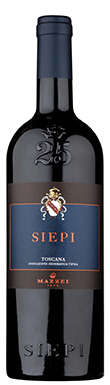

Siepi 2016 is a ripe, dark wine with inky and herbal edges. Plush aromas of violet, chocolate, liquorice and black berries are joined, after some time in the glass, by gorgeous dried cherry. In the mouth it's smooth yet tight, with fine, integrated tannins and fragrant leather, dried fruit and nut flavours framing a core of dark fruit. 35,000 bottles produced.
2016
Castello di FonterutoliToscana

Castello di Fonterutoli, Siepi, Toscana, Tuscany, Italy, 2017
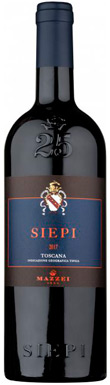
2017 was infamous in much of Italy for its hot and dry conditions, and the vines here did not miss out. 'It was hotter in 2022,' says Giovanni Mazzei, 'but there was less hydric stress'. The balsamic stamp of so many other 2017s is also present here - the result of the vines shutting down in the extreme heat and actually preserving freshness. A complex and fragrant nose showcases tobacco leaf, earth, cocoa and petrichor alongside ripe black and blue fruits which also make themselves known on the palate. Super-fresh in the mouth, the plush fruit is supported by grainy cocoa tannins, with an intense balsamic streak of herbs and toasted fenugreek seeds. 29,500 bottles produced.
2017
Castello di FonterutoliToscana
Castello di Fonterutoli, Siepi, Toscana, Tuscany, Italy, 2018
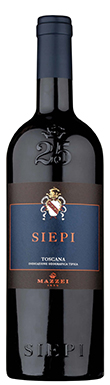
This vintage was a warmer year, similar to 2015, however, as Giovanni Mazzei correctly points out, it combines 'the softness of a warmer vintage with the aromatics of a cooler vintage'. Potpourri, violet, aromatic red fruits and a subtle cocoa touch leap from the glass, inviting you to taste what turns out to be a soft, smooth and intense Siepi framed by invigorating acidity and chalky tannins. The concentrated core of dark fruit and pomegranate develops nuances of black tea, dark chocolate and violets, which linger on the long finish. Simply gorgeous. 38,000 bottles produced.
2018
Castello di FonterutoliToscana
Castello di Fonterutoli, Siepi, Toscana, Tuscany, Italy, 2019
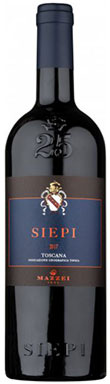
In 2019, a 'classic' good quality vintage in much of Tuscany, the vines experienced very large temperature differences between day and night in September, giving perfect ripeness allied to great freshness. This wine combines ripe, fruit-forward and super-floral aromas with a fresh, fleshy and elegant palate showcasing plush black cherry. It seems a bit lighter than the 2020, with more plentiful grainy tannins, making for a focused and harmonious Siepi. 35,000 bottles produced.
2019
Castello di FonterutoliToscana
Castello di Fonterutoli, Siepi, Toscana, Tuscany, Italy, 2020
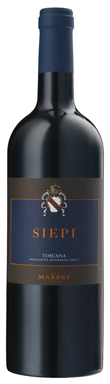
Yields in 2020 were down due to cold spells in April which affected the vines that had already begun budburst, however the summer was pretty average in terms of temperature and rainfall, allowing for a successful growing season. Bottled this May/June and released on La Place on 14 September 2022, the youthful 2020 vintage of Siepi is bursting with black and blue fruits, floral and spice aromas. Intense, concentrated and silky in the mouth, it features balsamic blueberry alongside richer black cherry and a streak of pomegranate. Liquorice, coffee, spice and tar notes from oak ageing are still in the foreground but will settle down and eventually provide a complex backdrop for the fruit to shine. The palate is nicely freshened up by high acidity, which brings clarity and length. 29,000 bottles produced.
2020
Castello di FonterutoliToscana
