
Smith-Madrone: Tasting a Napa Valley pioneer
Elin McCoy ventures to Napa Valley's Spring Mountain District to taste at Smith-Madrone, known for its age-worthy, balanced wines that also tend to be released at relatively reasonable prices...


Smith-Madrone is one of Napa Valley’s pioneer estates. It was founded in 1971 by Stuart Smith, known as Stu, who is here for this tasting and is sporting a greying beard and impressive brush moustache as the morning light streams into the ivy-covered barn winery high on Spring Mountain
A long table with a white cloth, dozens of glasses, and red napkins is surrounded by French barrels stacked four high. The oldest wine on the table, a Cabernet, was made here 40 years ago.
Scroll down to see Elin McCoy’s top Smith-Madrone tasting notes and scores
Stu’s brother, Charles (Charlie), is opening bottles of Riesling, Chardonnay, and Cabernet. His beard and moustache are white. The two engage in back-and-forth banter that resembles a good stage routine. It feels like a Napa scene from several decades ago.
In many ways, Smith-Madrone is a throwback to an era before wineries resembled Tuscan villas, before cult Cabernets cost $500-plus a bottle, and before Ferraris lined streets in St. Helena far below.
The Smiths are proudly old school in their winemaking philosophy, the age-worthy, balanced wines they make, the reasonable prices they charge, and the homely way they welcome visitors. The winery is the tasting room. The guides are the Smith brothers, or Stu’s son Sam, who is now assistant winemaker.
Smith-Madrone at a glance
Founder: Stuart Smith
Founded: 1971
Location: Spring Mountain District, Napa Valley
Annual production: 3,000 to 4,000 cases
Vineyards: 38 acres, dry-farmed, first planted 1972
Elevation 1,300 to 2,000 feet
Soil: Volcanic-based Aiken Stony Clay loam
Grapes planted: Cabernet Sauvignon, Merlot, Cabernet Franc, Chardonnay, Riesling
Wines produced: Estate Riesling, Estate Chardonnay, Estate Cabernet Sauvignon, Cook’s Flat Reserve Cabernet, Rosé
What makes Smith-Madrone so compelling is its authenticity in a glitzy place devoted to image maintenance.
After nearly 50 years, this is still a small estate winery whose reds and whites reflect the beliefs of two men who don’t tone down their opinions, whether controversial or not.
Though respected, the Chardonnay, Riesling, and two Cabernets rarely make trophy lists and have never grabbed as much attention as they should. That’s why I headed to the winery to taste their history and find out what’s happening now.
A mountain heritage
From downtown St. Helena, it takes 20 minutes to navigate the six miles of steep road and hairpin curves to the winery, 1,900 feet above the valley floor – and that’s if someone who knows the way is driving. Being a mountain winery is central to Smith-Madrone’s identity and the wines’ personalities.
Scouting a place for a vineyard, Stu first walked this land in 1970. ‘I believed then very strongly, as did Virgil in 43 BC, that wine loves the hills,’ he says, ready with a historical overview.
Old redwood stakes revealed vineyards were here in the 1880s, part of a land grant to George Cook, but phylloxera destroyed the vines and they were abandoned. Picholine olive trees, 120 years old, frame a valley floor view.
See all Smith-Madrone tasting notes and scores
We head out to the best vantage point to look at the winery’s 15.3 hectares of vineyards, some of which have 34-degree slopes. The soil is Aiken Stoney Clay loam, volcanic based, deep rust-red, and studded with rocks.
While at UC Davis, Stu joined with family and friends to buy 81 hectares (200 acres) that stretch from 1,300 to 2,000 feet (610 metres) in elevation.
His brother helped him log one million board feet of timber (2,360 cubic metres), pulling out massive roots by hand. They named the property after its predominant tree, the red-trunked Madrone. At the time the valley had fewer than 30 wineries.
‘That was the era of the Joe Heitz model of starting a winery,’ Stu explains. ‘You studied oenology and worked at everything as opposed to making money in some other industry and then buying your way in.’
In 1972, the Smiths planted two hectares (five acres) each of Cabernet Sauvignon, Pinot Noir, Chardonnay and Riesling, all on their own roots.
Their first Riesling, 1977, put them on the world wine map when it was named the ‘Best Riesling in the World’ in 1979 at an international competition sponsored by Gault-Millau.
They finally abandoned Pinot Noir, grafting over the vines to Chardonnay in 1986, added a reserve Cabernet Sauvignon named Cook’s Flat in 2007 and a rosé in 2018.
Timeline
1971 Stuart Smith founds the winery on Spring Mountain.
1972 The vineyard is planted to Chardonnay, Riesling, Cabernet Sauvignon, Pinot Noir
1973 Charles Smith, Stu’s brother, joins the winery full time.
1977 The first wine, a Riesling, is produced.
1979 The 1977 Riesling wins “Best Riesling” award at Gault-Millau Wine Olympics
1986 The Smiths graft Pinot Noir vines over to Chardonnay
1998 The brothers begin replanting the vineyard on phylloxera resistant rootstock.
2000 For the first time, the estate Cabernet includes Merlot and Cabernet Franc.
2007 The first vintage of Cook’s Flat Reserve, a high-end Cabernet blend.
2013 Sam Smith, Stu’s son, joins winery full-time.
2018 The winery produces the first rosé.
Terroir and the Smith-Madrone philosophy
Spring Mountain District, an AVA since 1993, is an area of the Mayacamas mountain range named for the hundreds of underground springs and the coolest and wettest Napa’s sub-region.
More than half the plantings are Cabernet, but I’ve never found the wines share a particular flavour profile.
Instead, the AVA is touted for its ‘mountain men’.
Fritz Maytag, owner of York Creek Vineyards, once told me the district’s winemakers are freer, tougher, more independent and contrarian, all of which describes the Smith brothers.
Though Riesling plantings in the valley have dwindled to one-twentieth of what they were in 1979, for example, the Smiths are committed to it, and their version remains Napa’s finest, with classic varietal character.
At the heart of their philosophy – and their success– are mountain terroir and dry farming. ‘Think of tomatoes,’ Stu says. ‘If you water them every day, they have no flavor. The same is true of grapes. Avoiding irrigation makes more concentrated wines.’
Given California’s recurring droughts, that’s a challenge. Since 2017, the Smiths water vines if needed at the beginning of veraison.
While they are all-in on sustainable farming, don’t ask Stu about biodynamics unless you want a lecture on why science is so important to viticulture and winemaking. For a time, he authored a website titled ‘Biodynamics is a Hoax’.
Tweaking the Old School Style
‘What distinguishes Spring Mountain wines is structure,’ says Charlie, and Smith-Madrone’s Cabernets have it.
The duo championed unfiltered, unfined wines long before Robert Parker Jr made the idea popular.
Their firm, balanced, complex reds show off cedary, herbal aromas and spicy-savoury dark fruit flavors and age for decades. The barrel-fermented Chardonnays are the opposite of the oaky, buttery style, with distinctive floral aromas, succulence and racy acidity.
But in 1997, they began re-evaluating everything they’d been doing.
Phylloxera forced them to replant on resistant rootstock, starting in 1998, and the Smiths took it as a do-over opportunity. They changed row orientation from east-west to northeast-southwest so the vines got substantial morning sun, but were shaded in late afternoon. They also changed spacing and trellising.
The early Chardonnays had been pretty austere, so they embraced malolactic fermentation and new oak, and about six years ago added batonnage. They seem to have hit a lemon-scented, mineral sweet spot.
In the 1970s, ‘80s, and ‘90s, the estate red was 100% Cabernet Sauvignon, but they planted Merlot and Cabernet Franc and added these to the blend in 2000, giving the wine more complexity.
They wish now they’d planted more of the latter. Until the 1980s they aged the estate red in French oak, then turned to American because it cost less.
‘But the difference between American and French oak is like the difference between Baywatch and Sophia Lauren,’ says Charles, and since the mid-2000s they’re back to French, and have reduced the percentage of new barrels. The result is more elegance and brightness than ever.
With the 2007 vintage, they introduced a much more expensive Cabernet reserve wine that shows off more power and intensity.
‘We kept tasting expensive Napa Cabs that were just yuck. Cook’s Flat is our attempt to compete with the first growths,’ says Stu. The 2016 is their best yet.
What’s next?
Sam Smith, Stu’s son, who sports a dark beard and moustache, now works full-time at the winery, but the long-term picture isn’t yet clear.
Making great wine, they say, is no longer enough. ‘So much money is coming in that it makes me wonder how we can compete against millionaires who can lose money year after year,’ says Stu.
‘We’re not sports stars or celebrities. We don’t do Corinthian columns.’ They worry that regulations and the costs of permits will drive small producers out of the business.
For sure, they’ll continue to fight for the right to plant on Napa’s hillsides, a controversial view to local environmentalists. ‘All things being equal, the best grapes come from the mountains,’ insists Stu.
The Smiths know what matters to them, and the wines reflect their commitment to make wines they like. After all, they always have.
Glass Fire update from the Smith-Madrone website: “We were fortunate not to lose any major structure to the Glass Fire even though the fire burned all our property that wasn’t vineyard or within our vineyard fence line.”
See Elin McCoy’s Smith-Madrone tasting notes and scores
Additional tasting notes added October 2020.
You may also like:
Top Bordeaux 2017 wines in the bottle: Left Bank report
Top wines from California’s young Petaluma Gap AVA
Smith-Madrone, Riesling, Napa Valley, Spring Mountain, California, USA, 2016
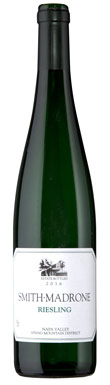

Smith-Madrone’s dry Riesling has long had a dedicated following and the winery is one of the few producers of the variety left in Napa. It’s...
2016
Smith-MadroneNapa Valley

Smith-Madrone, Chardonnay, Napa Valley, Spring Mountain, California, USA, 2017
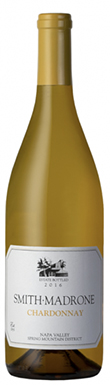
This was a rollercoaster vintage in terms of temperature, with oppressive heat on Labor Day weekend in early September (not to mention the horrific October...
2017
Smith-MadroneNapa Valley
Smith-Madrone, Rosé, Napa Valley, Spring Mountain, California, USA, 2018
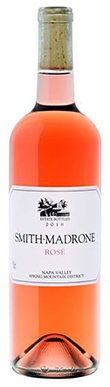
The winery experimented for several years before releasing this first vintage of rosé. In the watermelon-hued 50/50 blend of Cabernet Franc and Merlot, the Cab...
2018
Smith-MadroneNapa Valley
Smith-Madrone, Cook’s Flat Reserve, Napa Valley, Spring Mountain, California, USA, 2016
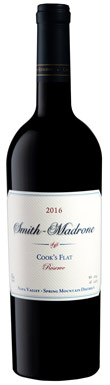
This limited-production Cabernet blend is a selection of the best barrels, and the vintage enjoyed a near-perfect growing season. The dark, intense colour promises...
2016
Smith-MadroneNapa Valley
Smith-Madrone, Cabernet Sauvignon, Napa Valley, Spring Mountain, California, USA, 2016
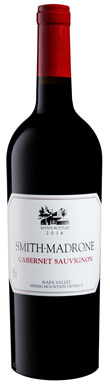
The winery’s estate Cabernet is from mostly dry-farmed vines grown at the top of Spring Mountain, elevation 550m, and in this vintage the sense of...
2016
Smith-MadroneNapa Valley
Smith-Madrone, Cabernet Sauvignon, Napa Valley, Spring Mountain, California, USA, 1979
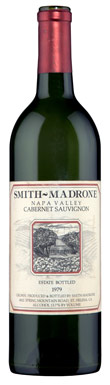
Only the winery’s second vintage, this 40-year-old Cabernet is from a cool year. Poured from magnum, it was the most youthful of the older wines...
1979
Smith-MadroneNapa Valley
Smith-Madrone, Cook's Flat Reserve, Napa Valley, Spring Mountain, California, USA, 2016
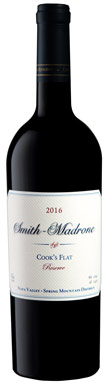
This limited production Cabernet blend is a selection of the best barrels and the vintage was a near perfect growing season. The dark, intense colour...
2016
Smith-MadroneNapa Valley
Smith-Madrone, Cabernet Sauvignon, Napa Valley, Spring Mountain, California, USA, 2001
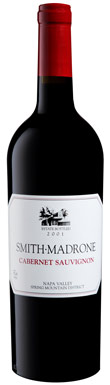
The 2001 vintage was a stunner for Cabernet in Napa Valley, and this wine was really singing. Harmonious, vivid, with a very long, wonderfully smooth...
2001
Smith-MadroneNapa Valley
Smith-Madrone, Cabernet Sauvignon, Napa Valley, Spring Mountain, California, USA, 1989
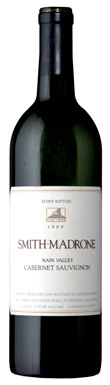
This was a doom and destruction vintage, as pickers scrambled to save grapes from pelting rain in a mid-October harvest. At the time, though,...
1989
Smith-MadroneNapa Valley
Smith-Madrone, Cook's Flat Reserve, Napa Valley, Spring Mountain, California, USA, 2012
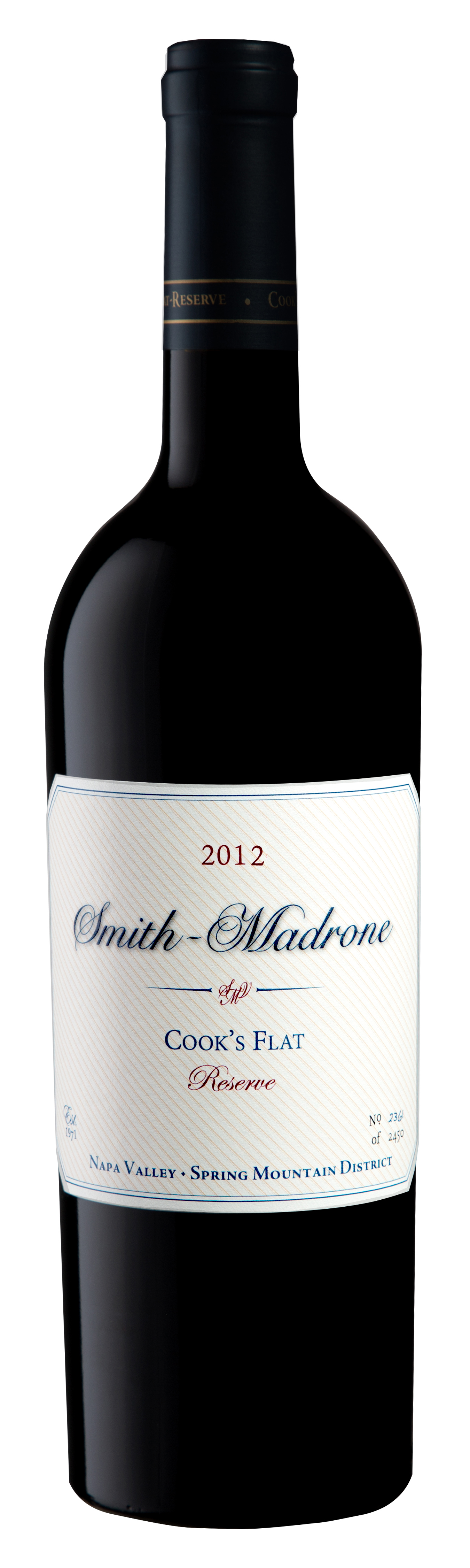
The name refers to the first owner of the property, George Cook. The one word that describes this Cabernet Sauvignon dominant blend is seductive. It...
2012
Smith-MadroneNapa Valley
Smith-Madrone, Cabernet Sauvignon, Napa Valley, Spring Mountain, California, USA, 2009
At 10 years of age, this wine is both appealing and impressive right now, with a distinct black cherry character, an almost juicy finish,...
2009
Smith-MadroneNapa Valley
Smith-Madrone, Cabernet Sauvignon, Napa Valley, Spring Mountain, California, USA, 1994
Considered a great year in Napa, this vintage was fairly cool. It produced complex, fleshy, showy wines with striking aromas and a lot of freshness...
1994
Smith-MadroneNapa Valley
Smith-Madrone, Cook's Flat Reserve, Napa Valley, Spring Mountain, California, USA, 2013
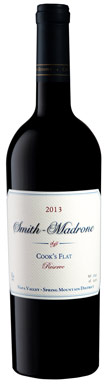
94
Only 194 cases of this Cabernet Franc-dominant blend were made. Black cherries, tobacco and herbs dominate the tantalising aromas, which spill out of the glass. Generous and open, it’s not as floral or dense as the 2016 and shows a kind of savoury, briary style. Unlike the Estate Cabernet, it’s aged in 100% new French oak.
2013
Smith-MadroneNapa Valley
Smith-Madrone, Cook's Flat Reserve, Napa Valley, Spring Mountain, California, USA, 2009
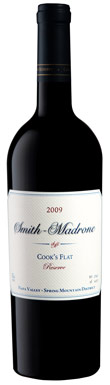
This Cabernet Sauvignon-dominated (64%) wine is very architectural, with a powerful structure, yet still almost juicy. This is very much a mountain Cabernet, but...
2009
Smith-MadroneNapa Valley
Smith-Madrone, Cook's Flat Reserve, Napa Valley, Spring Mountain, California, USA, 2007
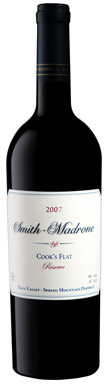
This was the first vintage of Cook’s Flat Reserve, a selection of the best barrels of the year, and aged 100% in new French oak....
2007
Smith-MadroneNapa Valley
Smith-Madrone, Riesling, Napa Valley, Spring Mountain, California, USA, 1996
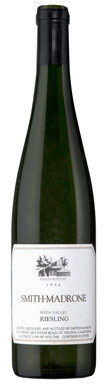
Amazingly bright, fresh and appealing for a 23-year-old wine, this illustrates the longevity of the winery’s Riesling. Apricot coloured, it has ripe peachy verve and...
1996
Smith-MadroneNapa Valley
