
Off the beaten track: 10 hidden gems in Southern Italy


There are seriously underrated wines in Italy’s hot south if you know where to look, says Susan Hulme MW, who selects a few examples from 10 of her favourite producers.
Southern Italy rightly has a value-for-money reputation, but it also has the potential to rival great wine regions, thanks to a warm Mediterranean climate, distinctive and characterful grape varieties and a long history of winemaking that goes back to the time of ancient Greece and Rome.
Happily, in the last 20 years, much has begun to change; new sub-zones like Campi Flegrei DOC, Cilento and Paestum have created a buzz alongside the historically famous DOCGs of Fiano di Avellino and Taurasi, and the recently trendy Etna DOC. It is clear the south has a very strong hand to play.
Scroll down for Susan Hulme MW’s wine picks from 10 of her favourite Southern Italy producers
One might assume the region is too hot for fine wine, especially with the warming effects of climate change, but that isn’t so.Climate change is about erratic weather patterns just as much as increased temperature. For example, the 2011 vintage saw long periods of drought and record high temperatures, while in 2014 producers experienced prolonged, heavy rain.
Southern Italy has late-ripening grape varieties, such as Aglianico and Nero di Troia, and warm autumns to cope with wet vintages (in 2014 quality was badly affected in the north of Italy, but Sicily had a great vintage).
It also has grape varieties that have adapted to the intense summer heat, and vineyards are often located in high-elevation sites with big diurnal temperature differences, allowing vines to cool down at night and slow grape ripening in hot and dry vintages.
When it comes to grape varieties, the south has an abundance of riches: Carricante, Falanghina, Fiano and Greco make top-quality whites; black varieties include Aglianico (capable of rivalling any of Italy’s best black grapes), Frappato, Nero d’Avola, Nero di Troia, Primitivo and many, many more.
Add to that distinctive volcanic soils, a range of elevations and the skill and daring of a bunch of passionate winemakers and you have a heady and intoxicating mix.
What they have created is an explosion of vivid, delicious wines that are full of personality. There’s so much going on that it’s difficult to limit the number of producers represented here to only 10; these are the ones that have impressed me most in the past 18 months.
Coincidentally, many are farmed organically or even biodynamically. While some are new, and others are established names, they remain relatively undiscovered. In other words, here are a few of southern Italy’s hidden gems.
Pietracupa, Campania
Pietracupa is a name that comes up whenever the famous white varieties of Campania, Fiano and Greco, are discussed.
Owner Sabino Loffredo likes to push the boundaries with these classic varieties – his style is one that does not aim for simple fruitiness, rather for depth of flavour and a richness of texture. He likes his wines to have three things: depth, elegance and freshness.
The winery was founded by his father, with Loffredo taking over in 1999. It is situated 10km north of Avellino and about 70km east of Naples.
He has almost 10ha of vines split between the elevated area of Montefredane and nearby Santa Paolina at elevations of 350m-550m, and almost all of his vineyards are south- or southeast-facing and on stony soils. The high elevation allows him to retain acidity and freshness, which is essential.
The winery won the ‘Up and Coming Winery of the Year’ award from Italian wine magazine Gambero Rosso in 2006. Building on this success, Loffredo launched in 2015 his G, Greco di Tufo 2010 (only 2,000 bottles), ambitiously priced at £109 but full of intense, smoky, brimstone flavours and aromas.
The single-vineyard Fiano, Cupo, is much more affordable and equally worthy of attention.
San Salvatore 1988, Campania
I can’t remember when I first tasted these wines, but I sought them out again to share with my family on a recent summer holiday in Capri.
San Salvatore 1988 wines have a luminosity and brightness to the quality of the fruit that just shines through and is so appealing. Having really enjoyed its delicious Fiano and Greco during the summer, we all took delight in the intensity and purity of its Aglianico during cooler months.
The estate is situated in the beautiful Cilento national park, about a two-hour drive south of Naples, beyond Amalfi, near the town of Paestum, whose ancient Greek temples can be seen from the winery.
San Salvatore is proud of the fact that vines were cultivated here by the ancient Greeks and it produces its wines under the relatively new (established 1995) Paestum IGP classification.
I also love its holistic approach; as well as producing deliciously vibrant wines, it also manages olive trees for oil and a herd of 450 buffalo for mozzarella, cultivating organically and biodynamically.
Tenuta Cavalier Pepe, Campania
The Pepe family originally sold Aglianico grapes to other producers to make Taurasi DOCG, but after studying viticulture and oenology, eldest daughter Milena arrived to do her first vintage on the family land in 2005.
Since then she has overseen 12 vintages, working as a jack of all trades. ‘I had to do everything from making the wines to choosing the bottles, corks and labels, writing the brochures in several languages, and I had to learn the laws for the wine sector in Italy.’
The estate is located in Campania, in the province of Avellino in Irpinia, 20km from the town of Avellino and 80km from Naples.
The vineyards are all located in the heart of the Taurasi appellation at 350m-500m above sea level in the foothills of the Apennine mountains. The family grows traditional local white varieties such as Coda di Volpe, Falanghina, Fiano di Avellino and Greco, and Aglianico for the reds.
Pepe is a firm believer in the region’s traditional varieties: ‘We have to keep the typicity of flavour that a grape gives from a particular terroir. I like to recognise the flavour of a wine when I drink it, and for it to speak of where it comes from.’
Tenuta Cavalier Pepe caught the attention of the UK wine market by winning Best Red Southern Italy Over £15 at the 2016 Decanter World Wine Awards with its La Loggia del Cavaliere 2009. I think the 2011 is even better.
Cantine del Notaio, Basilicata
This winery was founded in 1998 by Gerardo Giuratrabocchetti, whose family has been involved in winemaking for seven generations, and his wife Marcella.
They are champions of the Aglianico del Vulture grape, grown on the slopes of the nearby extinct volcano Monte Vulture in Basilicata. Notaio produces different expressions of the grape, including sparkling, a skin-contact white and passito, but La Firma red is its flagship, winning Gambero Rosso’s top Tre Bicchieri award in 2016.
The estate’s 26 hectares of vineyards are distributed across seven sites, each with a slightly different soil composition but all volcanic in nature, all farmed organically and, since 2008, biodynamically.
Wines are aged in natural cellars cut deep into the volcanic tufo and dating back to the 1600s. Cantine del Notaio is regarded as an inspiration for a whole host of young winemakers. Its very attractive Aglianico wines are firmly structured but with a purity of fruit and aromas.
Paternoster, Basilicata
I first tasted Paternoster wines in 2015, at Radici del Sud, a wine competition held in Bari, Puglia, which celebrates the wines of southern Italy.
One of the side events was a day-trip to Basilicata, where several producers were showing their wines. The overall quality was very high but I was very impressed by the quality of the Paternoster wines and in particular its flagship red, Don Anselmo.
Paternoster is a regular winner of Gambero Rosso’s Tre Bicchieri awards, and its Don Anselmo wine is a favourite of the critics.
Big changes have recently taken place: a new split-level winery and cellar complex has been built and now the big Valpolicella producer Tommasi has acquired a majority stake in the company, adding it to a portfolio that includes estates in Veneto, Montalcino, Maremma, Lombardy and Puglia.
Tommasi’s intention is to preserve what attracted it to Paternoster in the first place – high-quality wines expressing the singular Vulture terroir – while adding the commercial muscle of a wine giant.
In the midst of all these changes, I hope the company can retain its individuality and continue to be one of the best ambassadors for the Aglianico del Vulture grape.
Cantine Carpentiere, Puglia
Nero di Troia, that characterful black grape with high acidity and high tannins, can be such a difficult variety to get right, and rarely have I seen it managed so well as at Cantine Carpentiere, by owner Luigi Carpentiere and winemaker Valentina Ciccimarra.
They are based in the hills of the Alta Murgia national park and have only been producing their own wines since 2012.
The wines are a little bit edgy, funky even, but full of character and personality.
Carpentiere pushes the boundaries: how about a 100% Nero di Troia vinified into a deliciously full, textured white wine called Come d’Incanto (‘as if by magic’)? Or a Nero di Troia Senza Solfito (without sulphur), which has bruised apple and traditional Champagne-like aromas and flavours?
But what they do especially well here is to tame the wilder sides of Nero di Troia.
The harvest takes place in the last week of October (surprisingly late considering the estate is so far south) but they seek to push the variety to its best phenolic ripeness in order to get smooth tannins, avoiding the greenness typical of this variety when it is harvested too early.
The wines are characterful, exciting and delicious and they are definitely one to watch.
Morella, Puglia
Morella makes La Signora, one of the most exciting Primitivo (aka Zinfandel) wines I have tasted in a long time.
It is so deliciously seductive, managing to combine all the richness, intensity and concentration of Primitivo from very old vines (60 to 80 years) and from Puglia’s hot climate, but still with persistently refreshing acidity and super-soft but pleasantly drying, plum-skin tannins.
This wine transported me back to a time of lazy summer days living by the sea in Bari, with the cooling, salty breeze just taking the edge off the heat.
Morella’s Primitivo is made by Lisa Gilbee and her partner Gaetano Morella. Gilbee is an Australian winemaker who graduated from Adelaide’s prestigious Roseworthy College then found herself making wines in Tuscany, Soave, Emilia-Romagna and Sicily, finally settling in Puglia where she met Morella.
Their Primitivo vines are aged between 30 and 75 years old, are bush-trained in the traditional style and farmed biodynamically. Their single-vineyard La Signora (The Lady) is from a singular clone of bush-vine Primitivo and is a truly stunning wine.
The vineyards are on a favoured patch of terra rossa topsoil with a limestone subsoil – in fact, very much like South Australia’s famous Coonawarra. Perhaps Lisa has found a home away from home after all?
Feudo Montoni, Sicily
Feudo Montoni is a very special place. Surrounded by wheat fields, the vineyards are 500m above sea level in Cammarata in the province of Agrigento, in central western Sicily, about a two-hour drive from Palermo.
The estate produces a range of white and red wines from local varieties: Catarratto, Grillo and Inzolia for the whites; rosé from Nerello Mascalese; reds from Nero d’Avola and Perricone.
But it is the flagship wine Vrucara from Nero d’Avola which really stands out. This is a single-vineyard wine from 80-yearold, ungrafted, pre-phylloxera vines – the producer’s very own special clone of Nero d’Avola, identified as such by noted oenologist Giacomo Tachis, of Tignanello fame.
He believed it may have developed partly due to the isolation of the vineyards.
Feudo Montoni is one of Italy’s true hidden gems, revealing a more elegant and ethereal side to Nero d’Avola than is usually seen.
The wines have a lovely purity of expression and fantastic ageing potential. I recently opened a magnum of the Vrucara 2007, which seemed hardly to have aged at all.
Owner Fabio Sireci comments: ‘Nero d’Avola is like a crazy horse, it needs time to be reined in.’ Perhaps, like a thoroughbred, it also needs time to show its best.
Occhipinti, Sicily
Arianna Occhipinti’s wines have been causing quite a stir for a while now. She makes elegant, deliciously easy-to-drink Frappato and Nero d’Avola reds, as well as intriguing whites from the rare Sicilian grape variety Albanello, blended with Moscato di Alessandria (known locally as Zibibbo).
Occhipinti’s vineyards are located in the heart of the Cerasuolo di Vittoria Classico DOCG area in southeast Sicily.
They are 260m above sea level and just 8km from the sea, but in front of them is the 1,000m-high mountain range Monti Iblei. The overall effect of these factors is a beneficial diurnal temperature difference and a cooling breeze, allowing the grapes to ripen more slowly.
The low-yielding, old-clone vines are planted in what Occhipinti calls ‘our treasure’, an unusual, pre-Miocene era mix of red topsoil with an underlying layer of limestone.
Occhipinti is certified organic and does not irrigate or use selected yeasts (although this is permitted under organic rules). Everything is aimed at producing a natural, unforced style of wine and I especially love what I see as its hallmark – elegance and purity.
I was particularly struck by its SP68 blend of Frappato and Nero d’Avola. The name comes from the country road that passes the winery and vineyards, and was chosen to reflect the idea that wine, like life, is ‘a journey’.
Tenuta di Fessina, Sicily
Back in 2012 I tasted a lot of older vintages of Carricante at a special tasting in Sicily and I was amazed by their quality and ageing potential.
Carricante is one of Italy’s best white grape varieties, yet it is still not very well known, even among wine professionals, a fact probably explained by it being mostly grown in a limited area on the slopes of Etna. It is, however, Sicily’s white jewel in the crown.
Tenuta di Fessina was founded in 2007 with the purchase of some very old vineyard plots around an 18th century wine press, and quickly went on to become a leading light of Etna’s new-wave producers.
It makes elegant reds from Nerello Mascalese and Nerello Cappuccio, but the star is its A’ Puddara Carricante, winner of the Gambero Rosso Tre Bicchieri almost every year since its first vintage in 2009. The name is local dialect for the Pleiades constellation seen in summer above Mount Etna.
I have tasted this wine a few times, but I remember especially the first occasion: the combination of delicate white flower aromas with a concentrated, nervy structure that matched so well with lightly steamed swordfish enjoyed in a little trattoria by the sea shore in Catania.
See Susan Hulme MW’s wine picks from 10 of her favourite Southern Italy producers
You might also like:
Chianti Classico 2013 & 2014 top tiers: Panel tasting results
Top Valpolicella Superiore: Panel tasting results
Great value Nebbiolo wines from Piedmont – Under the radar
Top Barbera d’Asti wines – panel tasting results
Pietracupa, Cupo Bianco Montefredane, Fiano di Avellino, Campania, Italy, 2013
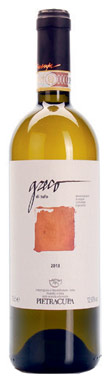

Maverick winemaker Sabino Loffredo, has helped revolutionise the image of Campanian white wines. Cupo is a single-vineyard Fiano di Avellino from Montefredane. The wine opens...
2013
PietracupaFiano di Avellino

San Salvatore 1988, Pian di Stio Fiano, Paestum, Campania, Italy, 2015
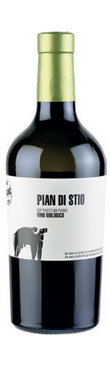
This vivacious wine is grown at 550m above sea level on the Stio plateau. Attractive and incisive nose of acacia, ripe pears and red apple...
2015
San Salvatore 1988Paestum
Tenuta Cavalier Pepe, La Loggia del Cavaliere Riserva, Taurasi, Campania, Italy, 2011
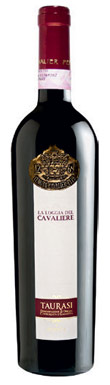
This DOCG red is released after five years and is made from 100% Aglianico grapes grown in Irpinia. Described by winemaker Milena Pepe as an...
2011
Tenuta Cavalier PepeTaurasi
Cantine del Notaio, La Firma, Aglianico del Vulture, Basilicata, Italy, 2011
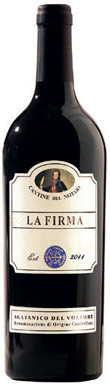
Gerardo Giuratrabocchetti owns 30ha of organically grown Aglianico vines in some of the best vineyards in the volcanic Vulture DOC. La Firma 2011 has a...
2011
Cantine del NotaioAglianico del Vulture
Paternoster, Don Anselmo, Aglianico del Vulture, Basilicata, Italy, 2010
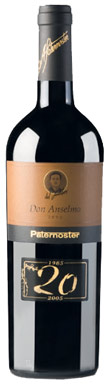
Established in 1925, Paternoster’s recent business alliance partner, Tommasi, describes it as ‘a little gem in the heart of Basilicata’. Don Anselmo, Paternoster’s flagship wine,...
2010
PaternosterAglianico del Vulture
Cantine Carpentieri, Armentarío Nero di Troia, Castel del Monte, Puglia, Italy, 2012
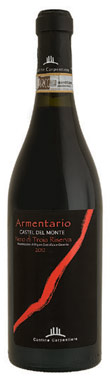
Carpentieri started growing grapes in 1997 but only made its first wine in 2012, and is already doing exciting things with Nero di Troia. Heady...
2012
Cantine CarpentieriCastel del Monte
Morella, La Signora Primitivo, Salento, Puglia, Italy, 2013
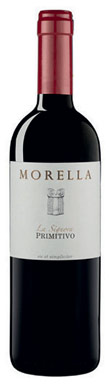
Pretty big, rich and, frankly, too tannic. Hints of raisins on the palate, with a little residual sweetness leaving a bitter cherry aftertaste. The red...
2013
MorellaSalento
Feudo Montoni, Vrucara Nero d’Avola, Sicily, Italy, 2009
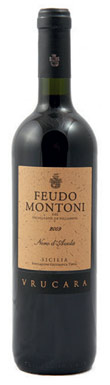
This is not your typical Nero d’Avola, but from 80-year-old, ungrafted vines of a special clone from the Vrucara vineyard and made by one of...
2009
Feudo Montoni
Occhipinti, SP68 Rosso, Terre Siciliane, Sicily, Italy, 2015
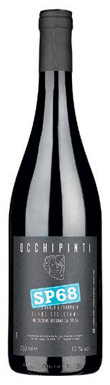
Arianna Occhipinti’s SP68 is a blend of 70%Frappato and 30% Nero d’Avola. An enticing nose of creamy vanilla oak and berry compote is followed by...
2015
OcchipintiTerre Siciliane
Tenuta di Fessina, A’ Puddara Bianco, Etna, Sicily, Italy, 2014
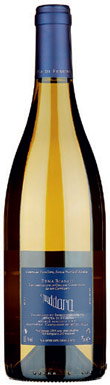
A striking example of Carricante, grown at 900m on Etna’s southern slopes. This 2014 has a very pure and incisive nose with waxy lemons, beeswax...
2014
Tenuta di FessinaEtna
