
Spanish Icons: Marqués de Murrieta, Castillo Ygay Blanco
Ines Salpico presents Marqués de Murrieta's Castillo Ygay Gran Reserva Especial Blanco, a wine produced just 13 times in over 100 years.


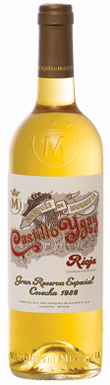
Marqués de Murrieta, Castillo Ygay Gran Reserva Especial Blanco, Rioja
First vintage: 1917
It’s difficult to capture in words the experience of tasting Marqués de Murrieta’s Castillo Ygay Gran Reserva Especial Blanco.
Not only does it offer a singular, complex combination of aromas and flavours, but it also brings the essence of wine to the forefront: a product of human craftsmanship capable of bringing into question the inexorability of time.
If the red Castillo Ygay can be categorised as iconic, its white counterpart verges on ‘unicorn’ status. To say that Castillo Ygay Reserva Especial Blanco is highly collectible and scarcely available is an understatement; the most recent release, of the 1986 vintage (bottled in 2014), still doesn’t have a successor announced.
Scroll down for the vintage of Castillo Ygay Blanco to try before you die
Since it was first produced in 1917, only 13 vintages have been released. It relies on Viura and Malvasía grapes (some vintages are single-varietal Viura) from the Capellanía site, planted in 1945.
Aged for about two decades in barrel and – in the case of the 1986 – a further 67 months in concrete, it’s a resolutely traditional white Rioja that, with each release, rewards time and patience.
A true pioneer of modern Bordeaux-inspired Rioja, Don Luciano Murrieta founded the winery in 1852 near Logroño. The entrepreneurial aristocrat was among the first to release, and the first to export, Rioja wines after phylloxera derailed French production.
In 1983, Marqués de Murrieta Estates and Wines was purchased by the Cebrián-Sagarriga family, with second-generation Vicente Dalmau Cebrián-Sagarriga, the 11th Conde de Creixell, currently at the helm.
The Galician family remained faithful to Murrieta’s heritage and style, while also consolidating its premium focus.
Marqués de Murrieta produces exclusively from its own vineyard: the sprawling, continuous 300ha Finca Ygay. Within it, three plots – Canajas, La Plana and Capellanía – have been singled out for the production of the winery’s top wines.
Among them is the flagship Castillo Ygay, named after the historical structure at the centre of the estate, converted into a museum in 2019.
The wine to try before you die

Marqués de Murrieta, Castillo de Ygay Gran Reserva Especial Blanco, Rioja 1986, 99pts
£705-£1,000 (ib) Berry Bros & Rudd, Fine & Rare US$950-$1,100 Binny’s, Connecticut Avenue Wine & Liquor, Italian Wine Merchants, Wally’s
97% Viura and 3% Malvasía, aged for 21 years in 225L American oak barrels, then a further 67 months settling in concrete tanks.
A complex, nuanced and sinuous journey through the palate, expertly balancing nutty depth, floral allure and zesty freshness. Intense, well-defined flavours of pickled walnut, linden, wet hay, camomile, preserved lemon, red apple peel, quince and nectarine fill the mouth without ever becoming weighty. Incredible structure – outlined by intense spiciness – and depth.
Finishes with luscious honey, pain aux raisins and toasted brioche.
Drink: 2025-2038 Alcohol: 13.5%
Spanish Icons: Marqués de Murrieta, Castillo Ygay Blanco
Related articles
- Spanish Icons: Alvaro Palacios, L’Ermita
- Spanish Icons: CVNE, Imperial Reserva
- Spanish Icons: Vega Sicilia, Unico
Marques de Murrieta, Castillo de Ygay Gran Reserva Especial Blanco, Rioja, Alta, Northern Spain, Spain, 1986
99
A complex, nuanced and sinuous journey through the palate, expertly balancing nutty depth, floral allure and zesty freshness. Intense, well-defined flavours of pickled walnut, linden, wet hay, camomile, preserved lemon, red apple peel, quince and nectarine fill the mouth without ever becoming weighty. Incredible structure – outlined by intense spiciness – and depth. Finishes with luscious honey, pain aux raisins and toasted brioche. 97% Viura and 3% Malvasía, aged for 21 years in 225-litre American oak barrels, then a further 67 months settling in concrete tanks.
1986
Marques de MurrietaRioja
