
St-Emilion: 10 grands crus classés to watch
The St-Emilion estates at the third level of classification are as diverse as they are noteworthy. Jane Anson profiles 10 of the best…


St-Emilion is huge. Almost 700 wineries are spread across 5,300ha of land that runs from Libourne and Pomerol in the west over to Castillon in the east, passing through eight communes, and rising and falling at regular intervals as it traces the limestone plateau that forms the rather misshapen backbone of the whole appellation.
Scroll down for Jane Anson’s top wines from 10 St-Emilion grands crus classés to watch
Its size – not to mention its wide variety of soils – means that the St-Emilion classification, which began in the 1950s and is renewed every 10 years, can be invaluable in helping to make sense of it all. The ranking is split into three levels, unlike the five levels of 1855 over in the Médoc, or the single level (thank you Pessac) of the Pessac-Léognan version. There were 82 estates in total at the last St-Emilion classification in 2012, with four at the top level of premier grand cru classé A, 14 at the next level of premier grand cru classé B, and 64 at the third level of grand cru classé.
The ‘Grand Cru’ label that you often see on St-Emilion labels is not a reference to the classification. The exact same geographic footprint covers both AP St-Emilion and AP St-Emilion Grand Cru, the main difference between the two being that the maximum yield is lower and the minimum ageing time higher for AP Grand Cru. The classified wines can only be drawn from this AP.There are ongoing arguments over who deserved what, and why, but personally I find it a great way to take the temperature of St-Emilion. Some of the best-value wines in the whole region can be found within the grand cru classé level, so which châteaux at this level should we be looking out for?
Château Fonplégade
Classified since 1955
One of the best examples of what organic (certification came in 2013) and now biodynamics (certification expected this year) can do to invigorate not only a style of wine, but the entire staff in the winery. I always remember, for example, director Eloi Jacob telling me about the cellar workers getting to work early to feed the chickens, so motivated were they by what was happening in the vineyards. ‘Where cellar workers and vineyard workers were separate before,’ he says, ‘today they increasingly exchange and take an interest in each other’s roles because the estate feels like one whole.’
Fonplégade covers 18.5ha of vine, partly on St-Emilion’s limestone plateau and partly on the clay-limestone slopes. There are sheep, chicken and honey-bee colonies dotted around the estate, and a new structure in 2019 will house all biodynamic preparations, along with drying areas for herbs and plants. A biodynamic garden will also be used as an education centre.
American owners Denise and Stephen Adams are fascinating to speak to, as they are not afraid to talk about what can go wrong as well as right. When they first moved to Bordeaux they bought six estates, then promptly sold four of them when they decided to concentrate on Pomerol and St-Emilion.
‘We didn’t ask enough questions and made some mistakes,’ says Denise Adams with disarming honesty. ‘But we are passionate about biodynamic farming and continue to take a holistic approach to everything we do, to ensure the highest quality.’
Château Barde-Haut
Classified since 2012
There aren’t many classified estates where the owner is also the person you find out on the tractor – day in, day out. It helps, I expect, that Patrice Lévêque was brought up in the Graves at Château Chantegrive. Here, together with his wife Hélène Garcin-Lévêque (whose family are also winemakers, originally from Pessac- Léognan), they are turning this 17ha property into a brilliant example of what can be achieved with hard work and an ability to listen to the land.
Although they used to work with Michel Rolland and Alain Raynaud as outside consultants, today they take all the major decisions themselves. ‘We needed outside help when we first arrived here in 2010,’ Hélène tells me, ‘but now we feel better able to make those choices ourselves.’
They have also stopped using an optical sorting machine, preferring instead to sort entirely by hand and eye, and only in the vineyard, because they don’t want the artificial perfection of the optical machine. Not to say there hasn’t been plenty of investment, including a new cellar in 2010 and the replanting of just under half the vines.
Always full-flavoured and tannic, Barde- Haut is a wine that needs time to soften but ages beautifully. The south-facing slopes, which fall from a height of 90m in altitude, close to Château Troplong Mondot in St-Christophe-des-Bardes, have shallow soil cover before the limestone rock. This means a low pH and tight grip of tannins, but also a beautiful freshness that sculpts the fruit.
The winery uses both 500-litre and 300-litre barrels for ageing, with up to 80% new oak, depending on the vintage. Sulphur dioxide additions are low, and the fermentation vats are cement, stainless steel and oak, ranging in size from 40hl -72hl. ‘We don’t mind the shape, just that they are not too big,’ is how they put it, proving once again that they are highly capable and sensitive winemakers.
Château La Clotte
Classified since 1955

Château Latour heading over from the Left Bank to take on Le Prieuré may have caused quite a stir, but to be fair so did Alain Vauthier of Château Ausone simply crossing the street to buy Château La Clotte in 2015. The name Clotte is said to mean ‘grotto’ in the local Gascon language, and is a reference to the wonderful limestone cellars that lie beneath the property – which, if we’re being honest, were probably the main reason to visit the château in the decade or so before the Vauthiers arrived.
All that is set to change, with a new winery being planned, and 1ha of vines already pulled up (which is pretty serious when you have only 4ha to start with). The usual blend now is 85% Merlot, 10% Cabernet Sauvignon and 5% Cabernet Franc, with plans to increase the proportions of both Cabernets Sauvignon and Franc over the next few years. With Pauline Vauthier in charge of winemaking, as at Ausone, this is definitely one to watch.
Château La Fleur Morange
Classified since 2012
Jean-François Julien was a carpenter before he became a winemaker. He was also a resident of St-Pey-d’Armens (on the road from St-Emilion as it heads to Castillon), way before he planted any vines there.
In the early years, Julien, along with his wife Véronique, pieced together various plots of vines from around the commune, including some 100-year-old Merlots, and 70-year-old Cabernet Francs, with massal selection used for all new vines. The first vintage arrived in 1999, and was made in his father-in-law’s cellar (who himself owned vines but sold them all to the local cooperative cellar).
It is still one of the smaller classified estates, with 3.8ha of vines, of which just 2ha made it into the 2012 ranking (this isn’t particularly unusual, by the way, because it is the land and not the château name that is classified in St-Emilion – unlike in the Médoc or Pessac-Léognan).
I was there for one of the early harvests in 2005, and I remember the ‘all-hands-on-deck’ feeling, and the joyfulness with which they approached every task. It’s also an exuberant wine in the bottle; really one to savour, with juicy berry fruits and the power that comes from its unusual clay-rich soils (something that you find more typically over in the west of St-Emilion, not over here by Castillon). It’s also worth looking out for its 100% Merlot second wine, Mathilde.
The château remains unconventional – rumour has it that it is planning to release a white wine sometime soon, from as-yet undisclosed grape varieties. I think we can safely assume that it won’t be a 100% Sauvignon Blanc.
Château Le Prieuré
Classified since 1955

When the team behind Pauillac’s Château Latour turned its investment and famous eye for detail towards what was a fairly small and inconspicuous St-Emilion estate, you just knew that it was going to be worth following the progress.
It’s still only five years since the purchase of Le Prieuré by Artemis Estates, in co-ownership at first with the Guichard-Goldschmidt family and now, since 2017, in full control. Pénélope Godefroy, former technical director of Latour, moved over to the Right Bank from the moment of purchase and began conversion to both organic and biodynamic farming. Since 2015, the entire vineyard has been ploughed by shire horses. Oh, and Jean-Claude Berrouet has come on board as consultant because, you know, if you can get Berrouet to consult on your wine, you would.
We are once again on prime limestone terroir on the plateau, with southern-facing slopes split across 19 plots. The current footprint is 0.6ha smaller than it will be by 2024, because two plots have been pulled up for replanting, and are currently being left fallow. Density for the older vines is at 6,300 vines per hectare, with all new plots at 7,140 vines/ha. Precision viticulture is aligned here with a joyful purity of fruit – it’s a pretty powerful combination.
Château Laroque
Classified since 1996
If you want to track how Bordeaux has been taking its terroir more seriously over recent years, make yourself an appointment with Château Laroque and its director David Suire, who took over the role in 2015.
It’s an amazing place to visit for the scenery alone: historically the largest estate in St-Emilion, and covering 300ha before the French Revolution, it boasts a history that dates back to the 12th century. Although various pieces of its land have been trimmed off and sold, at 61ha it is still the largest wine estate in the St-Emilion appellation.
In 2018, long-term owner Xavier Beaumartin was succeeded by his nephew Stanislas Droin, the next generation of a family that has been in charge of Laroque since the 1930s (they basically rescued an estate that had been entirely abandoned, but didn’t replant until the 1950s, which is why, despite its history, it missed out on the early years of the classification).
Laroque’s vineyard is planted entirely around the château but across a few very different sections, one with the pure astéries limestone, another with richer red clay over limestone and the rest over east-facing terraces and west-facing slopes of chalky fine blue clay. All are treated differently – not only in the vineyard but also in the cellar, with a mix of barrels, large oak casks, stainless steel and cement vats, depending on the terroir and grape variety. In recent years there has been an increasing focus on ensuring the wine is more supple in its early years. Things are moving here, and I’m looking forward to seeing what is achieved over the next decade.

Château Corbin
Classified since 1955

The Corbin sector, with its cluster of similarly named châteaux, has always been intriguing, because this is where St-Emilion begins to merge with Pomerol. Not just geographically, but also in terms of its soils and, in many ways, its psychology.
With Anabelle Cruse-Bardinet at the helm, there is great energy coming from this château. Although classified since the early days, it has only really been given a new lease of life since Cruse-Bardinet took over entirely in 2006, buying out the rest of her family members and taking control of all decisions herself. ‘I can still make plenty of mistakes,’ Cruse-Bardinet concedes, ‘but at least they are under my control’.
Aside from 2017, which was particularly brutal for Château Corbin – the frost wiped out the entire crop from its 13ha of vines – it has had an impressive recent set of results. With 35% of the vines replanted over the past decade, and a new cellar for the 2016 vintage, there is much more to come.
Château Sansonnet
Demoted 1996, reclassified 2012
This estate shows why the classification system, for all its faults, can work really well for consumers. The demotion in 1996, when it was owned by the Robin family, was no doubt partly why it changed hands three years later, going to the d’Aulan family, formerly of Champagne Piper-Heidsieck. The d’Aulan family invested seriously over the following decade (and stopped the machine harvesting that had been practised previously), but sold again to the dynamic husband-and-wife team of Marie and Christophe Lefevère in 2009.
Fast-forward to 2012, and the work put in by both the d’Aulans and the Lefevères was rewarded by a return to the classification.
The vines are in a single 7ha block close to Chateaux Trottevieille and Balestard la Tonnelle, at 92m with shallow soils that are pretty much straight onto the hard limestone bedrock, meaning excellent natural freshness and a tendency to austerity when young.
Jean-Philippe Fort from Laboratoire Rolland is consultant, and there is an emphasis on techniques to soften tannins and ensure rich fruit flavours – so some integral vinification and ageing that takes place between 70% new oak and two 700-litre amphorae. The resulting wine tends to be packed full of chocolate and black cherry notes and is utterly delicious.
Château Ripeau
Classified since 1955
There are plenty of changes to track over the past four years at Ripeau, ever since Cyrille and Nicolas Grégoire bought the estate from the Janoueix family.
Unlike at Château Fonplégade, the focus here is not on biodynamics, but on ways to use biostimulants to boost plants’ auto-defence mechanisms, and ensuring there are zero traces of any winemaking residues in the final wine that we drink.
Director Julien Salles has set up a program with Guillaume Crocq, a pioneer in the use of biostimulants and products that stimulate the plants’ protective mechanisms to reduce any reliance on chemicals. Copper usage is 50% lower than it would be in biodynamic farming, according to Nicolas.
In 2017, Ripeau was tested on the TFI (Treatment Frequency Index) by analysts at Excell Laboratoire & Conseil, for traces of any herbicides, insecticides, fungicides and a number of other molecules; the tests showed zero traces in the wine.
As with Château Corbin, this estate is located over on the west side of St-Emilion as it approaches Pomerol, meaning you find sandy-gravel soils underpinned by clay. It is planted to 65% Merlot, 30% Cabernet Franc and 5% Cabernet Sauvignon, at a density of 6,700vines/ha, at an average of 38 years old. Since 2015, 3.5ha of vines have been pulled up, with drainage channels added. Of the 10 wines chosen here, this is at the earliest point on its journey, but with a young and dynamic team in place, there are great things ahead.
Château La Serre
Classified since 1955
I have long loved this wine. It manages to be under the radar despite its brilliant location – slap-bang on 7ha of prime limestone plateau real estate, up at around 90m altitude, with soils that are covered with a shallow layer of clay that differs from 30cm to 1m before hitting the limestone bedrock. It is also hugely consistent, approaching its terroir with care and attention, never shouting too loudly, yet delivering delicious, sappy and fruit-filled wines made from a (usual) blend of 80% Merlot and 20% Cabernet Franc.
And the team here stand by what they produce. They have the possibility of making a second wine, Les Menuts de la Serre, but it only gets made once in a blue moon (maybe three times in the past 25 years). ‘I can’t remember the last time we made the second wine,’ owner Luc d’Arfeuille, who runs the property with his nephew Arnaud, says cheerfully. ‘Up here on the plateau we have brilliant ventilation, which helps deal with most weather conditions. So even in 2018 we didn’t suffer from any mildew because the north wind always flows across the vines’.

There are signs that this most old-school of estates is on the move. Density of planting has risen over the past five years; from 6,000 to 7,200 vines per hectare, and a new winery was ready for the 2018 harvest, allowing more plot-by-plot vinification in smaller-sized vats, with more precise, softer extractions. No sulphur dioxide is added until bottling, and new oak is kept to about 50%.
Jane Anson is a Decanter contributing editor, Bordeaux correspondent and author of the book Bordeaux Legends
See Jane Anson’s top wines from 10 St-Emilion grands crus classés to watch
You may also like
Best St-Emilion 2018 wines: ‘Up there with 2015’Anson: Comparing St-Emilion 1989 and 1998St-Emilion classification: Do vineyards matter? – Ask DecanterSpend a weekend in Bordeaux: Travel guide
Château Fonplégade, St-Émilion, Grand Cru Classé, Bordeaux, France, 2014
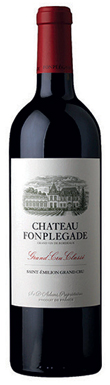

Smooth and inviting with juiciness and elegance delivered in both cool blueberry and ripe blackberry fruit. If not among the most succulently scintillating, a far...
2014
Château FonplégadeSt-Émilion

Château Barde-Haut, St-Émilion, Grand Cru Classé, Bordeaux, France, 2011
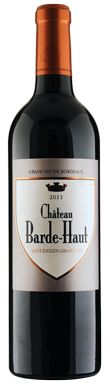
Still extremely closed, but softens after a few minutes and stretches out to a tingling finish that suggests high limestone, high minerality, and a long...
2011
Château Barde-HautSt-Émilion
Château La Clotte, St-Émilion, Grand Cru Classé, Bordeaux, France, 2016
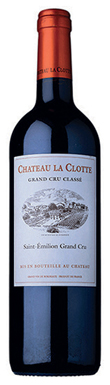
An extremely precise, well paced La Clotte that shows the austerity of its late-ripening terroir. Fruits are well brushed and the strands of flavour are...
2016
Château La ClotteSt-Émilion
Château La Fleur Morange, St-Émilion, Grand Cru Classé, Bordeaux, France, 2016
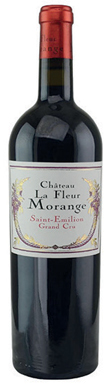
Some of the oldest vines in St-Emilion, with an average age of 100 years. Loved this en primeur and it remains an exuberant fist of...
2016
Château La Fleur MorangeSt-Émilion
Château Le Prieuré, St-Émilion, Grand Cru Classé, Bordeaux, France, 2009
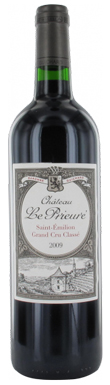
From a few years before the arrival of Artemis Estates, but I picked it because it shows the potential of the property, even before it...
2009
Château Le PrieuréSt-Émilion
Château Laroque, St-Émilion, Grand Cru Classé, Bordeaux, France, 2016
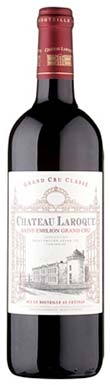
Fleshy in texture, with sweet loganberry, damson and raspberry through the palate. Really starting to settle into itself, and has great potential. 50% new oak.
2016
Château LaroqueSt-Émilion
Château Corbin, St-Émilion, Grand Cru Classé, Bordeaux, France, 2009
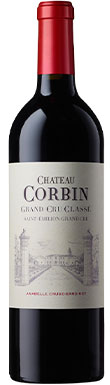
With its damson and blackberry fruits, this shows the generosity and spice of a warm year, along with the tannins and fresh core to make...
2009
Château CorbinSt-Émilion
Château Sansonnet, St-Émilion, Grand Cru Classé, Bordeaux, France, 2015
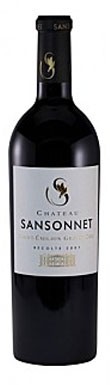
Perfumed florals, bright cherries and plums with hints of vanilla, well-furnished tannins and a fleshy, ripe texture.
2015
Château SansonnetSt-Émilion
Château Ripeau, St-Émilion, Grand Cru Classé, Bordeaux, France, 2017
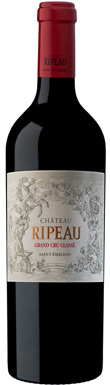
A frostaffected year, so low yields and an unusual blend (70% Merlot with Cabernets Franc and Sauvignon), but one they were so happy with that...
2017
Château RipeauSt-Émilion
Château La Serre, St-Émilion, Grand Cru Classé, Bordeaux, France, 2015
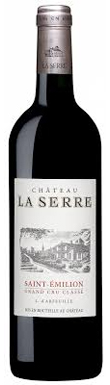
Lifted black cherries and plums with a fresh spicy, mineral component; succulent and rich with a mouthwatering acidity.
2015
Château La SerreSt-Émilion
