
Steven Spurrier’s wines of the month


Decanter’s long-standing consultant editor hand-picked fine wines for drinking now and for the cellar, based on tastings that he has attended recently.
From the cellar
Jim Barry, The Armagh 2000
In the hall of Australian wine fame, there are certain names that rise above others, and Jim Barry (1925-2004) is one.
With an oenology diploma from South Australia’s Roseworthy College in 1947, he was put in charge of the local co-op that produced mostly fortifieds and ‘stickies’ (aka sweet wines). In 1968 he planted a 3ha patch of vines and set up a nursery propagating Riesling, Cabernet Sauvignon, Shiraz and Malbec, offering cuttings free of charge. Today the family farms 300ha.
Sam Barry, one of three grandchildren, was in Harrods’ new wine department to present nine vintages of the 100% Shiraz The Armagh from 2014 to 1994 (sadly the 1999 was out of condition, the 1994 beginning to fade). The 2014, vibrantly dense and vigorous, still needed time to smooth out, while the 2013 – the bottle under cork more open than that under screwcap (70% of production) – was tighter for a longer future. The screwcapped 2012 showed florality and stone fruits from a cooler year, while 2010 stood out with rare fragrance for Shiraz. The 2007, from a dry year, reminded me of the southern Rhône, but with the masculine 2006 we were firmly back north. The 2000 vintage combined both to perfection and will age gracefully for another decade (93/100pts, £210 from Harrods).
For the cellar
Emrich-Schönleber, Halenberg Riesling GG 2017
This 19-hectare estate, planted 85% to Riesling on south-facing slopes of up to 70% above the Nahe river, was unknown to me until the Justerini & Brooks Germany en primeur tasting on 4 September, the wine trade’s first day of the autumn term.
Based on the Monzinger hill – whose wines the poet Goethe held in high esteem and which were the most expensive in the Nahe, according to the Prussian tax map of 1901 – the rocky blue slate, red slate, dark quartz and gravel soils have been farmed by the Emrich-Schönleber family for more than 250 years.
The current generation, Werner Schönleber (vineyards) and son Frank (who takes control in the winery once harvest is underway) know their vines inside out, nurturing them to reach their optimum potential, the Halenberg vineyard representing the VDP Grosse Lage (grand cru) designation to perfection.
The Spurrier selection
You may also like:
Revisiting the Port 1994 vintage
Top German Riesling: Grosses Gewâchs new releases – published September 2018
Domaine Marcel Deiss, Engelgarten, Alsace, France, 2015
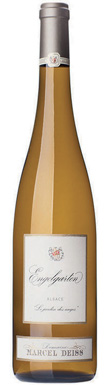

From gravelly soils, this is a field blend of Riesling, Pinots Beurot, Gris and Noir and 5% Muscat, the last present on the nose. The...
2015
Domaine Marcel Deiss

Il Paradiso di Frassina, Moz Art Wine, Brunello di Montalcino, Tuscany, Italy, 2013
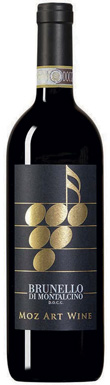
Carlo Cignozzi, a lawyer who formed the Caparzo Estate in the 1970s, planted La Frassina in 2000 where, thanks to 80 loudspeakers, his vines receive...
2013
Il Paradiso di FrassinaBrunello di Montalcino
Mouchão, Alentejo, Alentejo, Portugal, 2013
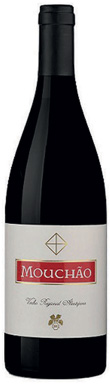
From this large region’s most historic estate, 70% of the blend is Alicante Bouschet, showing exotically spicy black fruit aromas leading to structure and depth...
2013
MouchãoAlentejo
Emrich-Schönleber, Halenberg Riesling, Grosses Gewächs, Nahe, Germany, 2017
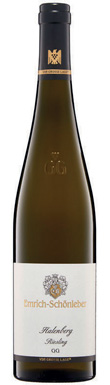
Silver pale in colour, the precision and utter purity of flavour of the 2017 vintage is evident from the start, and it’s followed by a...
2017
Emrich-SchönleberGrosses Gewächs
