
Sustainability in Champagne: The ‘green’ heroes
Following on from his magazine guest column, Charles Curtis MW unpicks the thorny subject of sustainability in the context of Champagne and its producers.

Talk of global warming and ecological disaster fills the news almost daily, inducing a sense of alarm and guilt in readers. We all live in ‘the environment’ – shouldn’t everyone want to protect it? While it is easy to agree on the goal, the difficulty lies in deciding the best approach.
Discussions can sometimes take on the tone of moral imperative, and often-unexpressed moral judgement makes us uncomfortable when we hear the term ‘greenwashing’. The implication is that large, faceless corporations are abusing our credulity by trumpeting actions to ‘protect the environment’ while pursuing profit rather than progress. Judging correctly, however, involves more investigation than innuendo. Champagne often comes under fire, in part since the proprietor of the company with the largest market share regularly tops the list of the world’s wealthiest men.
See Charles Curtis MW’s latest guest column
Scroll down to see tasting notes and scores for 20 sustainably-minded Champagnes
Ecological concerns have not always been as prominent in Champagne as they are today. The postwar period from 1946 to 1975 was known in France as Les Trente Glorieuses. In Champagne, this was marked by ever-increasing sales supported by technical advances in grape growing, largely through mechanisation and agrochemicals. Records show that during this period, while the vineyard size doubled, sales increased more than five-fold, from an average of 32 million bottles per year to 164 million. This happened because the average yield rose from 5,300kg/ha to over 8,500kg/ha, according to the Syndicat Professionnel des Courtiers en Vins de Champagne (Union of Champagne Brokers).
There was so much grape juice in the 1970s that the excess was sometimes tipped into the Seine. This productivity was made possible using recently developed fertilisers, pesticides, and herbicides. Growers even used urban waste from Paris, known as boues de ville, as compost, a practice that was only outlawed in 1999.
In 2004, I wrote my dissertation for the Master of Wine program on the topic: ‘Developing environmental management standards for wine production’, using Champagne as a case study. At the time, the remnants of this environmental degradation were still very recent wounds. In this context, the authorities in Champagne began to address the issue.

The beginnings of sustainability certification
The first effort, entitled Viticulture Raisonnée (Sustainable Grapegrowing), debuted in 2002. The system was well thought-out, but largely toothless. It was voluntary, self-administered, and there was no outside audit of the results. By 2014, this system had evolved into a program known as Viticulture Durable en Champagne (VDC), which was eventually made subject to outside audit, enabling proper certification. VDC was built on the framework of a similar nationwide sustainability certification known as HVE (Haute Valeur Environnementale) that was not specific to grape growing. Both encourage producers to move in the right direction, but the systems do not mandate or forbid any particular practice.
Producers hoping for organic certification follow a different path. To be certified organic, a producer must abide by EU legislation which sets stringent rules regarding what is and isn’t allowed, forbidding synthetic pesticides, chemical fertilisers, or genetically modified products. As strict as this system is, it does not leave growers without recourse, since the use of naturally occurring elements such as copper and sulphur may be used to treat grapevine disease. According to the Association des Champagnes Biologiques (Association of Organic Champagnes), the limit for copper (which is toxic to humans) is an average of 4kg per hectare each year.

Biodynamic grape-growing uses the same organic principles, but goes beyond to require the use of special biodynamic preparations based on compost and herbal teas sprayed on the vines, usually according to the cycles of the moon and stars. Both organic and biodynamic certifications require an audit from an outside agency to certify compliance with the standards that have been established.
So-called natural wines are another phenomenon in ‘eco-friendly’ wine. Interest in these wines has been growing, particularly among younger consumers, although there is no accepted standard for what constitutes a natural wine. It is, one assumes, a matter of trust, but there are few rules. According to Isabelle Legeron MW, the impresario of the RAW natural wine fairs and wine clubs, it is a wine whose grapes were farmed organically and made without adding or removing anything during the process. Many natural wines are produced without sulphur, although some add small amounts before bottling. There is a certification body in France, launched in 2020, called Vin Méthode Nature, although it is not yet widely adopted. There are no other outside audits at present.

How do organics and biodynamics affect a vineyard’s carbon footprint?
What is sustainability?
Each system outlined above aims to produce wines sustainably, minimising the environmental impact to the greatest possible degree. Growing grapes sustainably requires work, and there are a number of factors to consider.
Inputs
The most visible aspect of sustainable production is the use of inputs. Pesticides, fungicides, herbicides and fertilisers spring most readily to mind, but anything added in the vineyard counts as an input. Eliminating synthetic inputs is among the primary considerations of organic and biodynamic viticulture, while limiting and gradually reducing all inputs over time is the objective of the other kinds of sustainable certification. The dilemma is that the most intractable problems the grower faces are rot, mould and mildew. These fungal diseases can be treated with compounds called fungicides. Copper sulphate is an example of a contact fungicide, but because it stays on the leaves of the vine and then gets washed off by the rain, it necessitates another pass through the vines to re-apply, which in turn compacts the soil, increases fuel use for tractors, and leaves more copper in the soil. For this reason, some growers – even those deeply committed to the environment – eschew organic certification.
Biodiversity
One element of sustainability that almost everyone can agree upon is biodiversity. Most systems require growers to set aside a certain percentage of their land for species other than vines, lowering revenue but paying dividends by improving the overall health of the vines. Bringing new species into the vineyard, and by extension, new types of birds, insects and animals can help fight pests and revitalise the soil since the intensive monoculture of modern vineyards is among the least natural aspects of winemaking.
How sustainable is your wine?
Water management
An essential, if often overlooked, element of winemaking is the amount of water needed to produce wine. Irrigation is rarely permitted under most French appellation rules (or indeed in most of Europe), but a lot of water is required to wash picking baskets, presses, tanks and barrels. The most common figure cited is that six litres of water are needed to produce a litre of wine, although some anecdotal estimates have gone as high as ten-to-one. Discharged water requires treatment since the rinse water is high in organic matter and must be treated before discharge.
Carbon footprint
The carbon footprint of an industry is a measure of the greenhouse gas emissions from all sources. As part of the development of the Viticulture Raisonnée program, the Comité Champagne undertook a carbon audit, which it has been repeated every three years. It is surprising that according to their results, growing grapes and making wine accounted for just 14% of the region’s carbon footprint, while 30% comes from travel and transport and another 32% from packaging waste. A robust sustainability program needs to address all of these issues, from packing waste to bottle weight, and the types of energy used to run wineries, ship wine and power tractors.
Organic farming can lead Cava producers towards a sustainable future

Plus ça change? Zero herbicides in 2025
The issue of Champagne’s environmental impact has recently burst noisily into view again. In 2018 the joint heads of the Comité Champagne at the time, Maxime Toubart and Jean-Marie Barillère, announced with some fanfare the goal of banning herbicide use by 2025. Was it to align the region with the campaign promise made by French president Emmanuel Macron in 2017 to ban glyphosate ‘within three years’? Macron eventually walked back his promise, and so did the Champagne growers.
Toubart, president of the Champagne growers union (Syndicat Général des Vignerons de la Champagne or SGV), announced in April last year that while the ban ‘remained a goal’ it would not be an obligation. A group of 200 environmentally minded growers formed a movement called Stop Herbicides en Champagne and began high-profile protests. In February of this year, however, the two sides met and found an uneasy common ground. The affair would seem to be at an impasse.
In April this year, the prestigious group of independent growers, Terres et Vins de Champagne, held their tasting in Épernay. As we drove through the vines to reach the tasting, dead weeds showed that some growers had applied liberal amounts of herbicide, while others had left the rows grassed over or started to plough. Things were still improving, but not for everyone at the same pace. To borrow an example from another region, I was tasting recently with Frédéric Mugnier in Burgundy and discussed herbicide use there. ‘What I find interesting,’ he related, ‘is not what one grower can do, but what we can do together.’ By this measure, Champagne is moving forward, if incrementally, towards an important goal.
Is botanical biodiversity key to defining a wine’s terroir?
Who are Champagne’s green heroes?
Drappier

Michel Drappier has long been a leader in the struggle to produce eco-sensitive Champagne. He leads his family’s medium-sized négociant business based in southern Champagne’s Aube department, which was certified as carbon neutral in 2016. 27 of the 62ha owned by the house are certified organic, and solar panels and electric vehicles are employed throughout. On a recent visit, we accompanied Michel’s son Hugo to the Grande Sendrée vineyard, where they till the vines by horse to produce a prestige cuvée that is among Champagne’s reference standards.
Champagne Fleury

Champagne Fleury is among the pioneers in biodynamic work in the Champagne region. This family house was founded in 1895 in Courteron in the Aube. Jean-Pierre Fleury, the founder’s grandson, took over in 1970. In 1989, he instituted biodynamics, and by 1992 the entire 15-hectare estate was certified. Today Fleury is led by his children Jean-Sébastien, Benoît and Morgane, who have worked to expand their beneficent influence by working as a ‘green incubator’ to foster new biodynamic producers both by marketing the biodynamic yeasts they culture and purchasing biodynamic grapes from young growers for their négociant line of wines.
Marie-Courtin

Dominique Moreau, the founder of Champagne Marie-Courtin, is another important voice in the biodynamic wine movement. Her small estate is certified organic and biodynamic. Beyond this distinction, she applies rigorous technique in the winery. No reserve wines are used, no dosage is used (except for the rosé), and several of the cuvées are made without sulphur. Although she does not refer to her Champagnes as natural wine, her work is as close to this ethos as possible. Her wines, however, transcend philosophy with their astonishing purity of fruit, freshness and depth of flavour.
Henriot and Nicolas Feuillatte

Henriot is among the smaller grande marque houses, founded in 1808. Until recently it flew somewhat under the radar, although this is changing – Henriot changed hands last year, and is now owned by the enormous co-operative Nicolas Feuillatte (third-largest producer of Champagne in the region). Despite the sale, the serious and talented young chef de cave Alice Tétienne has continued to work on the eco-friendly Alliance Terroirs initiative. All of the vineyards owned by Henriot are in organic conversion and are certified VDC and HVE. The hous is working on biodiversity by creating green spaces, planting roses, and other measures, and is transitioning to an all-electric fleet of tractors and the use of UV radiation to fight fungal disease among other initiatives. Now that Feuillatte has launched its own organic Champagne, we can hope that the attention it pays to the environment will only continue to expand.
Lanson

Champagne Lanson, founded in 1760, is one of the high-visibility grande marque houses, and its parent company Lanson-BCC is the fourth largest globally. Despite its size, it has shown a strong commitment to eco-friendly Champagne. In 2010 Lanson purchased a 16-hectare estate in the Marne Valley village of Venteuil from Leclerc-Briant that was already certified as organic and biodynamic. Lanson has continued this work, and in 2016 launched its first organic-certified Champagne, which is called, naturally, Green Label. Perhaps even more impactful is the establishment of a department led by Mélody Stroh to help its suppliers achieve HVE certification, since it is only when the laudable initiatives of the market leaders trickle down to the small farmers who supply them that Champagne will continue the progress it has already made.
Telmont

With its sponsorship of the Cannes Film Festival, Champagne Telmont is a bit flashy these days, but that does not stop them from making serious wine or a serious commitment to the environment. This mid-size, family-owned négociant based in the Marne Valley was sold in 2020 to a consortium of buyers led by industry giant Remy-Cointreau, buttressed by other investors, including the founding Lhôpital family and movie star Leonardo DiCaprio, known for his devotion to environmental causes. Telmont’s ecological commitment, known as Au Nom de la Terre, includes organic conversion for all vineyards, including suppliers (nearly 50% are already certified). Telmont has implemented an extensive carbon positive program that seeks to reduce CO2 and all other greenhouse gas emissions from Telmont, its partners and its suppliers through reductions in packaging waste, using lighter bottles and shipping exclusively via ocean freight.
Pascal Doquet

Pascal Doquet is among the most respected mid-size independent growers in the Côte des Blancs. He stopped herbicide use in 2001 while still at the helm of his family estate, Doquet-Jeanmaire, but left to create his eponymous house in 2003, which was certified organic in 2010. He is the former president of L’Association des Champagnes Biologiques (ACB or Organic Champagne Association). He felt constrained to resign his post at the ACB, however, due to the conflict of interest over the Stop Herbicides fracas since he was a board member of the SGV at the same time. He explained, ‘In the confrontations to come, I think that I could still be useful to bring our voice against herbicides within the interprofession [SGV].’ Internal politics aside, Doquet has remained true to his vision and to his delicious wines.
Eric Rodez

Ambonnay grower Eric Rodez has managed his family’s estate since 1980. Convinced after the disastrous 1984 vintage that he must find a new path, he stopped herbicide use in 1989 and in 2012 became the first grower in Champagne to be certified as HVE – the same year he attained organic certification. He was certified biodynamic by Demeter in 2015, and continues to experiment, using aromatherapy to combat weeds. His devotion to the terroir of Grand Cru Ambonnay is legendary, and his extensive range of wines is consistently delicious.
Charles Curtis MW’s favourite sustainably-minded Champagnes:
Related articles
- Top organic wines to try
- Bordeaux sees sharp growth in organic vineyards
- Sustainability in wine explained
Eric Rodez, La Pierre aux Larrons, Champagne, France, 2014
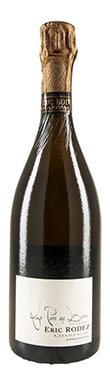

La Pierre aux Larrons is a superb example (among many others) of the single-plot Champagnes from Rodez, with its smoky, reductive nose that unites fruit...
2014
Eric Rodez

Marie-Courtin, Concordance Blanc de Noirs Extra Brut, Champagne, France, 2012
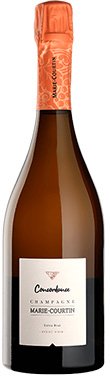
This wine redefines its category with its fresh elegance and lovely fruit aromas of ripe pear and quince with hazelnut and smoke notes. The texture...
2012
Marie-Courtin
Drappier, Grande Sendrée, Champagne, France, 2012
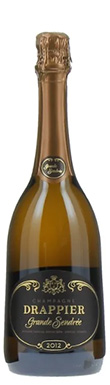
This delightful wine is a benchmark for the Aube. Its exquisite texture boasts a delightfully creamy, dense feel and vibrant energy. The fruit aromas range...
2012
Drappier
Marie-Courtin, Eloquence Blanc de Blancs Extra Brut, Champagne, France, 2013
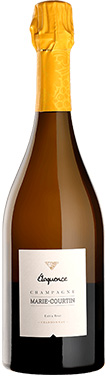
Lush and seductive, the enchanting notes of ripe apple, white flowers and marzipan envelope the taster on the initial attack. The texture is impressively dense...
2013
Marie-Courtin
Pascal Doquet, Coeur de Terroir Grand Cru Le-Mesnil-sur-Oger, Champagne, France, 2009
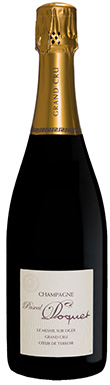
This mono-cru wine from Pascal Doquet is a marvel of complexity and balance – truly a standout from the Côte des Blancs. The texture is...
2009
Pascal Doquet
Eric Rodez, Empreinte Noir, Champagne, France, 2008
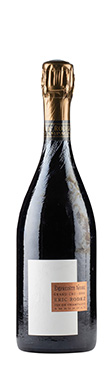
This lovely, dense wine is among the treasures of Ambonnay. It is true to the monumental 2008 vintage, with a coppery colour, a rich nose...
2008
Eric Rodez
Fleury, Extra Brut, Champagne, France, 2010
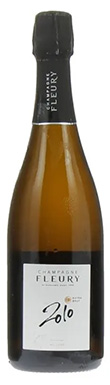
Beguiling aromas of white peach and melon, along with a hint of maturity – almost a bit of truffle just now beginning to show. The...
2010
Fleury
Henriot, Hemera, Champagne, France, 2008
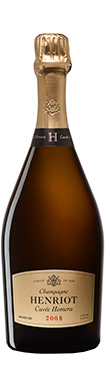
This iteration of what used to be called Enchanteleur is a blend of equal parts of Chardonnay from Avize, Le Mesnil and Chouilly, along with...
2008
Henriot
Drappier, Réserve de L'Oenothèque, Champagne, France, 2012
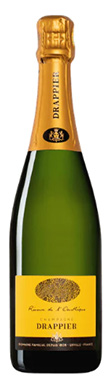
A 60/40 Pinot Noir and Chardonnay blend that is still youthful, with pronounced ripe pear fruit, hints of marzipan and smoke, and a floral edge....
2012
Drappier
Eric Rodez, Cuvée des Crayères, Champagne, France
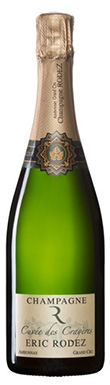
With its notes of almonds, white flowers, ripe pear and quince fruit, this non-vintage Ambonnay blend is silky and rich, dense but not heavy. Rodez...
Eric Rodez
Fleury, Rosé de Saignée, Champagne, France
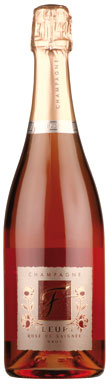
This exuberant wine seems contradictory – it has a deep colour and a very vinous texture, yet it is drier and more elegant than one...
Fleury
Henriot, Brut, Champagne, France, 2012
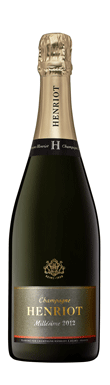
This elegant Champagne is still very youthful, with notes of ripe apple and acacia flowers. There is a discreet, well-integrated toasty character, but the autolysis...
2012
Henriot
Marie-Courtin, Efflorescence Blanc de Noirs Extra Brut, Champagne, France, 2014
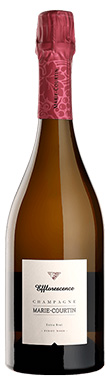
This bright, pure wine has enchanting, forward aromas of greengage plum and ripe pear, with hints of spice from the barrel ferment and a touch...
2014
Marie-Courtin
Pascal Doquet, Diapason Le Mesnil sur Oger Grand Cru, Champagne, France
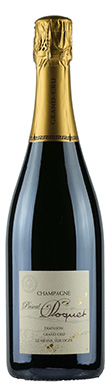
A superb non-vintage blanc de blancs that comes exclusively from the grand cru Le Mesnil-sur-Oger. The wine opens with zippy lemon peel, gooseberry and exotic...
Pascal Doquet
Telmont, Blanc de Noirs Brut, Champagne, France, 2014
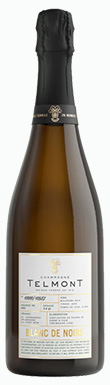
A surprisingly serious wine that opens with notes of apricot, quince and marzipan coloured with hints of delicate acacia flowers and toasted brioche. The grape...
2014
Telmont
Telmont, Vinothèque, Champagne, France, 2013
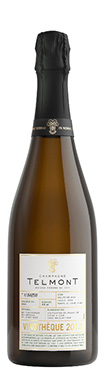
The late-disgorged Vinothèque is a standout in the Telmont line up, with notes of ripe apple, hazelnut, toasted brioche, and a touch of smoke and...
2013
Telmont
Drappier, Les Riceys Rosé Brut Nature, Champagne, France
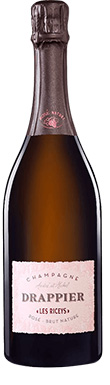
Due to the name, this delightful Champagne didn't win Drappier any friends from Les Riceys, yet it is 100% Pinot Noir from that village. The...
Drappier
Drappier, Trop m'en faut!, Champagne, France
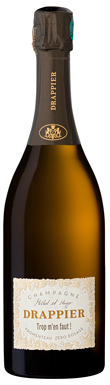
An understated nose of ripe apricots touched with honey, beeswax and dried flowers. The texture is dense and waxy; the finish is long. It is...
Drappier
Lanson, Green Label, Champagne, France
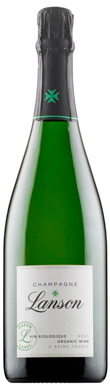
91
A balanced, refreshing Champagne that has understated aromas of ripe pear and fresh white flowers with a well-integrated yeasty character. The bubbles are exuberant, and the acidity is crisp without being overwhelming. The overall impression is satisfyingly classic in style. The grapes come from a single 16-hectare estate in the village of Verneuil in the Marne Valley; red grapes make up two-thirds of the blend. The base wines are fermented in tank, and the malolactic fermentation is blocked. The wine is four years on the lees before disgorging with a dosage of 6g/L. 2018 base wine.
Lanson
Telmont, Réserve Brut, Champagne, France
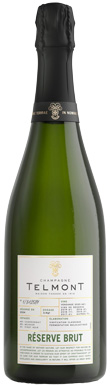
Complexity, character and integrity in a champagne that, having spent three years on the lees, is moreish and delicately opulent while retaining zesty freshness. Yellow...
Telmont