
Suvereto: Regional profile & names to know
Bordeaux varieties thrive alongside Sangiovese and local white grapes in this small corner of the northern Maremma. Suvereto local Filippo Magnani takes a closer look.


Suvereto is located in the middle of the area known as the Val di Cornia, a multifaceted, biodiverse territory where vineyard altitudes vary between 100 and 380 metres above sea level. This unique territory produces a great variety of wine styles but Suvereto is a location where the production of red wines based on Bordeaux varieties has coexisted in symbiosis with Sangiovese for many years.
Scroll down to see tasting notes and scores for six Suvereto wines worth seeking out
The presence of Bordeaux varieties dates back to Elisa Bonaparte Baciocchi, Napoleon’s sister, who first brought the French vines here at the beginning of the 19th century when her brother was exiled to the island of Elba.
Today there is an array of red wines ranging from monovarietal Merlot, Cabernet, Syrah and Sangiovese to various blends of these varieties. Despite the high profile of international varieties in Suvereto, however, Sangiovese – the Tuscan red grape par excellence – still has an important role to play in the area.
What really distinguishes Suvereto from its neighbouring wine districts on the Tuscan coast is the personality of its white wines. For many years now, practically all the estates here have focused on Vermentino, and some on Ansonica too. In this specific area on the coast, these two Mediterranean varieties are capable of imprinting sapidity, minerality and acidity, producing wines with character and great value.
Suvereto at a glance:
- Area under vine: 850 hectares
- Number of estates: 30
- Soil types: Red clay, schist, calcareous soil; sandier in lower portions.
- Vineyard altitude: 100-380 metres above sea level.
- Training methods: Guyot and single cordon spur pruned.
- 80% red varieties: Merlot, Cabernet Sauvignon, Sangiovese, Cabernet Franc, Syrah, Petit Verdot.
- 20% white varieties: Vermentino, Trebbiano Toscano, Ansonica, Viognier.
- Ventilation: Well-ventilated area with northwesterly sea breezes in summer and north/northeasterly winds in winter.
- Exposure: Increased and constant light exposure due to light reflecting off the sea
- Diurnal conditions: Excellent day/night temperature variation.
- Climate: Mediterranean climate with long growing season. Hot and dry summers, mild winters.
- Average yearly temperatures/: 15°C.
- Average annual rainfall: 500-650 mm.
Suvereto: the terroir
This small corner of the Tuscan coast is planted with 850 hectares of vines; most is labelled as IGT. Formerly a subzone of the Val di Cornia DOC, Suvereto was established as a separate DOCG in 2011 and covers just 18 hectares.
There are many factors that determine the unique climatic conditions here. Firstly, the proximity to the sea has a fundamental impact on the health and maturation of the vines. The thermal northwest Mistral wind channelled between the islands of Elba and Corsica mitigates the hottest summer temperatures, aerating the vines and imparting greater freshness into the wines. It also keeps the grapes free from humidity and mould. The shimmering Tyrrhenian Sea itself plays the role of a mirror, reflecting sunlight which aids regular ripening of the grapes.
Other essential elements that create appropriate conditions for viticulture in this wine district are the morphology of the territory and heterogeneity of the soil. The Colline Metallifere are an impervious range of hills densely covered with Mediterranean vegetation and stretching northeast from the coast, behind the village. They embrace the open plain leading southwest towards the sea, protecting vineyards from winter fronts and heavy rainfall. The vegetation gives way to sulphuric gases and fumaroles, a whiff of aqueous vapour; tangible signs of a geothermal area full of minerals.
In addition to the richness of the soil, the presence of the Cornia river and the two tributaries of Milia and Massera help to create the perfect conditions for accentuated seasonal and daily temperature variations, which is beneficial for the ripening process.
Nestled in this sort of natural amphitheatre formed by the three main hills of San Lorenzo, Montepeloso and Belvedere – and the mountainous Montecalvi (600 metres) – is where the majority of the wine estates are located. Vines and other agricultural products have been cultivated for centuries in the wine district of Suvereto and the surrounding Val di Cornia, but it is only since the beginning of the 1980s that a small group of passionate growers has oriented their farming production towards viticulture and winemaking as a core business and begun bottling their own labels.
This evolution in wine production has accelerated in the last 20 years thanks to the efforts of wineries such as Tua Rita, who perfectly interpreted the future vision of the viticulture in this area, together with other renowned estates like Petra, Tenuta Casadei, Bulichella, Montepeloso and Gualdo del Re.
Suvereto: names to know
Bulichella
Bulichella was born with a fascinating love story: Hideyuki Miyakawa left Japan in 1960 at the age of 22 on a motorbike trip around the world. In Turin he met his future wife, Marisa and they had seven children. His journey continued to Tuscany where, in 1983, they bought La Bulichella winery. The flagship label ‘Montecristo’ is a blend of Cabernet Sauvignon, Merlot and Petit Verdot.
Foundation year 1983
Owners Hideyuki Miyakawa & Family
Total annual production 75,000 bottles
Hectares of vineyard 14
Key varieties Vermentino, Sangiovese, Syrah, Cabernet Sauvignon, Merlot, Petit Verdot
La Fralluca
The wine journey of Francesca and Luca wine began in early 2000 along the coast of Tuscany, stopping at Barbiconi in the hills of Suvereto. In October 2008, after the first harvest, the wines were baptised with the names of characters who in classical mythology were transformed into trees that characterise this area.
Foundation year 2005
Owners Recine Family
Total annual production 40,000 bottles
Hectares of vineyard 10
Key varieties Sangiovese, Syrah, Cabernet Franc, Vermentino, Viognier
Macchion dei Lupi
Carlo Parenti left Milan for Suvereto to establish the tiny Macchion dei Lupi estate. Initially focused on red wines, Parenti now claims to be ‘the only producer in Suvereto that sees the centrality of production in white wines.’
Foundation year 2005
Owner Carlo Parenti
Total annual production 25,000 bottles
Hectares of vineyard 4.5
Key varieties Ansonica, Cabernet Sauvignon
Montepeloso
A purist and a great scholar, on the uniqueness of Suvereto, Fabio produces wines of great character. His fascinating wines include Eneo and Nardo, both based on Sangiovese, Montepulciano, Alicante and Black Malvasia.
Foundation year 1999
Owners Montepeloso S.S Agricola (Fabio Chiarelotto & Silvio Denz)
Total annual production 130,000 bottles
Hectares of vineyard 17
Key varieties Sangiovese, Alicante, Malvasia, Cabernet Sauvignon
Petra
Petra is a natural oasis that stretches for 350 hectares; a lush amphitheatre that encompasses parts of the Colline Metallifere and the Montioni Natural Park, opening southwest towards the island of Elba and the Tyrrhenian Sea. In 1997, Francesca Moretti’s dream materialised in Suvereto. The philosophy behind Petra’s production is founded on respect for biodiversity.
Foundation year 1997
Owners Moretti Family
Total annual production 355,000
Hectares of vineyard 350
Key varieties Cabernet Sauvignon, Cabernet Franc, Merlot , Sangiovese, Viognier, Syrah
Tenuta Casadei
The project Tanuta Casadei came from a vision of Stefano Casadei and his partner, Fred Cline, a Californian in love with Tuscany. Their work sprung from the study of the subsoil and follows the principles of sustainability with absolute respect for nature.
Foundation year 1998
Owners Stefano Casadei and Fred Cline
Total annual production 130,000 bottles
Hectares of vineyard 13
Key varieties Cabernet Sauvignon, Cabernet Franc, Petit Verdot, Viognier, Merlot, Syrah, Ansonica
Tua Rita
Tua Rita was born in 1984, when Rita Tua and Virgilio Bisti decided to buy 2 hectares of land on the hills of Notri in Suvereto. The turning point was 1992 with the first vintage of Giusto Di Notri, a blend of Cabernet Sauvignon and Merlot. The first great success of the company coincided with the harvest of 1994. The wine from a parcel of Merlot was named ‘Redigaffi’ and became one of Italy’s iconic Merlots. Today the new generation Simena, her husband Stefano, and her son Giovanni continue to carry on the same ideals initiated by Rita and Virgilio.
Foundation year 1984
Owners Rita Tua, Simena Bisti, Stefano Frascolla, Giovanni Frascolla
Total annual production 350,000 bottles
Hectares of vineyard 57
Key varieties Merlot, Cabernet Sauvignon, Syrah, Sangiovese
A new regional body
After much turbulence, in early 2020 this group of pioneers proved to be a fundamental pivot in the formation of the new DOP Suvereto and Val di Cornia Wine Consortium. All the other local family estates, some of them already with a prestigious reputation, have enthusiastically shared the same desire of making their land speak for itself. It hasn’t been an easy road but today, Suvereto and the Val di Cornia are home to 30 wine estates that are enthusiastically carrying out a common project for the territory.
Filippo’s top picks: six Suvereto wines worth seeking out
Related content
SuperTuscans at 50
Barolo and Brunello vintages to drink now
Ruchè di Castagnole Monferrato: A DOCG to know
La Fralluca, Elice, Toscana, Costa, Tuscany, Italy, 2018
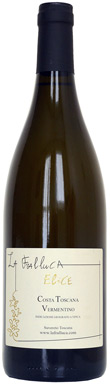

Elice is a cru bottling from a vineyard called the 'Punta'. Here, the vines face south and are planted in a hilly, limestone soil with...
2018
La FrallucaToscana

Tua Rita, Giusto dei Notri, Toscana, Tuscany, Italy, 2019
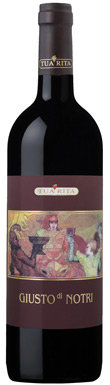
Giusto dei Notri represents the original spirit of the winery - it was the estate's first wine and helped to position Tua Rita among the...
2019
Tua RitaToscana
Montepeloso, Nardo, Toscana, Costa, Tuscany, Italy, 2019
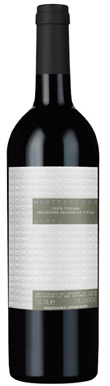
Nardo is the result of the meticulous work of Fabio Chiarelotto, who identified the oldest vines of the estate that make up the blend: Sangiovese,...
2019
MontepelosoToscana
Petra, Toscana, Tuscany, Italy, 2018
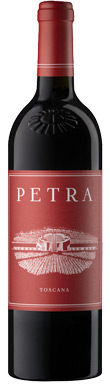
Just as the winery Petra has a beautiful visual impact for every visitor, the wine of the same name radiates a sublime influence on the...
2018
PetraToscana
Bulichella, Montecristo, Suvereto, Tuscany, Italy, 2018
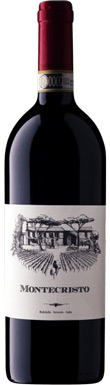
Bulichella was certified the first organic wine and olive oil estate in Suvereto, in 1983. The first vintage of the estate's flagship Montecristo in 2015...
2018
BulichellaSuvereto
Tenuta Casadei, Filare 18, Toscana, Tuscany, Italy, 2018
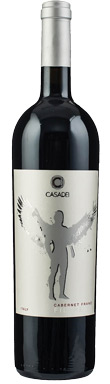
Filare 18' refers to the number of the first row ('filare') of the vineyard, planted in 1999 and producing 7,000 bottles of 100% Cabernet Franc....
2018
Tenuta CasadeiToscana
