
Sweet Bordeaux: 12 wines to look out for beyond the obvious
It’s not all about Sauternes, you know – there are other, lesser-known Bordeaux areas that produce top-notch dessert styles using botrytised grapes. Andy Howard MW explores these outlying and often great-value appellations, and recommends 12 top wines to try.


Bordeaux is rightly famous for the great sweet white wines of Sauternes and Barsac. These standalongside trockenbeerenauslese from Germany, Hungarian Tokaji and Tuscany’s vin santo as some of the finest and most delectable wines available.
And yet making a sweet white wine is not for the faint-hearted. Minimal yields and uncertainty about the prospects for viability every year combine with high costs of production. Add to the equation the weak demand for sweet wines, and it’s a wonder that any is produced at all.
Scroll down for Andy Howard MW’s top 12 sweet wines beyond Sauternes
The most famous sweet wines of Bordeaux are generally referred to as ‘Sauternes’, although five distinct communes are permitted to use this name, including Barsac, Bommes, Fargues and Preignac, as well as Sauternes itself.
Appellation rules dictate a minimum planting density of 6,500 vines per hectare, together with a maximum yield of 25hl/ha. Harvesting by hand is mandatory, with successive passes through the vineyard tries in French) required to pick the best grapes.
Soils here are diverse, with clay, gravel and sand, with a higher limestone presence in Barsac. What makes the area unique is the presence of mists caused by the confluence of the warm Garonne and the colder Ciron rivers. In the autumn, these conditions encourage the development of ‘noble rot’ – Botrytis cinerea. The effect of noble rot is to dry out and concentrate grapes (particularly the thin-skinned Semillon) and promote the flavours found in botrytised grapes: marmalade, fruit zest, mushroom and honey.
With all the constraints on production, Sauternes can never be cheap. However, in the post-war years, the region managed to damage its reputation with the production of many poor-quality wines.
With shortcuts taken at harvest and minimal grape selection, often the only way to preserve the fermented wine was the application of extremely high levels of sulphur dioxide. As a result, demand for Bordeaux’s sweet wines reduced, and although quality has dramatically improved in recent decades, consumers remain reluctant to purchase sweet wines.
Today, with substantial investment in vineyards and wineries, the quality of classed-growth Sauternes and Barsac wines has soared. Yquem, Suduiraut, Climens, Rieussec and many others produce astonishing wines in most years.
Noteworthy neighbours
In addition to Sauternes, Bordeaux also has a number of ‘under the radar’ sweet wine appellations that deserve to be more widely known:
- Cérons
- Ste-Croix-du-Mont
- Loupiac
- Cadillac
Located close to Sauternes and Barsac, these APs share many similarities with their more illustrious siblings, while adding their own character. Encouragingly, the wines are always keenly priced in comparison.
Similarly, Monbazillac and Haut-Montravel are two other appellations renowned for sweet wine, but these are located in the Dordogne so are not considered part of Bordeaux.
In 2018, the area under vine for Sauternes stood at 1,550ha, with 365ha in Barsac. In comparison, Ste-Croix totalled 329ha, Loupiac 309ha, Cadillac 110ha and Cérons just 33ha.
The number of producers is comparable between Barsac (33), Ste-Croix (40) and Loupiac (35) but, significantly, the volumes produced are markedly different.
In 2018, sweet wine production in Ste-Croix amounted to 10,845hl and Loupiac 10,218hl, whereas Barsac stood at 5,602hl. These numbers (CIVB/Service Economie et Etudes) reflect oneof the key differences between the appellation rules: maximum permitted yields. With higher yields, the wines from Ste-Croix, Loupiac, Cadillac and Cérons will rarely match the concentration and higher sugar levels of Sauternes/Barsac, but make up for this with a lightness of touch, freshness, floral notes and lower residual sugar.
Vintage guide: best years for Bordeaux sweet wines
2017 Yields heavily affected by severe frosts in late April. Despite this, some very fine sweet wines with acidity and freshness were made. Noble rot was uneven, so careful selection was necessary.
2016 Good quality with very healthy grapes, albeit less marked by botrytis. Stone-fruit characters more evident than bitter orange notes. Fresh but lacking the extra dimensions of the best years.
2015 Wines with a lovely combination of power, richness and abundant botrytis. High-quality, concentrated wines which will age very well.
2014 An excellent year for Bordeaux sweet wines. A cold, wet spring led to very poor flowering and low yields. September and October were very warm, with an abundance of noble rot, though the grapes preserved acidity.
2013 Unlike Bordeaux’s reds, there are some standout sweet wines from 2013. With a very wet spring and very low yields, great weather in the autumn encouraged botrytis. Rich wines, full of candied fruit flavours.
2011 A great year for Sauternes, compared by some to 2001 and 2007. Rich wines with an abundance of noble rot, concentration and essential freshness.
2009 A year renowned for high temperatures and rich, alcoholic reds. Sweet wines reflect the growing season – high-quality, healthy grapes with more tropical fruit than noble rot character.
Cérons
Of these lesser-known sweet appellations, Cérons is geographically different, given its location on the left bank of the Garonne river close to Barsac. Dating back to Gallo-Roman times, wine production developed as a result of proximity to the port of Cirione. The Cérons wine syndicat was formed in 1920, with its own appellation granted even before that of Sauternes.
Soils are similar to Barsac, with limestone covered by layers of gravel. Yields of 40hl/ha are permitted. Although very small in size, there are some fine estates in Cérons producing red, dry white and sweet wines, with Château de Cérons and Château du Seuil two of the best. Xavier and Caroline Perromat run the former and have made significant investments in the cellar with gravity-fed vats along with extensive replanting in the vineyard. Sean and Nicola Allison now manage Château du Seuil and have converted to organic production, while using three to four tries in thevineyard to select only the most suitable botrytised grapes.
Cadillac
Across the river, on the right bank of the Garonne running north to south, lie the AOPs of Cadillac, Loupiac and Ste-Croix-du-Mont. Cadillac – part of the Premières Côtes de Bordeaux – has its own sweet wine appellation to reflect that certain Premières Côtes plots are more prone to botrytis. It is perhaps the least distinctive of the three appellations with just a few notable estates, although Château Fayau has produced some fine wines over many years.
Loupiac
A little further south, Loupiac raises the bar. Located directly across the river from Barsac, this appellation has soils with more clay and there are some prime, south-facing plots that achieve very high ripeness. Yields are a maximum of 40hl/ha – no doubt enhancing the lighter style seen in many Loupiac wines. Château de Ricaud, owned by Alain Thiénot from Champagne, is part of the Dourthe portfolio. This is another estate where significant investment has been made, and the wines show a lot of promise, albeit without the intensity of Sauternes. However, prices are much more reasonable.
Ste-Croix-du-Mont
The most noteworthy wines are those from Ste-Croix-du-Mont, and in the best years, from the best producers, these can at least rival the second-tier wines from Sauternes and Barsac. Ste-Croix differs from its neighbours in terms of topography. Rather than gentle slopes running down to the Garonne, the village of Ste-Croix stands on top of a dramatic cliff 120m above the river.
Many estates are located on clay-limestone soils on the plateau, but Ste-Croix has its own secret weapon – a thick band of fossilised oyster shells dating back 20 million years to the early Miocene epoch. From here, producers in Ste-Croix lie opposite many of the famous names of Sauternes – Yquem, Suduiraut and Lafaurie-Peyraguey – which are just a little more than 3km away.
Maximum yields are also 40hl/ha, but the wines of Ste-Croix have more richness and substance than Loupiac and Cadillac. Botrytis is a common feature, although residual sugar (usually between 80g/L-100g/L) is lower than in Sauternes. Add to this the influence of the fossilised oyster beds and the result is elegant, fresh and highly drinkable sweet wines. These can age for many years and work surprisingly well with food at all stages of a meal. During my most recent visit, older Ste-Croix wines were paired with a delicious dinner. At every point – aperitif, fish starter and poultry main course – they were a perfect accompaniment.
Château Crabitan-Bellevue, Grand Peyrot and La Rame are some of the leading properties in Ste-Croix, and these estates can be heartily recommended. Virginie Tinon runs Grand Peyrot and strives to highlight the character of the oyster beds with salty, mineral flavours through her wines. At Château La Rame, Angelique Armand and husband Olivier Allo are also raising the quality bar, with freshness, purity and drinkability the key objective. The team at La Rame supplies various UK retailers with different interpretations of the Ste-Croix terroir. Some wines are barrel-fermented, some are aged in barrel, while others are matured in stainless steel to enhance fresh fruit and bright acidity.
These are all high-quality wines at very attractive prices, and each is a worthy alternative to the richer, glossier, more expensive wines of Sauternes and Barsac.
Noble sweets: Andy Howard MW reveals his top 12 Bordeaux sweet wines beyond Sauternes
See also
Bordeaux first growths: How the 2000 vintage tastes now
Best Bordeaux 2019 wines: Second labels
Best Sauternes & Barsac 2019 wines tasted en primeur
Château La Rame, Sainte-Croix-du-Mont, Bordeaux, France, 2016
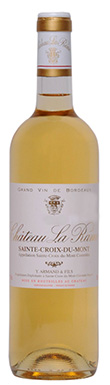

The Armand family is doing a great job in promoting Ste-Croix, with Angélique and husband Olivier now in charge at this 16ha estate. Fifty-year-old Semillon...
2016
Château La RameSainte-Croix-du-Mont

Château Crabitan-Bellevue, Cuvée Spéciale, Sainte-Croix-du-Mont, Bordeaux, France, 2015
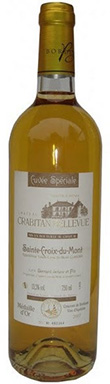
A frequent gold medal-winner, this has the density to compare to more famous names across the river, while retaining typical Ste-Croix purity. A proportion of...
2015
Château Crabitan-BellevueSainte-Croix-du-Mont
Château de Cérons, Cérons, Bordeaux, France, 2009
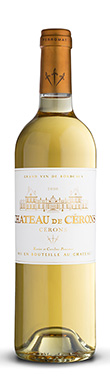
90% Semillon, 5% Sauvignon Blanc and 5% Muscadelle grapes have been fermented in barrel and matured in oak for 18 months. Caroline and Xavier Perromat...
2009
Château de CéronsCérons
Château Grand Peyrot, Sainte-Croix-du-Mont, Bordeaux, France, 2015
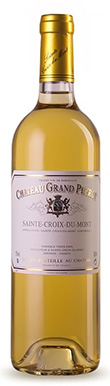
The Bridet-Tinon family acquired Château La Grave in 1929, adding small amounts to the domaine over the course of many years. In 1977, Grand Peyrot...
2015
Château Grand PeyrotSainte-Croix-du-Mont
Château Ricaud, Loupiac, Bordeaux, France, 2015
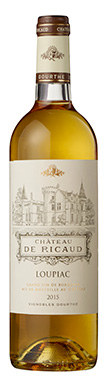
A magnificent château dating back to the 17th century, this 30ha is now part of the Dourthe portfolio. Like many sweet wines from the Right...
2015
Château RicaudLoupiac
Château des Arroucats, Sainte-Croix-du-Mont, Bordeaux, France, 2016
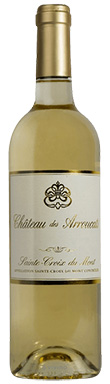
With 25ha of vines in Ste-Croix, des Arroucats is a great-value, elegant sweet wine. Already displaying powerful aromas of ripe pear and stone fruits, this...
2016
Château des ArroucatsSainte-Croix-du-Mont
Château La Rame, Gourmandise, Sainte-Croix-du-Mont, Bordeaux, France, 2016
A different take on Ste-Croix from the Armand family. There is plenty of density and concentration to age well, with bright acidity ensuring that the...
2016
Château La RameSainte-Croix-du-Mont
Château du Seuil, Cérons, Bordeaux, France, 2016
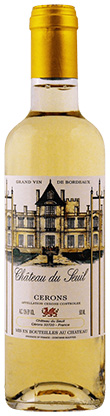
An unctuous 100% Semillon sweet wine from Cérons, this shows zesty orange and a rich honeyed character, with vibrant acidity to finish. The 25ha estate...
2016
Château du SeuilCérons
Château La Caussade, Sainte-Croix-du-Mont, Bordeaux, France, 2017
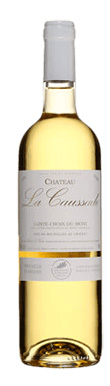
From the same team as Château La Rame, La Caussade is produced from slightly younger Semillon vines, with fermentation and maturation in stainless steel. As...
2017
Château La CaussadeSainte-Croix-du-Mont
Château Valentin, Sainte-Croix-du-Mont, Bordeaux, France, 2013
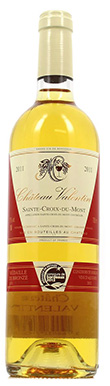
Hervé Chouvac is now owner of this historic estate, originally created in the 19th century as Château du Mont. 100% Semillon, the wine has gained...
2013
Château ValentinSainte-Croix-du-Mont
Château Fayau, Cadillac Côtes de Bordeaux, Bordeaux, France, 2012
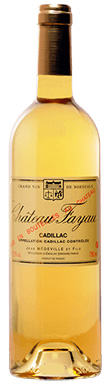
Owned by the Medeville family since 1826, this large estate is located in Cadillac. Rich, ripe and viscous on the palate, the wine shows the...
2012
Château FayauCadillac Côtes de Bordeaux
Tesco, Bottled by Yvon Mau, Premières Côtes de Bordeaux, Bordeaux, France
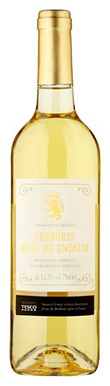
A good example of an uncomplicated but well-made Premières Côtes de Bordeaux. This is a lighter style of sweet wine, without the influence of botrytis,...
TescoPremières Côtes de Bordeaux
