
Taurasi: a buyer’s guide
East of Naples, the star of this DOCG region in the beautiful landscape of Campania is the Aglianico grape, its wines increasingly being hailed as the ‘Barolo of the south’. We take a deserved look at this stout-hearted red with a growing reputation.


What’s in a name? The region of Campania lives up to its billing as a scenic landscape of verdant rolling hills dotted with picture-postcard hilltop villages and medieval castles. Within an hour’s drive from Naples airport, Irpinia in the Campanian province of Avellino is readily accessible. Winding and weaving your way up hill and down dale, there’s a perpetual view of wooded hills on the opposite side of the valley.
The lack of any tourist infrastructure here might be off-putting to some, but the region’s rural charm is a magnet for the independent-minded traveller in search of wines that embody the local aromas and flavours of the region: the two white DOCGs of Greco di Tufo and Fiano di Avellino, and the red DOCG of Taurasi.
Scroll down to see tasting notes and scores for 10 top Aglianico wines
Taurasi itself is a patchwork of vineyards lying on slopes at altitudes between 300m and 700m, facing all four corners of the compass in 17 communes.
These communes are split by the Calore river, which divides the DOCG into eastern and western parts, while the terrain of clay, limestone and sandy soils with occasional underlying volcanic rock is another key factor in bringing body and minerality to the wines. Average annual production is – according to Taurasi, A Cura di Lorenzo Matteo (Rogiosi Editore, July 2021) – some half a million hectolitres, or roughly 67 million bottles.

Taurasi: key elements
Created in 1993, the Taurasi DOCG area covers about 1,000ha over 17 municipalities with more than 150 wine producers and 104 bottlers. It is an enclave within the greater Irpinia Aglianico DOC, which covers 2,000ha with 123 producers (including some who also declare the DOCG wine). The areas do overlap in places, and sometimes both Taurasi DOCG and Irpinia DOC are produced in the same vineyard.
According to the Consorzio Vini d’Irpinia, the Taurasi DOCG planted vineyard area stands at 472ha, and Irpinia DOC at 519ha in total (including other varieties red and white).
Taurasi DOCG Requires at least 85% Aglianico with up to 15% of other permitted grapes, namely Piedirosso, Sciascinoso and Greco Nero. Taurasi must undergo a minimum of 36 months of ageing, at least 12 of which should be in wood.
Taurasi DOCG Riserva Requires at least 48 months of ageing, at least 18 of which should be in wood.
Irpinia Campi Taurasini DOC A sub-zone within Irpinia DOC covering 24 small municipalities. Requires at least 85% of Aglianico and at least 10 months of ageing.
Irpinia Aglianico DOC Requires at least 85% Aglianico with no minimum ageing.
The pioneers

In his 1985 book, Life Beyond Lambrusco (Sidgwick & Jackson), the late Nicolas Belfrage MW wrote: ‘The most important, indeed the only significant version of Taurasi is that of Mastroberardino.’ Founded in 1878, Mastroberardino became known for its work in identifying, preserving and championing local grape varieties. Belfrage observed that: ‘…one aspect of it concerns grapes. Rather than bring in volume varieties from elsewhere in Italy, as so many producers in the south have done, or experiment with fashionable French varieties, Mastroberardino has stuck with the ancient varieties of its homeland.’
It was this authenticity that struck a chord with producer Antonio Caggiano, whose focus in the early 1990s was on a change in the local viticulture. Traditionally, cultivation had been based on mixed crops of potatoes, cereals and vegetables. In the time-honoured Raggiera system, there were fewer vines, each producing large quantities of wine. The tall vines – up to 3.5m in height – also tended on occasion to produce varying levels of ripeness, depending on the height of the shoots.
The development of the cordon system led to an increase in planting density, with vines trained [on horizontal wires] closer to the ground. Better clones and substantially reduced yields helped to achieve more consistent ripening. These changes went hand in hand with more modern cellar practices such as rigorous grape selection, gentle extraction of tannins and barrel ageing aimed at reducing harshness and austerity. The changes have seen producers move away from the burly, macho wines of yesteryear towards much- improved wines. New practices being adopted in the vineyard include green harvesting to obtain a riper crop, and picking berries at physiological/ phenolic (rather than sugar) ripeness.
The result is that while some older wines suffer from ailments such as harshness, over-oaking and oxidation, more recent vintages are based on a better understanding of the vineyards and how best to manage the Aglianico grape itself, not to mention the introduction of experienced consultants such as Luca d’Attoma.
Add to your cellar: Taurasi to keep
While Aglianico Irpinia DOC and its sub-zone Campi Taurasini Irpinia DOC focus on fresh, juicy fruit characters for early drinking without necessarily seeing any oak, Taurasi DOCG satisfies demand for wines that can still be enjoyed relatively young but can also age well thanks to more weight and concentration. Taurasi DOCG Riserva’s concentration and structure of tannins and acidity demands evolution in the bottle for finesse and complexity. Ultimately, the ageability of Taurasi depends on the approach of the producer.
Rose’s top three for the cellar:
Quintodecimo, Taurasi Riserva 2017
Bocella Vini, Sant’Eustachio, Taurasi 2017
Mastroberardino, Radici Taurasi Riserva 2015
Building on tradition

Aglianico is the principal grape of the Taurasi DOCG – the jury is out as to the derivation of the name. Wine writers Burton Anderson and Belfrage both link Aglianico’s origins to the ‘Hellenic’ connection of Greece, but according to Wine Grapes (Robinson, Harding & Vouillamoz; Allen Lane), it more likely stems from the Spanish ‘llano’, meaning a plain. Either way, the allowance of 15% in the blend of other local red varieties – principally Piedirosso, Greco Nero and the ancient Sciascinoso – is the legacy of a heritage of old vines, the most venerable of which can reach an astonishing 200 years of age. This is not a stretching of the regulations to incorporate so-called ‘improving’ grape varieties, but rather a reflection of tradition.
Thanks to Aglianico’s thick skins and high acidity, which make the wines excellent candidates for long ageing, producers can hold out for full ripeness, with harvest usually not until late October and in some cases into November. According to Margherita Bozzacco, family member at producer Boccella Rosa: ‘One vintage involved picking the grapes after the snow had fallen at the beginning of November.’ Aglianico in Taurasi is one of the last harvests in all of Italy, and picking late in the year means that the grape can ripen slowly, reaching its unique quality of savoury maturity during a long, warm growing season. Its thick skins help to resist botrytis, which can threaten grapes following the rains that often come in September.
Impressions of Aglianico as a tannic or alcoholic grape variety are not necessarily entirely borne out. According to Milena Pepe of Cavalier Pepe, ‘producers used to add tannins in the past’. Certainly, Aglianico from Taurasi does produce aromatic, deep-coloured, richly flavoured wines – particularly when using the popular VCR 2 clone – in the spectrum of red and dark cherry, plum fruit and spicy, tarry, even chocolatey notes, sometimes not a million miles from Syrah.
When the fruit extraction is carried out well, its structure is based on ripe grapes with supple tannins underpinned by refreshing, saline acidity and supported by subtle oak maturation, often using a variety of sizes, origins and producers of cask to avoid overt oak flavours getting in the way of a wine’s typicity and site-specific character.
During my visit in the summer of 2022, the daytime temperature soared to 34°C, followed by cool evenings. This perfectly illustrates how swings in day and nighttime temperatures in these hills are a key part of the freshness of Taurasi, enabling the grapes to hold on to precious acidity and aromatic compounds.
Names to know: new talents
Balance, freshness, elegance and, above all, drinkability are the watchwords of the new generation of winemakers taking Taurasi to greater heights. Indeed, in the view of Dutch wine writer Paul Balke, who lives locally and hosted a Taurasi masterclass during my visit, the richness of its aromas and flavours as well as its intensity make Aglianico – along with Nebbiolo – Italy’s most prominent red grape variety.
Here are 12 young and cutting-edge producers to know: Barbot, Boccella Rosa, Boccella Vini, Giovanni Molettieri, Marianna Venuti, Michele Perillo, Salvatore Molettieri, Tenuta Cavalier Pepe, Tenuta del Meriggio, Tenuta Scuotto, Terredora and Urciuolo Vini.
Know your vintages: Taurasi
2018 Spring was mild and rainy, and the fruit set took place in good conditions, resulting in regular ripening and reds for short- to medium-term cellaring.
2017 Summer was the hottest and driest of the past 15 years. With higher than average day and night temperatures in July and August, the grapes were harvested in healthy condition, resulting in wines of excellent concentration.
2016 A mild winter and spring with a good fruit-set, then a hot summer and heavy rainfall followed by a sunny autumn. This allowed good ripening at harvest, producing concentrated, fragrant reds.
2015 A good year after a cool start, with a hot, dry summer followed by rain at harvest – but the grapes retained their sugar levels, so concentration and balance were good.
2014 A challenging vintage with a cool August and abundant rains, but a dry autumn at harvest with low yields saved the day for the reds.
2013 A very good year following rapid vegetative growth in spring, then lower temperatures and a delay in flowering, with cooler than average temperatures and a late harvest.
2012 A warm, dry summer and wide temperature range between day and night at harvest led to a good vintage of expressive reds with balance, softness and varietal expression.
A taste of Taurasi: Rose’s top 10 Aglianico buys
Related articles
- Taurasi: Feudistudi – A tale of terroirs
- Top Campania white wines: Fiano & Greco
- Campania: regional profile plus 30 great wines to try
Mastroberardino, Stilèma, Taurasi, Campania, Italy, 2015
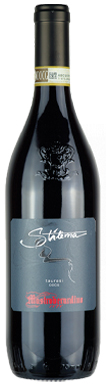

Warm and spicy in aroma, with background notes of sundried tomato and coffee, Mastroberadino’s interpretation of the style aims at maximum expression of the terroir....
2015
MastroberardinoTaurasi

Quintodecimo, Vigna Quintodecimo, Taurasi Riserva, Campania, Italy, 2017
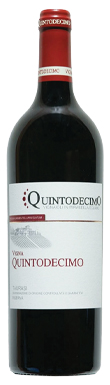
Youthfully vivid in its ruby hue, this cru from 2ha of Aglianico planted in 2001 at 400m on rocky clay rich in limestone is attractively...
2017
QuintodecimoTaurasi Riserva
Boccella Vini, Sant'Eustachio, Taurasi, Campania, Italy, 2017
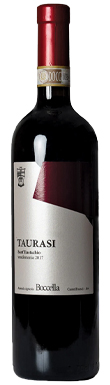
From the 600m-high commune of Castelfranci, Sant'Eustachio is deeply coloured, with a fine aromatic quality based on a combination of delicious black fruit succulence supported...
2017
Boccella ViniTaurasi
Mastroberardino, Radici, Taurasi Riserva, Campania, Italy, 2015
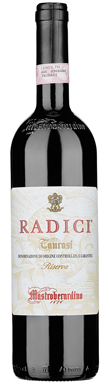
Rich in colour with garnet at the rim, this has a lovely bouquet with smoky notes of vanilla oak, almond and dark cherry. It’s only...
2015
MastroberardinoTaurasi Riserva
Antico Borgo, Taurasi Riserva, Campania, Italy, 2014
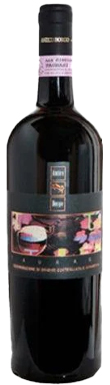
There’s still plenty of vivid ruby in the colour of this eight-year-old Aglianico, often one of the best-value Taurasi. An attractive aromatic spicy complexity emerges...
2014
Antico BorgoTaurasi Riserva
Boccella Rosa, Taurasi, Campania, Italy, 2016
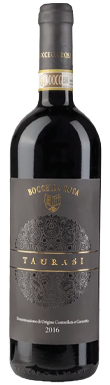
Deep and dark in colour, this organic Taurasi displays a sweetly spiced fragrance, combining the evolved character of the Aglianico grape with stylish oak and...
2016
Boccella RosaTaurasi
Cavalier Pepe, La Loggia del Cavaliere, Taurasi Riserva, Campania, Italy, 2014
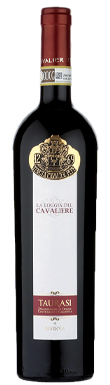
Deep and darkly brooding in colour, this red grown in the hillside vineyards of Carazita, Pesano and Brussineta at 450m is almost Syrah-like in its...
2014
Cavalier PepeTaurasi Riserva
Salvatore Molettieri, Vigna Cinque Querce, Taurasi, Campania, Italy, 2007
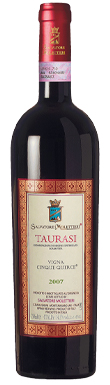
At 15 years of age, there’s barely a whiff of evolution in a wine made from vines in Montemarano on calcareous clay soils at 550m,...
2007
Salvatore MolettieriTaurasi
Fratelli Addimanda, Starse, Taurasi, Campania, Italy, 2017
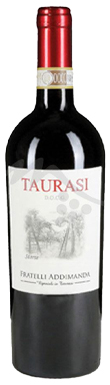
Vivid in colour, there’s some smoky mocha and camphor-like oak aromas on this Aglianico produced from the volcanic and calcareous clay soils of the middle...
2017
Fratelli AddimandaTaurasi
I Favati, Terzotratto, Taurasi, Campania, Italy, 2017
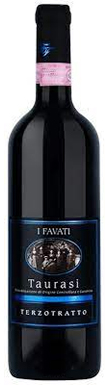
The Favati family are producing good value Taurasi from their estate in Cesinali at 400m on calcareous clay soils. Really appealing aromas of dark fruit...
2017
I FavatiTaurasi
