
Ten of the best Rioja producers – and wines to buy


We asked Tim Atkin MW to whittle his own list of top winemakers and bodegas in this famous Spanish region down to just 10 favourites. Far from an easy task...
Rioja was one of the first regions I visited as a fledgling wine writer, and if it wasn’t quite love at first glance, it’s been an enduring and fulfilling relationship that’s lasted for 30 years and counting.
As I drive across the Sierra de Cantabria, invariably swapping the rain, mist and grey skies of Bilbao for the brighter, more intense colours of Spain’s most famous DOCa, my spirits rise. People forget that Rioja is incredibly beautiful, especially in autumn.
It’s been a pleasure to witness significant changes over those three decades. Rioja likes to present an immutable image – built on the foundations of crianza, reserva and gran reserva, blended across the region for consistency – but it has always been much more complex and interesting than that.The move towards single-vineyard and village wines, following a Burgundian rather than a Bordeaux model, has become unstoppable over the past year, culminating in a decision by the local consejo regulador to allow both from the 2017 vintage.
How do you pick just 10 favourite producers? I could easily have selected 30 or more. Those who feature on BBC Radio 4’s Desert Island Discs must feel like this!
In the end, I tried to pick a representative selection: traditional and modern; small and large bodegas; established and up-and-coming winemakers. On another day, I could have chosen a different set, but I’m happy with these because they represent the huge diversity of Rioja. More than anything, that is what keeps me going back for more.
Scroll down to see Tim’s tasting notes from his favourite producers
Muga
Visit Muga’s winery in Haro for a tasting and there’s every chance that half of the extended family will join you.
The bodega was founded in 1932 by Isaac Muga. He was succeeded by Manuel and Isacín (the latter still visits the vineyards every day) who, between them, had five, unfeasibly tall sons – Manu, Juan, Eduardo, Jorge and Isaac – all of whom work in the business, as do several members of the fourth generation of Mugas.
Is Muga traditional or modern in style? In truth, it’s a bit of both, depending on the wine. The white, Seleccíon Especial Reserva, and the long-lived Prado Enea Gran Reserva belong in the former camp; Aro and especially Torre Muga in the latter, with 100% new French oak barrels, all made in the winery’s own cooperage to prove it.
The Mugas were grape growers before they were winemakers (the family has been in Haro for more than 300 years) and own 250ha of vineyards, with contracts for another 150ha, mostly in the Rioja Alta sub-region. Their ability to combine different parcels, some picked early, others as late as the first week of November, is the hallmark of their winemaking.
López de Heredia
Even by the standards of the Barrio de la Estación, Haro’s historic station quarter, López de Heredia is a traditional winery. It’s sometimes described, not least by co-owner Maria José López de Heredia, as ‘the last of the Mohicans’, but that is incorrect.
For all its adherence to an ultra-classic, lower-alcohol, earlier-picked style, it is no museum piece, as demonstrated by the modernist, Zaha Hadid-designed wine shop in its courtyard.
Heritage is certainly important here – a walk around the 19th-century winery and the old cellars is a must – yet this is a dynamic business that has achieved great things under the direction of the great-grandchildren of founder Rafael López de Heredia.
Low intervention and long barrel ageing in old wood are part of what makes these wines special – the current vintages of Viña Tondonia white and red are 2004 and 2005 – but what happens in the vineyard is every bit as important as the time they spend in those cobwebbed cellars.
The winery has 170ha of vineyards, all close to Haro. Plantings are dominated by the Viña Tondonia vineyard (more than 100ha), with additional grapes supplied from the Viña Cubillo, Viña Bosconia and Viña Zaconia vineyards. At their best, these are unforgettable wines.
Marqués de Murrieta
If Rioja has a bodega that can rival the appearance of a great Bordeaux château – a Margaux, Cos d’Estournel or Pichon Baron perhaps – then it is surely Murrieta.
Turn off the busy main road from Logroño to Zaragoza and the winery sits at the end of a long drive, surrounded by lawns and cypress trees. Built in 1872 and lovingly restored in 2013, it makes wines that are every bit as stylish as its façade, combining traditional and contemporary techniques.
Murrieta made its first wines in 1852, but its modern success dates to 1982, when it was acquired by the Count of Creixell, Vicente Cebrián-Sagarriga, who planted new vineyards and began to update the old cellars. His son, also Vicente, has gone even further since he took over after his father’s death in 1996, helped by long-term winemaker, María Vargas.
The winery’s 300ha produce some of the best and most celebrated wines in Spain, led by its occasional Castillo Ygay bottlings (both red and white), Dalmau (one of the few local wines that includes Cabernet Sauvignon) and its ageworthy Capellanía white. Also commendable is its reliable Reserva, which accounts for 85% of Murrieta’s production.
Juan Carlos Sancha
Juan Carlos Sancha is an unusual academic, as good at practical cellar and vineyard work as he is at the theoretical, pointy-headed stuff.
A professor of oenology at the University of La Rioja in Logroño, he was also instrumental in rediscovering old Rioja grapes, such as Maturana Tinta and Blanca, Tempranillo Blanco and Monastel, and has always made wine professionally, first at Viña Ijalba and, since 2008, at his own eponymous bodega in Baños de Río Tobía, deep in the south of the Rioja Alta sub-region.
Here, too, Sancha is at the forefront of innovation – he has 27 different varieties in the organically certified 4.5ha around his house. He makes a series of wines under his Ad Libitum label, but the superstars are the eight old-vine Garnachas, all sold under his Peña El Gato brand.
These are: Peña El Gato, Natural (one of just a few Riojas made without sulphur), Jacinto López, Rubén Olarte, José Luis Martínez, Fernando Martínez de Toda, Manolo López and Juan Carlos Sancha.
Using grapes from slopes high up in the Sierra de la Demanda foothills, Sancha is resurrecting the profile of Garnacha in Rioja.
Artuke
Arguably the leading member of the exciting Rioja ’n’ Roll group, which includes some of the best young winemakers in the region, Artuke is based in relatively unglamorous Baños de Ebro in the Rioja Alavesa.
Run by Arturo and Kike de Miguel (hence the name Artuke), the bodega was founded as recently as 1991 by their father Roberto, but has achieved new heights under the second generation.
It was their grandfather who laid the foundations of the business, however, buying vineyards on less fertile soils away from the Ebro river. At the time, he was considered insane for doing so, but today has been well and truly vindicated.
The two brothers farm 25ha in Baños itself as well as in Avalos and Samaniego, up to a height of 700m. They make a vibrant carbonic maceration Tinto Joven simply called Artuke (one of the best-value wines in Rioja), as well as a village-level Avalos wine (Pies Negros).
But they are best known for their remarkable, terroir-expressing range of single-vineyard reds: Finca de Los Locos, Cerro de Mulas, K4 and (one of the great wines of Spain) La Condenada: an abandoned 1920 parcel that was rescued in 2012 and brought back to life.
Finca Allende
Ask Miguel Angel de Gregorio where the grapes for Allende, the bodega he founded in 1995 with his sister Mercedes, come from and his reply is unequivocal: ‘Briones, 100% Briones.’
This attractive village on the south side of the Ebro has long been known for the quality of its Tempranillo and Graciano, especially when they’re grown on iron-rich clay soils, but it’s de Gregorio who has done most to promote it.
He’s often (rightly) described as one of Rioja’s great modernisers, influenced by France as much as Spain, and his drive to express individual vineyard plots is positively Burgundian. Even when de Gregorio was forbidden to do so by Rioja’s Consejo Regulador, he used the phrase ‘Single Vineyard’ on labels.
Unusually in Rioja, Allende makes whites that are every bit as thrilling as its reds. The Mártires barrel-fermented Viura is one of the great wines of the region – up there with de Gregorio’s single-vineyard reds, Mingortiz, Gaminde, Calvario and Ausus.
Concentration and new French oak are the order of the day, but the Allende wines never lack freshness or precision. And if you can’t afford the top reds, the straight Finca Allende (recommended here) is a steal.
Bodegas Bhilar
David Sampedro and his American wife Melanie Hickman run this biodynamically farmed boutique winery in the village of Elvillar, which released its first wines in 2003.
Sampedro also consults to other Spanish wineries, but his heart will always lie here and in the surrounding vineyards. Now working from a new winery on a panoramic slope above the village, his whites and reds are increasingly impressive. ‘I only use grapes from Elvillar,’ Sampedro says.
He is a vigneron to his core, who ploughs his own vineyards, prunes the vines and makes all the wines himself. His rugby playing past has kept him fit – which is just as well, given how hard he works.
The style here favours low yields, older oak and minimum intervention, with partial or complete whole-bunch fermentation for most of the reds and plenty of lees and oxidative handling for the whites.
Some are blends of parcels (Phincas, Bhilar Plots and Thousand Milks), while others are single-vineyard wines (El Vedao, Phinca Abejera, Phinca La Revilla and the remarkable Phinca Lali, made from a 0.6ha site planted in 1910). Hickman also makes her own wines under the Phinca Hapa label, sourced from grapes in – where else? – Elvillar.
Contino
One of three wineries owned by the Compañía Vinícola del Norte de España (universally known as CVNE, pronounced koo-nay), Contino is a 64ha estate located in the Rioja Alavesa on a bend in the Ebro river.
It’s a special, unusually warm site, recognised as such in the early 1970s by CVNE’s then vineyard manager, José Madrazo, who suggested the company make a stand- alone wine with the grapes. This it duly did in 1974, producing the second single-vineyard wine in Rioja, after Remelluri.
The Madrazo name has a long association with Contino. José’s son, Jesús, was winemaker for more than 30 years until he left in July 2017. One of Madrazo’s new projects, Leizaola’s El Sacramento, is worth looking out for.
For the time being, the Contino wines on the market are Madrazo’s, but his youthful successor Jorgé Navascués is every bit as talented.
Weather permitting – 2013 was marked by a violent hailstorm – Contino usually makes seven wines. There’s a rosé, a white and five reds: a varietal Garnacha and Graciano, a Reserva, a Gran Reserva and, best of all, Viña del Olivo, named after a small parcel of vines in the upper part of the estate.
Abel Mendoza
The name above the door says Abel Mendoza, but this highly respected grower couldn’t make the wines he does without his oenologist wife, Maite Fernández.
They are a brilliant team who, together, have made a string of exceptional wines since 1988, inspiring a new generation of terroir- driven wineries in the process. Mendoza farms 18ha of vineyards, spread over 37 parcels, in San Vicente, Labastida and Abalos. He knows the terroirs of the north bank of the Ebro better than anyone.
The best time to visit is when the duo’s rumbustious ‘grano a grano’ (berry to berry) picking party is in progress, but it’s always fun to sit around their kitchen table, taste through the range and listen to Mendoza in full, expletive-laden Spanish.
The pair make everything from a carbonic maceration quaffer, Jarrarte, to a no-sulphur Tempranillo and three Grano a Grano reds. But it’s the whites that are really exciting, even if they only account for 20% of production. There’s a Viura, a Malvasia Blanca, a Tempranillo Blanco, a Torrontés, a Garnacha Blanca and (my personal favourite) 5V, which combines all five grapes in a delicious blend.
Bodegas Lanzaga
Based just outside the village of Lanciego in the Rioja Alavesa, Bodegas Lanzaga is the Rioja outpost of the Compañía de Vinos Telmo Rodríguez, which runs winemaking projects from Malaga to Valdeorras. Rodríguez is a brilliant marketer, as well as a trained oenologist, who works alongside long-term friend and collaborator Pablo Eguzkiza, who quietly runs the vineyards and cellar.
Lanzaga made its first wines in 1998 with the idea of producing Riojas from a single commune. It now owns 15ha of bush-trained vines in Lanciego, as well a further 4.6ha in Labastida, close to Rodríguez’s family property, Remelluri, which the partners also make together.
The wines that have propelled the young company to the front rank of Rioja are the single-vineyard bottlings, which began in 2011 with Las Beatas and have since expanded to include La Estrada, El Velado (formerly known as Veriquete) and Tabuérniga.
Of the four wines, it is Las Beatas that has received the highest praise, which is reflected in the price it commands after only five (bottled) vintages. To walk along its southeast-facing terraces, co-planted with nine different varieties, is to experience the past, as well as the exciting future of Rioja.
Tim’s top wines from his favourite producers:
More articles on Rioja:
Top mature Rioja from our panel tasting
Top Roda I, Rioja Reserva wines to try
Premium red Rioja – Panel tasting results
Telmo Rodriguez, Las Beatas, Rioja, Northern Spain, Spain, 2014
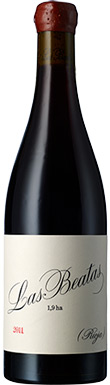

The fourth vintage of this remarkable single-vineyard red, sourced from a 1.9ha site in Labastida. It is graceful and elegant, with flavours and filigree tannins...
2014
Telmo RodriguezRioja

R López de Heredia, Viña Tondonia Blanco, Rioja, Northern Spain, Spain, 2004
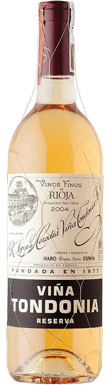
A great wine in a great vintage: Tondonia is unique. Aged for six years in wood, this cuvée of Viura with 10% Malvasia ages brilliantly,...
2004
R López de HerediaRioja
Abel Mendoza, Guardaviñas Sin Sulfuroso, Rioja, Northern Spain, Spain, 2014
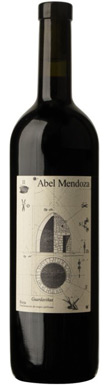
Biodynamically farmed, and made - as its name indicates - without sulphur additions, this is a fruit bomb with less new oak than most of...
2014
Abel MendozaRioja
Contino, Viña del Olivo, Rioja, Northern Spain, Spain, 2014
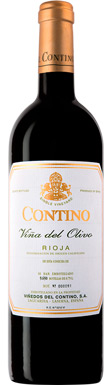
There was no Olivo in 2012 or 2013, but the wine is back with interest in 2014. It's still a very young wine that will...
2014
ContinoRioja
R López de Heredia, Viña Tondonia, Rioja, Northern Spain, Spain, 2005
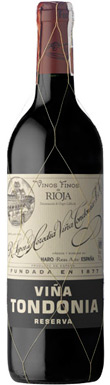
Traditional Rioja at its ageworthy best, the Tondonia red is a cuvée of Tempranillo with 20% Garnacha and 5% each of Graciano and Mazuelo. Leafy,...
2005
R López de HerediaRioja
Marques de Murrieta, Dalmau, Rioja, Northern Spain, Spain, 2013
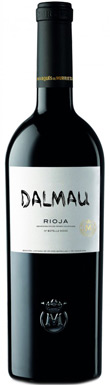
2013 was a cool year, its late cycle resulting in a harvest that finished in the final week of September. To me the ‘lighter’ style...
2013
Marques de MurrietaRioja
Telmo Rodriguez, Lanzaga, Rioja, Northern Spain, Spain, 2011
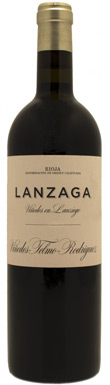
Combining Tempranillo grapes grown on both red and white soils in Lanciego, this sees no new oak. It's a taut, high-altitude style that's fresh, scented...
2011
Telmo RodriguezRioja
Bodegas Bhilar, Phinca Abejera, Rioja, Northern Spain, Spain, 2012
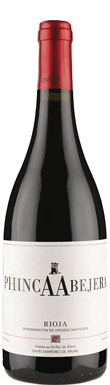
David Sampedro's top red is a blend of Tempranillo with 40% Graciano and 10% each of Viura and Garnacha, planted in 1932. Spicy, stemmy and...
2012
Bodegas BhilarRioja
Contino, Blanco, Rioja, Northern Spain, Spain, 2016
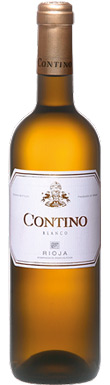
It's easy to overlook Contino's white, such is the fame of its reds, but this complex, barrel-fermented assemblage of Viura with a little Malvasia and...
2016
ContinoRioja
Finca Allende, Tinto, Rioja, Northern Spain, Spain, 2010
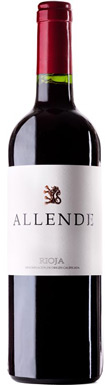
It's hard to recall a better vintage of the 'entry point' Allende red, demonstrating the balance and poise of the year. Floral, nuanced and elegant...
2010
Finca AllendeRioja
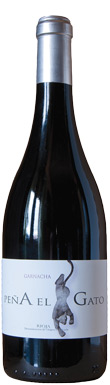
Juan Carlos Sancha, Peña El Gato Viñas Centenarias Garnacha, Rioja, Northern Spain, Spain, 2016
94
One of eight Garnachas in Juan Carlos Sancha's range, this comes from a remarkable 100 year old parcel in Baños de Río Tobía. It's floral, peppery and spicy, with dense berry fruit sweetness and some tannic grip. What a bargain!
2016
Juan Carlos SanchaRioja
Marques de Murrieta, Capellanía, Rioja, Northern Spain, Spain, 2013
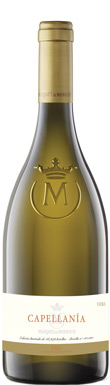
A rich nose full of orange peel, vanilla and a touch of melon. A complex, layered wine with an underlying energy and driving acidity. Nutty...
2013
Marques de MurrietaRioja
Muga, Selección Especial Reserva, Rioja, Northern Spain, Spain, 2011
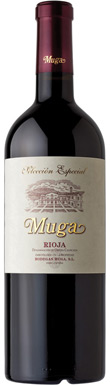
Fruit from cooler Villalba contributes winning zip and freshness to this Tempranillo-dominated blend. It displays a dark berry sweetness, Asian spices, and deftly integrated oak...
2011
MugaRioja
Abel Mendoza, 5V, Rioja, Northern Spain, Spain, 2016
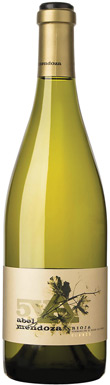
5V uses five different varieties – Viura, Tempranillo Blanco, Garnacha Blanca, Malvasia and a splash of Torrontés – to produce a rich, textured, waxy white...
2016
Abel MendozaRioja
Bodegas Bhilar, Phinca Lali, Rioja, Northern Spain, Spain, 2012
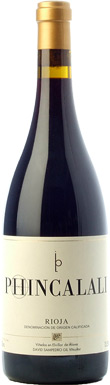
Sourced from a vineyard planted in 1915, this is a field blend cuvée of Tempranillo with 15% Viura, made with 100% whole bunches. Spicy, balanced...
2012
Bodegas BhilarRioja
Finca Allende, Blanco, Rioja, Northern Spain, Spain, 2013
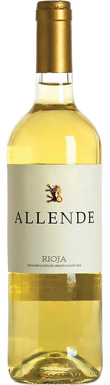
For anyone looking for a good value alternative to classy white Bordeaux, this white Rioja, aged for 14 months in French oak, is a good...
2013
Finca AllendeRioja
Juan Carlos Sancha, Ad Libitum Maturana Blanca, Rioja, Northern Spain, Spain, 2015
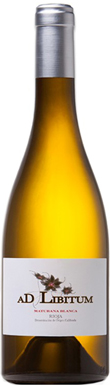
Wines made by a professor of oenology risk being super-technical. That's not the case here - Sancha has rescued and developed some of Rioja's disappearing...
2015
Juan Carlos SanchaRioja
Artuke, Tinto, Joven, Northern Spain, Spain, 2016
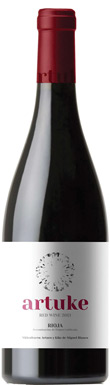
Unwooded, juicy and bursting with bramble and red berry fruit, this is made using carbonic maceration in the traditional 'cosechero' style of the Rioja Alavesa....
2016
ArtukeJoven
