
Tenuta San Guido Guidalberto: 2001-2021 vertical
‘Having tasted a range of Guidalberto vintages at this London vertical, I feel that the wine is improving even more with recent vintages,’ says Susan Hulme MW. Read her report below.


The first vertical tasting of Guidalberto, Tenuta San Guido’s Merlot-based wine, took place in March 2023 in London, hosted by UK importer Armit Wines alongside Priscilla Incisa della Rochetta from the estate.
Tenuta San Guido is world-famous for Sassicaia, the Cabernet-based blend from Tuscany which was first released onto the market in 1971 with the 1968 vintage, and quickly became one of the world’s most sought-after wines.
Scroll down to see tasting notes and scores for eight Guidalberto vintages between 2001 and 2021
The name Guidalberto celebrates an ancestor of the Incisa family, Guidalberto della Gherardesca, who lived in Bolgheri in the early 19th century. He was not only a pioneer in agricultural practices but was also responsible for the planting of the Viale dei Cipressi, the famous 5km-long cypress avenue that has become the symbol of the Bolgheri area.
In the mid-1990s Tenuta San Guido’s owner, Nicolò Incisa della Rocchetta, with the technical support of Giacomo Tachis, decided to plant the first Merlot vineyards around Tenuta San Guido’s farmhouse, Podere Alberto, in the stretch of land adjacent to the Viale dei Cipressi. Here, the soil is rich in clay – most suitable for Merlot. The vineyards are about 70-80 metres above sea level and face west, so benefitting from the afternoon and evening sun.
‘Some may question whether Guidalberto is simply a ‘baby Sassicaia’ but there are some important differences’
Priscilla Incisa della Rochetta commented that, with Guidalberto, ‘the goal was to experiment with a Merlot/Cabernet Sauvignon blend to create a different wine that best expressed the characteristics of Merlot – a wine that needed less ageing to achieve perfect balance and the right drinkability but, equally, that was in perfect union with the estate’s production philosophy.’
When comparing the winemaking processes of Guidalberto and Sassicaia, there are more similarities than differences. The primary fermentation for both takes place using selected estate yeasts, carefully chosen in relation to the vintage and seasonal characteristics. Ageing in barriques is shorter for Guidalberto (15-16 months as opposed to 20-25 months for Sassicaia) and, adding to its individuality, Guidalberto employs a small percentage of American oak as well as the standard French oak.
The company’s third wine, the earlier-drinking Cabernet Sauvignon/ Sangiovese blend, Le Difese, is aged for a much shorter period (six to eight months) in oak barriques previously used for Sassicaia and Guidalberto.
Some may question whether Guidalberto is simply a ‘baby Sassicaia’ but there are some important differences. Guidalberto is a Merlot-based wine and is made from grapes from a different set of vineyards; Sassicaia was created by the vision of Mario Incisa della Rocchetta, whereas Guidalberto is the brainchild of his son, Nicolò.
At Tenuta San Guido, after more than 20 years of careful analysis and experiments, they feel that ‘Guidalberto is today a wine with a clear temperament and distinctive personality. We do not define it as a “baby Sassicaia” or “second wine”. It is rather another wine produced at the estate … related to the other two wines but which provides a different angle from which to approach Tenuta San Guido.’
Vintage comparisons
Having tasted a range of Guidalberto vintages at this London vertical, I feel that the wine is improving even more with recent vintages and, of course, the vineyards are now coming of age. There’s a brightness and transparency of aromas and flavours, and the tannins are becoming ever more refined despite the extremely variable recent vintage conditions.
I found the older wines were interesting in a different way. For this vertical tasting some older vintages had been sourced from private collectors, hence there was a little more bottle variation than if they had come directly from Tenuta San Guido. Of the three oldest vintages, the 2002 suffered most from bottle variation. All three bottles that I tasted seemed a little evolved, but also 2002 was a notoriously difficult and very wet vintage.
Weather conditions in 2001 and 2003 were both warmer and drier, and these two vintages appeared much fresher and more alive, demonstrating mature, tertiary aromas and flavours with great poise, balance and finesse. They are still drinking beautifully.
2008 was a cooler, more classic vintage and a great one for Tenuta San Guido. Despite some bottle variation, the best bottles showed a very beautiful harmony, texture and weight. While the 2013 Sassicaia is a stunning wine, for me the Guidalberto 2013 was a little reticent and didn’t reveal much at this tasting. On the other hand, the hot and very dry 2017 vintage – which was a challenge for most producers in terms of tannin ripeness and finesse – was handled extremely well by Carlo Paoli, director of winemaking, and his team. They have produced a Guidalberto 2017 with lots of polish and refinement.
The vintages that really stood out for me on this showing were the 2015 and the 2021, which seemed to have reached a peak of vibrant aromatic expression while also being sublimely harmonious on the palate. Paoli is reported to rate the 2021 as his best Guidalberto so far, and I must say I have to agree.
Guidalberto 2021 & seven older vintages tasted and rated
Related articles
- First taste: Sassicaia 2020
- Sassicaia masterclass at Decanter’s London Fine Wine Encounter 2022
- Bolgheri 2019: Vintage report plus 50 top wines
Tenuta San Guido, Guidalberto, Toscana, Tuscany, Italy, 2021
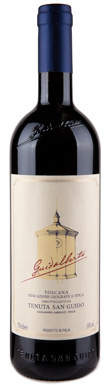

According to Tenuta San Guido’s director of winemaking, Carlo Paoli, the 2021 is the best Guidalberto he has ever made. The percentage of Merlot was...
2021
Tenuta San GuidoToscana

Tenuta San Guido, Guidalberto, Toscana, Tuscany, Italy, 2020
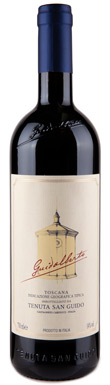
Guidalberto 2020 is a blend of 50% Merlot and 50% Cabernet Sauvignon, matured for 15 months in oak (20% new), including a small percentage of...
2020
Tenuta San GuidoToscana
Tenuta San Guido, Guidalberto, Toscana, Tuscany, Italy, 2017
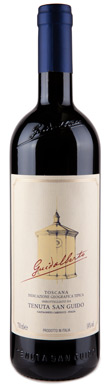
The 2017 vintage was a challenging one because it was hot but above all very dry. Vines in general lacked water and struggled to reach...
2017
Tenuta San GuidoToscana
Tenuta San Guido, Guidalberto, Toscana, Tuscany, Italy, 2015
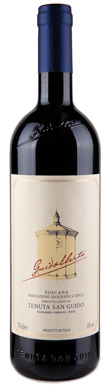
The Tenuta San Guido team commented that ‘In 2015 the grapes were of an excellent quality, perfectly ripened, [but] pretty cool and crisp, giving wines...
2015
Tenuta San GuidoToscana
Tenuta San Guido, Guidalberto, Toscana, Tuscany, Italy, 2013
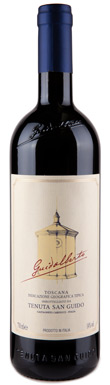
In general, 2013 is considered a very good vintage. There was plenty of rainfall at the start of the year, so there was no vine...
2013
Tenuta San GuidoToscana
Tenuta San Guido, Guidalberto, Toscana, Tuscany, Italy, 2008
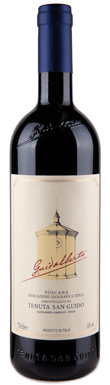
2008 had a slower and cooler start to the season, with plenty of rainfall in the spring then two weeks of exceptional heat in the...
2008
Tenuta San GuidoToscana
Tenuta San Guido, Guidalberto, Toscana, Tuscany, Italy, 2003
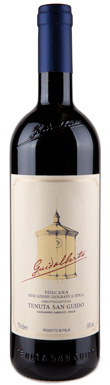
2003 was one of the first vintages in what was later to become a pattern of very hot, dry vintages. The summer had above-average temperatures...
2003
Tenuta San GuidoToscana
Tenuta San Guido, Guidalberto, Toscana, Tuscany, Italy, 2001
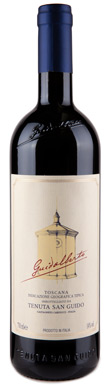
The 2001 Guidalberto was only the second vintage to be produced of this wine, and at this stage it still had 20% of Sangiovese in...
2001
Tenuta San GuidoToscana
