
Terrasses du Larzac: The untamed freshness of the high Languedoc
In the decade since it was officially recognised, this wild, other-worldly corner of Languedoc has been garnering increasing attention, both from winemakers keen to set themselves up in the region, and from wine lovers attracted by its fresh, highly drinkable wines.


The mountainous area of the Massif Central occupies about a sixth of France, bordering Beaujolais and the Rhône to the east and Languedoc to the south. The massif’s southern section consists of a number of limestone plateaus – called causses in the Occitan language, from the Latin calx, meaning ‘lime’.
It’s this landscape, with its stalactite-littered caverns and dramatically deep gorges, that gives rise to one of France’s most famous cheeses: Roquefort (also the first product of any kind in France to be granted ‘appellation d’origine’ status under the then-new law of 1925).
It’s also one of these arid, sparsely populated limestone plateaus, the Causse du Larzac, that defines a spectacular wine terroir: the Terrasses du Larzac.
Scroll down for highlights from Terrasses du Larzac
Ten years since itself becoming an independent AP (appellation d’origine protégée, as the designation has been known since early 2016), Terrasses du Larzac has quickly established itself as one of the most exciting and dynamic areas in this vast region.
Identified as a denomination of the wider Languedoc in 2004, this is one of the rare regions that gained its appellation status quickly; usually the process takes many years.
In Rosemary George MW’s 2001 book The Wines of the South of France, Terrasses du Larzac hardly gets a look in. ‘I gave it little more than a cursory mention,’ she acknowledges in her 2018 book Wines of the Languedoc, yet it ‘has attracted enormous interest over the past 20 years’.
And for good reason.
Lay of the land
Up on the arid, exposed Larzac plateau, wind-battered grassland is interspersed with gnarled lumps of grey-white rock that resemble ancient ruins. This Jurassic landscape – 145 million-200 million years old – has a long history of supporting the Lacaune sheep that provide the milk used in Roquefort production, an activity in which a number of wine estates were also historically involved.
The wheels of this veiny blue cheese that age in the caves under the village of Roquefort-sur-Soulzon, at the western edge of the Causse du Larzac, benefit from similar natural phenomena as the vineyard area below.
The caves feature cracks and fissures (called fleurines) that allow cool winds from high up on the plateau to blow down through the mountain itself, creating the perfect conditions for ageing the cheese.
These same winds blow off the top of the plateau into the foothills where the Terrasses du Larzac vineyards lie, one element in a terroir that’s ideal for producing wines with an inherent freshness.

‘We’re an appellation with Languedoc generosity but Larzac freshness,’ says Jean-Baptiste Granier, owner and winemaker of Les Vignes Oubliées.
The region’s climate, which is heavily influenced by the proximity of the Larzac plateau, is a unifying factor in an appellation with a huge diversity of soils, exposures and elevations.
This is one of the most northerly vineyard areas of Languedoc, scattered across 32 villages and communes that hug the foothills of the causse and fan out along the geological terraces that stretch to the confluence of the Hérault and Lergue rivers at Canet, forming a rough ‘V’ shape.
Vines are planted between 40 metres and 450m. Hillsides and valleys cut like notches into the landscape, creating a wealth of different exposures.
This, combined with the northerly latitude and more inland location, means that there’s a significant diurnal temperature range, ‘at least 20°C difference between night and day in the summer months’, says Loïc Benezeth, fourth-generation winemaker at Domaine La Rouquette.
This helps to preserve freshness and acidity, but also provides a ‘bigger aromatic revelation’, says Vincent Goumard, owner and winemaker of Mas Cal Demoura.
The Terrasses terroir: a patchwork of soils
The vineyard area is a complex array of geological eras – a fascinating mix of colour, shape and texture, a Kandinsky painting splashed out across the terrain. As soil types meander through alkaline limestone to more acidic sandstone and schist, the wild Mediterranean vegetation that surrounds the vineyards changes – a shifting, contrasting, metamorphosing landscape.
The thyme, juniper, bay and holm oak of the limestone-based garrigue transforms into the heather, mint, white oak and lavender of the sandstone-based maquis. Although communication around individual terroirs is at a nascent stage, a few specific areas are worth pointing out…
Cercle de la Blaquière
An enclave to the west of Mont St-Baudille, at 300m, from St-Privat down to St-Jean-dela-Blaquière. It’s mainly grès (sandstone) and schist – although not the same schist found in the Faugères appellation further southwest. The combination of schist and cool night-time temperatures brings elegance and silky tannins.
Escalette
The upper valley of the Lergue river, at 350m-400m, with rocky limestone soils and a very cool climate. Some vineyards are on terraces, and there are clapas – piles of stones – that surround the vineyards.
‘Women removed these large stones from the vineyards so that men could work the land,’ says Delphine Zernott of Domaine du Pas de l’Escalette, ‘but they also act as barriers, protecting vines from strong winds.’
This is a particularly fresh terroir, ‘really white wine country’, according to Decanter contributing editor Andrew Jefford. Reds have fresh acidity, a lighter body and a saline, mineral character.
Salagou and ruffes
In the west around the manmade Salagou lake, with a few outcrops in the southern part of St-Jean-de-la-Blaquière, striking red soils resemble the Australian outback. These ruffes (from the Latin rufus/Occitan ruffus, meaning ‘red’), were formed during the Permian period some 275m years ago.
According to author and geologist Luc David, these are alluvial terraces, with silty iron-oxide-rich soils. There’s also basalt from ancient volcanic eruptions.
Aniane and Puéchabon
To the east of the Hérault river, a few top-quality estates have made their mark, notably Mas de Daumas Gassac and Domaine de la Grange des Pères, although neither labels its wines as Terrasses du Larzac. Hilly vineyards with stony limestone soils and galets roulés (large, rounded stones) make for a lunar landscape.
The heart: Jonquières and surrounds
The lower-lying ancient terraces of the Lergue river. The soil is varied but there’s more clay here, with limestone pebbles as well as galets roulés. This part also includes Montpeyroux and St-Saturnin, historic denominations under the Languedoc appellation, both of which hope to gain individual AP status. The wines are denser and more structured.
The Buèges valley
Extending far up the right-hand branch of the Terrasses du Larzac ‘V’. This follows the Cévennes fault line, with glacial deposits of fractured limestone.
Grapes & styles
Grenache, Syrah, Mourvèdre and Carignan are the key varieties in this red-only appellation, with Cinsault, Counoise, Lledoner Pelut, Morrastel and Terret Noir as secondaries. A blend of at least three varieties is required.
As in other Languedoc regions, a renewed appreciation of once-maligned Carignan is helping to save old vines and bring fresh acidity to blends. Syrah, on the other hand, is suffering across Languedoc due to its sensitivity to drought, but here it’s less aggrieved, thanks to the fresh climate.
Even so, Amélie d’Hurlaborde of Mas d’Amile says that the climate keeps reminding them to look after the indigenous varieties that have better resistance to drought, like Carignan.
Cinsault plays an increasingly important role here, lending blends an ethereal, floral, juicy quality. I also love pure Cinsault – of course it’s not permitted under the appellation rules, but a few producers bottle one as Vin de France or IGP, so it warrants a mention here.
Try examples from Mas Combarèla, Le Clos Rivieral, Domaine du Pas de l’Escalette, Le Clos Rouge (Piccolo 2021, £22.49 The Wine Reserve) and Mas Conscience (Cieux 2021, £18 Dead Time).

Although it’s hard to generalise about the style of a large region with such variable geology, there are four striking things about the wines: their freshness, drinkability, aromatic display and tannic finesse.
Generous, dark brambly fruit is often tempered and lifted by red fruit undertones. Notes of garrigue – sage, thyme, juniper – are infused into the very core of the wines’ being. Many are moreish, delectable and succulent, boasting suave tannins with the texture of fine, wet clay.
Some are also elevated by a stony, iodine, mineral quality. It’s when these elements come together that the vigneron has succeeded in sharing their place with the drinker.
Although not currently permitted under the appellation rules, white wines are making promising strides and an official request for their inclusion is being assessed as I write.
The main varieties would be Grenache Blanc, Roussanne, Rolle, Carignan Blanc and Chenin Blanc. Many of the whites currently made under the local IGPs are delicious, so this is definitely an area to watch.
Overall, despite the quality coming out of the region, the Terrasses du Larzac wines still appear fairly difficult to sell abroad. ‘It is the name of the estate that sells the wine,’ says Marcel Orford-Williams, wine buyer at UK retailer The Wine Society and DWWA judge for Languedoc-Roussillon.
Indeed the wide variety of terroirs and potential styles makes it difficult to define a singular identity for the region – but arguably this is also the region’s strength.
The place to be
The Terrasses du Larzac region is incredibly dynamic, having a combination of long-standing, native producers (such as Mas Jullien, Mas des Chimères and Domaine de Montcalmès, which all helped to create the reputation of the appellation) and a steady stream of newcomers who have arrived in a relatively short space of time (40 new wine-growers since 2014).
Some big names, including the likes of Gérard Bertrand, Calmel & Joseph and Vignobles Jeanjean, even have properties here.
‘With this mix, it could have been two worlds that coexisted but didn’t acknowledge each other, but that’s not at all what happened,’ says Sébastien Fillon, president of the appellation and winemaker at Le Clos du Serres. ‘They interacted and exchanged and discussed, and the people from outside were accepted, so it worked.’
One senses the cohesion and partnership among the producers.
‘Everyone helps each other. We’re friends – there’s no competition,’ says Benezeth, who took over the family domaine in 2021 at the age of 26.
‘When you’re young and recently installed in the region, it’s important to have the big names on your side.’
What’s more, about 80% of producers are organic and many are biodynamic, too (and the proportion rises to 92% if HVE and Terra Vitis certification are taken into account), which highlights a certain like-mindedness among them, and also ‘allows for large areas in which biodiversity can thrive and a natural balance can be achieved’, according to Goumard.
The wines, with their fluidity and delicate structures, could strike a chord with new drinkers discovering wine for the first time, as well as seasoned wine lovers looking for wines with a southern soul but also balance and finesse.
In the mighty tome that is the Languedoc, Terrasses du Larzac might be the most compelling chapter.
Terrasses du Larzac: the facts
Producers: 96 independents, 3 cooperatives; 4 négociants
Area planted: 747ha (AP)
Production (2023): 2.7m bottles
Average yield (2023): 27.1hl/ha
Grapes: Principal Grenache, Syrah, Mourvèdre, Carignan; Secondary Cinsault, Counoise, Lledoner Pelut, Morrastel, Terret Noir
Blends: At least three varieties, of which two must be principal varieties; principal varieties at least 75% of the blend; no single variety more than 70% of the blend; Carignan maximum 50%, Cinsault maximum 25%; secondary varieties (other than Cinsault) max 10%
Organic producers (2023): 79% certified or under conversion (92% if including HVE or Terra Vitis certification)
[Source: AP Terrasses du Larzac]
Producers to know in Terrasses du Larzac
Clos Constantin
Domaine de Montcalmès
Domaine du Pas de l’Escalette
Les Vignes Oubliées
Mas Cal Demoura
Mas d’Amile
Mas des Brousses
Mas Combarèla
Mas Conscience
Mas Jullien
New & noteworthy:
Domaine de l’Accent
Domaine Flo Busch
Les 8 Sarments
Le Clos des Combals
Mas Lasta
Mas Origine

Languedoc charm: 10 wines from Terrasses du Larzac
Related articles
- Château Fabre Gasparets: 20 vintages from Languedoc’s Corbières Boutenac cru
- Ten reasons to rediscover Languedoc plus the wines to seek out
- Corbières: 10 names to know plus top wines to try
Domaine de Montcalmès, Blanc, Terrasses du Larzac, Languedoc-Roussillon, France, 2021
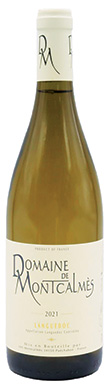

A dazzling array of shining golden fruit: Mirabelle plums, mango and white peach. A soaring rush of freshness fills the mouth, not acidity per se,...
2021
Domaine de MontcalmèsTerrasses du Larzac

Mas Jullien, Blanc, Pays d'Hérault, Languedoc-Roussillon, France, 2022
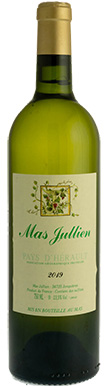
Such a complex and beguiling wine, hinting at lemon curd, wet stones, gunflint, lemon peel and linden flower. Texture, energy and a sensation of crushed...
2022
Mas JullienPays d'Hérault
Mas Cal Demoura, Les Combariolles, Terrasses du Larzac, Languedoc-Roussillon, France, 2022
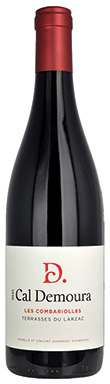
Spectacular and enchanting aromatics of bramble, iris, juniper, smoky thyme. This is mouth filling and refined in texture. Fluid and energetic, with red apple skin...
2022
Mas Cal DemouraTerrasses du Larzac
Mas des Brousses, Cléo, Terrasses du Larzac, Languedoc-Roussillon, France, 2022
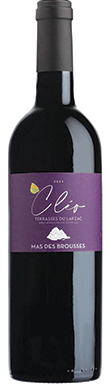
Incredible purity of squashed strawberries and red plum. Fresh acidity meets silky, fine tannins for a seductive finish. A wine that’s flowing and elegant, combining...
2022
Mas des BroussesTerrasses du Larzac
Mas des Chimères, Nuit grave, Terrasses du Larzac, Languedoc-Roussillon, France, 2021
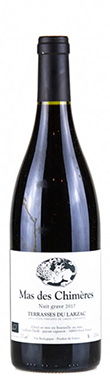
A brilliant example of Languedoc generosity and Larzac freshness. Deep, plummy fruit has a raspberry undertone, speckled with dry, scrubby herbs. The palate races, swooping...
2021
Mas des ChimèresTerrasses du Larzac
Domaine du Pas de l’Escalette, Les Clapas, Terrasses du Larzac, Languedoc-Roussillon, France, 2022
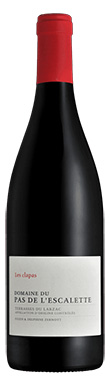
This wears a smoky grey cloak of embers and wispy sage over a silky red dress of wild raspberry and mulberry. A deep, herbal and...
2022
Domaine du Pas de l’EscaletteTerrasses du Larzac
Les Vignes Oubliées, Terrasses du Larzac, Languedoc-Roussillon, France, 2022
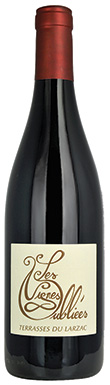
Aged in a hidden cave, this is a serene, cool-headed wine with mulberry and loganberry fruit shot through with a peppery, minty lift. There’s a...
2022
Les Vignes OubliéesTerrasses du Larzac
Domaine Flo Busch, Pointe du Jour, Terrasses du Larzac, Languedoc-Roussillon, France, 2022
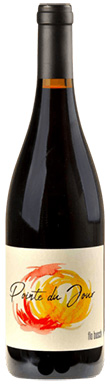
Expressive and alluring, notes of red-fleshed plums, star anise, red apple skin and liquorice. Juicy but still structured, with those lovely fine-clay tannins and a...
2022
Domaine Flo BuschTerrasses du Larzac
Clos Constantin, Euziéra, Terrasses du Larzac, Languedoc-Roussillon, France, 2022
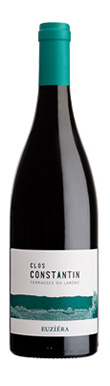
Mellow and approachable, with notes of soft, squishy plums and dried herbs. The first sip is like biting into a warm plum, light and fresh...
2022
Clos ConstantinTerrasses du Larzac
Mas d’Amile, Le Petitou, Terrasses du Larzac, Languedoc-Roussillon, France, 2022
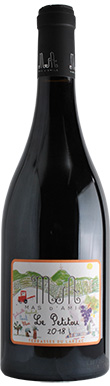
You feel the ripeness of the year here. Deep purple and gorgeously floral on the nose, with violets, cherries and ripe blackberries. The fine-grained texture...
2022
Mas d’AmileTerrasses du Larzac
