
The Decanter interview: Bordeaux consultant Eric Boissenot
He may be happy to maintain a low profile, yet consultant oenologist Eric Boissenot is as highly regarded as they come, appreciated by his many clients for his precision, skill and ability to bring vitality to a wine. James Lawther MW finds out more...
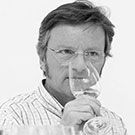

He is arguably one of the most influential figures in Bordeaux, particularly the Médoc, but apart from industry insiders, few people know of him.
He’s reserved rather than outspoken, sensitive rather than thick-skinned, nonchalant in his dress and manner, doesn’t own a great château – though he frequents many – avoids publicity and doesn’t have a chauffeur-driven car.
The straight-up answer: he’s a consultant oenologist. It’s the ‘to whom’ that raises eyebrows, for among his 150-odd clients, 40 are 1855 classed growths, including first-growth châteaux Lafite, Latour, Margaux and Mouton Rothschild, plus super-seconds such as Léoville Las Cases and Ducru-Beaucaillou.
On the books, as well, are a host of ‘lesser’ Médoc châteaux that he values just as highly, and a small percentage of overseas clients – Concha y Toro being one example.
But it’s not just the names that are important. The style of wine he embodies carries equal weight, with classicism, finesse and terroir the watchwords.
Father’s footsteps
Boissenot was patently born into the job. His father Jacques was also a highly respected consultant oenologist, who trained and worked with legendary French oenologist Emile Peynaud, so Eric follows an eminent lineage.
His youth was spent knocking around with the sons of local growers in the Médoc village of Lamarque where he was born, the harvest a yearly ritual. When he was 14, his father planned to buy 2ha in APs Haut-Médoc and Margaux, and asked him to oversee them. Hence, by the time he started his studies at the Faculty of Oenology in Bordeaux, he’d already notched up six years’ viticultural and winemaking experience.
In 1991, with a diploma in oenology under his belt, he started consulting independently and alongside his father. A doctorate in oenology-ampelology followed in 1997.
Working with his father was not a problem. ‘Our offices and laboratory were at home so most of the clients already knew me. In those days the staff structure was simpler and it was the manager who brought the samples, whereas today it’s a trainee,’ he recounts.
Much of the time he was in contact with his father’s generation, whose views and experience he came to respect. And above all, there were the guiding lines of Peynaud that Jacques never ceased to recite: ‘Respect the tannins and structure of a wine, don’t over-extract and always place the focus on terroir.’ And this in the 1990s and 2000s, when bodybuilder wines were all the rage.
Which begs the question, is there a Boissenot style and philosophy?
‘My father always said no, as it’s the terroir and cru that come first, but compared with [Stéphane] Derenoncourt and [Michel] Rolland, for instance, there is, because I work in a different way.
‘The philosophy is probably more in the manner in which I see things: understanding and having confidence in the raw material, never leaving an imprint that goes against nature and always to make a wine that evokes the highest possible emotion,’ he explains.
Close relationship
How that works in practice requires the complicity of the owners and managers, he says: ‘It takes about three years to understand the terroir and commitment of the people.’
The key spheres of his consultation include advice on harvest dates for different parcels, temperature and length of vatting, the sorting of different batches of free-run wine, work on the press wine and blending – all interpreted by incessant tasting.
‘He is a guide who is discreet, non-intrusive and objective, and he brings us back to basics when we go too far in our deliberations,’ explains Hélène Génin, technical director of Château Latour. Here, the final blend is selected from 120 batches of free- run wine and 50 press batches over a period of six or seven sessions.
In practical terms, he has a laboratory with a staff of three to handle sample analyses. The workload following clients is shared with two assistant oenologists, Marco Balsimelli and Edouard Lambert. Boissenot takes the lion’s share, observing a time frame that runs parallel to the production of the wine: August through to November, the harvest and winemaking; November until the end of February, blending; March and April, re-tasting blends for the primeurs; May to July, preparation of finished wine for bottling (fining, filtration, etc), overseas visits and company business.

Surgical precision
His forte is his stamina and skill at tasting. This he applies in rigorous manner when deciding on the date to run off free-run wine, sorting batches and working on the different fractions of press wine, an important element in the Boissenot approach.
‘Peynaud used to say that the press wine was an ally rather than an opponent,’ he relates. But it’s the expertise in blending where he truly excels. ‘He has a surgical precision and sensibility in his choices which bring elegance and vitality to the wine,’ says Fabrice Darmaillacq, technical director of Château Clarke in Listrac.
Château Clarke is one of the newer Boissenot consultancies, first vintage 2016, but there are plenty of other non-classified châteaux that he follows. At this level, finance, of course, comes into play, but he works in the same manner, insisting on as much selection of parcels and press wine as possible to build the blend. ‘There can be reticence at first as it means more work and greater precision,’ he says. At the primeurs tastings he has started to present these wines to the press and trade as he feels they are undervalued, but he is not a marketing or sales person.
Traditional values
New clients are rarely solicited these days, and he’s reluctant to venture far from his Médoc base (home to at least 80% of his clients) due to the time lost travelling.
There has to be an interesting terroir (Alpha Estate in Greece) to catch his interest and imagination, or a connection with the people (Domaine du Chenoy in Belgium, whose Belgian co-owner/manager Jean-Bernard Despatures spent 16 years as the technical manager of a couple of Médoc properties, where he originally met Boissenot).
Often, the winemakers/owners travel to him for assistance with the final blend (American winery RdV Vineyards does this, as well as Concha y Toro for Don Melchor).
One recent recruit to the Boissenot stable, and certainly not one that drags its feet or lacks ambition, is Château Malartic-Lagravière in Pessac-Léognan. ‘We felt Eric could help provide an added note of complexity in the wine, something that reflects the terroir and detail in the vineyard,’ outlines marketing director Séverine Bonnie.
The first vintage is 2019 and provides an interesting contrast in work methods compared with the previous regimen. Harvest dates were brought forward and the time in tank shortened to reduce extraction. There’s been a lot more work on the selection and preparation of press and free-run wine, and the final blend was finished in February 2020 instead of waiting another year to do it pre-bottling. We will now have to wait to judge this new offering, of course, following the postponement of this year’s early-April primeurs tasting week in light of the current coronavirus pandemic.
As can be surmised, Boissenot has a reasonably traditional approach to winemaking, even playing down the technical aspect. ‘If you have confidence in the fruit, you’ll succeed without sophisticated techniques,’ he declares.
Oak is the most noble material for fermentation, he claims, but producers need to be fully aware of the work required. Optical sorting machines are efficient but not obligatory and depend on the vintage (useful in 2018). Racking can help alleviate problems such as volatility, and the use of new oak barrels is determined by the wine and the quality of the oak. A modern practice he does favour, though, is inducing the malolactic fermentation to occur at the same time as the alcoholic. ‘It’s practical and efficient and makes it easier to manage the different batches of wine,’ he states.
Diversity matters
He is not that keen on the secondary grape varieties: Carmenère, Petit Verdot and Malbec. The first is too irregular and the second, even when good, clashes with Cabernet Sauvignon, which he praises for its elegance. Cabernet Franc he judges a great variety but often, in the Médoc, planted in the wrong site or with a poor clone. Merlot has its place, but with global warming problems relating to alcohol and stuck fermentations are increasing, so it mustn’t be harvested too late. Malbec could be worth another look as it is more resistant to climate change.
As to the impact of wealthy investors in Bordeaux, he doesn’t see this in itself as a bad thing, except for the additional layers of management it has engendered. He does, though, bemoan the loss of small producers, victims of competition from bigger players and the weight of a burgeoning administration. ‘We need to preserve the small producers alongside the large to maintain diversity,’ he insists. As a small producer himself with 2ha planted at Château les Vimières in AP Haut-Médoc, this is a personal sentiment.
Humility and discretion are the two words that come to mind when meeting Eric Boissenot. Both qualities are appreciated by his clients, particularly those with a big reputation. He’s at ease with himself, his competence and work methods, so has little else to prove. His defence of a style of wine hasn’t changed over the years and, icing on the cake, it’s back in fashion these days.
This article appeared in the Bordeaux supplement of Decanter magazine’s July 2020 issue, and was written prior to the Bordeaux 2019 en primeur campaign.
A taste of the Boissenot magic: Five wines rated
See also:
Anson: Tasting ten years of Château Clarke
Château Fourcas Hosten, Listrac-Médoc, Bordeaux, France, 2016
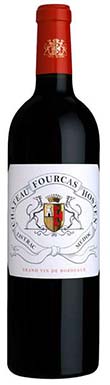

Since 2006 there’s been huge investment from new owners at this property, with Eric Boissenot a strong influence on decisions. This is every bit a...
2016
Château Fourcas HostenListrac-Médoc

Château Teynac, St-Julien, Bordeaux, France, 2016
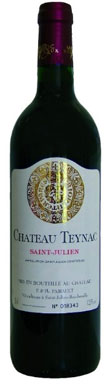
From a 12ha vineyard in St-Julien (the type of family property Eric Boissenot enjoys), with a distinct Cabernet expression. Has a fresh, flattering nose with...
2016
Château TeynacSt-Julien
Château Lanessan, Haut-Médoc, Bordeaux, France, 2014

Lanessan has been changing since manager Paz Espejo arrived in 2009, with Eric Boissenot a key to defining blends. This is a solid wine that...
2014
Château LanessanHaut-Médoc
Château Moulin de La Rose, St-Julien, Bordeaux, France, 2016
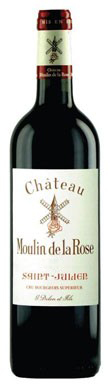
The 5ha of this estate are dotted around the classed-growth vineyards of St-Julien. The wine has dark- and red-fruit aromatics with a hint of graphite....
2016
Château Moulin de La RoseSt-Julien
